
 We reject the false doctrine that the Church could have permission to hand over the form of its message and of its order to whatever it itself might wish or to the vicissitudes of the prevailing ideological and political convictions of the day.
An Excerpt from the Barmen Declaration, May 29-31, 1934
This weekend, we celebrate the anniversary of the birth of the “confessing church” in Germany, standing up against the idolatry of the State. This is a nice summary from the United Church of Christ “beliefs” page:
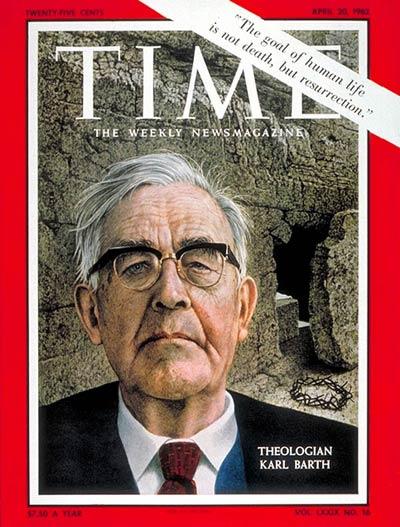
The Barmen Declaration, 1934, was a call to resistance against the theological claims of the Nazi state. Almost immediately after Hitler’s seizure of power in 1933, Protestant Christians faced pressure to “aryanize” the Church, expel Jewish Christians from the ordained ministry and adopt the Nazi “Führer Principle” as the organizing principle of church government. In general, the churches succumbed to these pressures, and some Christians embraced them willingly. The pro-Nazi “German Christian” movement became a force in the church. They glorified Adolf Hitler as a “German prophet” and preached that racial consciousness was a source of revelation alongside the Bible. But many Christians in Germany—including Lutheran and Reformed, liberal and neo-orthodox—opposed the encroachment of Nazi ideology on the Church’s proclamation. At Barmen, this emerging “Confessing Church” adopted a declaration drafted by Reformed theologian Karl Barth (above photo) and Lutheran theologian Hans Asmussen, which expressly repudiated the claim that other powers apart from Christ could be sources of God’s revelation. Not all Christians courageously resisted the regime, but many who did—like the Protestant pastor Dietrich Bonhoeffer and the Roman Catholic priest Bernhard Lichtenberg—were arrested and executed in concentration camps. The spirituality of the Barmen Declaration profoundly influenced many of the first generation of pastors and laypeople who formed the United Church of Christ in 1957
 Radical Discipleship