By Tommy Airey, originally posted to his Substack, which provides an audio version and important links
*A letter to my niblings (ages five to thirteen), on the 3rd anniversary of Operation Al-Aqsa Flood.
Dear Riley, Mason, Milo and Haylen,
Abraham Joshua Heschel once said that the whole future of America depends on the impact and influence of Rev. Dr. Martin Luther King, Jr. Abraham Joshua Heschel was a rabbi and professor who marched with MLK in the Black freedom struggle.
You already know who MLK is. You’ve read about him in children’s books. You’ve seen photos and murals of him all over the place. You hear about him every January, in the lead-up to his holiday weekend.
It is one thing to know who MLK is. It is another thing to be impacted and influenced by him.
My hope is that you and your generation will not only be impacted by MLK’s beautiful words, but also that you will be influenced by his brave actions.
Six years before George Floyd and I were born, MLK said that the greatest purveyor of violence in the world was his own government. A lot of Americans got really angry when he said this. The next day, 168 newspapers condemned him.
MLK made it clear that real terrorism is what America does to other people all over the planet.
Our exclusive interview with Elaine Enns, the author of Healing Haunted Histories: A Settler Discipleship of Decolonization (2021).
Radical Discipleship:Elaine, I cannot believe it has been five years since you published Healing Haunted Histories: A Settler Discipleship of Decolonization. I continue to hear from friends and comrades who rave about your book. Just last week, in one of the men’s groups that I facilitate, one brother recommended it to the rest of the crew! For folks who might be unfamiliar, could you give us a brief synopsis of the book? Also why did you write it and who did you write it for?
Elaine Enns: Tommy, thank you for this opportunity to be in conversation with you. I continue to be humbled and gratified by all the folks using and promoting Healing Haunted Histories.
A synopsis: Most of us white settlers believe that colonization is something that happened in a distant past that doesn’t concern us; has nothing to do with our own family or history; and/or is too complicated for regular people like us to understand. The truth is that colonization has a politics, economics, culture and a spirituality that runs right through each one of us who reside on Turtle Island. Healing Haunted Histories is about developing a sense of “response-ability” (an intentional double entendre) to an ongoing historical project that we are socialized to keep at arm’s length, or worse, to dismiss.
Ched and I developed a “landlines-bloodlines-songlines” framework that instructs and empowers us to examine—compassionately but critically—how our family benefited from, has been implicated in, and harmed by colonization.
Landlines looks at how, from the beginning of our ancestral migrant journeys, our people were pushed and pulled by macro forces of boom and bust (such as war, economics, famine, or racial politics), and how different people came (or were forcibly brought) under vastly different circumstances. We encourage readers to research where and how their ancestors arrived in North America; what privileges or entitlement they experienced (or not); and what impacts their settlement had on Indigenous peoples. We also need to reckon with our ownresettlements across the landscape, whether in pursuit of adventure, education or jobs. How do these movements essentially reproduce unconsciously colonial entitlement to “help ourselves” (in both meanings of that phrase) without relationship or permission, while remaining ignorant of the history, culture and present situation of Indigenous peoples we continue to displace.
Bloodlines work is about:
How we were shaped by the loss or distortion of our ethnic identities through assimilation into whiteness, and how we internalize attitudes of white supremacy while holding onto myths of settler innocence and nobility;
Looking at intergenerational patterns of privilege, moral injury and trauma that we have inherited and by which we’ve been shaped and misshaped;
And the narratives and myths into which we have been socialized by family, community, and dominant culture, which tell only part of the story while distorting or silencing problematic aspects.
And Songlines are the liberatory traditions of faith, courage, service, neighborliness and mutual aid that also inhabit parts of our ancestral story. These help animate and support our own commitments to restorative solidarity and justice.
While our focus is how this work interfaces with the original inhabitants of this land, the same work is required concerning legacies of enslavement and systemic racism that have similarly impacted both self and society. We have facilitated many workshops where white settlers use this process to address enslavement in their ancestral history and where BIPOC participants use the framework and adapt it to their context. The book concludes by focusing on practices of a decolonizing discipleship, illustrated by examples of individual, congregational, denominational and political efforts that experiment with relationship building, solidarity, reparations and repatriation.
I started researching this project in 2010 because I wanted to understand the impact of intergenerational trauma in my community and how it was hampering our ability to see and respond to the historical and current realities of our Indigenous neighbors in the prairies. Ched and I wrote this book primarily for white settlers, but many different groups are experimenting with the model, taking what is helpful and adapting it to their contexts and questions. We have been workshopping this material for ten years, and it has been a transforming journey of deepening and broadening our discipleship.
RD: Elaine, I’d love to hear some of your own testimony. How has this ancestral work healed and liberated you?
EE: Over the last dozen years, I have taken a deep dive into how the ancestral stories we carry influence and shape us. I am particularly interested in how—for those of us who are descendants of white settlers—the narratives, myths and half-truths with which we grew up and the impact of intergenerational moral injury, form and de-form us. The work of Healing Haunted Histories is to examine these compassionately yet critically, in order to become more “response-able” to the work of reparative justice.
The seeds of my involvement in this ancestral work were planted by my experience of three teenage girls.
i. Over a century ago, in December 1918, my maternal grandmother endured a home invasion in Osterwick, Ukraine during the Russian Revolution, when anarchist soldiers commandeered her house for two weeks over Christmas. She was fourteen when, with her sister and girl cousins, she was hidden up in the attic, while her mother (my great-grandmother) fed, clothed and bandaged the wounds of the hostile soldiers. This was just one episode in a continuous climate of violence during this period.
ii. When I was thirteen, I knew something horrible had happened to my grandparents, and wanting to know more, I interviewed this grandmother. She began by speaking about the beauty and abundance growing up in Ukraine, but as her account approached her teenage years, she began to weep and could not continue. Because I knew her only as a joyful person who was full of laughter, seeing her cry left an indelible impression on me. I later came to understand such symptoms of unresolved trauma, which has been intergenerational for my family and many others in our Russian Mennonite community.
iii. Third, in my final year of college in Winnipeg, MB, I volunteered with the Big Sisters/Little Sisters program. I was paired with a thirteen-year-old Cree girl who had just been released from juvenile detention after three years. Her “crimes” had been sniffing glue, stealing food and clothes, and getting into fights. Though I had no race or economic analysis at the time, she helped me see that the Criminal Justice System was unable to address the impacts of injustices on this Indigenous child. This experience was my first tutorial in the hard truths of colonization, and began to raise deep questions about how her ancestors had been displaced by mine on the Canadian prairies. This compelled me to begin exploring restorative justice, first in the criminal justice field, and later as a response to historical violations.
As I considered the latter, I realized that while I heard in my family and community about the violence my grandparents’ generation experienced, I never learned about the genocide of Indigenous peoples in Saskatchewan. These three experiences laid a foundation for me to wrestle with decolonizing the narrative I inherited from my Mennonite subculture.
In my research into these issues, I came upon the critical lens that Unangax scholar Eve Tuck calls “Settler Moves to Innocence.” In our book we outline ten such strategies through which we settlers typically seek to exonerate ourselves from responsibilities for and to the past and present violence of colonization. For example, we consciously practice what Canadian scholars call “agnosia”—a kind of “aggressive unknowing” which justifies our ignorance concerning historic and continuing injustices: we neither want to know nor care that we don’t know. Thisis rooted in the pervasive ideology of ahistoric individualism (e.g. “I didn’t own any slaves”; or “my family didn’t displace anyone – they bought their land fair and square.”) We imagine that we are free-floating entities, unaccountable to what has preceded us and dissociated from patterns and systems that have benefitted us.
Another strategy is a willingness to acknowledge that violence may have occurred, but was never intended, so there is no need to take responsibility or make amends. Anti-racist educator Robin DiAngelo says that such distinctions between intent and impact is the “foundation of white fragility.”Nor are folks in progressive communities immune; for example, we think by adopting the right talking points and critical consciousness we have exonerated ourselves from doing the hard work of making things right.
In the final chapters of Healing Haunted Histories we outline four practices of restorative solidarity that can nurture our healing and liberation:
Re-schooling the colonial legacy and identity we have inherited through building literacy, critical analysis and moral imagination;
Relationship-building with Indigenous communities (especially our neighbors), to de-abstract the issues;
Restorative actions that support work for Indigenous Justice; and
Reparative experiments—both personal and political—with resources we own or influence.
I have experienced how such practices of a settler discipleship of decolonization can contribute to healing of our haunted histories and to the liberation of our hostage future. I have become far more attentive to:
how the land holds stories in both my homeland of Saskatchewan and my adopted land of California (my landlines work);
my own ethnic community’s costly assimilations, blind spots and moral injury (my bloodlines); and
all the ways our faith traditions can animate us to heal parts of us that have been deformed by colonization—from scripture to song and from pilgrimage to protest—which give us courage to take concrete steps towards reparative justice (my songlines).
RD: As you know, most people read books like Healing Haunted Histories individually. Tell us why reading your book together can be so transformational – and how your new group study resource (Throughlines) can help with this.
EE: It is both countercultural and counterintuitive to do this work because we white North Americans have been socialized to deny past injustices, and to shrug off responsibility for present inequities. Though each of our stories has different particularities, all of us have grown up in a world impacted by the history and continuing structures of colonialism. But we are intimidated to take this on, because it is so deep and wide in its implications. Working the LBS process collectively allows group participants to name the resistances that arise within and among us, share and probe what we are learning by comparing notes, and encourage one another’s steps deeper into decolonizing discipleship. This reduces our sense of being overwhelmed in our implication and isolated in tackling such big and taboo subjects.
We believe that doing decolonization work in community functions to deprivatizeour anxieties (since we are all facing different types of hauntings, moral injury and/or trauma); and communitize our imaginations concerning how to do genealogical work (approaching our families and facing difficult narratives) and how to take next steps in each of the four restorative solidarity practices outlined in the book (see above). Groups can become a safe container of encouragement and empathy as well as challenge and accountability. Some participants decide on restorative solidarity practices to do together, and some continue to meet to accompany one another deeper into reparative praxis.
For a decade we’ve workshopped HHH with in-person and online groups small and large. This led us to create the newly releasedThroughlinescompanion, a ten-session guide that resources processes of study and practice. It includes:
a 49-page Facilitator’s Guide (PDF), step-by-step instructions to lead a group through difficult but animating conversations and commitments;
a 27-page Participant Workbook (PDF), offering mapping exercises and worksheets to help participants learn the Landlines of their settlement, decode family myths and find Songlines that inspire and sustain resistance and solidarity; and
Nine Key Concept Videos: Links to downloadable files for 15- to 30-minute illustrated summaries, narrated by author Elaine Enns.
Steve Taylor, United Methodist Church Home Missioner and Director of Antiracist Discipleship and Beloved Community for his denomination in North Carolina, recently facilitated an HHH group using Throughlines, and offered these reflections:
It was a shared journey of discovery, truth-telling, and transformation. Together we engaged the stories that shape us: the lands we inhabit; the peoples our ancestors encountered, displaced, or benefited from; and the systems of colonization and white supremacy that continue to de-form our lives and communities today. We learned that decolonization and healing are not solitary accomplishments, but practices we learn and live into alongside one another as we move beyond abstraction and into embodiment. We listened deeply, spoke honestly, and learned to be accountable to one another as we discerned and continue to discern faithful steps toward reparative action.
So on this fifth anniversary of HHH’s publication, we encourage RadicalDiscipleship.net readers to consider forming a group using Throughlines to deepen their own decolonizing discipleship. Here are two discount codes to facilitate this:
a 40% discount code for Throughlines: RDSAVE40 (for a group of nine sharing the cost it would be just $20 per participant) order here;
a 40% discount for Healing Haunted Histories: order directly from Wipf & Stock and enter HHHGRP26 at check-out.
From the Apartheid-Free Newsletter put out by the American Friends Service Committee. Subscribe to it here.
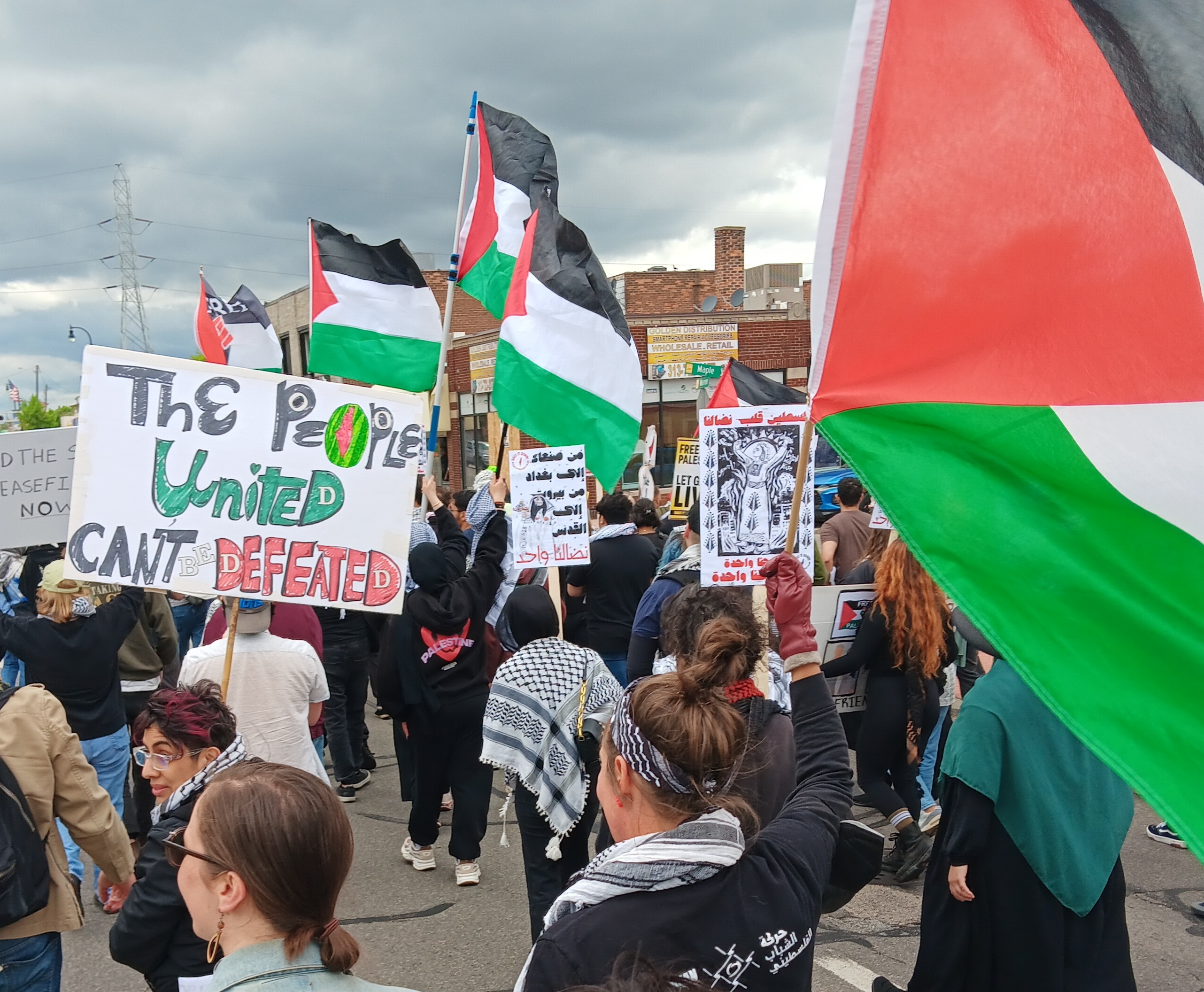
May 15 marks the 78th commemoration of the Nakba – “Catastrophe” in Arabic — which refers to the period in 1948 when Palestinians were ethnically cleansed during the creation of Israel. Between 1948 and 1950, an estimated 750,000 to one million Palestinians were forcibly expelled from their homeland by militias and the new Israeli army — about 85% of the Palestinian population. Most ended up in refugee camps in the West Bank, Lebanon, Gaza, Syria and Jordan. In addition to mass displacement, forced removal, the destruction of entire villages, and expropriation of over 4 million acres of land belonging to Palestinians, May 1948 marks the beginning of the Israeli apartheid system.Here are some of the early markers of apartheid that Israel would use to tighten its grip through ongoing occupation and erasure:
Creation of the “Transfer Committee” which oversaw the destruction of Palestinian towns and villages, repopulating them with Jews. The Zionist militias and Israeli army systematically destroyed more than 400 Palestinian towns.This mapdocuments them.
Passage of the “Absentees’ Property Law,” (1950) which granted the government “custodianship” over lands and property belonging to Palestinian refugees, (with no compensation for the owners). An “absentee” was defined as any Palestinian who left his or her home after November 1947, even if they remained inside what became Israel.
Passage of two additional laws — the Law of Return (1950), which still grants Jews from anywhere in the world the right to immigrate to Israel and automatically become a citizen, and the Entry into Israel Law (1952) which was designed to prevent the return of Palestinian refugees.
It is important framing in this time to name that the Nakba never ended — that it is a structure and a system, not one event in history. You can use this month to raise education and awareness about the ongoing Nakba of the Palestinian people — a forced erasure which we continue to witness in its most recent and deadliest form in the Gaza genocide.
Kirkridge Retreat & Study Center in the Pocono Mountains of Eastern Pennsylvania is offering the following retreats in 2026. Designed to help participants meet this moment, the retreats offer spiritual nourishment, decolonial commitments, and an opportunity for rest and reflection. We hope you will join us sometime this year.
Damned Whiteness: How White Christian Allies Failed the Black Freedom Movement and How We Can Do Better
David F. Evans
February 27-Mar 1
This retreat for Christians in solidarity with the Black liberation struggle is based on the material from David F. Evans’s book by the same name. We will learn how some of our forebearers failed the Black Freedom Movement and how we can course correct.
Shaping Clay, Shaping Life: A Collective Expression of Trauma and Hope
Denise Griebler
April 24-26
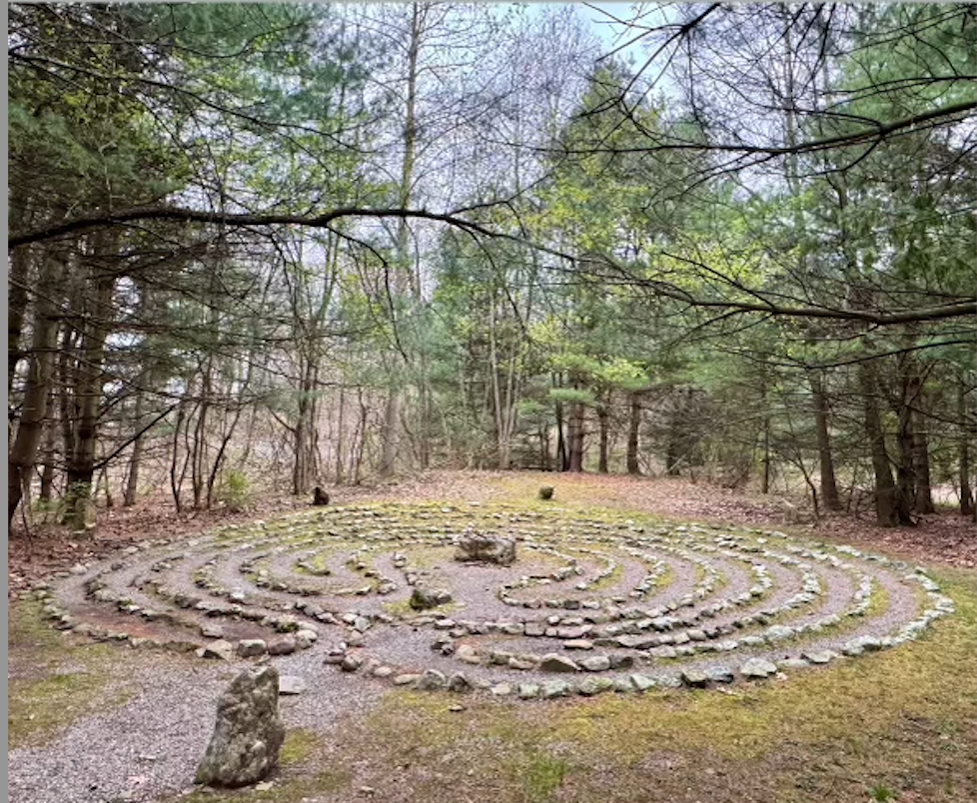
Take some clay in your hands and sit quietly with the grief, loss or trauma in your life. Sit with the stubborn, tenacious hope as well. Based on the work of Corinne D. Peterson, this clay retreat will contribute to growing Kittatinny Cairn & Cloud installation in the woods of the Kittatinny Ridge.
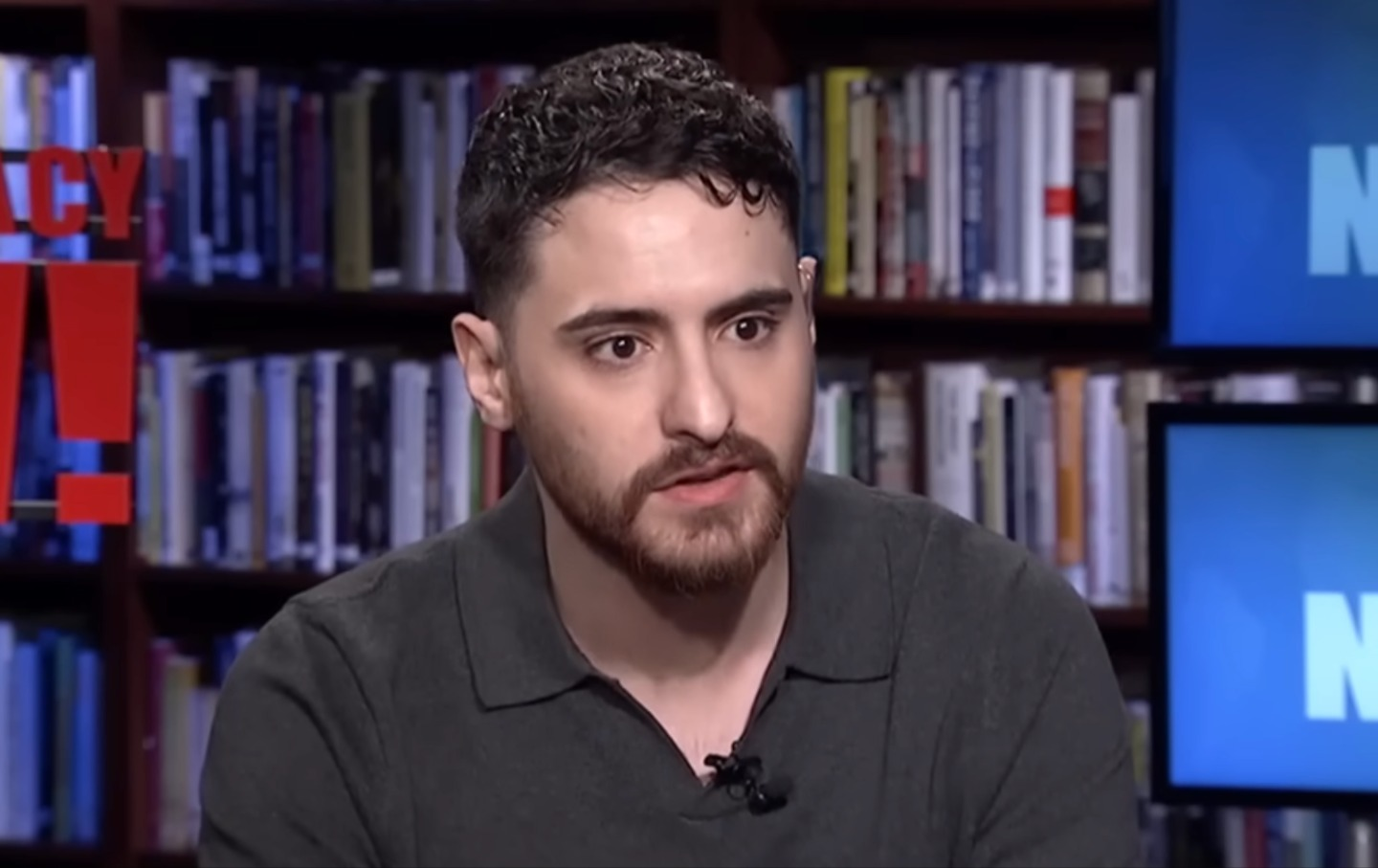
From Mohammed El-Kurd, a Palestinian author, re-posted from his Substack feed.
If you felt that the Javier Bardem/Hannah Einbinder’s statements last night [at the Emmy Awards] were refreshing, and unlike the usual red carpet lip-service, it is because they weren’t vague or preemptively defensive, nor did they reduce the genocide to a faceless “humanitarian crisis.” They denounced the culprit unequivocally and named what justice demanded: sanctions.
I’m rarely impressed with celebrity displays of solidarity, not only due to suspicions of opportunism or whatnot, but mostly because, so often, they’re painfully timid and hesitant, defanging their political stances with euphemisms, disclaimers and bothsidesism, or refusing to name the perpetrators—these silly linguistic tricks meant to appease all sides end up rendering well-intentioned gestures hollow and perfunctory. Such reticence does nothing to raise the ceiling and is a complete waste of social capital.
In the case of Bardem and Einbinder, however, it wasn’t the keffiyeh or the ceasefire pin that were impressive, it was Bardem’s full-throated call for “commercial and diplomatic blockade, and also sanctions on Israel.” It was Einbinder’s saying “Free Palestine” in a room full of powerful Zionists, instead of opting to use the classic (and very feeble) talking point of “women, children, etc.” Meaning, instead of taking the easy route of talking about Gaza as if it’s an unfortunate natural disaster, she explicitly adopted the slogan of our movement, a slogan rooted in anti-Zionist, anti-colonial struggle for land and liberation, coupling it with the local struggle against ICE, and later renouncing Israel, not just “Netanyahu’s government,” as an “ethnonationalist state” that must be exiled outside of American mainstream Jewry.
One only gets a few minutes on stage or talking to the press, and they chose to use that time to move beyond the symbolism of the pin and the scarf and into tangible action, however limited it may be: vowing to cut ties with those complicit in genocide and demanding they be sanctioned.
A message from Tommy Airey, co-founder of RadicalDiscipleship.net
This is not a famine. This is forced starvation.
The most faithful thing radical disciples can do is publicly call out Israeli and US leaders for what they have intentionally been doing to Palestinians for decades. We should call out our pastors and priests too – whenever they support it with their sermons, or their silence.
When Jesus prayed “give us each day our daily bread,” he was teaching his disciples to live in solidarity with the slaves who escaped from Egypt, trusting that God would sustain them by sending manna in the wilderness.
The first Christians learned to live on just enough so there would be enough for everyone else to live too. Their personal faith was inextricably connected to collective liberation.
********
Over the past eighteen months, I’ve been organizing with a collective of Palestinian Christians – and a few allies – who are committed to the love, compassion, truth and justice of Jesus. We are connecting the dots and telling the truth about how Western Christian dogma dehumanizes Palestinians.
Our collective is strategizing to subvert the destructive biblical and theological underpinnings of an overwhelming number of evangelical, protestant and catholic churches in North America that support Israeli apartheid and gen0cide – in the name of Christ.
We are inviting friends in the Christian fold – and those who are Jesus-adjacent – to join us for a 40-day prayer vigil, starting this Saturday (8/2).
Some of us will fast on different days. Some of us will intercede for Palestine at a certain time each day. Some of us will take in fewer calories, in solidarity with our Palestinian siblings in Gaza. All of us will pray, whenever we feel our own hunger pangs.
We are bonding together for forty days to pray for an end to this forced starvation – and for a free Palestine. We are committed to doing whatever we can to stop this gen0cide and inaugurate a new chapter in “the holy land,” where Palestinians are not only protected and affirmed, but empowered to lead.
As the sacred text says, faith without action is dead. Our hope is that our prayers to a Love supreme will conceive unprecedented levels of spiritual depth, moral clarity and political courage that will give birth to a whole new world. If you feel compelled, click on this link and join us.
An invitation from Rev. Dr. Edgar Rivera Colon, reposted from his social media account.
Beloved Comrades:
These are confusing and chaotic times in the US and across the globe. Please consider coming to this class on “Confluence of Crisis: Understanding and Deploying a Root Shock- Informed Approach” directed by Mindy Fullilove, Molly Kaufman, & Bob Fullilove. These folks have been dealing with the problems of dispalcement and the consequences of structural violence over four decades. We need their wisdom and practice-based learnings more than ever.
There is a suggested scale of donations for UofO to meet the increasing demands for consolidating our community bases and broadening our resistance. But no one will be turned away for lack of funds. Please share this post widely.
I’m a board member at UofO Free People’s University and one idea we always emphasize is that all of us can things to learn and to teach. In that spirit, come and learn as well as teach with us.
An Update from Critical Resistance, an organization committed to challenging the belief that caging and controlling people makes us safe.
For the month of April, we honor two dates that speak to the resilience of life under violent systems of control: Palestinian Prisoners Day on April 17, and Earth Day on April 22. Though they may seem unrelated, both are powerful reminders that the fight against cops and cages is a fight for the right to live—a struggle for collective survival and liberation.
This week, Palestinian Prisoners Day uplifts the courage and resistance of Palestinians caged and tortured in apartheid-Israeli prisons as part of a settler colonial regime that uses imprisonment as a key tool of control. Next week, Earth Day calls us to confront the global systems that exploit land and people.
From the 9,600 Palestinians currently incarcerated by apartheid-Israel, including over 3,300 prisoners in administrative detention without charge or trial, to the escalated crackdowns on student activism for Palestine and collaborating with attacks on immigrant communities in the US as seen by the Trump administration and ICE’s targeting of Mahmoud Khalil, we uplift the brave resolve of imprisoned Palestinians who continue to organize hunger strikes, create underground political education spaces, and remain part of the larger struggle for land, dignity, and freedom in the face of brutal repression in historic Palestine and across the diaspora.