
By Jennifer Maidrand, a professor of Bible, Culture, and Interpretation at United Theological Seminary in the Twin Cities. This is re-posted with permission from her social media page (07.29.25).
After spending the last month and a half in Palestine-Israel for research, I feel a clear affirmation in the work that is ahead and found a renewed prayer of sorts for the journey. And now that I’ve returned to the U.S., communicating what I witnessed during my time in occupied Palestine feels nearly impossible to yet urgent. Research aside, what did I see?
A situation more dire than I’ve seen in the last 11 years of spending time in the region
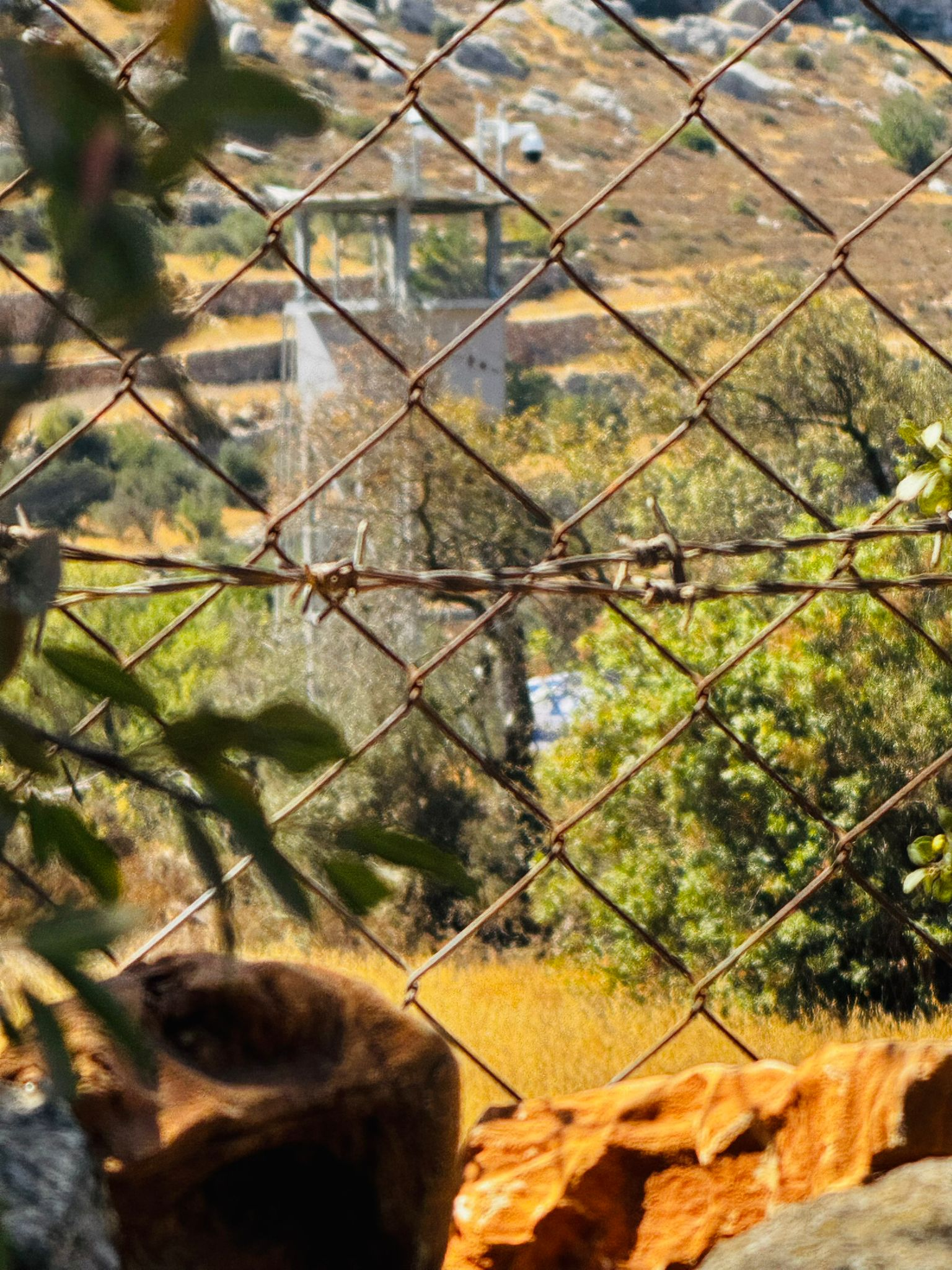
Countless new checkpoints and gates separating Palestinian society (from Israeli society and from itself) and restricting Palestinian freedom of movement—apartheid at work
The manifestation of the U.S. and Israel’s greenlighting of illegal settlements—outposts being built in hours, rampant settler violence and pogroms (protected by the Israeli military), more cars with Israeli than Palestinian plates in the West Bank
Palestinian homes being seized, demolished, and coercively sold left and right
More than 1,000 Palestinians in the West Bank have been killed since October 2023
Palestinian life being squeezed so tightly from every direction: road and checkpoint closures (let alone the reality that Palestinian movement is controlled by walls and military checkpoints to begin with); new gates enclosing entire villages; work permits denied; virtually no opportunities for work; income withheld; travel permits denied; social media surveilled (and countless Palestinians arrested for using the word “occupation” or “genocide” in a post); nightly military raids of villages; daytime raids; so many young men arrested; many older men arrested; children abducted and imprisoned; water to refugee camps and towns cut off; natural springs stolen by settlers; water systems destroyed; wells poisoned (again by settlers); permits denied to Palestinians to harvest olive trees on *their* land which they are barred from accessing; new guns installed at the top of the separation wall as a reminder that lives can be taken at any moment, as if there aren’t enough reminders already.
I cannot recall a conversation I had with a Palestinian where they did not mention the rapidly increasing violence of their realities since October 7th and Israel’s genocidal campaign on Gaza began. The many stories I heard struck chord after chord of resonance with one another, and what I’ve summarized here feels as if it only begins to weave these threads into the much larger tapestry of this catastrophe—the ongoing Nakba of the Palestinian people.
And still, despite these suffocating realities that Palestinians are pressed with, the abundance and beauty of their lives resists. It spills over like freshly pressed olive oil. The sumud (steadfastness) of the Palestinian people remains. This resistance through existence is a source of grounding and hope for many, myself included. It overflows from youth camps and mutual aid programs. From the ways that the knowledge of tatreez (traditional Palestinian embroidery) is passed on to younger generations and the mish mish (apricot) season is beloved. From Palestinians organizing their own protective presence and developing trauma healing practices that will uniquely serve Palestinians. From a Palestinian Christian community who refuses to accept a story of death and despair, affirming, rather, that they are people of the resurrection. From women who walk together on the outskirts of town at sunset and will invite you to their home for a meal without needing to know you. From farmers’ pride for the eggplants their village is known for and seed libraries saving heirloom Palestinian seeds. From faith that declares alhamdulillah—praise be to God—no matter the scale of catastrophe and finds Christ amid the rubble of genocide.
All of these precious lives and livelihoods lay in the balance between military occupation and a rapidly advancing extremist settler movement. And these evils—these human-created systems of racist, ethno-religious control—continue to grow within the context (and perhaps under the guise) of the ethnic cleansing of the people of Gaza. While the world’s eyes have been on Gaza for nearly 2 years now (though this attention has waned significantly as the genocide is being completed), Israel has simultaneously advanced this takeover of the West Bank, with America’s support. In order to prevent another holocaust in our lifetime, the world must intervene.
As I’ve witnessed genocide unfold from afar for the last 22 months, the only prayer I’ve been able to utter is “Lord, have mercy.” This remains my daily prayer as the people of Gaza are being intentionally starved to death. Yes—intentionally, literally, U.S.-sanctioned starved to death. Yet somehow, I’ve found a renewed prayer (or it has found me): “God, liberate us.” Help us to free each other, to free ourselves, to wake up in the morning with our minds on freedom. In other words, let us do on this earth as it would be in heaven. “What can we do?” is the question that most of us get (understandably) stalled by in the face of catastrophe(s). The answer that I’ve been finding (from a still, small voice—perhaps a spirit-filled, and, certainly a child-like one) is, “everything.”
 Radical Discipleship