 Tomorrow morning, Tommy Airey and I are huddling up and packing over 70 packages filled with calendars, cards, and books. Everything is here and they all look beautiful. We are so excited! So is Cedar!
Just a reminder to make your orders now!

Tomorrow morning, Tommy Airey and I are huddling up and packing over 70 packages filled with calendars, cards, and books. Everything is here and they all look beautiful. We are so excited! So is Cedar!
Just a reminder to make your orders now!
 Comments on this week’s Gospel text (Mark 12:38-44) from Binding the Strong Man: A Political Reading of Mark’s Story of Jesus (1988), the commentary from Ched Myers, celebrating 30 years of prophetic utterance.
The last episode in the temple is a story of a widow being impoverished by her obligations to the temple cultus (12:41-44). Long mishandled as a quaint vignette about the superior piety of the poor, Wright has shown that Jesus’ words should be seen “as a downright disapproval and not as an approbation”:
The story does not provide a pious contrast to the conduct of the scribes in the preceding section (as is the customary view); rather it provides a further illustration of the ills of official devotion. Jesus’ saying is not a penetrating insight on the measuring of gifts; it is a lament….Jesus condemns the value system that motivates her action, and he condemns the people who conditioned her to do it.
 An excerpt from an old classic: The Sun Magazine‘s interview with Martin Prechtel.
To be at home in a place, to live in a place well, we first have to understand where we are; we’ve got to look at our surroundings. Second, we’ve got to know our own histories. Third, we’ve got to feed our ancestors’ ghosts, so that the ghosts aren’t eating us or the people around us. Lastly, we’ve got to begin to grieve. Now, grief doesn’t mean sitting around weeping every day. Rather, grief means using the gifts you’ve been given by the spirits to make beauty. Grief that’s not expressed this way becomes a kind of toxic waste inside a person’s body, and inside the culture as a whole, until it has to be put in containers and shipped someplace, the way they ship radioactive waste to New Mexico. This locked-up grief has to be metabolized. As a culture and as individuals, we must begin feeling our grief — that delicious, fantastic, eloquent medicine. Then we can start giving spiritual gifts to the land we live on, which might someday grant our grandchildren permission to live there.
 By Tommy Airey, a homily for Day House, a four-decade Catholic Worker experiment wedged between casinos and stadiums a stone’s throw from downtown Detroit
I am new to the traditions of Celtic Samhain and Christian All Saints. I grew up in the world of white suburban Evangelical Christianity. I attended a private Christian school that was part of the movement sparked a decade earlier as a response to the Civil Rights Movement and the racial integration instituted by the Supreme Court (and resisted by Governors who were enabled by Presidents). My pastors and teachers taught me that Catholics were going to hell and that Halloween was the devil’s holiday. Continue reading “Every Goodbye Ain’t Gone”
 Proper 27(32) B
25th Sunday after Pentecost
 By Dr. Oz Cole-Arnal (far left in photo), former professor emeritus at Waterloo Lutheran Seminary
I was visiting my oldest son Bill and his partner Darlene when I heard the awful news of the massacre at the Tree of Life Synagogue in the Squirrel Hill neighborhood of Pittsburgh, Pennsylvania. I felt gut-punched and burst into tears. With so much hatred in the world, with the “othering” of all God’s vulnerable—Jews, blacks, women, Muslims, immigrants, LGBTQ– reaching new heights of murderous invective and hate as the wave of neo-Fascism arising throughout the western democracies, this attack in Squirrel Hill struck me exceedingly close to home. I am an ex-American from Western Pennsylvania, roughly an hour by auto to Pittsburgh, yet the emotions involve a deeper gut-wrenching connection than the thirty-mile jaunt by car to that city. Continue reading “Hidden Beasts”
Talk by Bill Wylie-Kellermann on the friendship between Bill Stringfellow and Daniel Berrigan
 By Ken & Nancy Hastings Sehested
We thank you, God, for water.
By it you give life to plants,
Animals, and all humankind.
We thank you that in the beginning
your Spirit of creation moved over
the face of the waters. Continue reading “Water of life: A baptismal prayer”
30 years in and Ched Myers’ Binding the Strong Man: A Political Reading of Mark’s Story of Jesus (1988) is more relevant than ever. We’ve got four more Sundays to celebrate it! This week’s commentary homes in on Mark 12:28-34.
The man’s question concerning the “first of all the commandments” is a common topic of rabbinic discussion, but could also be interpreted as yet another attempt to get Jesus to reveal his own political commitments. Jesus’ answer at first glance seems cautious in its orthodoxy: he quotes from the Shema (Dt 6:4f), with minor changes to the LXX text. Suddenly, however, he adds a citation of Leviticus 19:18 about obligation to neighbor, and concludes that “No other command is greater than these.” Continue reading “Orthodoxy is not Enough”
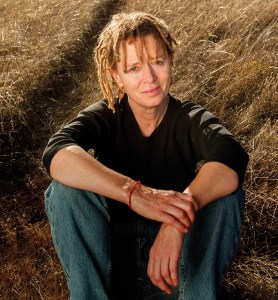 From the mind and heart of Anne Lamott (Facebook 10.20.18):
Every so often, I mention a book I’ve always thought about writing, called All The People I Still Hate: A Christian Perspective. Half the people responding roar with laughter and say, “I’d read that,” and half are sort of horrified, by either the word “hate” or “Christian.”
You’re not supposed to hate, because hate is ugly and diminishes the soul of the hater. But if I were to be honest. I’d admit that I could still write the book, about some of our leaders and one really special ex-boyfriend. But I got the miracle. Continue reading “To Reduce My Crazed Fever Dream Hatred of Certain People”
 Radical Discipleship