
 By Ched Myers, on Luke 16:1-13
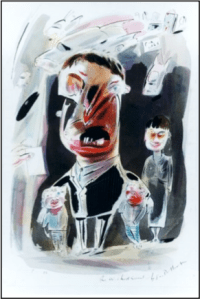
Note: This post is part of a series of weekly comments on the Lukan gospel readings from the Revised Common Lectionary during Year C, 2016. This week Ched offers a longer study because of his conviction that this is a crucial text for middle class Christians. A more detailed version of the reflections below can be found here; a webinar exploring these themes can be found here. [Right: “The Wicked Servant,” Ian Pollock, 1972.]
Summary: This Sunday’s gospel can be read as a poignant fable for all who realize that they have been disenfranchised by the dominant economic system, and who would try to “monkeywrench” whatever status they have in it to provide a modicum of Jubilee justice for themselves and others. This parable illustrates the contemporary strategy of navigating what Wendell Berry calls the “Two Economies” by using capital to build social relations, rather than sacrificing social relations to build capital. Continue reading “Discipleship as Defection from the Mammon System: Jesus’ Parable about a “Manager of Injustice””
 An update from Mark Van Steenwyk, the co-founder of the Minneapolis Mennonite Worker:

 During our current lectionary cycle, we’ve been downright spoiled with the scholarship that Ched Myers, Wes Howard-Brook (right) and Sue Ferguson Johnson bring every Thursday with their weekly comments on the Gospel passage. When Wes is not busy teaching at Seattle University, serving at the local soup kitchen, leading the weekly Bible Study in his home, participating in liturgical direct action, hiking up Tiger Mountain or making Sue a latte, he spends his free time researching church history for his next publication. Last week, his
 From Ta-Nehisi Coates (see full article from The Atlantic
 Our hearts are full; this an historic day for the Standing Rock Sioux Tribe and for tribes across the nation. Native peoples have suffered generations of broken promises and today the federal government said that national reform is needed to better ensure that tribes have a voice on infrastructure projects like this pipeline.
 By Nathan Holst
 By Wes Howard-Brook and Sue Ferguson Johnson

 By Lydia Wylie-Kellermann

