We Cry Peace

Berrigan2From Daniel Berrigan (1921-2016) in No Bars to Manhood (1971):

We have assumed the name of peacemakers, but we have been, by and large, unwilling to pay any significant price. And because we want the peace with half a heart and half a life and will, the war, of course, continues, because the waging of war, by its nature, is total – but the waging of peace, by our own cowardice, is partial. So a whole will and a whole heart and a whole national life bent toward war prevail over the velleities of peace. In every war since the founding of the republic we have taken for granted that war shall exact the most rigorous cost, and that the cost shall be paid with a cheerful heart. We take it for granted that in wartime families will be separated for long periods, that men will be imprisoned, wounded, driven insane, killed on foreign shores. In favor of such wars, we declare a moratorium on every normal human hope – for marriage, for community, for friendship, for moral conduct toward strangers and the innocent. We are instructed that deprivation and discipline, private grief and public obedience are going to be our lot. And we obey. And we bear with it – because bear we must – because war is war, and war good or bad, we are stuck with it and its cost.

But what of the price of peace? I think of the good, decent, peace-loving people I have known by the thousands, and I wonder. How many of them are so afflicted with the wasting disease of normalcy that, even as they declare for the peace, their hands reach out with an instinctive spasm in the direction of their loved ones, in the direction of their comforts, their home, their security, their income, their future, their plans – that five-year plan of studies, that ten-year plan of professional status, that twenty-year plan of family growth and unity, that fifty-year plan of decent life and honorable natural demise. “Of course, let us have the peace,” we cry, “but at the same time let us have normalcy, let us lose nothing, let our lives stand intact, let us know neither prison nor ill repute nor the disruption of ties.” And because we must encompass this and protect that, and because at all costs – at all costs – our hopes must march on schedule, and because it is unheard of that in the name of peace a sword should fall, disjoining that fine and cunning web that our lives have woven, because it is unheard of that good men should suffer injustice or families be sundered or good repute be lost – because of this we cry peace and cry peace, and there is no peace. There is no peace because there are no peacemakers. There are no makers of peace because the making of peace is at least as costly as the making of war – at least as exigent, at least as disruptive, at least as liable to bring disgrace and prison and death in its wake.

Continue reading “We Cry Peace” →

Daniel Berrigan: ¡Presente!

berriganBy Bill Wylie-Kellermann, “Giving Voice”: a tribute for his mentor Daniel Berrigan who crossed over at 94 yesterday
—————
the heart dares the word dares the page
lest love stick in the throat of this pen,
and go untold

i remember my name
in your voice
echoing down the underground hall
beneath niebuhr place:
come, crack a jar of scotch
come for talk and a minted brew of tea
come to life. wake. arise.
(an ascent follows, sweet and rash) Continue reading “Daniel Berrigan: ¡Presente!” →

Not as the World Gives”: Receiving Jesus’s Gift of Peace

DiscourseBy Wes Howard-Brook and Sue Ferguson Johnson

Readers of radicaldiscipleship.net hardly need to be reminded of the sharp contrast between the pax imperium and pax Christi. It is foundational that Jesus’s messiahship is grounded not in militarism but in love. What it can be easy to forget—or to remember but not practice so well—is the holistic nature of the peace Jesus offers: the “ease of fit” between our inner and outer, our individual and communal lives. Continue reading “Not as the World Gives”: Receiving Jesus’s Gift of Peace” →

Radical Book Recommendations

NicholaNichola Torbett of Oakland’s Seminary of the Street recently posted this great question:

Radical Christian friends, what books do you recommend that do deep exegesis of Matthew and Luke of the sort that Ched Myers has done on Mark and Wes Howard-Brook has done with John? And actually, while I have your attention, what are your indispensable go-to books for radical Christian inspiration?

Here are some of the responses: Continue reading “Radical Book Recommendations” →

Dorothy Day’s anarchism is the antidote to disappointing political system

dorothyBy Brian Terrell, Re-posted from NRC Today
“When one mentions Dorothy Day, one thinks automatically of the Catholic Worker Movement, the religious organization that she founded to help alleviate poverty and injustice. But few people know that Dorothy Day was also a committed suffragist who endured torture and mistreatment at the hands of the jailors in Occoquan Prison in Virginia after being arrested for picketing the White House.” So said the Long Island Woman Suffrage Association when they proclaimed her “Suffragist of the Month.” Continue reading “Dorothy Day’s anarchism is the antidote to disappointing political system” →

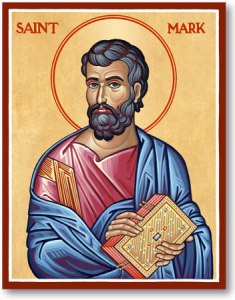
The Feast of St. Mark

St MarkFrom Ched Myers’ Binding The Strong Man: A Political Reading of Mark’s Story of Jesus (1988):

Mark’s Gospel originally was written to help imperial subjects learn the hard truth about their world and themselves…His is a story by, about, and for those committed to God’s work of justice, compassion, and liberation in the world…to those willing to raise the wrath of the empire, Mark offers a way of discipleship.

Propaganda

GreenwaldFrom Glenn Greenwald:

But whatever else is true, if we are constantly bombarded with images and stories and dramatic narratives highlighting our own side’s victims, while the victims of our side’s violence are rendered invisible, it’s only natural that large numbers of us will conclude that only They, but not We, are committing civilian-killing violence. That’s a really pleasing thing to believe, no matter how false it is. Having media outlets perpetrate self-pleasing and tribal-affirming — but utterly false — narratives is the very definition of propaganda. And that’s what largely drives Western media coverage of these terrorist attacks every time they occur in the West.

Witnesses to the Resurrection: Color on the Rise

chicoryBy Jim Perkinson, Detroit, MI

Resurrection shows up as color: the riot—bombastic or subtle—that is spring.  The oldest, most ancestral “return” from the grave is clearly the gift of plants—for millions of years now refusing to stay embalmed in earth.  Revealing every tomb as womb, disclosing soil—even dusty versions—as a compost deity!  Indeed, for the indigenous the globe over, the trash heap was the most ancient of shrines, the place where seeds and discards of every manner recombined into life. And Life, in every wild and insurgent upwelling shouts color. What hits the ear as percussion and polyrhythm, titillates the iris as shocking brightness. Red as wily ribaldry; green as svelte grammar; blue as primordial echo of grief or iridescent hint of the kiss of sky on water!   Tribal peoples have always known the truth that color is the first language of trance, of seeing beyond the surface of the present. The world over, resurrection-peoples have squeezed their resistance to the colonial into even so subtle an upsurge as chartreuse shoes and pupil-popping scarves.  In Detroit, Tyree Guyton makes paint a tool of spirit-war, pulling an entire neighborhood out of the grave.   Bronze-toned Jesus and purple chicory: signs of the same.  Irrepressible! Continue reading “Witnesses to the Resurrection: Color on the Rise” →

The Soulmaking Room

UR1525_Risher_Soulmaking_CVR-215x324.jpgIf I am honest with myself, I can’t actually remember the last time I read a whole book. The moments when I have total head space are few and far between diaper changes and a chatty toddler. But the moment I held this book in my hands, I knew I would simply have to find the time. So while nursing or walking to sleep, paragraph my paragraph, I have soaked these pages in. Dee Dee is an amazing writer who weaves together scripture and her story calling on each of us to remember our own stories, to hold on to those deep truths that matter, and to sing and dance through it all. This book is a gift. I am grateful to share this interview and encourage you to find yourselves in the pages of The Soulmaking Room.

Lydia Wylie-Kellermann: What is this book about?

Dee Dee Risher: The book is about using the difficult and challenging parts of life as a way to deepen your spiritual path and become more authentic. The only way I knew to do this was to share my own story. My own path is not nearly as difficult as so many people I know, but my insight was that we all have to deal with loss. Our social justice causes fail. Life rolls on and the positions we take on certain issues become more complex and more difficult to hold with integrity as we see many grey areas. Our beloveds die, leave us, or become someone else. Situations come up that are so incredibly unjust they have you asking whether there is a God in this world. The rich stay rich while the vulnerable have a thousand new ways to suffer. Often, we are in neither of those groups, so we watch the debacle, trying to take an ethical stand. Life ain’t easy, especially if you live with eyes open and conscience listening. Continue reading “The Soulmaking Room” →