Shell No! Kayaktivism in Seattle

This April 17, 2015 photo shows a group of kayakers letting out a yell after successfully pulling up a protest sign as they practice for an upcoming demonstration against Arctic oil drilling, in Elliott Bay in Seattle. Seattle Mayor Ed Murray said Monday, May 4, 2015, the Port of Seattle can't host Royal Dutch Shell's offshore Arctic oil-drilling fleet unless it gets a new land-use permit. Shell has been hoping to base its fleet at the port's Terminal 5, near where protesters plan a mass kayak protest later this month. (AP Photo/Elaine Thompson)
This April 17, 2015 photo shows a group of kayakers letting out a yell after successfully pulling up a protest sign as they practice for an upcoming demonstration against Arctic oil drilling, in Elliott Bay in Seattle. Seattle Mayor Ed Murray said Monday, May 4, 2015, the Port of Seattle can’t host Royal Dutch Shell’s offshore Arctic oil-drilling fleet unless it gets a new land-use permit. Shell has been hoping to base its fleet at the port’s Terminal 5, near where protesters plan a mass kayak protest later this month. (AP Photo/Elaine Thompson)
Every day that we can stall them is a good day.
John Sellers, co-founder of The Ruckus Society

This is a cross post from Kate Aronoff at Waging Nonviolence.
————-
Seattle has become a hub of anti-extraction activism. Protests began on May 14, when Royal Dutch Shell — bucking city residents and officials — docked its Polar Pioneer off the Emerald City coast. The towering 400-by-355-foot oil rig is en route to the Arctic, where it is scheduled to begin drilling operations this summer. The largest demonstration yet happened May 16, as hundreds of “kayak-tivists” swarmed Seattle’s Terminal 5, where the Polar Pioneer is docked. Since then, protests against the rig have been ongoing, and show few signs of letting up.
Continue reading “Shell No! Kayaktivism in Seattle” →

When Nonviolence Is Preached

coatesFrom TA-NEHISI COATES:

When nonviolence is preached as an attempt to evade the repercussions of political brutality, it betrays itself. When nonviolence begins halfway through the war with the aggressor calling time out, it exposes itself as a ruse. When nonviolence is preached by the representatives of the state, while the state doles out heaps of violence to its citizens, it reveals itself to be a con. And none of this can mean that rioting or violence is “correct” or “wise,” any more than a forest fire can be “correct” or “wise.” Wisdom isn’t the point tonight. Disrespect is. In this case, disrespect for the hollow law and failed order that so regularly disrespects the community.

Milk, 1933

trumbull-ave.By Michael Lauchlan, printed in Trumbull Ave, WSU Press

When the gas man came for your meter,
your oldest let him in. You jumped
from your chair and handed him the baby—
“Take her, too! How will I feed her
if I can’t warm the milk?” After he fled,
you were ashamed. You were nursing,
of course, and had never lied to a soul.
Five decades later you could still see him,
nearly as hungry as you, his wrench
in one hand and, from the other,
your quiet Ellie gaping up.

Canada Guilty of Cultural Genocide Against Indigenous Peoples

4By: Chris Sabas. Chris  identifies as a Follower of The Way, Anglican, but also Catholic Worker, mystic, former attorney (owned own law firm in U.S., with almost 10 years of living in a courtroom before the Gospel awakening). Now a reservist with Christian Peacemaker Teams (“CPT”) and an At-Large Member of CPT’s Steering Committee.

Today is truly a historic…but somber day in and for Canada.

The Truth and Reconciliation Commission (“TRC”) released its long anticipated report today, finding Canada guilty of cultural genocide against Indigenous Peoples by way of the state sponsored, and church run Indian Residential Schools. Continue reading “Canada Guilty of Cultural Genocide Against Indigenous Peoples” →

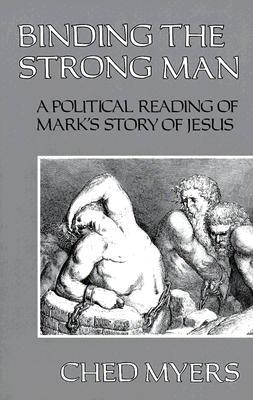
“BINDING THE STRONG MAN”: Jesus’ Master Metaphor

BindingBy Ched Myers, for the 2nd Sunday of Pentecost (Mk 3:20-35)

Note: This is an ongoing series of Ched’s brief comments on the Markan gospel readings from the Revised Common Lectionary during year B, 2015.

The first major narrative cycle in Mark’s gospel (1:16-3:6) ends with Jesus’ rejection by the authorities in a Capernaum synagogue. The following episodes serve to regenerate the story by a withdrawal and summary scene (3:7-12) and then by a reconsolidation moment (3:13-19a). The latter mountaintop scene boldly re-contextualizes two of the most revered traditions of Israel: God’s covenant with Moses on Sinai, and Moses’ founding of the free tribal confederacy in the wilderness. Jesus, who has taken the torch from the prophets, prepares to pass it on to twelve disciples he has called, named, and commissioned to proclaim, heal and exorcize (3:14f). Shortly they will be sent out to practice this charge – a second regenerative episode that follows upon another synagogue rejection (6:1-13). Continue reading ““BINDING THE STRONG MAN”: Jesus’ Master Metaphor” →

A Post-Evangelical Pilgrimage, Part II

MLKBy Tommy Airey

*This is the second post in a three-part series exploring more compelling ways to follow Jesus.

On the one hand we are called to play the good Samaritan on life’s roadside; but that will be only an initial act. One day we must come to see that the whole Jericho road must be transformed so that men and women will not be constantly beaten and robbed as they make their journey on life’s highway.
Martin Luther King, April 4, 1967

In a conversation we were having on a prairie highway about 30 kilometers north of Saskatoon, Ched Myers, predictably, got pedagogical. “When we become jaded or wounded, one of three things happens,” he exhorted.

1. We blame others and stay in denial, inflicting our pathologies on to others.
2. We bail out or burn out, escaping into a myriad of copings.
3. We traverse the road-less-traveled: we do the hard work of personal inventory.

Over the course of the past decade, as my Evangelical categories crumbled in the face of experience, theological reading, deep dialogue, prayer and social analysis, I’ve struggled through all three of these phases.
Continue reading “A Post-Evangelical Pilgrimage, Part II” →

Learning from Laughter: Beside the Beaver’s Dam

DSC00655“I love nature. Nature is cool. The forest is my classroom. The earth is my school. Trees are my teachers. Animals are my friends. And on this school all life depends.” Joe Reilly, I Love Nature

Isaac tiptoes through the forest, climbing over fallen branches and stopping to smell each flower. We follow behind delighting in the comfort he finds in the place. Down the hill and around the bend of the stream, we walk the deer’s path honoring their daily wisdom and knowledge of this wood. Continue reading “Learning from Laughter: Beside the Beaver’s Dam” →

The Great Stories

ArundhatiFrom Arundhati Roy in The God of Small Things (2008):

…the secret of the Great Stories is that they have no secrets. The Great Stories are the ones you have heard and want to hear again. The ones you can enter anywhere and inhabit comfortably. They don’t deceive you with thrills and trick endings. They don’t surprise you with the unforeseen. They are as familiar as the house you live in. Or the smell of your lover’s skin. You know how they end, yet you listen as though you don’t. In the way that although you know that one day you will die, you live as though you won’t. In the Great Stories you know who lives, who dies, who finds love, who doesn’t. And yet you want to know again.

That is their mystery and their magic.

Aslan is on the move

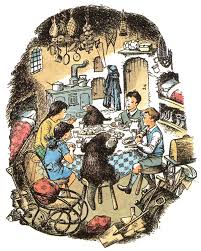
lion witch wardrobe“They say Aslan is on the move perhaps has already landed.”

And now a very curious thing happened. None of the children knew who Aslan was any more than you do; but the moment the Beaver had spoken these words everyone felt quite different. Perhaps it has sometimes happened to you in a dream that someone says something which you don’t understand but in the dream it feels as if it had some enormous meaning—either a terrifying one which turns the whole dream into a nightmare or else a lovely meaning too lovely to put into words, which makes the dream so beautiful that you remember it all your life and are always wishing you could get into that dream again. It was like now. At the name of Aslan each one of the children felt something jump in its inside. Edmund felt a sensation of mysterious horror. Peter felt suddenly brave and adventurous. Susan felt as if some delicious smell or some delightful strain of music had just floated by her. And Lucy got the feeling you have when you wake up in the morning and realize that it is the beginning of the holidays or beginning of summer. – C.S. Lewis, The Lion, the Witch, and the Wardrobe.