That’s All You Can Do, Brother

Last week on CNN.

DON LEMON: I’m not excusing what they did at all, but aren’t these people and even the Ahmaud Arbery, the hate crimes trial, aren’t these people in many ways, in a big way caught up or coopted in a system even now that is refusing to even teach people about race, to talk about race, to call people who try to bring light to it race-baiting? Do you understand what I’m saying? Who don’t want to confront the issue even to bring it to a positive place? Aren’t they caught up by that, they’re victims of that system?

CORNEL WEST: Yeah, in some sense we’re all wrestling with it. But keep in mind the attempt to do away with critical race theory means what? 1619 Project number one “The New York Times” bestseller week after week after week after week. So we can use the various kinds of ways to be narrow to continually broaden, deepen, universalize our vision and our efforts. It’s just we should never, ever get so discouraged that we think all we do is just react to all these vicious acts. No. We are taking off with vision, with power, with courage, with compassion regardless. Now, if we end up — if it ends up that America’s just over and it dissolves and it’s disintegrated because of hatred and the greed completely took over, we can say we went down swinging. We held on with integrity. That’s all you can do, brother.

Grief Doesn’t Fade

An excerpt from Jesmyn Ward’s memoir Men We Reaped.

I found the adage about time healing all wounds to be false: grief doesn’t fade. Grief scabs over like scars and pulls into new, painful configurations as it knits. It hurts in new ways. We are never free from grief. We are never free from the feeling that we have failed. We are never free from self-loathing. We are never free from the feeling that something is wrong with us, not with the world that made this mess.

Food and Land in the Shmita Year: A Release from Old Paradigms 

Sarah Barker CC, Herb spiral, May 2011.

by Carly Sugar | Published in Geez Winter 2022 Issue

It’s fall in the Shmita year of 5782 according to the Jewish calendar and I am putting up squash. And tomatoes. Peppers.

The last of the stone fruits and first of the pomes. There’re flushes of maitake in the forest and deer hunting season has just begun. As I fill my shelves and freezer with this season’s abundance, I am reminded of this ancient, radical, and deeply needed practice of my tradition – shmita.

Under profit-driven systems we are inundated with messages that more is more, that the oppression of people and land is necessary for food and other resource security, and that we must value the well-being of the individual over the communal. In the modern U.S. food system, we see a seemingly boundless accumulation of privatized (stolen) land and wealth in the name of producing enough food to feed us all. But because profit is priority millions are food insecure, people and the land are exploited, and a few are making billions.

Continue reading “Food and Land in the Shmita Year: A Release from Old Paradigms “

the brow of nazareth

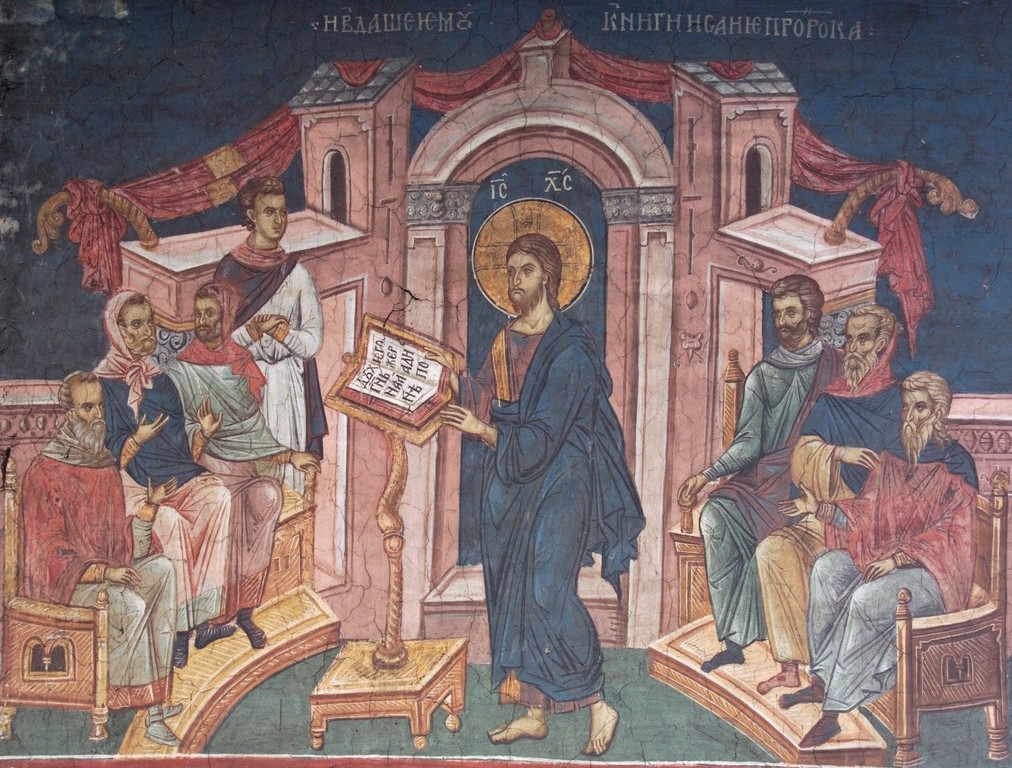
by jim perkinson, ps 71: 1-6, lk 4:21-30, performed at st. peter’s episcopal church (detroit, mi), 1-30-22

“they lead him to the brow of the hill
that they might throw him off”
says the lectionary text for the
4th week-take on epiphanies and magi
and comet-streaked skies of the season
but they failed to catch the snatch—
the orator at nazareth was a rock-kvetched
match for their outraged snit, hatched
like a birthed-again chic from rugged
outcrop, spirit-born and dove-mourned
just back from a 40-day stretch

Continue reading “the brow of nazareth”

A Brief Consideration of Language

By Dwight L. Wilson, originally posted to Facebook on January 27, 2022

When my ancestors were kidnapped from Africa, the overlords employed white supremacy philosophy to both claim they themselves believed in freedom of religion and strip the victims of their ties to ancestral religion. In the enslavers’ minds, surely the Holy One was named Jehovah, not Nyame. Any black saying otherwise was dismissed as uncivilized if not inhuman. Refusing to stop inflicting trauma, we were forced to change African personal names, and forbidden African languages so that the powerful could feel more comfortable. In partial response, I gave my sons African names 1) Kai Ashante (thank you for the surprise), 2) Rai Imani (strong faith), 3) Tai Amri (an eagle is leading) and 4) Mai Hakili (a leader who is both spiritually and intellectually strong).

Continue reading “A Brief Consideration of Language”

The Precursor to Really Deep Transformation

From an LA Times interview with author and professor Imani Perry on her new book South to America.

Wow. [laughs] I mean, there are many wonderful things about L.A., but having had family that moved from Alabama to L.A., that would be a huge mischaracterization. Everyone has gone back South. The promise of L.A. proved not to actually be as promising. I’ll say, having left Alabama young and spent most of my time coming of age in Massachusetts, one of the things that’s interesting for me is I experienced many more acts of racial aggression in Boston than in Alabama. Slurs, physical aggression of a sort I’d never experienced.

Continue reading “The Precursor to Really Deep Transformation”

A Divine Summons

By Ched Myers, a sermon to St. Michael’s Episcopal Church, Goleta Slough Watershed/Chumash Territory, CA, 5th Sunday in Epiphany, Feb 6, 2022

Luke 5:1-11 powerfully stitches together two gospel traditions: the miraculous catch of fish also found at the end of John (21:1-14), and the call of the fishermen which also occurs at the beginning of Mark (1:16-20). Let’s look at both themes, each so important to the vocation of followers of Christ.

Jesus’ encounter with working fishermen on the shores of Lake Galilee is typically romanticized in our churches: Oh, how quaint, fishermen! But this is a trivialization. No, this scene communicates defiance and delight, resistance and renewal—the same energy that fueled the painting of that new mural of the Goleta Slough here at the church, just completed by our friends Dimitri Kadiev, Rufo Noriega and Joshua Grace (right), which we are celebrating today.

Continue reading “A Divine Summons”

Thich Nhat Hanh and Radical Discipleship

By Ric Hudgens

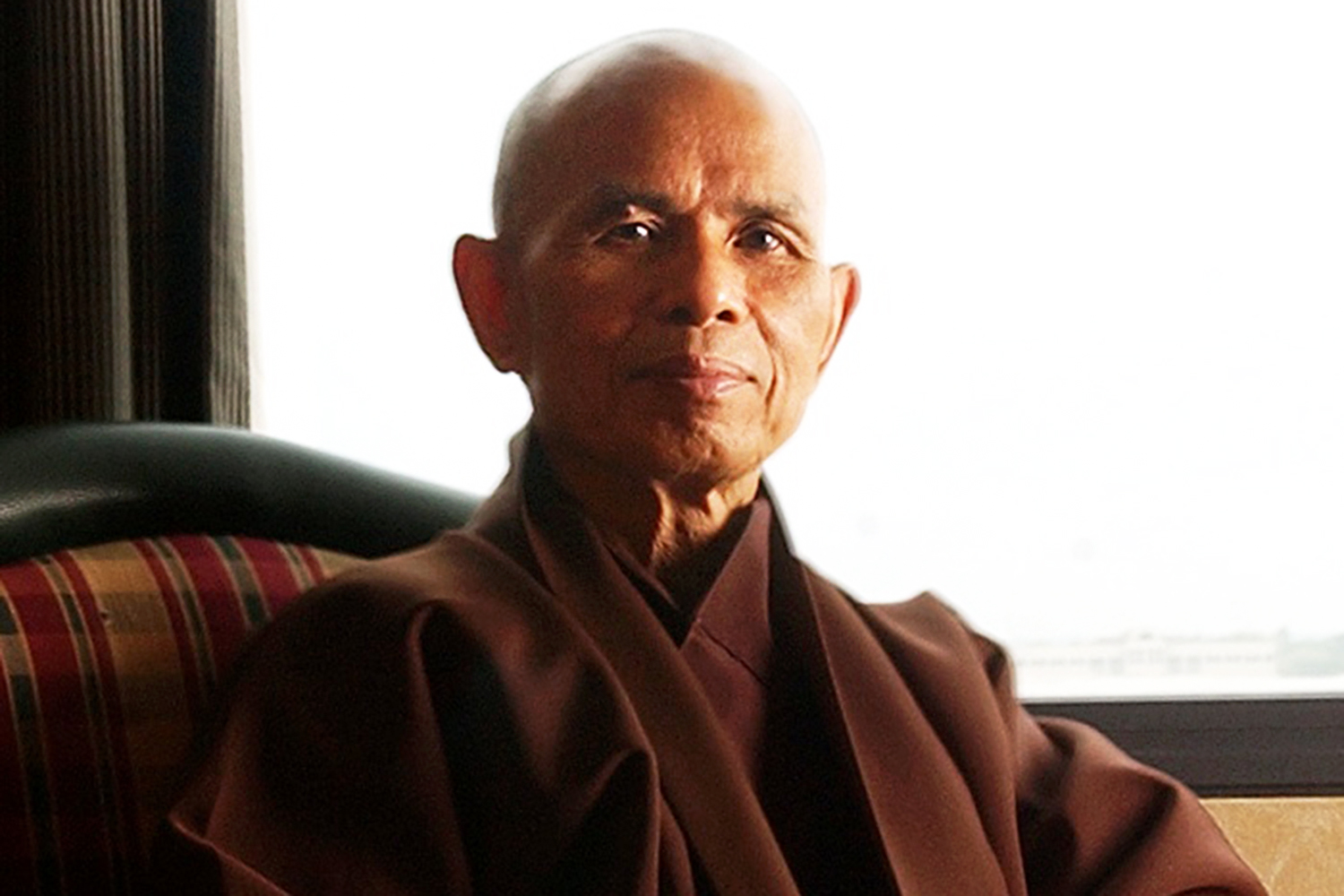
In the past six weeks, our community has lost bell hooks (December 15) and Jim Forest (Jan 13). Then earlier this week, on January 22, the great teacher of engaged Buddhism, Thich Nhat Hanh, passed. All three were linked. bell hooks wrote a foreword to The Raft Is Not the Shore, which are the transcribed dialogues between Thich Nhat Hanh and Daniel Berrigan. The final book that Jim Forest published was entitled Eyes of Compassion: Living with Thich Nhat Hanh.

Thich Nhat Hanh also had a connection with Dr. Martin Luther King and Thomas Merton. This places him as a surprisingly central figure in the history of our community. Because I already was finding these intersections fascinating, I was and was not surprised to discover an encounter between Thich Nhat Hanh and the writings of Dietrich Bonhoeffer.

Continue reading “Thich Nhat Hanh and Radical Discipleship”

Blessing for a Rest

“Two resters nap together during The Nap Ministry’s installation ‘A Resting Place,’” Tabia Lisenbee-Parker, September 2019, Atlanta, Georgia.

by Kate Suffling | Published in Geez Winter 2022 Issue

May you take full and gulping the
deepest breath you’ve ever drawn

And hold it in your belly, full,
a stretch that slows the heart and mind,
Slackens fibres now recalling
How to loosen, how to lessen,
how there’s nourishment in surrender.
Begin the softening, slump and slumber,
slow the spinning, the wanting, the needs
Except for this one, the one called rest.
She has stood outside at the door,
Not banished, but told to wait
With “Until I . . . ”, and “until it . . . ”,
until she turned to slumber.
May you wake her now, draw her in,
lead her by the hand.
She’s surprised and exultant,
but moving sweet and slow.

Continue reading “Blessing for a Rest”

Abel Still Speaks

By Tommy Airey, a seven-minute sermon (if you are speed-reading)

*Dedicated to Dr. James Perkinson who paradigm-shifted my reading of the Abel story. For more, check out Perkinson’s Messianism Against Christology: Resistance Movements, Folk Art, and Empire (2013)

Now Abel was a keeper of sheep, and Cain a tiller of the ground.—Genesis 4:2b

Cain said to his brother Abel, ‘Let us go out to the field. And when they were in the field, Cain rose up against his brother Abel and killed him. Then the Lord said to Cain, ‘Where is your brother Abel?’ He said, ‘I do not know; am I my brother’s keeper?’ And the Lord said, ‘What have you done? Listen; your brother’s blood is crying out to me from the ground!—Genesis 4:8-10

As he went ashore, he saw a great crowd; and he had compassion for them, because they were like sheep without a shepherd; and he began to teach them many things.—Mark 6:34

“I’m more than ever of the opinion that a decent human existence is possible today only on the fringes of society, where one then runs the risk of starving or being stoned to death. In these circumstances, a sense of humor is a great help.”—Hannah Arendt

——————————————

In the ancient world, shepherds tended their flocks on the edge of civilization, on the borderlands, straddling two cultures with the side-eyed and sidelined. Shepherds resisted mass migration to cities, built with resources extracted from somewhere else. What we called “civilization” was sculpted by strong men exploiting the masses. Shepherds were not part of this program. They stayed nomadic, foraging for food, going wherever the grass was growing. Shepherds were dirty people. Outcasts. Their testimony was not trusted in court.

Continue reading “Abel Still Speaks”