We Still Have a Race to Run

RubyFrom the front porch of Mother Ruby Sales. This is the sequel to yesterday’s clarion call to young people. This was originally posted to social media on February 2, 2020.

As remnants and elders we still
have a race to run and a role to play.
Heed the call.

Earlier this week I wrote a post to my younger friends reminding them of their responsibility as new generations of leaders. I reminded them that it is now up to them to use the fluency of their bodies and minds to push us beyond where previous generations took us. Now they are the ones under the light of historical scrutiny. I hope that they realize that the glare can both blind and clarify at the same time. Continue reading “We Still Have a Race to Run”

The Ball is in Your Court

RubyA two-part post from the front porch of Mother Ruby Sales. This is part I, originally posted to social media on January 31, 2020.

My young friends you have often stated that my generation should pass the baton of leadership. Well the ball is in your court as the Republicans take this nation down further into an abyss that chokes democracy to death.

I am listening to the roll call in the Senate, and it is clear that Republicans believe that Trump is above the law & they think that they are above your rebuke. Continue reading “The Ball is in Your Court”

Even Deeper Than What We Can See Right Now

MLP
PC: Valerie Jean (Detroit, MI)

From Monica Lewis-Patrick (right), executive director of We The People of Detroit, leaders in the struggle for clean and affordable water in Detroit and beyond. 

We didn’t call ourselves into this fight. We tell folks that we didn’t choose water. Water chose us. In the divinity of water, water was before everything else was. We see ourselves as called into this great layer of warrior women that are fighting for water all around the globe, from Cochabamba to the Arab Spring, from Ireland to the Navajo Nation, from all over these Great Lakes where we have what I call “bad revolutionary sisters” who have decided that not only will they drink, but that their children’s children’s children will drink. Our vision is even deeper than what we can see right now. It’s a transformative way of thinking.

Sermon: Saying Yes

Wrau-sea-of-galilee
Fishing in the Sea of Galilee. Image from the Library of Congress.

By Kateri Boucher, Homily at Day House Catholic Worker 1/26

Matthew 4: 18-22

As he walked by the Sea of Galilee, he saw two brothers, Simon, who is called Peter, and Andrew his brother, casting a net into the sea for they were fishermen. And he said to them, “Follow me, and I will make you fish for people.” Immediately they left their nets and followed him.

As he went from there, he saw two other brothers, James son of Zebedee and his brother John, in the boat with their father Zebedee, mending their nets, and he called them. Immediately they left the boat and their father, and followed him.

When taken at face value, this reading doesn’t seem to have much bearing on my life. I haven’t gone fishing in years. I’ve never been approached by a random man asking me to follow him and “catch other people.” And I’ve certainly never made a split-second decision to leave my daily life and family behind.

Continue reading “Sermon: Saying Yes”

Registrations for BKI2020 Close at Midnight (PST) on 29 Jan, 2020

BillabongBartimaeus Kinsler Institute 2020: Unsettling Histories | Decolonizing Discipleship | hukišunuškuy
Click HERE to register and for more info!

This year the BKI will follow up on the Bartimaeus Kinsler Institute 2019, when we listened to and learned from a range of Indigenous voices concerning land, law and language (note: you do not need to have participated to join us in 2020).  The 2020 BKI, as Rev. Art Cribbs puts it, “aims to help us toward 20/20 vision,” by:

Unsettling Histories: Cohorts will focus on the personal and political work required of settlers and immigrants, in order that we might more deeply:

  • understand how our narratives, communities and landscapes in North America are haunted by violence and injustice, past and present; and
  • heal the myriad layers of our colonization, and colonizing behaviors, inward and outward.

Continue reading “Registrations for BKI2020 Close at Midnight (PST) on 29 Jan, 2020”

If They Are Not Taking Notice

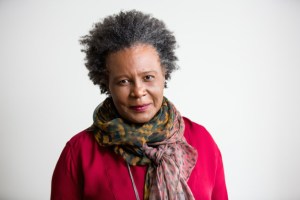
RankineFrom poet, playwright and Yale professor Claudia Rankine, the author of Citizen: An American Lyric, in an interview with The Guardian in December 2015:

Racism is complicated. White people feel personally responsible for racism when they should understand the problem as systemic. It is interfering as much with their lives as with the lives of people of colour. And racism can lodge in them. It isn’t them yet it can become them if they are not taking notice.

Much More Complex

GafneyFrom Dr. Wil Gafney, the author of Womanist Midrash (2017), in her podcast interview with Peter Enns and Jared Byas:

If you take seriously that women have heard throughout the centuries that what is masculine in some context is more closely identified with God, that what is feminine is other, and we even go back into church fathers like Tertullian for whom women were the devil’s gateway. I mean, there’s a whole lot of theological work that’s heavily invested in God being male and exclusively male. In fact, there’s a text that says men are the image of God and women are the image of man or something. That sets up a whole world of church and theology that marginalizes women. Yet for people who come out of the community that I did–the black church–for whom it really matters, what does the Bible say? It matters that the biblical text says repeatedly that God’s gender identity is complex. Binary language is used because the Hebrew Bible has two options. Masculine and feminine. But God is presented in a much more complex way. And that matters when we’re talking about people and hierarchy, particularly when those earthly hierarchies are entrenched in gender which is then claimed to be based on God and the Bible.

What the Waters Know: Re-Reading John 1:29-42

IMG_9794
Photo by Erinn Fahey

By James W. Perkinson

He lifted me out of the desolate pit, out of the mire and clay; he set my feet upon a high cliff and made my footing sure (Ps 40:2).

I myself did not know him; but I came baptizing with water for this reason, that he might be revealed to Israel. (Jh 1:31)

The next day John again was standing with two of his disciples, and as he watched Jesus walk by, he exclaimed, “Look, here is the Lamb of God!” (Jh 1:36).

So we sit today in bit of snow here in Motown, while our news feeds show weekly pile-ups of cold precipitation elsewhere across the land—and pile-ups, as well, of twisted metal in our stupid infatuation with cars and speed—as the Great Stream of Jetting Air bends south and brutal, from the Arctic Circle to Arizona, in announcement that Change, with a capital “C’ is not future, but here.  And we wonder about the upheaval of an entire planet.  Australia become a living kiln, cooking up a billion-fold of living flesh, involuntary offerings to our wanton refusal to heed!  In Puerto Rico they sleep outside, as the fracked Earth, heaving from a thousand cuts, here, there, in Oklahoma now grinding Her teeth in warning hundreds of times per year where She used to rest soft and fecund and quiet, but in our little cousin island to the south, slipping and sliding the soil into great fear and one more sheer nightmare.  Last time—it was the sea and sky as Maria roared through.  Now it is rock and sand, all serving notice they do not plan on being raped and plundered, forever.  But it is the poor who are first forced to hear and bear the pain.  The rest of us sleep-walk in daylight and pull the covers of night over our oblivious heads.  But our time is coming as well, I am afraid.  And we are far more culpable. Continue reading “What the Waters Know: Re-Reading John 1:29-42”

Third Way Farm’s Internship Program

Third Way FarmA Meaningful Way of Life:
Being an intern at Third Way Farm is a well-rounded, full-bodied experience. Not only does this program deeply immerse a person into the daily rhythms of life on a diversified farm and in the care of its ecosystem, but it also invites participants into a community whose life carries purpose and meaning beyond the confines of the farm itself. Participating in this age-old and ever-critical human work of growing food and caring for the land will open you to pathways of life and wholeness within yourself and the world around you, enriching you in ways that will serve you on whatever journey that lies ahead. Changing the world, amidst the ever complexifying crises of climate change, economic injustice, food justice, and more, begins with remembering and living into who we truly are as humans: members and caretakers of this rich web of abundant, God-given life in Creation. If we learn together how to lovingly nurture the life all around us, growing wholesome food from the soil under our feet and with the animals that enrich it and us, we will not only bless ourselves, our families, and our local community with live-giving food, but will be contributing to the preservation of this world for generations to come. So, we invite you to come, learn, grow, and be transformed with us as an intern at Third Way Farm!

Whether you are considering sustainable agriculture as a vocation or way of life, or are interested in organic farming and just want to have an experience living it for a season, this internship program is for you! Continue reading “Third Way Farm’s Internship Program”

Hospitality as the Ground for Good

Hospitality-as-the-Ground-for-the-Good_800_800_90
Dough rising – it’s a braided bread night Credit: Mark Bonica (link below)

By Jayme R. Reaves. From Geez 56: Entertaining Angels.

When someone says “hospitality,” what comes to mind?

Offering a cup of coffee or tea, a hot meal, a bed for the night – these are the usual answers. When we dig deeper, there’s usually an emphasis on welcome, creating a space where people feel at home, a warmth, a commitment to the other’s wellbeing.

In English, the Latin roots for the word hospitality connote two different ideas. First, the root hostis implies both guest and host, indicating a fluidity of motion between the two, a reciprocity or exchange that is expected: “I do this for you because you did this for me.” In the ancient worlds that shaped our religious traditions, the common practice was to treat guests with respect for two main reasons. Either it was an act of diplomacy as you may be a traveler in their land one day, or because there was an understanding that a guest could have been a powerful being – a god – in disguise, testing the righteous. Therefore, welcoming a guest became a sacred ritual because you just never really know who this guest sitting at your table really is or what they may be able to do for you later. Continue reading “Hospitality as the Ground for Good”