
Frodo: It’s a pity Bilbo didn’t kill him when he had the chance.
Gandalf: Pity? It was pity that stayed Bilbo’s hand. Many that live deserve death. Some that die deserve life. Can you give it to them, Frodo? Do not be too eager to deal out death in judgment. Even the very wise cannot see all ends. My heart tells me that Gollum has some part to play yet, for good or ill before this is over. The pity of Bilbo may rule the fate of many.
Frodo: I wish the Ring had never come to me. I wish none of this had happened.
Gandalf: So do all who live to see such times, but that is not for them to decide. All we have to decide is what to do with the time that is given to us. There are other forces at work in this world, Frodo, besides the will of evil. Bilbo was meant to find the ring, in which case you also were meant to have it. And that is an encouraging thought.
- The Fellowship of the Ring
 By Lindsay Airey, LMFT (right: with her nephew Mason)

 An unveiling from the legendary
 Siddhartha listened. He was now listening intently, completely absorbed, quite empty, taking in everything. He felt that he had now completely learned the art of listening. He had often heard all this before, all these numerous voices in the river, but today they sounded different. He could no longer distinguish the different voices- the merry voice from the weeping voice, the childish voice from the manly voice. They all belonged to each other: the lament of those who yearn, the laughter of the wise, the cry of indignation and the groan of the dying. They were all interwoven and interlocked, entwined in a thousand ways. And all the voices, all the goals, all the yearnings, all the sorrows, all the pleasures, all the good and evil, all of them together was the world. All of them together was the stream of events, the music of life. When Siddhartha listened attentively to this river, to this song of a thousand voices; when he did not listen to the sorrow or laughter, when he did bind his soul to any one particular voice and absorb it in his Self, but heard them all, the whole, the unity; then the great song of a thousand voices consisted of one word: Om- perfection.
 By Kathy Moorhead Thiessen, Christian Peacemaker Teams (CPT) Delegate
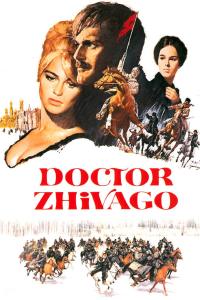 Now what is history? It is the centuries of systematic explorations of the riddle of death, with a view to overcoming death. That’s why people discover mathematical infinity and electromagnetic waves, that’s why they write symphonies. Now, you can’t advance in this direction without a certain faith. You can’t make such discoveries without spiritual equipment. And the basic elements of this equipment are in the Gospels. What are they? To begin with, love of one’s neighbor, which is the supreme form of vital energy. Once it fills the heart of man it has to overflow and spend itself. And then the two basic ideals of modern man—without them he is unthinkable—the idea of free personality and the idea of life as sacrifice.
 Another gem from Hafiz, the 14th century Sufi poet:
 The small hopes and plans and pleasures of children should be tenderly respected by grown-up people, and never rudely thwarted or ridiculed.


