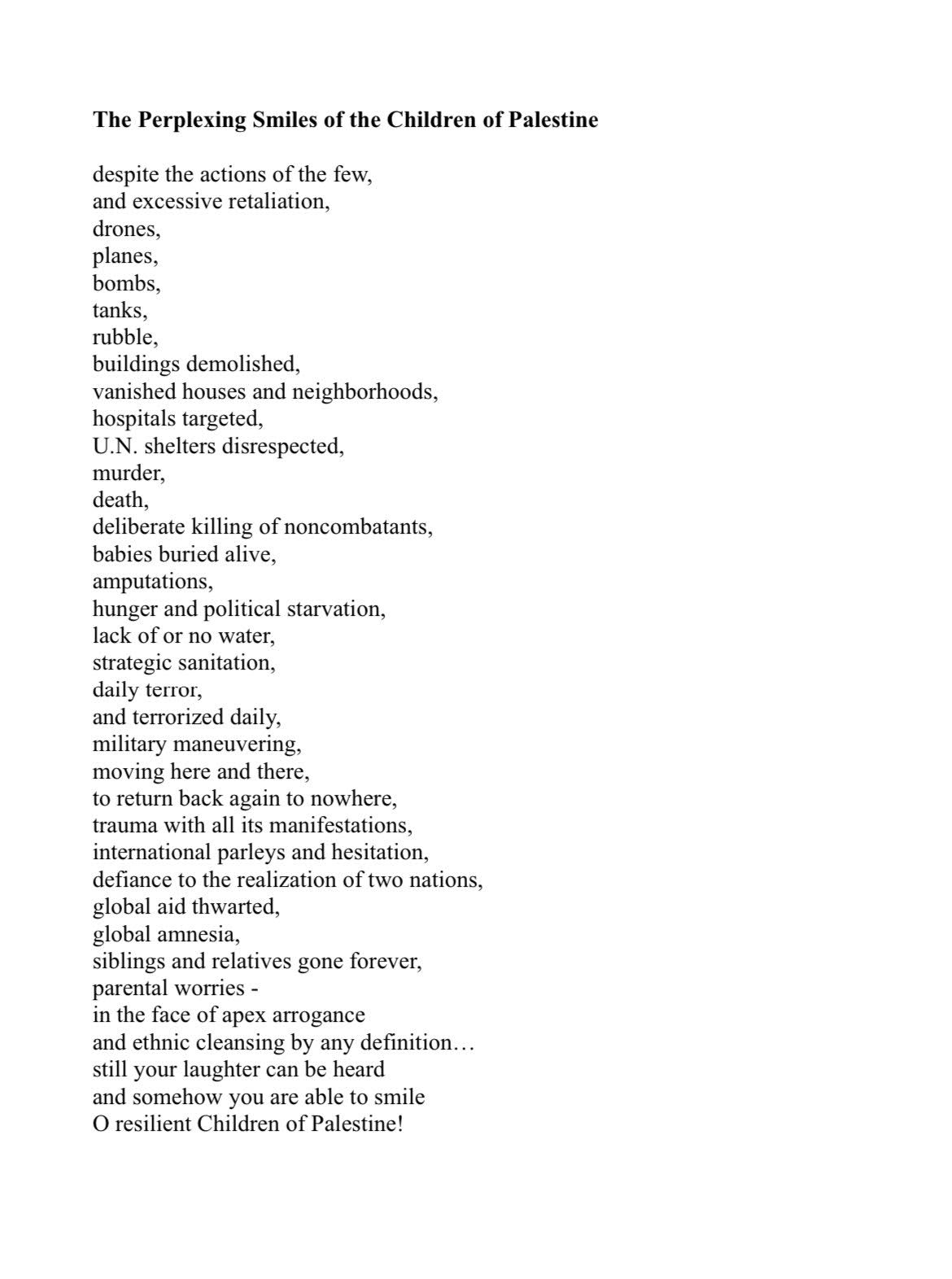
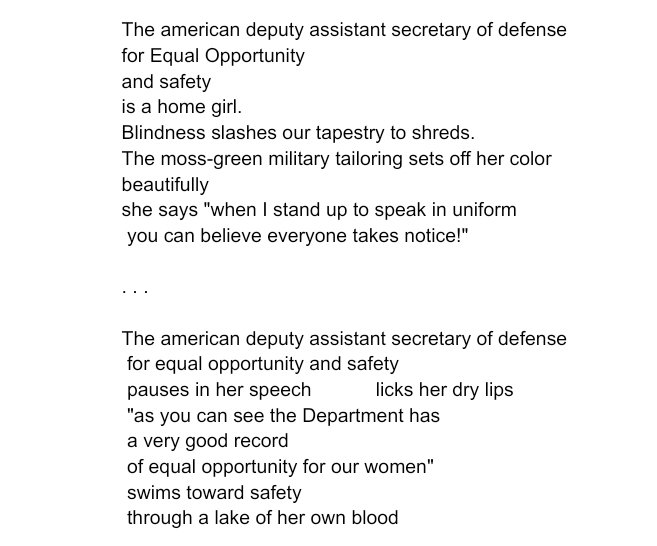
In May 2024, students of conscience at UC Irvine organized a non-violent direct action to demand that their university divest from companies profiting off the genocide in Gaza. Fifty protestors were arrested. Tiffany Willoughby-Herard, a tenured professor of global and international studies, was escorted away by riot police, her hands zip-tied behind her back. In a recent interview, she said: “You cannot war-machine your way out of massive social problems that actually require study and reflection.” This is a poem that Professor Willoughby-Herard posted in 2020.
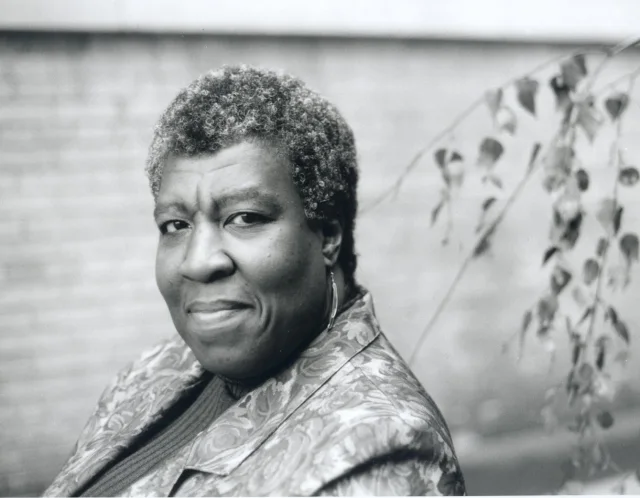
Here’s some more Octavia Butler to meditate on. This one comes to us from author Monica Byrne, who wrote that every time she criticizes the Democratic Party, and someone asks “So what’s the answer?”, she posts this.
By Maria Popova, re-posted from themarginalian.com
In 1845, as the forgotten visionary Margaret Fuller was laying the foundation of modern feminism, advocating for black voting rights, and insisting that “while any one is base, none can be entirely free and noble,” she contemplated what makes a great leader and called for “no thin Idealist, no coarse Realist,” for a person “of universal sympathies, but self-possessed,” one for whom “this world is no mere spectacle or fleeting shadow, but a great, solemn game, to be played with good heed, for its stakes are of eternal value.”
But how does a nation, a society, a world concerned with more than the shadowy spectacles of the present identify and elect such leaders to shape the long future?
A century and a half after Fuller, Octavia Butler (June 22, 1947–February 24, 2006) — another rare visionary — offered a glimmer of guidance in her sibylline two-part series set in the 2020s: Parable of the Sower (public library) and Parable of the Talents (public library) — a set of cautionary allegories, cautionary and future-protective in their keen prescription for course-correctives, about the struggle of a twenty-first-century society, Earthseed, to survive the ecological collapse, political corruption, corporate greed, and socioeconomic inequality it has inherited from the previous generations and their heedless choices.
Like Ursula K. Le Guin, Butler straddled the timeless and the prophetic, saturating her fiction with astute philosophical and psychological insight into human nature and the superorganism of society. Also like Le Guin, Butler soared into poetry to frame and punctuate her prose. Each chapter begins with an original verse abstracting its thematic direction. She opens the eleventh chapter of the second Earthseed book with this verse:
Choose your leaders with wisdom and forethought. To be led by a coward is to be controlled by all that the coward fears. To be led by a fool is to be led by the opportunists who control the fool. To be led by a thief is to offer up your most precious treasures to be stolen. To be led by a liar is to ask to be told lies. To be led by a tyrant is to sell yourself and those you love into slavery.
And yet our discernment in choosing wisely, Butler intimates in a chilling short verse from the first book, can so often be muddled by our panic, by our paralyzing fright and pugilist flight:
Drowning people Sometimes die Fighting their rescuers.
From Palestinian-American poet Hala Alyan. It is called “Naturalized.”
Can I pull the land from me like a cork? I leak all over brunch. My father never learned to swim. I’ve already said too much. Look, the marigolds are coming in. Look, the cuties are watching Vice again. Gloss and soundbites. They like to understand. They like to play devil’s advocate. My father plays soccer. It’s so hot in Gaza. No place for a child’s braid. Under that hospital elevator. When this is over. When this is over there is no over but quiet. Coworkers will congratulate me on the ceasefire and I will stretch my teeth into a country. As though I don’t take Al Jazeera to the bath. As though I don’t pray in broken Arabic. It’s okay. They like me. They like me in a museum. They like me when I spit my father from my mouth. There’s a whistle. There’s a missile fist-bumping the earth. I draw a Pantene map on the shower curtain. I break a Klonopin with my teeth and swim. The newspaper says truce and C-Mart is selling pomegranate seeds again. Dumb metaphor. I’ve ruined the dinner party. I was given a life. Is it frivolous? Sundays are tarot days. Tuesdays are for tacos. There’s a leak in the bathroom and I get it fixed in thirty minutes flat. All that spare water. All those numbers on the side of the screen. Here’s your math. Here’s your hot take. That number isn’t a number. That number is a first word, a nickname, a birthday song in June. I shouldn’t have to tell you that. Here’s your testimony, here’s your beach vacation. Imagine: I stop running when I’m tired. Imagine: There’s still the month of June. Tell me, what op-ed will grant the dead their dying? What editor? What red-line? What pocket? What earth. What shake. What silence.
This Sunday, radical disciples are organizing vigils all over the world to stand in solidarity with Palestinians who are resisting illegal settlements in the West Bank. Check out the Al-Makhrour IG page for locations, or to lead up a vigil in your watershed. Cole Arthur Riley wrote this prayer for the occasion.
Earlier this week, the state of Missouri executed Marcellus Williams, even though new evidence exposed his innocence. Earlier this year, Williams penned this poem for the people of Palestine. In this movement for life, love and liberation, everything is connected.
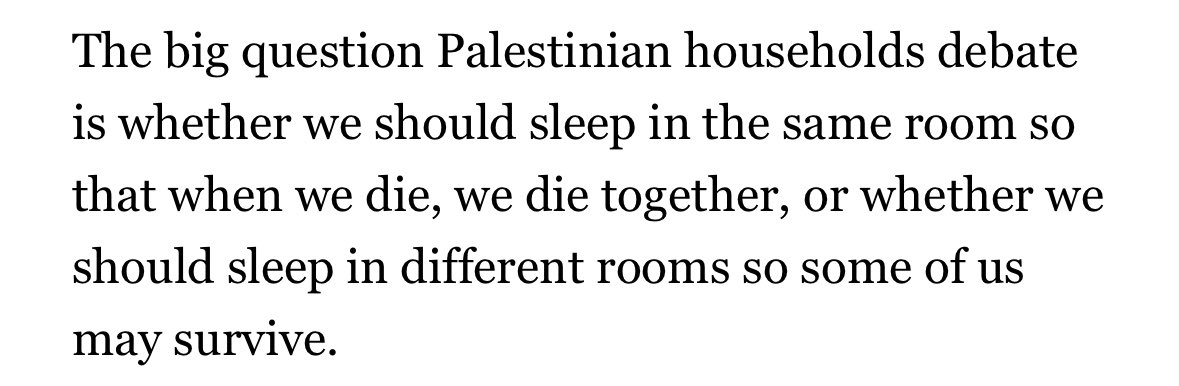
An excerpt from the recently published journal entries of Refaat Alareer, a Palestinian professor and author who was murdered by an IDF bomb in December 2023. His unpublished genocide diaries are now available at The Electronic Intifada here.