 By Bill Wylie-Kellermann
June 2, 2019
the day’s measure is more fleshy far,
more soulful even
than circles, however sweet, around our brother sun,
warming the planet this day
toward the end of an aeon. Continue reading “Seventieth with Friends”

By Bill Wylie-Kellermann
June 2, 2019
the day’s measure is more fleshy far,
more soulful even
than circles, however sweet, around our brother sun,
warming the planet this day
toward the end of an aeon. Continue reading “Seventieth with Friends”
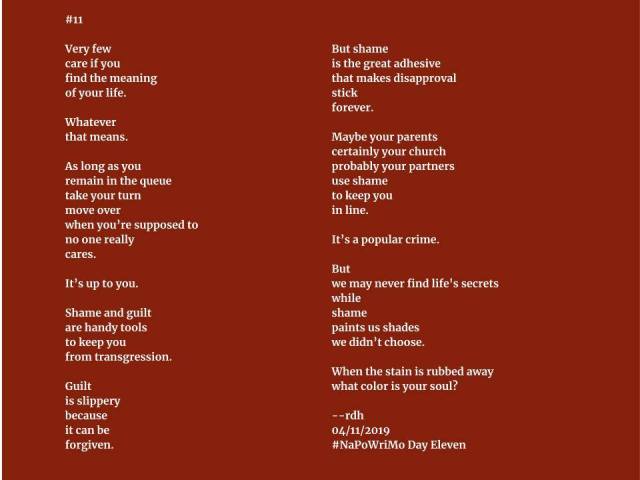
From Ric Hudgen’s recent social media collection “30 Poems in 30 Days.”
 A few summers ago in Detroit, a circle of high school students from a local church gathered with community organizer Monica Lewis-Patrick, executive director of the grassroots We The People of Detroit. The conversation flowed into what it looks like for faith to infuse political action when the odds are stacked against justice, freedom and equity. This is an excerpt.
All we have to do is start connecting the dots and telling the truth. When I started working in social justice, I was working in education, with children that were mentally impaired and extremely violent. What I found out really quickly was that the people at the table didn’t give a damn about the children. It was about the dollars. Because I cared about the children, I had to educate myself in terms of how I influence the policy—or the people who drive the policies—to help my people get the change they need. To help the children I served. That meant going to meetings where sometimes I would be the only one there speaking on behalf of the population that I thought was most vulnerable and most in need. Was I scared? Yes I was. Did I always get the language right? No I didn’t. Did I always have the data on hand that they had? No I didn’t. But it was out of my heart that I spoke. And then from there what would happen is that somebody would give me a card or somebody would say, “You know, I didn’t know that part” or “Can we talk?” And then I had to dig up from my spiritual history or family history and muster up enough energy to go meet with somebody that has a title—that seems to have power—and say to that person “We don’t like this.”
 By Ben Wideman, community pastor of the 3rd Way Collective in State College, Pennsylvania
*This piece was originally posted on the 3rd Way Collective blog on May 6, 2019.
Dear Rachel Held Evans,
I’m writing with a long-overdue note of appreciation. Last week’s news of your passing shook me at a deeper level than I anticipated, and I wondered if putting words on paper would help me process some of what I felt.
I think my first memory of you was hearing about your second book, A Year of Biblical Womanhood. I’m guessing that my reaction to hearing about an effort to live according to a legalistic reading of scripture was typical of many short-sighted folks at the time… hadn’t AJ Jacobs already tried that and written a book about the experience a few years prior? Was yours just going to be the female version of that? Continue reading “You Will Continue to Inspire”
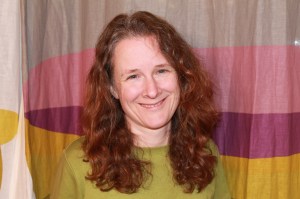 By Rev. Joanna Harader (right)
*This is part of a series of pieces from contributors all over North America each answering the question, “How would you define radical discipleship?” We will be posting responses regularly on Mondays during 2019.
I was struck by Rev. Dr. Victoria Marie’s statement that, in thinking of “radical discipleship,” “there is only discipleship.” The adjective is unnecessary, because to follow Jesus is radical. Period.
I get the temptation to add “radical,” though. Because we want to differentiate actually following Jesus from what too often passes as being Christian in our society. We add “radical” to remind ourselves that discipleship is not about just believing the right theology or showing up in the right place every Sunday or voting for the right political party or hanging the right calligraphied Bible verse poster above our couch. Continue reading “Everyday Radical”
 By Oz Cole-Arnal, former professor emeritus at Waterloo Lutheran Seminary
Over a period of roughly forty-five weeks (with an interlude of thirty weeks), I have come to know and deeply respect Tony Bender (photo right). We are both part of a Parkinson’s group to help determine what may help people live with this degenerative physical disease and its challenges. Over time this group and its trainers (university students working on graduate degrees in kinesiology), under the direction of Dr. Quincy Almeida (internationally renowned Parkinson’s expert) have become a team of mutual support and respect. This Friday two days before Palm Sunday, Tony opened his heart in glorious vulnerability with this powerful lament which he read to us all before Kish, Jordan and crowd led us in our “boxing” and related exercises: Continue reading “Bearing Witness While Living with Chronic Illness”
 By Talitha Fraser
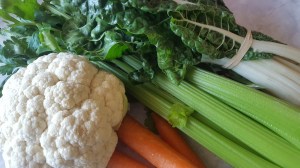
We live in times where the focus is on those things that divide rather than connect us but as Chappo (Peter Chapman) says “You should share communion together, it has a unique power to unite beyond words.” Continue reading “Fifth Helpings”
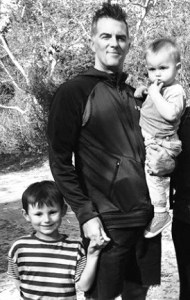 By Tommy Airey (right: posting up with the nephews)
*This is part of a series of pieces from contributors all over North America each answering the question, “How would you define radical discipleship?” We will be posting responses regularly on Mondays during 2019.
In the wilderness journey of deconstructing the white suburban fundamentalist Evangelical Christianity of my adolescence, I am reclaiming a Christian faith of expansive hospitality and prodigal vulnerability. My foot race to the empty tomb has been spurred on by conversation partners who are non-white, non-male, non-hetero and more-than-human. The binary bombs are bursting in air! I am intentionally taking my cues from Black and Indigenous and Immigrant freedom struggles. This marks the trailhead for my journey of radical discipleship to a divinity defined by Steadfast Love. Continue reading “A Faith of Expansive Hospitality and Prodigal Vulnerability”
By Joshua Grace, originally posted at Red Letter Christians
I’m a Polish-American settler. I didn’t choose the conditions of my birth or my original family. However, I do choose to actively underm ine the systems and lies beneath those conditions of various levels of privilege.
Ignorance of our nation’s history, and the systems that our national narrative myth supports, only perpetuate injustice and maintain roadblocks to our greater healing. I was fortunate that in the process, my own Western worldview got challenged and I realized it needed to be overcome. I could not and probably would not have put the work in without supportive community — the Indigenous friends, teachers, and relatives who offered a healing sense of belonging. Continue reading “How Making Friends with Indigenous People Changed My Life”
 Radical Discipleship