Remembering his Uncle

jerryDaniel Berrigan Memorial
September 30, 2016
St. Thomas More Parish, Kalamazoo
Jerry Berrigan

It is wonderful to be with you all on this last evening of September.  I need to begin by expressing my gratitude, deep beyond words, for this circle and each individual within it and for many more who couldn’t be here tonight.  You are my community and my family, your lives and the friendships we share undergird everything we do at Peace House and not only make our work possible but make our lives rich beyond any measure.  Thank you, for everything.  Continue reading “Remembering his Uncle”

To Reconcile and Restore

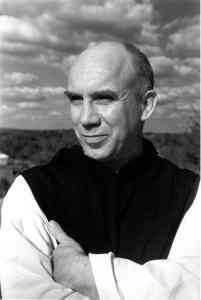
mertonFrom Gordon Oyer’s paraphrase of how Thomas Merton would answer the question “What and where is this Word of God?:”

The word of God is a breakthrough into our real, human experience, and it speaks not just from the Bible but from deep within us, within each of our neighbors, within all of creation. It offers us the means to tear down the false identities we have constructed to fit in with a society rooted in ego-centric self-interest. If we choose to engage it, this word engages us with questions about who we really are, about what person it is who seeks dialogue with the word. If we continue to engage its questions, the word of God will ultimately reconcile and restore us to our true self, to the human community, and to the great and mysterious ground of all being from which our core essence originated.

Have Mercy on Us!

lepersBy Wes Howard-Brook and Sue Ferguson Johnson

The final leg of the journey to Jerusalem begins with this week’s gospel (Lk 17.11-19). Alert readers, though, will note that Jesus and the disciples have not gotten very far. At the very beginning, Luke tells us that “they entered a village of the Samaritans to make ready for him” (9.52). Now, eight chapters later, Luke says, “On the way to Jerusalem Jesus was going through the midst (Gk, dia meson, misleadingly translated by NRSV as “between”) of Samaria and Galilee.” Like the Israelites in the wilderness, they seem to be going in circles in the land north of Judea. Perhaps this is a sly reference to the disciples, like their Israelite ancestors, lacking the faith that the journey they are on will lead to the place of God’s abundant provision. Indeed, as we heard last week, the disciples had just demanded of Jesus, “Increase our faith!” (17.5). Continue reading “Have Mercy on Us!”

Adventures in Recovering the Telos

CatonsvilleBy Tommy Airey

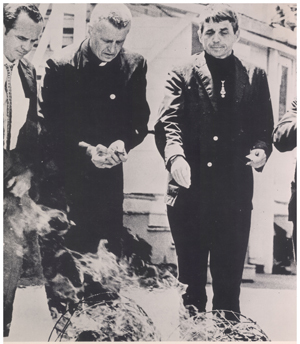
It was a cool Tuesday night in mid-June, four hours north of Detroit and forty-five days after the death of Daniel Berrigan. Rev. Bill Wylie-Kellermann gathered an intergenerational group from among original members and friends of the Detroit Peace Community–so named by members of Jonah House back in 1980 during a week of civil disobedience at the Pentagon. This night’s topic was the Catonsville Nine action of 1968, the mid-day, non-violent storming of the Catonsville, Maryland draft board: they took 378 draft files and set them on fire with homemade napalm in the parking lot and then waited in prayer and song for the police to show up. It sparked hundreds of similar actions all over North America. After Bill’s introduction and historical context, we read The Trial of the Catonsville Nine, a reworked transcript of the trial, put to poetry by Berrigan. I was struck by how coherently these nine spoke about the theological and spiritual motivations for their hit-and-stay action. They were all speaking the same compelling language. Continue reading “Adventures in Recovering the Telos”

The Silent Cry

DSFrom Dorothee Soelle in her book The Silent Cry: Mysticism and Resistance (2001):

At best, what Protestant theology and preaching articulate in what they designate as “gospel” can be summed up as follows: God loves, protects, renews, and saves us. One rarely hears that this process can be truly experienced only when such love, like every genuine love, is mutual. That humans love, protect, renew, and save God sounds to most people like megalomania or even madness. But the madness of this love is exactly what mystics live on.

What drew me to mysticism was the dream of finding a form of spirituality that I was missing in German Protestantism. What I was seeking had to be less dogmatic, less cerebral and encased in words, and less centered on men…

The title of this book [The Silent Cry] is an address to God that is taken from an anonymous letter from the late Middle Ages, presumably from a pastor to a penitent in difficulties and distress. “My child, be patient and leave off because God will not be torn from the ground of your heart. O deep treasure, how whilt thou be unearthed?” This is followed by a series of addresses to God that, as often happens in the language of German mysticism, do not use the traditional personal metaphors like Father, King, Most High, but new, nonpersonal ones like treasure, fountain, radiance, or “security that is hidden” in order to name the deity. In that sequence of metaphors is found the paradoxical expression “the silent cry” that has fixed itself in my mind for years now. It is a mystical name for God, whose divine power is not grounded in domination and commandment. It is a name that everyone can use, everyone who misses the “silent cry” that has often become inaudible among us. May the one who also cries in us help us all to learn to hear the cry in the foundations of the world.


The Inevitable

KingBy Tommy Airey, a homily on Luke 12:49-56 (St. Peter’s Episcopal, Detroit, MI)

For all intents and purposes, in the Gospel this morning Jesus is sounding a whole lot like my high school basketball coach, unrelentingly lighting a fire under our asses, telling us that it’s not his job for us to like him, a rant filled with name calling and rhetorical questions. But this is more than a game: “You hypocrites!” Jesus scolds, “You know how to interpret the appearance of earth and sky, but why do you not know how to interpret the present time?” We know when the Perseids are going to light up the night in Michigan, but we struggle to respond to the signs chronicled by Dr. King: “when machines and computers, profit motives and property rights, are considered more important than people.” Continue reading “The Inevitable”

As a Mother

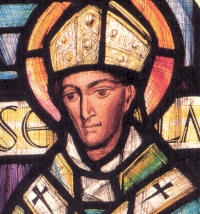
anselmA song of St. Anselm:

Jesus, as a mother you gather your people to you:
You are gentle with us as a mother with her children;
Often you weep over our sins and our pride:
tenderly you draw us from hatred and judgment.
You comfort us in sorrow and bind up our wounds:
in sickness you nurse us,
and with pure milk you feed us.
Jesus, by your dying we are born to new life:
by your anguish and labor we come forth in joy.
Despair turns to hope through your sweet goodness:
through your gentleness we find comfort in fear.
Your warmth gives life to the dead:
your touch makes sinners righteous.
Lord Jesus, in your mercy heal us:
in your love and tenderness remake us.
In your compassion bring grace and forgiveness:
for the beauty of heaven may your love prepare us.

A Prophetic Week at Proctor

By Tommy Airey

Michael Brandon McCormick
Photo: Ct Carmello

I brought you my son because there is a spirit trying to kill him and whenever it seizes him…whenever it grasps him, whenever it grabs him, whenever it accosts him, whenever it subjects him to force without his consent. Let me try it this way: whenever it arrests him! We’re dealing with folks who know what it means to deal with search and seizure. We are people who have been subject to seizure: seized from Africa, seized and thrown into the belly of slave ships. We’ve had our bodies seized, our language seized, our culture seized, our history seized, our resources seized, our economy seized, our possibilities seized, our hope seized, our dreams seized.
Dr. Michael Brandon McCormack (photo above), on Mark 9:14-29 (the episode of the young man seized by a demon)

Measured by its very spirit and structure, the every-four-year American political party national convention is nothing but an intoxicating religious revival meeting, a well-choreographed (mega)church service. Last week’s Republican National Convention in Cleveland highlighted the privilege-blind, fear-based, power-hungry religion of (mostly) white American elites and their Southern and suburban foot soldiers. Imperial chants of “Blue Lives Matter,” “Make America Safe/Great Again,” “Build The Wall” and “Lock Her Up” liturgically scripted delegates into worship. Continue reading “A Prophetic Week at Proctor”