

Category: Cloud of Witnesses
Daniel Erlander: Child of God
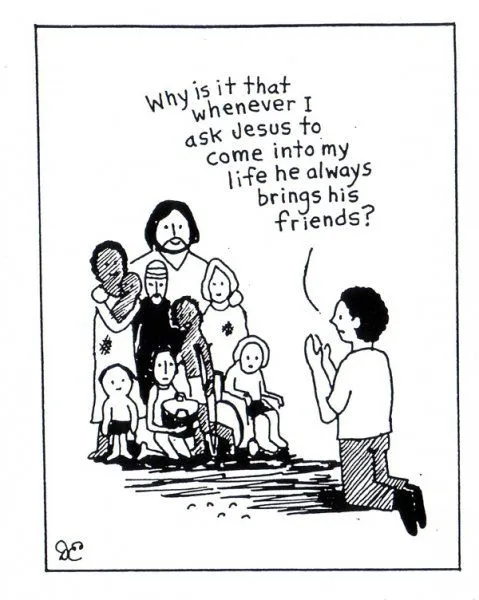
A special thank you to Marcia Dunigan for passing along the news that Rev. Daniel Erlander passed away in late August. His memorial service was this last weekend and you can access a video recording of it here. His books were clear and clever and were beloved by children and adults. If you haven’t, please order Manna and Mercy now. What a beautiful scripting of the biblical narrative! This is Dan’s obituary from the memorial bulletin.
Daniel Winfred Erlander
Child of God
December 10, 1938 – August 28, 2022 Daniel Erlander’s story is one of art and theology: theology as an embodied art and art as visible theology. Dan was born in Cheyenne, Wyoming in 1938, the second of Ruth and Emory’s three sons, and baptized on February 6, 1939. He was nurtured in faith and life in Lutheran parsonages in Cheyenne, Moline, and La Crescenta, CA. His childhood memories include drawing, especially airplanes, trains and cars.
Continue reading “Daniel Erlander: Child of God”Hersistence

By Ched Myers and Elaine Enns
Note: The gospel reading for this Sunday, October 16, the 19th Sunday after Pentecost in the Revised Common Lectionary, is a poignant and amazing text focusing on the agency of women. We shared these reflections last month with pastors in the Greater Minneapolis Synod of the ELCA, and invite you to delight in this story of persistence that pertains both to our prayers and our politics.
The story is introduced as a parable. Jesus tended to tackle tough issue by speaking in this particular rhetorical form, as did the Hebrew prophets before him. Unfortunately, most of our congregations still spiritualize this kind of grassroots pedagogy, typically understanding them as—see if you’ve heard this one before—”earthly stories with heavenly meanings.” Thus tales about landless peasants and rich land-owners, or lords and slaves, or lepers and lawyers—or persistent women—are lifted out of their social and historical context and reshaped into theological allegories or moralistic fables that are bereft of any political or economic edge—or consequence. This functions to thoroughly domesticate the parable under our status quo, such that stories meant to challenge our preconceptions about the world are instead deployed by us to legitimate them. In this way, we effectively disarm one of the Bible’s most powerful rhetorical weapons, whose purpose is to rescue us from our domestication and dehumanization under that very status quo. But what if parables were actually “earthy stories with heavy meanings” as Ched’s teacher Bill Herzog argued in his wonderful book, now a quarter century old, about Jesus as a pedagogue of poor communities?
Continue reading “Hersistence”Unbroken Connection
 For Indigenous Peoples Day, an excerpt from Dina Gilio-Whitaker’s brilliant new release As Long As Grass Grows: The Indigenous Fight for Environmental Justice, from Colonization to Standing Rock (2019).
The very thing that distinguishes Indigenous peoples from settler societies is their unbroken connection to ancestral homelands. Their cultures and identities are linked to their original places in ways that define them: they are reflected in language, place names and cosmology (origin stories). In Indigenous worldviews, there is no separation between people and land, between people and other life forms, or between people and their ancient ancestors whose bones are infused in the land they inhabit and whose spirits permeate place.
A Risky Undertaking

Desmond Tutu (1931-2021).
Forgiving and being reconciled to our enemies or our loved ones are not about pretending that things are other than they are. It is not about patting one another on the back and turning a blind eye to the wrong. True reconciliation exposes the awfulness, the abuse, the hurt, the truth. It could even sometimes make things worse. It is a risky undertaking but in the end it is worthwhile, because in the end only an honest confrontation with reality can bring real healing. Superficial reconciliation can bring only superficial healing.
What Racism Really Is
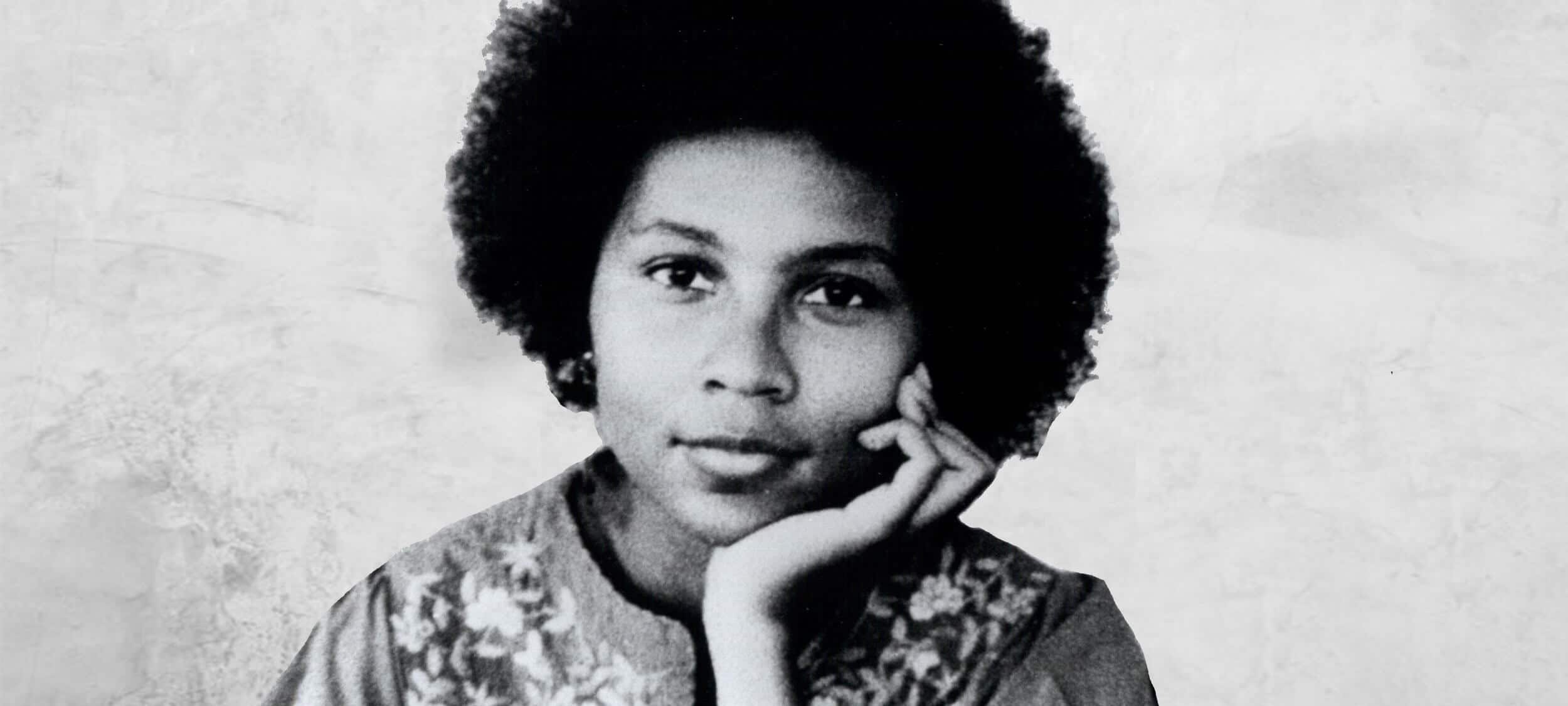
An excerpt from Killing Rage: Ending Racism by bell hooks (1952-2021)
A vision of cultural homogeneity that seeks to deflect attention away from or even excuse the oppressive, dehumanizing impact of white supremacy on the lives of black people by suggesting black people are racist too indicates that the culture remains ignorant of what racism really is and how it works. It shows that people are in denial. Why is it so difficult for many white folks to understand that racism is oppressive not because white folks have prejudicial feelings about blacks (they could have such feelings and leave us alone) but because it is a system that promotes domination and subjugation?
John Brown Broke Rank

By Tommy Airey, re-posted from social media and his blog Easy Yolk
For centuries, white people from lower economic classes have been hired as police patrol by the white ruling class. White folks have been given guns and badges to exercise unlimited force on enslaved people, poor people of color and dark-skinned immigrant labor. This power is so intoxicating that white people consistently choose to police vulnerable people instead of finding solidarity with them in a common struggle against wealthy white exploiters. Sure, Kyle Rittenhouse shot white protestors. But his mother drove him to Kenosha to police people of color—and protect wealthier white people and their property. Policing people of color remains common practice in classrooms, curriculums, churches, stores and neighborhoods, where white people do not necessarily need guns and badges to demand “others” know their place.
Continue reading “John Brown Broke Rank”She Wove Us Together
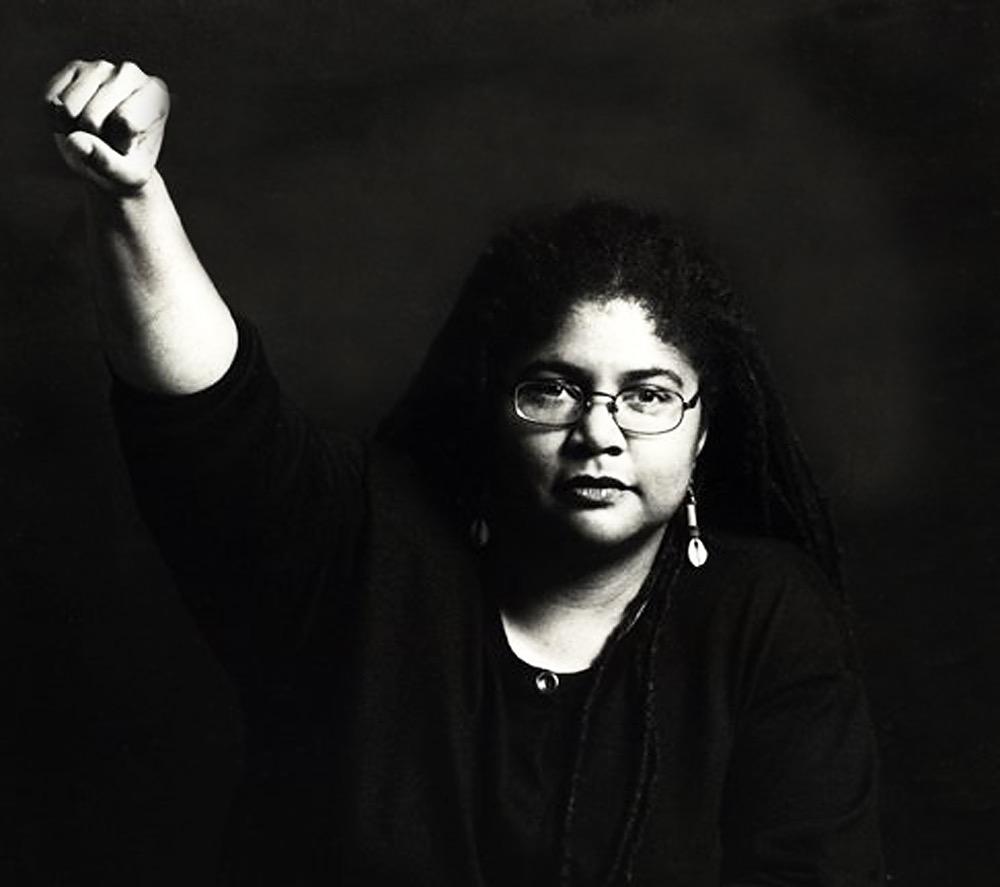
Linda Marie Thurston, August 7 1958 to May 23, 2021. Re-posted from her obituary site.
Linda Marie Thurston, who spent a lifetime forging connections between and among people, organizations, and ideas in peace and justice movements, passed away in her Brooklyn, NY home due to natural causes. She was 62 years young.
Linda was born in Providence, Rhode Island, on August 7, 1958, the oldest child of James Thurston Sr. and Barbara Thurston (née Oliver). She attended Classical High School and excelled academically, where, as she liked to tell it, a bet between guidance counselors led to Linda applying and being accepted to Harvard University. Linda graduated from Harvard in 1980 with a B.A. in Cultural Anthropology where she was a student organizer against South African apartheid and was the president of the Black Community and Student Theater. After working for some years at the American Friends Service Committee, Linda took time out to attend grad school at Temple University where she obtained an M.A. in Sociology in 1994.
Continue reading “She Wove Us Together”The Womanist Theology of Rev. Dr. Katie Geneva Cannon
An excerpt from a reflection on the life of Rev. Dr. Katie Geneva Cannon by Angela D. Sims. Re-posted from Religion and Politics, February 2019.
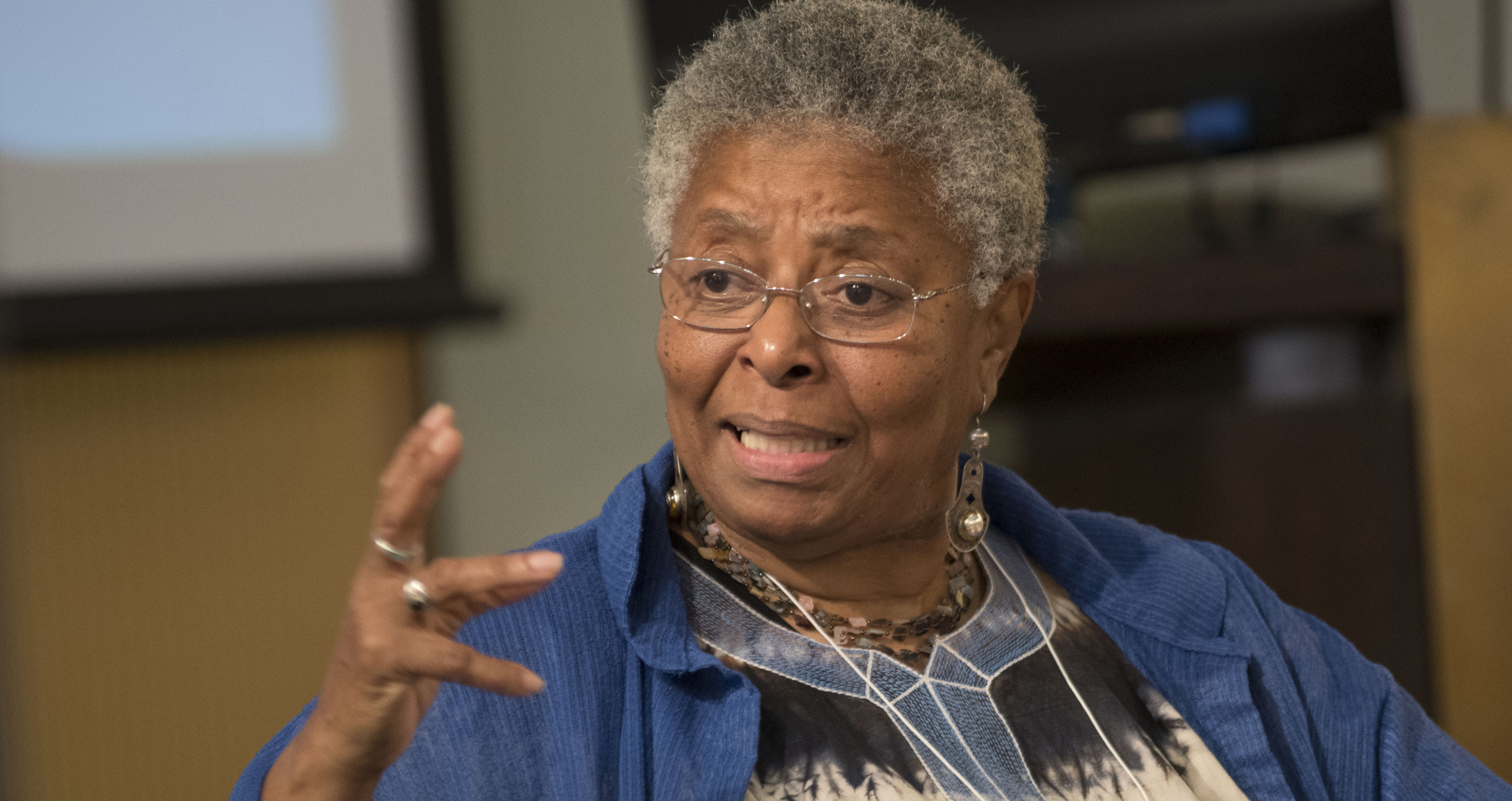
In every generation, a “remnant” of scholars emerges that challenges status quo perspectives. Their critiques of normative constructs serve as models for subsequent scholars who learn how to work not only to eat but also to work in a manner that enables others to eat. The Rev. Dr. Katie Geneva Cannon was indeed such a person. She loved life, loved people, loved laughter, loved food, loved imagining the not yet, loved calling things into existence. The progenitor of womanist theological ethics, Cannon was a brilliant scholar, a mentor extraordinaire who possessed an ability to discern what was most needed, and generous (almost to a fault) in the sharing of her time and resources…
…Born January 3, 1950, in Kannapolis, North Carolina, Cannon became the first black woman to be ordained in the United Presbyterian Church, a precursor to the Presbyterian Church (U.S.A). After earning her doctorate at Union Theological Seminary in New York City—the first African American woman to do so—Cannon laid the foundation for womanist ethics in her 1985 essay, “The Emergence of Black Feminist Consciousness.” Many black women in theological disciplines, including Cannon, have gravitated to the use of author Alice Walker’s term “womanist” as both a challenge to and a confessional statement for our own work. Womanist, as defined in Walker’s In Search of Our Mothers’ Gardens: Womanist Prose, contains elements of tradition, community, self, and a critique of white feminist thought and provides a fertile ground for religious reflection and practical application.
Continue reading “The Womanist Theology of Rev. Dr. Katie Geneva Cannon”NO MORE STATE-SPONSORED CRUCIFIXIONS IN THE NAME OF “SAFETY”
 A Holy Week Declaration From First Congregational Church of Oakland.
Issued on Good Friday, March 30, 2018. More relevant than ever.
As followers of Jesus, we recognize:
That Lent is a season of spiritual searching and wilderness wandering when we recommit ourselves to following the way of Jesus Christ.
That we face temptations that threaten to make us complicit with violence against our neighbors and ourselves, including the temptation to try to secure our own safety, survival, and comfort at the expense of other human beings and the planet. Continue reading “NO MORE STATE-SPONSORED CRUCIFIXIONS IN THE NAME OF “SAFETY””
 Radical Discipleship