Strange Liberators

DeniseDay 12 of our Lenten Journey through Dr. King’s “Beyond Vietnam” speech.

They must see Americans as strange liberators. The Vietnamese people proclaimed their own independence in 1954—in 1945 rather—after a combined French and Japanese occupation and before the communist revolution in China. They were led by Ho Chi Minh. Even though they quoted the American Declaration of Independence in their own document of freedom, we refused to recognize them. Instead, we decided to support France in its reconquest of her former colony. Our government felt then that the Vietnamese people were not ready for independence, and we again fell victim to the deadly Western arrogance that has poisoned the international atmosphere for so long. With that tragic decision we rejected a revolutionary government seeking self-determination and a government that had been established not by China—for whom the Vietnamese have no great love—but by clearly indigenous forces that included some communists. For the peasants this new government meant real land reform, one of the most important needs in their lives.
—————-
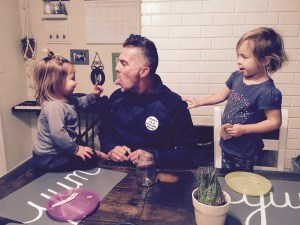
By Rev. Denise Griebler (photo above), the pastor of First United Church of Christ in Richmond, Michigan

We do not tell the truth about ourselves.   No wonder we and others are confused. Perhaps we have refused the long look in the mirror for so long that we simply do not know. But I think it is also true that we do not want to know.

Listen. Begin with the genocide. Indigenous people, communities and cultures crushed by colonial greed and settler-culture that took whatever it wanted with the twisted and absurd notion that this was all preordained, a manifest destiny set forth by a false-god in their image. Listen.   You can hear the sounds of an economy built on enslaving human beings and extracting their labor with the blessing of this false-god. Listen, as the ever-expanding economy gobbles up land and with it the gifts below the surface of land, waters, species, human life and labor and leaves in its aftermath spoiled land, air and water. They say a sound goes on forever. Listen. The cries of the indigenous and enslaved people and of the earth, our Mother, can be heard. Continue reading “Strange Liberators”

To Know Them and Hear Their Broken Cries

SugrueDay 11 of our Lenten Journey through Dr. King’s “Beyond Vietnam” speech.
And as I ponder the madness of Vietnam and search within myself for ways to understand and respond in compassion, my mind goes constantly to the people of that peninsula. I speak now not of the soldiers of each side, not of the ideologies of the Liberation Front, not of the junta in Saigon, but simply of the people who have been living under the curse of war for almost three continuous decades now. I think of them, too, because it is clear to me that there will be no meaningful solution there until some attempt is made to know them and hear their broken cries.
———–
From Thomas Sugrue, Professor of history at University of Pennsylvania, in “Restoring King” in Jacobin Magazine (January 16, 2017):

King’s radicalism is lost to the obfuscating fog of memory. In American culture today, we have several Martin Luther King Jr’s:

the Commemorative King, the Therapeutic King, the Conservative King, and the Commodified King. Each of these Kings competes for our attention, but each of them represents a vision of King that he himself would not have recognized.

First is the commemorative King. Only fifteen years after his death, King won an extraordinary recognition — he became the only individual (unless you count Presidents Washington and Lincoln, whose birthdays have been unceremoniously consolidated into President’s Day) with his own national holiday. That a man who was berated as un-American, hounded by the FBI, arrested and jailed numerous times, was recognized by a national holiday is nothing short of amazing. Continue reading “To Know Them and Hear Their Broken Cries”

To Speak for the Weak

RutesTen Days into our Lenten Journey through Dr. King’s “Beyond Vietnam” Speech.

Finally, as I try to explain for you and for myself the road that leads from Montgomery to this place, I would have offered all that was most valid if I simply said that I must be true to my conviction that I share with all men the calling to be a son of the living God. Beyond the calling of race or nation or creed is this vocation of sonship and brotherhood. Because I believe that the Father is deeply concerned, especially for His suffering and helpless and outcast children, I come tonight to speak for them. This I believe to be the privilege and the burden of all of us who deem ourselves bound by allegiances and loyalties which are broader and deeper than nationalism and which go beyond our nation’s self-defined goals and positions. We are called to speak for the weak, for the voiceless, for the victims of our nation, for those it calls “enemy,” for no document from human hands can make these humans any less our brothers.
——————-
By Tommy Airey, co-editor of RadicalDiscipleship.Net (photo above with former intentional community members Mabel and Ivy

More than 50 years ago almost to the day (March 9, 1964), citing an 1868 treaty which empowered Native American peoples to claim surplus federal land, five Sioux activists occupied and took possession of Alcatraz Island. It was less than one year after the notorious federal prison closed down after decades of complaints over high costs and the flushing of sewage into San Francisco Bay. These indigenous prophets envisioned a redemption of the island, transforming it into a cultural center and university. They were apprehended and removed after only four hours, imperial conventional wisdom dismissing their public offer to buy the land for the amount the government had initially offered them: $9.40. Continue reading “To Speak for the Weak”

Beyond National Allegiances

kateDay 9 of our Lenten Journey through Dr. King’s “Beyond Vietnam” Speech.

As if the weight of such a commitment to the life and health of America were not enough, another burden of responsibility was placed upon me in 1954. And I cannot forget that the Nobel Peace Prize was also a commission, a commission to work harder than I had ever worked before for the brotherhood of man. This is a calling that takes me beyond national allegiances.

But even if it were not present, I would yet have to live with the meaning of my commitment to the ministry of Jesus Christ. To me, the relationship of this ministry to the making of peace is so obvious that I sometimes marvel at those who ask me why I am speaking against the war. Could it be that they do not know that the Good News was meant for all men—for communist and capitalist, for their children and ours, for black and for white, for revolutionary and conservative? Have they forgotten that my ministry is in obedience to the one who loved his enemies so fully that he died for them? What then can I say to the Vietcong or to Castro or to Mao as a faithful minister of this one? Can I threaten them with death or must I not share with them my life?
—————–
By Kate Foran (photo above), formed by the nonviolent resistance and radical hospitality of the Catholic Worker movement, and inspired and challenged by other communities of love & struggle (including the Beloved Community Center in North Carolina) whose faith drives their work for social transformation.

Here is King the prophet (honored abroad and scorned by many at home), explaining, in concentric circles of accountability, why he feels compelled to speak out against the Vietnam war. After appealing to his commitment to America’s vision, he broadens his argument beyond national boundaries. Then he appeals to his Gospel obligation. Two questions for Lenten devotion arise for me here: In the current climate of “America First” and “build-a-wall” rhetoric, what does it mean to “go beyond national allegiances?” And further, in King’s surprising turn of phrase, how do I not only “not threaten [my enemy] with death,” (then: the communist; now: the terrorist, the immigrant, the refugee, whoever is other…) but how do I “share my life with them?” Continue reading “Beyond National Allegiances”

Led Down the Path of Protest and Dissent

roseDay 8 of our Lenten Journey through Dr. King’s “Beyond Vietnam” Speech.

Now it should be incandescently clear that no one who has any concern for the integrity and life of America today can ignore the present war. If America’s soul becomes totally poisoned, part of the autopsy must read “Vietnam.” It can never be saved so long as it destroys the hopes of men the world over. So it is that those of us who are yet determined that “America will be” are led down the path of protest and dissent, working for the health of our land.
———–
By Rose Marie Berger, a senior associate editor at Sojourners magazine

Between the first and second sentence of this paragraph, Brother Martin fully entered into his “vocation of agony.”

Between these two–the first, where he holds America accountable to the ideals of her founding and the second, where he begins his sharpest theological critique to date–King “sets his face like flint” (Luke 9:51; Isaiah 50:7) toward the center of military empire: Washington, D.C. Continue reading “Led Down the Path of Protest and Dissent”

To Save the Soul of America

tavisDay 7 of our Lenten Journey with Dr. King’s “Beyond Vietnam” speech.

For those who ask the question, “Aren’t you a civil rights leader?” and thereby mean to exclude me from the movement for peace, I have this further answer. In 1957, when a group of us formed the Southern Christian Leadership Conference, we chose as our motto: “To save the soul of America.” We were convinced that we could not limit our vision to certain rights for black people, but instead affirmed the conviction that America would never be free or saved from itself until the descendants of its slaves were loosed completely from the shackles they still wear. In a way we were agreeing with Langston Hughes, that black bard from Harlem, who had written earlier:

O, yes, I say it plain,
America never was America to me,
And yet I swear this oath—
America will be!
——————–
From Tavis Smiley, in an interview on NPR, March 30, 2010:

I’ve always argued that Dr. King is the greatest American we’ve ever produced. That’s my own personal assessment. But certainly one of the greatest orators of our time. And so I think most Americans know the “I Have A Dream” speech. A few other Americans know, of course, the “Mountaintop” speech given the night before he’s assassinated in Memphis. But most Americans, I think, do not know this speech, “Beyond Vietnam.” Continue reading “To Save the Soul of America”

The Greatest Purveyor of Violence

greenwaldDay 6 of our Lenten Journey through Dr. King’s “Beyond Vietnam” speech.

My third reason moves to an even deeper level of awareness, for it grows out of my experience in the ghettos of the North over the last three years, especially the last three summers. As I have walked among the desperate, rejected, and angry young men, I have told them that Molotov cocktails and rifles would not solve their problems. I have tried to offer them my deepest compassion while maintaining my conviction that social change comes most meaningfully through nonviolent action. But they asked, and rightly so, “What about Vietnam?” They asked if our own nation wasn’t using massive doses of violence to solve its problems, to bring about the changes it wanted. Their questions hit home, and I knew that I could never again raise my voice against the violence of the oppressed in the ghettos without having first spoken clearly to the greatest purveyor of violence in the world today: my own government. For the sake of those boys, for the sake of this government, for the sake of the hundreds of thousands trembling under our violence, I cannot be silent.
——————
From Glenn Greenwald’s Obama-era reflection on Dr. King’s “Beyond Vietnam” relevance (Jan 21, 2013):

What I always found most impressive, most powerful, about King’s April 4 speech is the connection he repeatedly made between American violence in the world and its national character…

The debasement of the national psyche, the callousness toward continuous killing, the belief that the US has not only the right but the duty to bring violence anywhere in the world that it wants: that is what lies at the heart of America’s ongoing embrace of endless war. A rotted national soul does indeed enable leaders to wage endless war, but endless war also rots the national soul, exactly as King warned. At times this seems to be an inescapable, self-perpetuating cycle of degradation… Continue reading “The Greatest Purveyor of Violence”

In Brutal Solidarity

sarahDay 5 of our Lenten Journey with Dr. King’s “Beyond Vietnam” Speech
Perhaps a more tragic recognition of reality took place when it became clear to me that the war was doing far more than devastating the hopes of the poor at home. It was sending their sons and their brothers and their husbands to fight and to die in extraordinarily high proportions relative to the rest of the population. We were taking the black young men who had been crippled by our society and sending them eight thousand miles away to guarantee liberties in Southeast Asia which they had not found in southwest Georgia and East Harlem. So we have been repeatedly faced with the cruel irony of watching Negro and white boys on TV screens as they kill and die together for a nation that has been unable to seat them together in the same schools. So we watch them in brutal solidarity burning the huts of a poor village, but we realize that they would hardly live on the same block in Chicago. I could not be silent in the face of such cruel manipulation of the poor.
—————-
Some highlights from Sarah Thompson’s MLK Day speech at Goshen College, January 16, 2017. Sarah is the executive director of Christian Peacemaker Teams.

Still dreaming the Beloved Community into reality, 50 years ago this April, King articulated the connections between the structures of white exploitation of black and brown people in this country, the exploitation of black and brown bodies and land through war, and the economic system that propelled it. Continue reading “In Brutal Solidarity”

A Society Gone Mad on War

billDay 4 of our Lenten Journey with Dr. King’s “Beyond Vietnam” Speech
Since I am a preacher by calling, I suppose it is not surprising that I have seven major reasons for bringing Vietnam into the field of my moral vision. There is at the outset a very obvious and almost facile connection between the war in Vietnam and the struggle I and others have been waging in America. A few years ago there was a shining moment in that struggle. It seemed as if there was a real promise of hope for the poor, both black and white, through the poverty program. There were experiments, hopes, new beginnings. Then came the buildup in Vietnam, and I watched this program broken and eviscerated as if it were some idle political plaything on a society gone mad on war. And I knew that America would never invest the necessary funds or energies in rehabilitation of its poor so long as adventures like Vietnam continued to draw men and skills and money like some demonic, destructive suction tube. So I was increasingly compelled to see the war as an enemy of the poor and to attack it as such.
—————–
“A Lent Beyond Despair” By Rev. Bill Wylie-Kellermann (photo above) of St. Peter’s Episcopal Church in Detroit

As we begin the contemplative foray into Dr. King’s seven words on the war, it is well worth considering the overall structure of those reasons for resistance. The first three view the war through the lens of the reigning principalities of the U.S. domination system: materialism, white racism, and militarism: 1) that the war is an attack on the poor, dismantling programs of support in order to fund it, 2) that it is a racist war, sending young men in brutal solidarity to burn huts in Vietnamese villages, who wouldn’t be able to live next door in Detroit, and 3) that he couldn’t preach nonviolence to young people on the street without also opposing the “greatest purveyor of violence in the world today – my own government.” He will subsequently name these the “giant triplets,” the ruling powers of domination. Continue reading “A Society Gone Mad on War”

The Necessary Condition of Trust

nick-p-2Day 3 of our Lenten Journey with Dr. King’s “Beyond Vietnam.”

I come to this platform tonight to make a passionate plea to my beloved nation. This speech is not addressed to Hanoi or to the National Liberation Front. It is not addressed to China or to Russia. Nor is it an attempt to overlook the ambiguity of the total situation and the need for a collective solution to the tragedy of Vietnam. Neither is it an attempt to make North Vietnam or the National Liberation Front paragons of virtue, nor to overlook the role they must play in the successful resolution of the problem. While they both may have justifiable reasons to be suspicious of the good faith of the United States, life and history give eloquent testimony to the fact that conflicts are never resolved without trustful give and take on both sides. Tonight, however, I wish not to speak with Hanoi and the National Liberation Front, but rather to my fellow Americans.
——————-
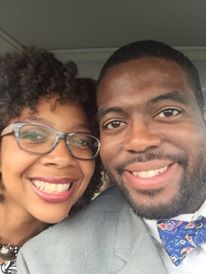
By Rev. Nick Peterson (above right, with spouse NaKisha), a pastor and prophet pursuing a PhD in liturgics and ethics at Emory University in Atlanta

Fixed in the intellectual heritage of American pragmatism is the notion that every problem has a solution. From the earliest stages of our formal education we are presented with problems that can be solved if we take the time to understand them and apply the methods and rules we learned. Modern medicine and technology are all furthered by a desire to solve our problems and in so doing make our lives better. Continue reading “The Necessary Condition of Trust”