Dear White People

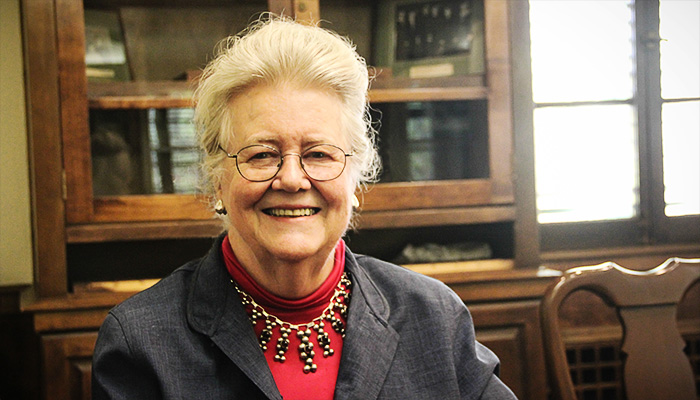
melanieBy Melanie Morrison, Executive Director, Allies for Change

DEAR WHITE PEOPLE: Difficult as it may be, you and I MUST listen to and grapple with the words that Dylann Roof spoke as he began shooting the people who warmly, graciously welcomed him into that Bible study circle at Emmanuel AME Church: “You are raping our women and taking over the country. You have to go.” Those words are a mirror for us as a people – as white people. Those words are not only the isolated rantings of a tormented soul. We can’t simply scratch our heads and wonder how someone could be so hate-filled. We can’t only conclude that we need stricter gun control. We don’t need to interview his family and friends to understand where those words came from. The words Dylann Roof spoke are quite literally the white narrative that has undergirded and sustained systemic racism for centuries. That narrative continues unabated. Those words represent the fears and stereotypes that undergird present day racial profiling, state sanctioned violence, and mass incarceration. Those words feed anti-immigrant hysteria. Those words ring out in the chant, “Give us our country back.” Dylann Roof’s words are a mirror we must face as a people — as white people — if we are going to do the deep work required of us. None of us is exempt from this work. You and I and all of us must do this.
Reflections on the Close of the Canadian Truth and Reconciliation

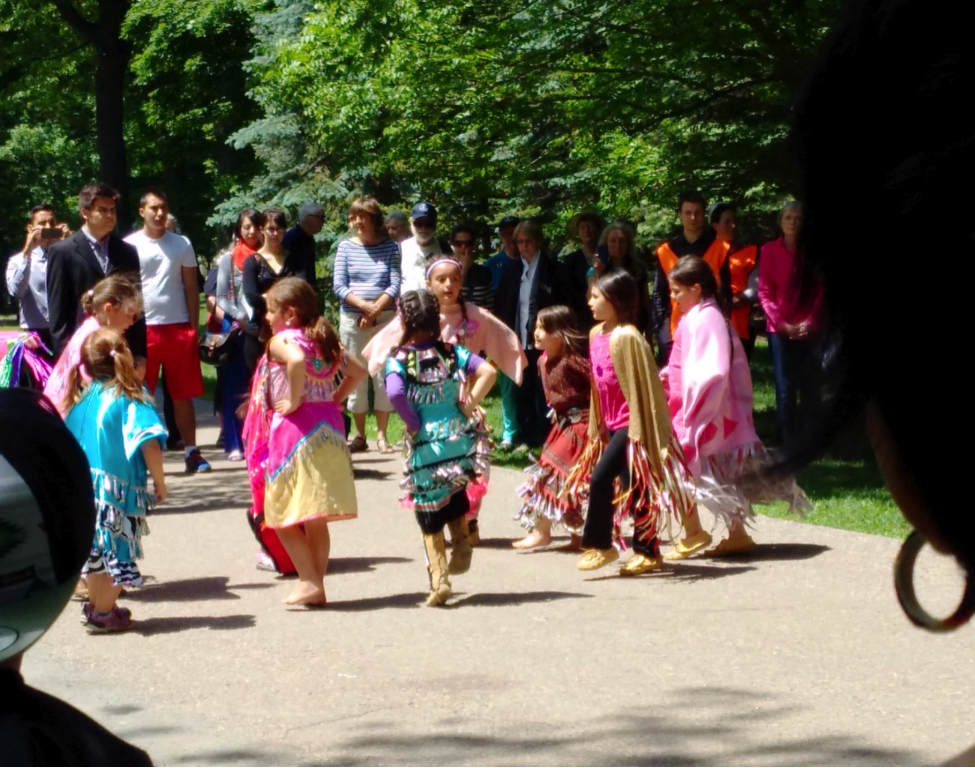
Jingle dress dancers at the Heart Gardens Ceremony, Rideau Hall, Ottawa, Canada.  June 3, 2015
Jingle dress dancers at the Heart Gardens Ceremony, Rideau Hall, Ottawa, Canada. June 3, 2015
By Jennifer Henry

I tell you this to break your heart, by which I mean only that it break open and never close again to the rest of the world.
Mary Oliver

Now, almost a month away from the closing ceremonies of the Canadian Truth and Reconciliation Commission (TRC), there are two images I can’t get out of my mind. One is a word picture painted by Commissioner Marie Wilson who asked those pressed into rooms to hear the findings of the TRC to think of “graveyards where there should have been playgrounds.” She was speaking of the 6000 estimated deaths at residential schools (odds of dying almost identical to those of Canadians serving in World War II) and the dehumanization of unmarked graves and families who still do not know what happened to their child. She was speaking of the 150,000 children whose childhood was robbed when they were forcibly removed from their families, subjected to neglect and child labour, denied their language and culture, taught they were inferior, and, in many cases, abused by the people who were charged with their care. It is an image that should have made every Canadian hold their breath. Children not allowed to be children. Children who never made it home.
Continue reading “Reflections on the Close of the Canadian Truth and Reconciliation”

Dylann Roof & Our Myth

DylanThe finger points at us. If we actually do want the country to behave differently towards peoples of color here and abroad—it is “we,” who are white and content, who must change and do so radically. Anything less than the equivalent of real reparations and real political confrontation in the streets is simply more of the same.
—————-
By Jim Perkinson, long-time activist and educator from inner city Detroit & the author of White Theology: Outing Supremacy in Modernity (2004)

One of the great fears of white people in the early 19th century was that if slaves were given any quarter at all, whites would rapidly be enslaved by blacks. So much as one moment of unpunished black response to white domination—even as seemingly minor as merely looking the master in the eyes—would mean, in short order, that the tables would be turned. Thus the “necessary” brutality of the peculiar institution (portrayed, for even Hollywood audiences, in the recent filmic depiction, “Twelve Years a Slave”).
Continue reading “Dylann Roof & Our Myth”

White Privilege: Unpacking the Invisible Knapsack

Peggy MacIntoshBy Peggy McIntosh, associate director of the Wellesley Collage Center for Research on Women

I decided to try to work on myself at least by identifying some of the daily effects of white privilege in my life. I have chosen those conditions that I think in my case attach somewhat more to skin-color privilege than to class, religion, ethnic status, or geographic location, though of course all these other factors are intricately intertwined. As far as I can tell, my African American coworkers, friends, and acquaintances with whom I come into daily or frequent contact in this particular time, place and time of work cannot count on most of these conditions. Continue reading “White Privilege: Unpacking the Invisible Knapsack”

What Can The White Man Say To The Black Woman?

AliceFrom Alice Walker, poet, activist and the author of many works including The Color Purple (1982). This was the conclusion of a piece published in the recent 150th anniversary edition of The Nation:

What can the white man say to the black woman?

Only one thing that the black woman might hear.

Yes, indeed, the white man can say, your children have the right to life. Therefore I will call back from the dead those 30 million who were tossed overboard during the centuries of the slave trade. And the other millions who died in my cotton fields and hanging from my trees.
Continue reading “What Can The White Man Say To The Black Woman?”

Twas Grace

black christBy Lindsay Airey. Originally published in the Detroit Catholic Worker paper On the Edge. Lindsay is a marriage & family therapist, radical disciple, and recovering AlAnon member, living and working alongside her husband Tom, the Larkins St. Community, and St. Peter’s Episcopal Church. Her activist work has been focused with We The People of Detroit, organizing around the ongoing water struggle.

“T’was grace that taught my heart to fear, and grace my fears relieved.”      -John Newton, Amazing Grace

If not for grace, I could never meaningfully engage the inner work of healing and repenting from white supremacy. This “taught my heart to fear” kind of grace is what compels me into this work. It is also what keeps me in it. Perhaps understood most deeply by recovering addicts and abusers, this “amazing” grace is foreign to the distorted, cheap & enabling grace vended on the daily at your local mainstream, white-dominated, suburban and affluent Christian church. Meanwhile, on the outer fringes of the (c)hristian tradition, this slave-trader-turned-abolitionist kind of grace may be the penultimate anti-white supremacist/anti-racist “program” we Christians have uniquely to offer the struggle for racial equity and reconciliation in America. Continue reading “Twas Grace”

Repenting White Supremacy

decolonizeBy Lydia Wylie-Kellermann. Originally printed in On the Edge.

I am sorry. I am sorry for speaking too quickly. For saying the wrong thing. Or not saying anything. For speaking unaware out of my own white supremacy.

I am sorry for not learning the history. For the large blind spots I carry. For all the people and creatures hurt along my way.
Continue reading “Repenting White Supremacy”

Of Thrones and High Places: Lessons from Selma

selmaBy Kim Redigan

This is not a movie – this is real life!, shouted the elderly woman standing near the base of the Edmund Pettus Bridge as a human wave of tens of thousands rolled past her in a people’s-led march on the day after dignitaries, including the President and Congressman John Lewis, observed the fiftieth anniversary of Bloody Sunday in a far more officious manner.

The hand-lettered sign she carried read:

Justice is Still Blind in Selma, AL . . . Unfair treatment of citizens by certain persons in high places. We need help in Selma, Alabama. Continue reading “Of Thrones and High Places: Lessons from Selma”

On the Trail Together: Confessing Resonances in Anti-Oppression Work

cara curtisBy Cara Curtis. Cara Curtis took part in Word & World’s 2011-2012 mentoring program. A former resident of Philadelphia, she now studies and centers her activism at Harvard Divinity School.

During my years at an elite, majority-white, social justice-oriented liberal arts college, I joined many of my fellow students in a process of awakening that many call “unpacking the invisible knapsack.” Coined in a landmark 1988 article of the same name by Peggy McIntosh, this phrase refers to a process of learning and re-evaluation in which people of privilege—economic, sexual, gender expressive, or in McIntosh’s case racial—begin to realize the ways that their lives are made easier solely by virtue of belonging to a dominant group. With practice, people also become vocal about calling out this privilege when they see it. They actively try to minimize their dominance in order to create greater opportunity and space for folks with non-dominant identities to thrive. Continue reading “On the Trail Together: Confessing Resonances in Anti-Oppression Work”