For a Free Palestine

This is from blackwomenradicals.com. Check out their site for a whole radical Black feminist reading list on a Free Palestine.

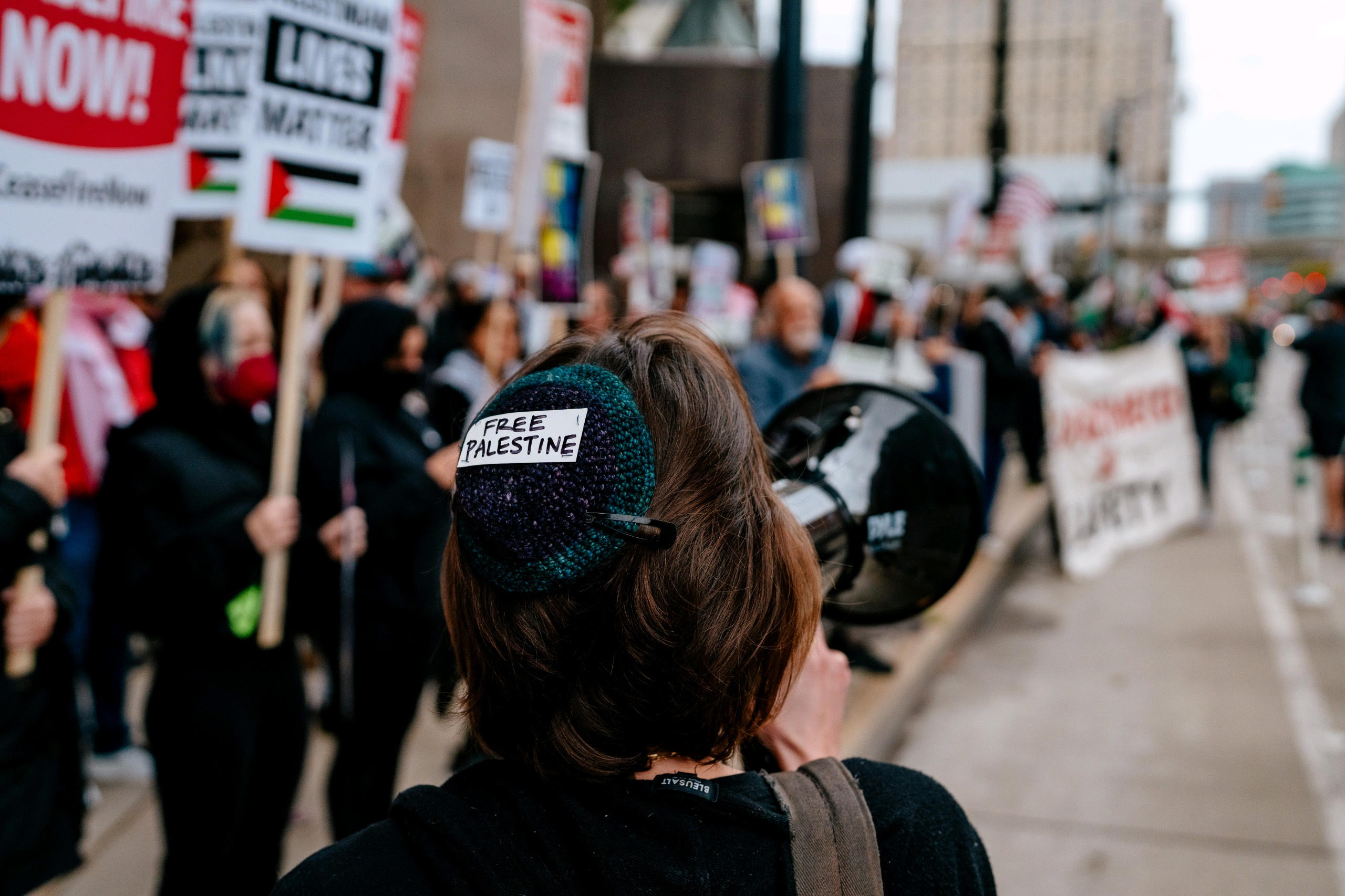
WE, WHO BELIEVE IN FREEDOM, WE AS BLACK FEMINISTS WHO BELIEVE IN FREEDOM  –– FREEDOM FROM WHITE SUPREMACY, PATRIARCHY, CAPITALISM, TRANSPHOBIA,  QUEERPHOBIA, ABLEISM, AND OTHER OPPRESSIONS –– UNABASHEDLY BELIEVE IN AND STAND IN SOLIDARITY FOR A FREE PALESTINE. 

As students of Black feminist politics and movements, we know and understand that our liberation as Black women, femme, and gender expansive people in the United States, in the belly of the imperial beast, is tethered to the liberation, freedom, and emancipation of all marginalized peoples around the world. We know that we come from long radical and revolutionary traditions of Black women and gender expansive organizers, educators, and activists who have and continue to be committed to the liberation struggles of oppressed and “Third World” peoples. 

MORE SPECIFICALLY, AND ESPECIALLY AT THIS CURRENT JUNCTURE IN GAZA AND THE WEST BANK, WE KNOW AS BLACK FEMINISTS THAT OUR POLITICAL COMMITMENTS, MANDATES, AND SOLIDARITY ARE BOUND UP AND INTERTWINED WITH THE LIBERATION AND SELF-DETERMINATION OF THE PALESTINIAN PEOPLE. 

According to reports, more than 2,383 Palestinians are dead and 10,814 are injured. The organization, Defense for Children International–Palestine has reported that at least 724 Palestinian children have been killed by the Israeli military since October 7th. This past Friday, October 12th, the Israeli army issued an evacuation order – by way of dropping leaflets – of more than 1.1 million Palestinians in northern Gaza, giving them only 24 hours to leave their homes and move to southern Gaza toward a “safe route.” However, when many Palestinians migrated to southern Gaza, the army bombed the south part of the Gaza strip – the only road in and out of Gaza – killing and injuring hundreds. Israel has cut off Gaza from electricity, fuel, food, water, and humanitarian aid.

Continue reading “For a Free Palestine”

Uncompromising Solidarity

CUNY LAW JLSA STATEMENT ON EVENTS IN OCCUPIED PALESTINE (10.10.2023). The statement was originally posted on Google Docs here, but it has been taken down for violating its terms of service (which raises all sorts of important questions).

In this season of renewal and self-reflection, and as we begin the year 5784, the Jewish students at the CUNY School of Law wish to express our uncompromising solidarity with the Palestinian people in their righteous struggle for self-determination. This feeling is accompanied by a profound sense of grief over the lives that have been lost. We are steadfast in our belief that Zionism – as a political ideology predicated on theft and destruction – serves to imperil both Jews and Palestinians, even though its proponents only target the latter.

In his analysis of the global anti-colonial struggle, Frantz Fanon wrote, “We revolt simply because, for many reasons, we can no longer breathe.” Such is the case for the Palestinian people, who have, for generations, been made to suffocate under the deadly weight of the Zionist project. This settler-colonial enterprise, promoted by antisemites within the British Empire following World War I, has taken shape across decades of uninterrupted brutality. In 1948, Zionist militias unleashed a campaign of terror marked by mass murder and systematic sexual violence, razing over 500 Palestinian villages and forcing more than 750 thousand Palestinians off their native lands.

Continue reading “Uncompromising Solidarity”

Capitalism and Christianity are Incompatible

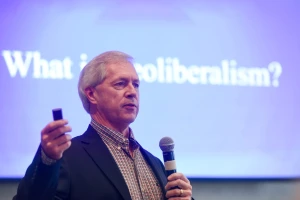
Three years ago, we interviewed Dr. Bruce Rogers-Vaughn (above), an ordained Baptist minister, pastoral psychotherapist and Associate Professor of the Practice of Pastoral Theology and Counseling at Vanderbilt Divinity School, and the author of Caring for Souls in a Neoliberal Age (Palgrave, 2016). “Neoliberalism,” he writes, “has become so encompassing and powerful that it is now the most significant factor in shaping how, why, and to what degree human beings suffer.”

This is why Bruce presses for a “post-capitalist pastoral theology” that empowers people to resist the system (instead of adapt to it), to embrace communion and wholeness in relation to others and the earth (instead of functioning in accord with the values of production and consumption) and to pursue interdependent reliance within the web of human relationships (instead of accepting shame-based personal responsibility narratives).

Above all, Bruce prods pastors, therapists and social workers to identify the source of personal distress in the social and political environment instead of within the individual (he rejects what he calls “sophisticated exercises in blaming the victim”). Oh—one more thing about Bruce. All of his work is informed by his deep roots in southern Appalachia.

This is an excerpt from the beginning of our five-part conversation. See this for Part I, this for Part II, this for Part III and this for Part IV.

—————————————————————————————-

Neoliberalism is simply an awful word. It is almost inevitably misleading. When I first encountered this expression, I imagined it was designating some new (“neo-”) form of political or theological “liberal.” But, actually, the term originates from economic philosophy. Its first proponents—the so-called “German Ordoliberals”—coined the name during the 1930s. Today the word is used, almost exclusively by its critics, to refer to the current phase of capitalism. This phase gained political traction in the USA and the UK in the 1980s, during the Reagan and Thatcher administrations, and by the mid-1990s was the dominant way of thinking and believing that guided global economics, politics, and culture.

Continue reading “Capitalism and Christianity are Incompatible”

Say Anew to this Festering World

By Ken Sehested, in honor of Rev. Cindy Weber

My friend Cindy Weber, pastor of Jeff Street Baptist at Liberty in Louisville, Ky., retired last month. Tomorrow, 1 October 2023, her congregation is celebrating her ministry.

She was initially called to serve as associate pastor (1984-1991) and then as pastor (1991-present). The congregation was expelled by the (Southern Baptist) Long Run Baptist Association when Cindy was called as pastor (because she was female).

The congregation’s history traces its roots back to a ministry to the city’s “derelicts, alcoholics, prostitutes, and homeless in 1881.” In the early ‘40s, Clarence Jordan, who would later co-found Koinonia Farm in Georgia, played a role in supporting the mission.

Continue reading “Say Anew to this Festering World”

Banning of Native Voices/Books

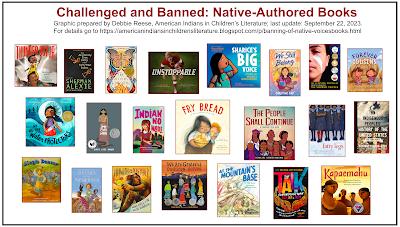
This is reposted from American Indians in Children’s Literature (AICL) which provides critical analysis of Indigenous peoples in children’s and young adult books. AICL was established in 2006 by Dr. Debbie Reese of Nambé Pueblo. Dr. Jean Mendoza joined AICL as a co-editor in 2016.

The year is 2023. 

People continue to take from Native peoples and Native Nations. It started with our lands and our children. It included efforts to destroy our nationhood and cultures by making it illegal for us to speak our languages and tell our stories and practice our religions. 

We persevered. 

In recent years more and more of us are being published. Through books, we are using our voices, telling our stories to our children and yours, too, in pre-school and kindergarten story times and in high school classrooms. 

But now, our books–our voices–are being removed from libraries and classrooms. 

Continue reading “Banning of Native Voices/Books”

Stained Glass

A few excerpts from Ken Sehested’s recent Prayer and Politiks newsletter.

The concurrence of two calendars brings together two significant historical episodes.
 
The Sunday morning terrorist bombing of 16th Street Baptist Church in Birmingham, Alabama, killed four children and injured or maimed many others, on 15 September 1963. Bombs targeting the Black community in that city were common, which gave rise to the nicknaming of the city as “Bombingham.” This one, however, was especially hideous.
 
Though the FBI concluded that known members of Ku Klux Klan were responsible, no one was brought to trial until 1977, when the ringleader, Robert Chambliss, was convicted in the murder of one of those children. Not until 2001 were the other culprits convicted.
 
Can you imagine the whipsaw emotions of Dr. Martin Luther King, Jr.? Eighteen days before he had been the singular figure in the largest demonstration (to that date) in US history, the 28 August March on Washington for Jobs and Freedom. His “I Have A Dream” speech is considered by many to be the most important speech of the 20th century.
 
And then he had to pivot to planning funeral services for these murdered children.
 
Sunset on Friday, 15 September, also happens to be the beginning of Rosh Hashanah, the opening act of the 10-day High Holy Days of Judaism, ending with Yom Kippur, the holiest day in the Jewish liturgical cycle.

Continue reading “Stained Glass”

A Peculiar Combination of Insecurity and Political Flimsiness

This is the first question and answer from Black Agenda Report’s interview with Dylan Rodriguez, a professor at UC Riverside and the author of White Reconstruction: Domestic Warfare and the Logics of Genocide. When you’ve got time and energy, read the whole interview!

Roberto Sirvent: You were recently interviewed on the podcast Millennials are Killing Capitalism about counterinsurgency in various corporate and non-profit spaces. The conversation has helped many academics re-think their relationship to the university and the academy, a distinction you emphasized in an interview with BAR last year. Why do you think it’s so hard for academics to hear about their vocation’s predatory, counterinsurgent, and colonial structuring forces?

Dylan Rodriguez: I generally don’t care, or more honestly, i try not to care, about most academics’ feelings. I think academics don’t like being reminded (or maybe being told for the first time) that they are generally, at best, politically irrelevant. At worst, they are actively providing (diversity) cover and training on behalf of an occupying, extractive force—that is, the college and university—that’s a skip and a sneeze away from the actual machinery of violent global racial capitalism and empire. Academics get in their feelings when people suggest they are operating as apologists and, at times, disempowered operatives for an institutional/state liberalism that is central to the antiblack colonial empire war machine.

Continue reading “A Peculiar Combination of Insecurity and Political Flimsiness”

The New World We Are Fighting For

Check out the Dream Defenders, a Black woman led org of Black and Brown youth building power in order to advance a new vision for the state of Florida. Watch their brilliant session at the Socialism 2023 conference last weekend.

WE ARE ABOLITIONISTS

We are fighting for a world without prisons, policing, surveillance and punishment. We know that prisons aren’t about safety or accountability but about control and domination over large segments of the population, especially Black people, in order to make a profit. We are different from prison reformers because reformers often create situations where incarceration becomes even more entrenched in our society. Instead, we are fighting for solutions that will produce decarceration, fewer people behind bars and a future world without prisons.

This is why Dream Defenders will never fight for the conviction of a police officer: prisons are not about safety, accountability, or justice.

In order to get us closer to this vision, we must begin to build community alternatives to dealing with harm and violence. Dream Defenders practices transformative justice, an abolitionist way of dealing with conflict and holding people accountable in opposition to the punitive nature of the prison system that treats people as disposable, locks them up and throws away the key.  

Continue reading “The New World We Are Fighting For”