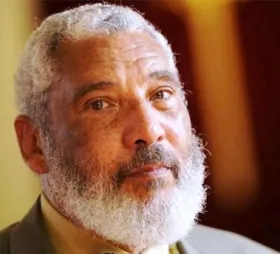
The Donkey-Human Rides Again

By Jim Perkinson, a Palm Sunday sermon for St. Peter’s Episcopal Church in Detroit, MI (04.02.2023)

And when they drew near to Jerusalem and came to Beth′phage, to the Mount of Olives, then Jesus sent two disciples, saying to them, “Go into the village opposite you, and immediately you will find an ass tied, and a colt with her; untie them and bring them to me. If any one says anything to you, you shall say, ‘The Lord has need of them,’ and he will send them immediately.” This took place to fulfil what was spoken by the prophet, saying,

“Tell the daughter of Zion,
Behold, your king is coming to you,
humble, and mounted on an ass,
and on a colt, the foal of an ass.”

The disciples went and did as Jesus had directed them; they brought the ass and the colt, and put their garments on them, and he sat thereon. Most of the crowd spread their garments on the road, and others cut branches from the trees and spread them on the road. And the crowds that went before him and that followed him shouted, “Hosanna to the Son of David! Blessed is he who comes in the name of the Lord! Hosanna in the highest!” 10 And when he entered Jerusalem, all the city was stirred, saying, “Who is this?” 11 And the crowds said, “This is the prophet Jesus from Nazareth of Galilee.”

So, begins the most profound communication in the public career of Jesus of Nazareth.  At the apex of his popularity, bringing his own movement “posse” from their home turf in the outback of Galilee to the central city in Occupied Palestine for an ultimate showdown in the Temple-State shrine, he confesses “lack.”  He “needs.”  And what he needs is a burro. Or ass.  Or donkey—they are all words for the same animal (but not a mule, as we shall see, and not a horse). 

Continue reading “The Donkey-Human Rides Again”

In Memphis. On the Mountaintop.

An excerpt from Dr. King’s final speech, in Memphis, on April 3, 1968. Exactly 55 years ago.

It’s all right to talk about “long white robes over yonder,” in all of its symbolism. But ultimately people want some suits and dresses and shoes to wear down here! It’s all right to talk about “streets flowing with milk and honey,” but God has commanded us to be concerned about the slums down here, and his children who can’t eat three square meals a day. It’s all right to talk about the new Jerusalem, but one day, God’s preacher must talk about the new New York, the new Atlanta, the new Philadelphia, the new Los Angeles, the new Memphis, Tennessee. This is what we have to do.

Now the other thing we’ll have to do is this: Always anchor our external direct action with the power of economic withdrawal. Now, we are poor people. Individually, we are poor when you compare us with white society in America. We are poor. Never stop and forget that collectively — that means all of us together — collectively we are richer than all the nations in the world, with the exception of nine. Did you ever think about that? After you leave the United States, Soviet Russia, Great Britain, West Germany, France, and I could name the others, the American Negro collectively is richer than most nations of the world. We have an annual income of more than thirty billion dollars a year, which is more than all of the exports of the United States, and more than the national budget of Canada. Did you know that? That’s power right there, if we know how to pool it.

Continue reading “In Memphis. On the Mountaintop.”

A Lexicon of Stringfellow’s Theology

By Bill Wylie-Kellermann, the author of William Stringfellow: Essential Writings (2013)

*See below for a chronological list of Stringfellow’s works (corresponding to initials & page numbers at the end of each entry).

Babel…means the means the inversion of language, verbal inflation, libel, rumor, euphemism and coded phrases, rhetorical wantonness, redundancy, hyperbole, such profusion in speech and sound that comprehension is impaired, nonsense, sophistry, jargon, noise, incoherence, a chaos of voices and tongues, falsehood, blasphemy. And, in all of this, babel means violence…By the 1970s in America, successive regimes had been so captivated by babel that babel had become the means of ruling the nation, the principal form of coercion employed by the governing authorities against human beings. EC, p.106-7.

Baptism …is often profoundly misunderstood. It is widely thought to be the sacrament of the unity of the Church. But that is not what baptism is; just as it is not mere membership or initiation ritual. Baptism is the assurance – accepted, enacted, verified, and represented by Christians – of the unity of all humanity in Christ… The oneness of the Church is the example and guarantee of the reconciliation of all humankind to God and of the unity of all humanity and all creation in the life of God. The Church, the baptized society is asked to be the image of all humanity, the one and intimate community of God. ID, p.111.

Blasphemy. In Revelation it denotes wanton and contemptuous usurpation of the very vocation of God, vilification of the Word of God and persecution of life as life originates in the Word of God, preemptive attempt against the sovereignty of the Word of God in this world, brute aggression against human life which confesses or appeals to the Word of God. CO, p. 69.

Continue reading “A Lexicon of Stringfellow’s Theology”

Banal Liberal Calls to Unity

An excerpt from a 2016 interview with professor, author and organizer Dylan Rodriguez, re-posted from theblackscholar.org

The following interview was conducted by Casey Goonan, an editor with True Leap Press. It originally appeared in the independent, open-access journal Propter Nos

Casey Goonan: The US white-supremacist state operates today through a different set of discourses and cultural structures than in previous epochs. Your work interrogates such shifts at a level of depth and nuance that is of particular importance for emergent struggles against racist state violence. “Multiculturalist white supremacy,” “post-racial liberal optimism,” “white academic raciality”—such terms are utilized throughout your work to interrogate a myriad of theoretical and historical conundrums that define the post-Civil Rights era, particularly in regards to racial violence and subjectivity. Can you, in very broad strokes, lay out what you are trying to accomplish with these interventions in the discourses, practices, and forms of embodiment that so violently delimit the possibilities for radical social change in the United States?

Dylan Rodríguez: The aftermath of American apartheid’s formal abolition has been overwhelmed by a grand national-cultural vindication of “Civil Rights” as the vessel of fully actualized gendered-racial citizenship. This fraud has, in various ways, facilitated rather than interrupted the full, horrific exercise of a domestic war-waging regime. For the sake of momentary simplicity, we can think about it along these lines: the half-century narrative of Civil Rights victory rests on an always-fragile but persistent common sense—the idea that national political culture (“America”) and the spirit of law and statecraft (let’s call this “The Dream”) endorse formal racial equality. Bound by this narrative-political context, the racist state’s mechanics shift and multiply to rearticulate a condition of normalized racist violence that is condoned or even applauded by the institutionalized regimes of Civil Rights. (It is not difficult to see how the NAACP, JACL, LULAC, Lambda, NOW, Urban League and other like-minded organizations condone or applaud domestic racial war, so long as it is directed at the correct targets: gang members, drug dealers, “violent criminals,” terrorists, etc.). In other words, the contemporary crisis of racist state violence is not reducible to “police brutality” and homicidal policing, or even the structuring asymmetries of incarceration: it is also a primary derivative of the Civil Rights regime.

Continue reading “Banal Liberal Calls to Unity”

Unrepresented and Overlooked

From author and activist Rebecca Solnit, re-posted from social media.

Memo to my fellow white people ostentatiously complaining about how they didn’t like Everything Everywhere All At Once. I loved the film but if I didn’t I’d be aware how meaningful it is to other people–notably Asian and Asian American viewers– and not dump on their joy. It’s a huge breakthrough film in a white-dominated industry, and some of you are sounding pretty….checked-out…in your grousing.

[There are lots of other works of art where it’s very clear how meaningful it is to someone else, often because they have long gone unrepresented and overlooked, and if it’s not resonating the same way for me, it’s my goal to be attuned to why it resonates for them, not foreground my grumpy limitations and my luxury of already having films/ music/ stories/ songs enough about people like me. But there’s also always the question of why something doesn’t resonate. Can you not identify with characters of another race/sexual orientation/background or enjoy spending time watching their lives unfold? If not, you might want to explore that. A lot of young and queer people also loved the film. I’m not saying everyone must like it; but I am saying that thinking about the why or why not could be useful and also that a lot of the complaining sounds pretty close-minded and mean-spirited and very middle-aged. Black journalist Eugene Robinson wrote today: “That is a level of Asian representation we have never seen before at the Oscars. In the past, the message from Hollywood to Asian actors and creators has ranged from, effectively, “squeeze yourself into this stereotyped pigeonhole” to “just stay the hell away.”’]

Entering the Womb Again: A Sermon for Straight Males (and Everyone Else)

By Jim Perkinson, a sermon for St. Peter’s Episcopal Church in Detroit, Michigan (March 5, 2023)

Last week Carvan asked me “What’re you gonna preach on!”  I said something like, “I don’t know yet—we’ll see.”  Only partially truthful—but human “knowing” is always a work in progress and for a 71-year old man, more like a bird flitting “now here, now gone,” than a rock sitting hard and fast on the ground.  But the response was also a way of keeping the door open, letting the wind in, as the gospel today retorts, making womb-space for new seeds to plant themselves and grow.  And sure enough, a new seed showed its face on the very morning of my beginning to sprout whatever it was I was going to say.  And contrary to our modern dried up relations with the plant world, seeds do have faces.  So, I will start there.

The New York Times this past Friday had a feature on the most recent museum display of Wangechi Mutu, Kenya artist straddling the Atlantic like her people have been made to do for 500 years now, crafting pain into vision, trauma into beauty, haunting and clairvoyant.  She sees the past and future all in one glimpse.  And opens the sight for any who would dare look.  But only, as John enjoins, if you are willing to be “born again.”               Am I?  Are you?  Hmmmm . . .

Continue reading “Entering the Womb Again: A Sermon for Straight Males (and Everyone Else)”

Take Action on Immigration

An appeal from Guillermo Torres of Clergy and Laity United for Economic Justice.

After four years of horrific immigration policies of the previous administration, I was somewhat hopeful (I say that because with politicians you never know) that things were going to change when the new Biden administration took over. But to my dismay, but not surprise, this administration had some major hick-ups right from the start. 

It started with the process of detaining unaccompanied minors and locking them up in a detention center in Texas that was previously used by the former Trump administration, located near toxic grounds. 

Then, after that, came horrific images of Custom Border Patrol agents in Texas pursuing and hurling their horses at Haitian asylees to detain them and deport them back to Haiti, this in the midst of a country that was experiencing horrific violence and reeling from an earthquake. 

Continue reading “Take Action on Immigration”

God’s Competition with Race, Gender and Nationalism

By Rev. Graylan Scott Hagler

“O say can you see,” stood in the place where God should be, and it didn’t wave but passively stood, planted, and seemingly unmovable across from the Christian flag, that is also red, white and blue. This is the scene in so many Christian houses of worship across the country. It serves as a reminder to the congregants that they are not only in America, but quietly and effectively offers the assertion that America is a Christian country, founded on Christian principles, and in order to be a good American necessitates being a Christian. Or, in the synagogue, on the Bimah, often stands two flags, an American one and the Star of David, that confirms not only American loyalty, but loyalty to another country, and to another political ideology. These symbols are not too subtle, and the implied message is God and country, and country or countries on the same level as God.

According to the theologies of the Judeo-Christian traditions there is no god greater than God, and there is this timeless struggle against idol worship in all its manifestations. We caution against worshipping money and riches, against pride and arrogance, we call for humility and the extension of love to our neighbors down the street and across the globe. We pray to keep God before us and above us, and seek to be accountable to that God. We strive to create a synthesis between our daily living and our worship, and seek to allow nothing to supplant the prominence of God in our lives. Yet, on these altars, these places that are set high and represents the loftiness and sacredness of God, stands symbols of nationalistic pride. They are placed in the place where the spirit and concept of God should reside, and we are therefore declaring that God must share sacred space with nationalistic symbols of pride, arrogance and militarism. Some would suggest that this is simply patriotism, but patriotism placed on the altar alongside the conceptional sacredness of God is the height of idolatry, and in Christian text we are taught,

Continue reading “God’s Competition with Race, Gender and Nationalism”