Adelante

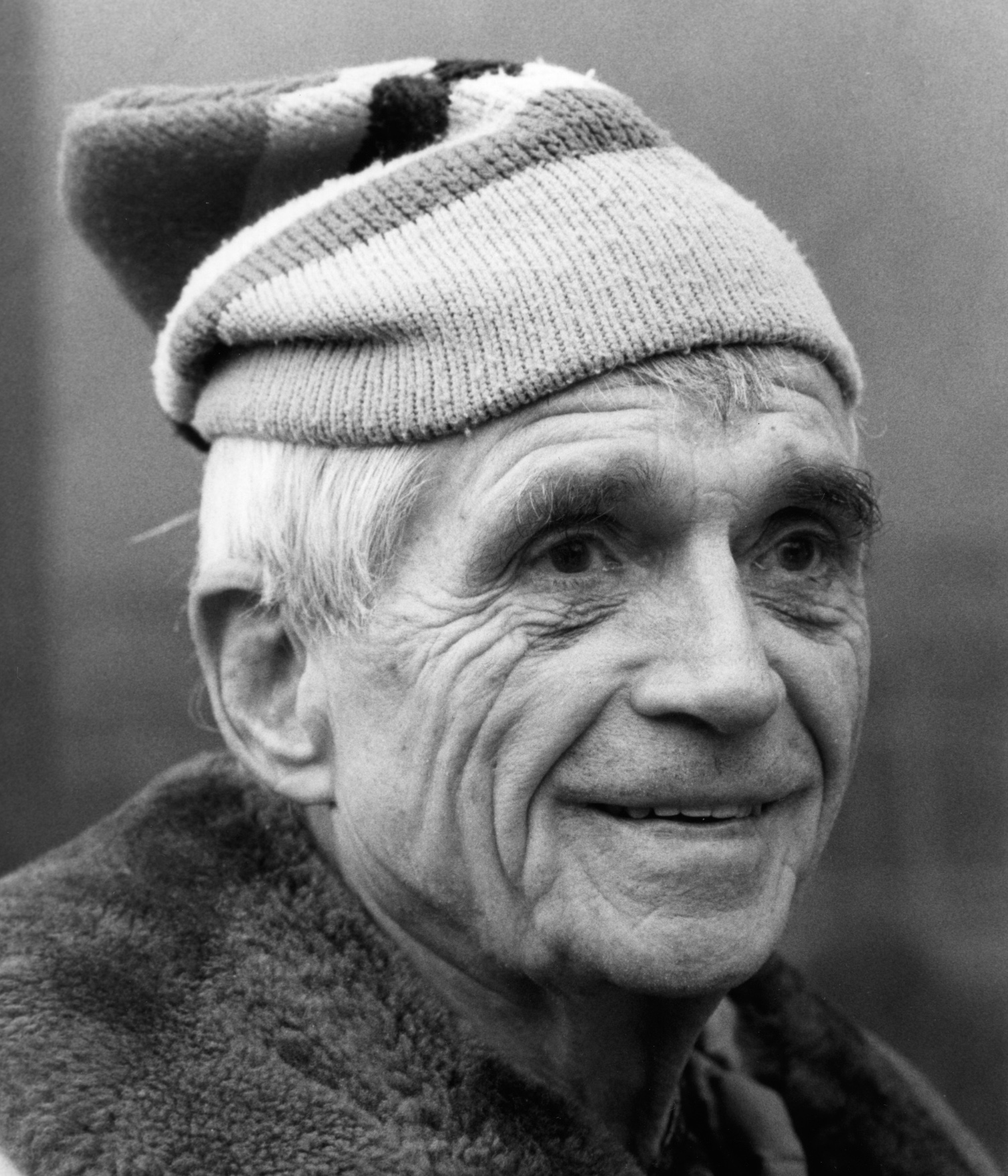
By Ruth Sawin, a letter to Daniel Berrigan (right)

Monday, November 10, 2014

Dear Fr. Dan,            

Having just finished your book, “The Steadfastness of the Saints,” on the flight home from El Salvador, I want to tell you of the gift that reading it on this journey has been, for me.               

I must first, of course, mention the twist in the gut that comes with reading about the work of Central American Jesuits, written five years before the martyrdom of six of them at the University of Central America, and more, since. You could not have known that would come, although I think you and all who worked in mission in Central America then knew that it was always a possibility.               

Also, during this trip we got the electrifying news that Fr. Jon Sobrino had announced that Rome announced on Tuesday (the day after we visited his tomb) that Monseñor Romero would be beatified in 2015… news which was contradicted in the edition of “La Prensa” I saw on the trip home. It seems fitting, given all the confusion that surrounded him in life, that news (or rumors) of the official recognition of the sainthood long recognized by the people, would come in confusing fits and starts. It really doesn’t matter; I still hear God whispering, “Adelante!”               

Continue reading “Adelante”

Collective Memory

From Rev. Jim Bear Jacobs, re-posted from Facebook (9/10/2021).

Before you post that #neverforget sentiment tomorrow, ask yourself; in the last 20 years have I told any Black or Indigenous person that they need to “get over it” “move on” “forgive and forget” when they posted about historical trauma? I know for a fact that some of you have. You no longer get to choose what is preserved as collective memory.

Summer Reading Subverting Supremacy Stories

By Tommy Airey, exclusively for RadicalDiscipleship.Net

This summer, Lindsay and I maneuvered a ministry of migration. We pivoted between and beyond the Kirkridge Retreat Center in the Poconos of northeast Pennsylvania, a studio apartment two blocks from the Deschutes River in Central Oregon and a wide stretch of beach on the Pacific Ocean on Acjachemen land in Southern California. I spent some of this time working on a book that lays out a biblical spirituality for white folks and middle-class people breaking rank from the default narratives of dominant culture. Those of us navigating the wilderness that borders both fundamentalism and liberalism need a spiritual training program for the ultra-marathon race of recognizing and resisting the supremacy stories scripted by whiteness, hetero-patriarchy, the profit motive, the penal system and patriotism.

My friend Sarah Nahar says this kind of inner work is like shedding colonial codes of conduct. Rev. Lynice Pinkard compares it to learning another language: speaking treason fluently. I like breaking rank because it sounds so subversive—what spirituality should be. Break rank with supremacy stories and you’ll gain your soul—and lose your social respectability. Try calling out capitalism at your church potluck. It sounds like a conspiracy, which in Latin means “to breathe with.” To grow our souls, us middle-class folk need mouth-to-mouth resuscitation. Because our hearts have stopped. But here’s the rub: we can only get CPR from those chronically oppressed by supremacy stories. So we start breathing with those who are Black and Brown, Indigenous and Immigrant, women and working poor.  

Continue reading “Summer Reading Subverting Supremacy Stories”

It Is Harder to End a War Than Begin One

By Rev. Graylan Scott Hagler, Senior Minister, Plymouth Congregational United Church of Christ & Director & Chief Visionary, Faith Strategies, LLC

Twenty years ago, planes crashed into the World Trade Centers, the Pentagon, and a field in Pennsylvania. There was disbelief, weeping, and shock as people in the affected areas looked for their loved ones. There was a deep eeriness in the air, and grief and disbelief set in, and then the tone began to shift to revenge and retribution. Chants began to arise like “USA! USA! USA!”  Politicians and preachers began to use the phrase “God bless America,” as if America was somehow more deserving of God’s blessings than anywhere else.

Three days later I was speaking on the phone with an insurance company representative about a personal matter, and the insurance representative paused the call so that the entire office could sing “God Bless America.” The news sources were all rattling their proverbial sabers, and it would only be a short amount of time before all the pistons would be firing in the war engine. It was a time 20 years ago, a moment, and a setting that the American public could be cajoled and sold anything seemingly patriotic and retaliatory, and it was. The military went into Afghanistan to dislodge Al Qaeda, and it stayed to create a new government and country. Something that the Soviets had tried to do previously. But that was not a history that the US learned from because the neo-cons and the defense contractors with the military industrialists decided that it was an opportunity to reconstruct a region in its own image, control the natural resources of the region, and to create governments loyal to the interest of the west and particularly the US.

Continue reading “It Is Harder to End a War Than Begin One”

Wasichu

An excerpt from Alice Walker’s Living By The Word (1988).

Wasichu was a term used by the Oglala Sioux to designate the white man, but it had no reference to the color of his skin. It means He who takes the fat. It is possible to be white and not a Wasichu or to be a Wasichu and not white. In the United States, historically speaking, Wasichus of color have usually been in the employ of the military, which is the essence of Wasichu.

The Wasichu speaks, in all his US history books, of “opening up virgin lands.” Yet there were people living here on “Turtle Island,” as the Indians called it, for thousands of years; but living so gently on the land that to Wasichu eyes it looked untouched. Yes, it was “still,” as they wrote over and over again, with lust, “virginal.” If it were a bride, the Wasichus would have permitted it to wear a white dress. For centuries on end Native Americans lived on the land, making love to it through worship and praise, without once raping or defiling it. The Wasichus—who might have chosen to imitate the Indians, but didn’t because to them the Indians were savages—have been raping and defiling it since the day they came. It is ironic to think that if the Indians who were here then “discovered” America as it is now, they would find little reason to want to stay. This is a fabulous land, not because it is a country, but because it is soaked in so many years of love. And though the Native Americans fought as much as any other people among themselves (much to their loss!), never did they fight against the earth, which they correctly perceived as their mother, or against their father, the sky, now thought of mainly as “outer space,” where primarily bigger and “better” wars have a projected future.

Continue reading “Wasichu”

A Kind of Radical Leaning

A few excerpts from Angela Flournoy’s interview with community organizer, scholar and mother-of-three Melina Abdullah in last weekend’s LA Times. The entire interview is well worth the read!

When we think about the Black Radical Tradition, we traditionally go back to the ’60s. But I think that we actually want to go back further — we want to go back to the moment that we were stolen from Africa. If we think about the freedom struggle from chattel slavery, Mama Harriet [Tubman] wasn’t saying, “Just end slavery,” she was saying, “Let’s get to freedom.” That’s the Black Radical Tradition, not just freeing ourselves from conditions but freeing ourselves from an entire system that’s built on our exploitation and our un-freedom. When you talk about the anti-lynching movement, Ida B. Wells and Mary Church Terrell, they were intent not just on ending lynching but also building a world where Black people could grow and prosper. The Black Radical Tradition is abolitionist. It’s about upending unjust systems. But also, there’s another side. Angela Davis reminds us you have to upend unjust systems and you have to envision and build towards new ones. You have to have the vision to build towards a new world.

Continue reading “A Kind of Radical Leaning”

Other Vehicular Pathways of Prayer

By Bayo Akomolafe, a re-post from social media (August 9, 2021)

Growing up in an evangelical Christian community meant I was coached to think of prayer as a direct line to heaven – a telephone call I could make anytime I wanted. The problem was: God didn’t always pick up.

How does one make sense of that?

Competing theologies of prayer had different ways of making sense of divine rejection. God said no when we had not atoned for unconfessed sins, intoned one theory. Another theory presumed the pre-eminence of God’s Will, an intelligently composed plan so far-reaching in its consequences, so cosmic in its details, so wise in its objectives, that the only way an omniscient, omnibenevolent deity could ensure its completion was to lovingly reject our counter-proposals scripted in mortal and flawed ignorance. The clergy class therefore exhorted us to “pray in God’s will”: that is, to learn the details of this vast fabric of Being, and thread our petitions through the embroidery of this predetermined material. If the answer we sought wasn’t coming, we were to keep praying anyway (“delay is not denial”). The rumour that God worked in mysterious ways kept things fresh and exciting.

Continue reading “Other Vehicular Pathways of Prayer”

Los Samaritanos

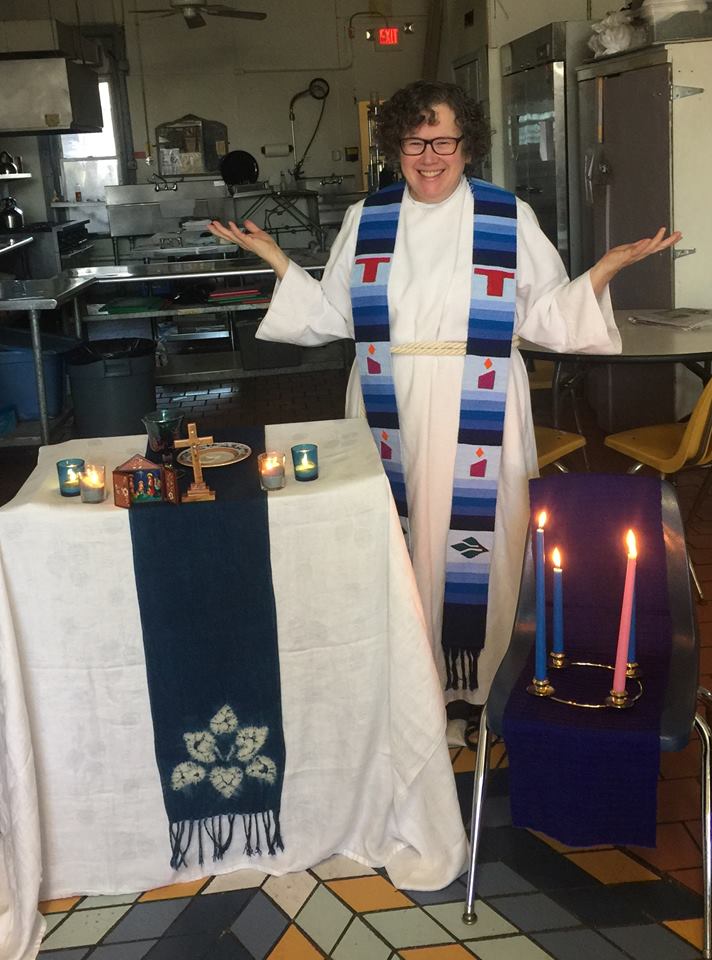
An update from Chava Redonnet (right), the priest at Oscar Romero Inclusive Catholic Church (Sunday, August 8, 2021).

Dear Friends,

Three years ago we invited some folks in Batavia to get together and talk about how we might support people being released from the detention center. Fili and his family had noticed that there was a need. We wanted to respond as St Romero’s but soon realized that we needed people who lived closer to the center, and needed the input and participation of people and churches in Batavia. The group that met that first night included several pastors – Presbyterian, Methodist, UCC, and myself, as well as some folks not connected with churches. It took us a while to figure out the details, but eventually we had a sign hanging up in the gas station where people are left to wait for a bus, with a number to call if you needed help and a bilingual person holding the phone, who could alert folks that there was a need. Fili told us that we should include on the sign the message, “You are not alone.”

Continue reading “Los Samaritanos”

A Public Accounting

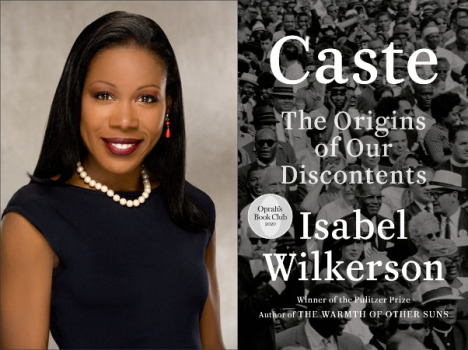
Photo credit: Joe Henson

An excerpt from Isabel’s Wilkerson’s Caste: The Origins of our Discontent (2020).

Our era calls for a public accounting of what caste has cost us, a Truth and Reconciliation Commission, so that every American can know the full history of our country, wrenching though it may be. The persistence of caste and race hostility, and the defensiveness about anti-Black sentiment in particular, make it literally unspeakable to many in the dominant caste. You cannot solve anything that you do not admit exists, which could be why some people may not want to talk about it: it might get solved.

The Absentee Landlord

By Greg Jarrell, re-posted with permission from his website (July 29, 2021). A sermon on Psalm 118 and Mark 12:1-12.

In January of 1960, Martin Waters of Waters Insurance and Realty stood before the Charlotte City Council to make one last plea to stop Urban Renewal. The council was set to vote that night, after a decade of starts and stops, to formally adopt the recommendations of the Charlotte Redevelopment Commission and to submit their final plans to the federal Urban Renewal Administration. The council planned to seize and destroy the Brooklyn neighborhood, a historic Black neighborhood that had been, for decades, one site of Black thriving and creativity in Charlotte. It had also been subjected to the long siege of Jim Crow policies. The vote in council chambers seemed like just a formal step, a foregone conclusion, but several people stood to speak in protest anyway.

They weren’t the first to lodge a protest. The local NAACP chapter in 1950, under the leadership of Kelly Alexander, Sr., had pushed a 10-point plan to remake Black neighborhoods in Charlotte. That plan argued for basic infrastructure, and for the elimination of exploitative landlording relationships that caused untenable living conditions for many tenants. Accomplishing even half of the NAACP’s plan would have radically altered the shape of those neighborhoods, including the Brooklyn neighborhood that in 1960 was in the crosshairs of the Redevelopment Commission. The NAACP plan might have eliminated the possibility of Urban Renewal a decade later by making it far more difficult for local white leaders to declare the area a “slum” and schedule it for demolition. (Doubting the tenacity of Charlotte’s elite in following through on a land grab might be a mistake, though.) Charlotte’s public and civic leaders ignored Alexander and the NAACP. And, landowners in Brooklyn – 90% or more of whom were white – went on ignoring the eroding conditions of their rental properties, though never ignoring the rent.

Continue reading “The Absentee Landlord”