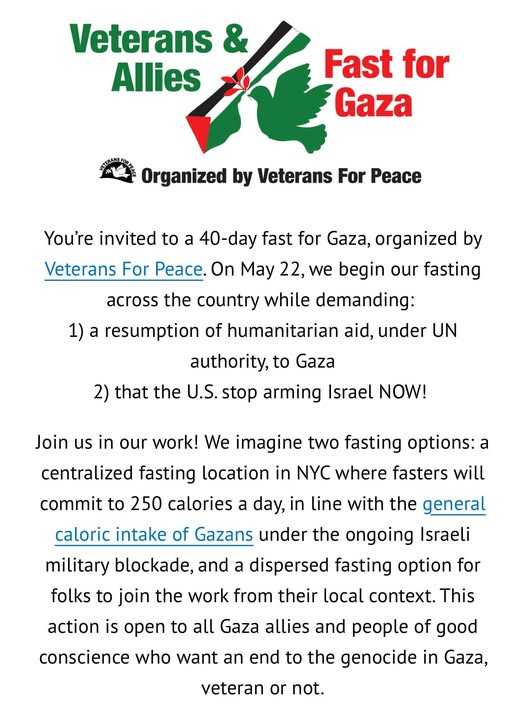
Register to join the 40-day fast for Gaza here. If you don’t have the capacity to fast for forty days, there is a great option to recruit a chain of fasters that last the 40 day action length. (For example, four people commit to 10 days spread across the action).
By Tommy Airey, re-posted from his Substack newsletter
Last week, I wrote about how the social construction project of empire hammers away at our humanity with all sorts of destructive norms. This week, I woke up on Monday morning to the jack-hammering of a construction project two blocks north of us on Rosa Parks Blvd, right across the street from Greater Faith Missionary Baptist Church.
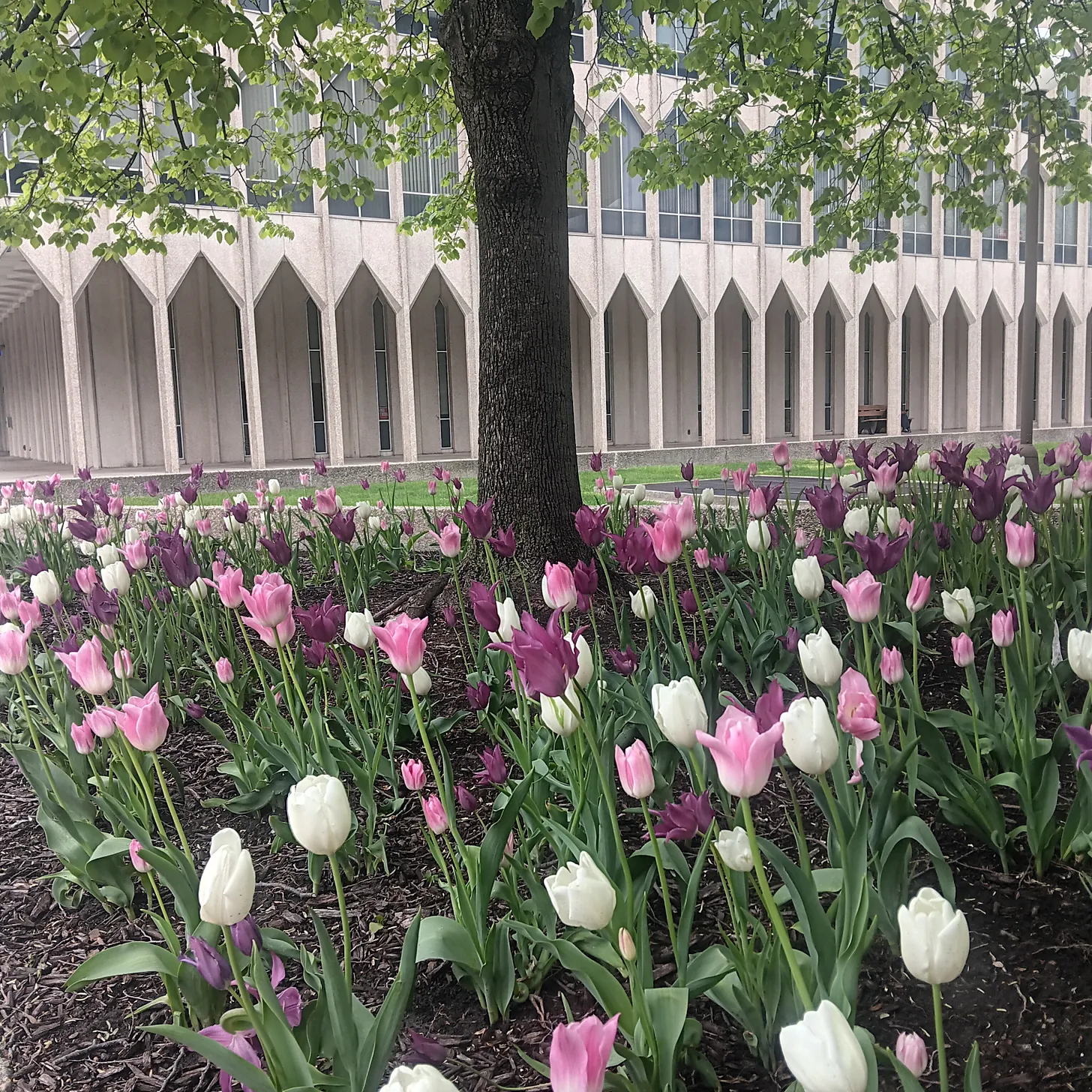
It’s Spring in Detroit. These days, the jack-hammering goes into overdrive.
My Celtic ancestors called this season Beltane, a whirling dervish of planting, budding, birds and bees, a time to celebrate abundance, fertility and fresh ideas. Beltane, which begins on May 1, literally means “bright fire.” My deep ancestors on the Emerald Isle cleansed their souls and sparked the land back to life by jumping over bonfires. They did this every year before they drove their cattle out to pasture.
Speaking of pasture, Psalm 23 comes up in the Western Christian lectionary this weekend. This ancient Hebrew text, famously read at funerals, describes the divine as a shepherd who restores our souls by leading us out of imperial construction projects, into a wilderness of green pastures and still waters. This feral Force, overflowing with goodness and steadfast love, is greater than empire itself.
From Dr. Stacey Patton, a journalist and professor at Howard University. Re-posted from social media.
Deep sigh.
So there’s chatter over a genealogist’s discovery of the new Pope’s Black relatives. The sudden excitement over a drop of Black ancestry in his bloodline is… weird.
As if that one ancestral thread is going to cleanse centuries of colonization, genocide, child abuse, and anti-Blackness woven into the very fabric of the Catholic Church. This institution literally weaponized Christianity to justify slavery, declared entire continents heathen wastelands, and baptized the whip before it struck the backs of Africans.
Do people think that a sprinkle of melanin in the papal family tree is some kind of moral redemption arc?
The Catholic Church has always been a war-mongering, imperialist machine. It funded conquest. It erased Indigenous cultures. It turned confession into control.
And it’s not like Black Catholics haven’t been sitting in pews for centuries, watching themselves be erased from religious iconography, leadership, and liturgy, all while being told to forgive white supremacy in the name of Jesus. But suddenly, because this Pope’s great-great-great somebody might have been Black, people think the Vatican might finally be about justice?
This is racial symbolism theater at its worst. Ancestry ain’t activism.
Unless that Black ancestry shows up as radical disruption, reparations, reformed doctrine, and full-throated repentance this is meaningless. Symbolic Blackness in a sea of institutional whiteness is just seasoning for white supremacy.
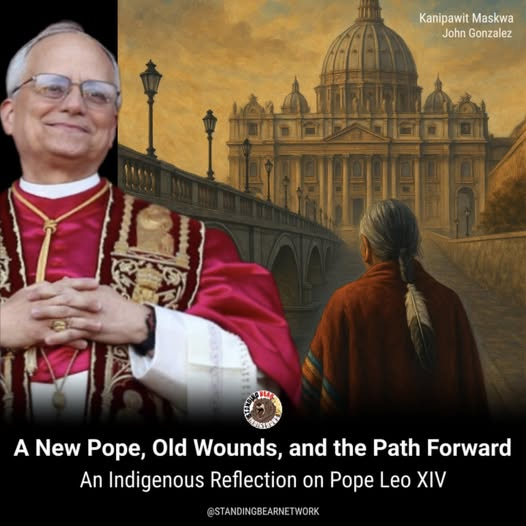
They say his name is Pope Leo XIV, and that he is the first to come from the United States. But to us, the First Peoples of these lands — the ones whose stories stretch back to the rivers, stars, and stones — we do not judge leaders by their titles, but by their relationship to the truth.
And so, we look closely.
Before the white smoke rose in Rome, Robert Francis Prevost spent years in Peru, walking among Indigenous peoples in the Andes. He was a missionary there — a man of the Church bringing his teachings into communities that already had their own ways of praying, healing, and knowing the land. Some say he offered education and support. Others know the weight that always follows when priests arrive with crosses in one hand and promises in the other.
He is no stranger to our communities — not by name, but by role.
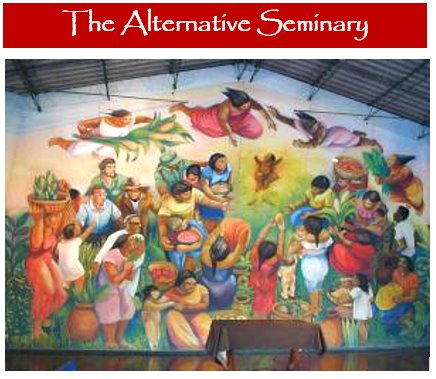
Another compelling offering from our friends at the Alternative Seminary.
A SIX-WEEK ONLINE COURSE
Thursday evenings, May 29 – July 3, 2024
7:00 – 9:00 pm EST
These are perilous times. In the United States today, we are witnessing the emergence of fascist authoritarianism. Undergirding this movement is a militant White Christian Nationalism – a dangerous heresy in which “American Jesus” is a gun-toting, law-and-order, pro-military, pro-capitalist, and racist Messiah of the Domination System.
We urgently need to recover the authentic Jesus of the Gospels. Together we will explore the radical and revolutionary vision of Jesus in the midst of this emerging fascism. What does Jesus mean in proclaiming “the reign of God”? How can we both prophetically challenge the idolatrous theology in U.S. society and seek to embody a faithful alternative? We will reflect on how the Gospel addresses issues of politics, economics, power, healing, community, and suffering, and how they can empower us to action. We will seek to draw from faith-based resistance movements, including the Confessing Church in Nazi Germany. We will struggle with how Jesus challenges us to be a Beloved Community in these insane and vicious times.
People all over the United States are being snatched up, disappeared, imprisoned, and deported. So how can we be careful amid these horrible conditions? Simply put, we can’t. We can be tactically prudent, but there’s no guarantee of safety for anyone serious about Palestine solidarity, or for anyone who is vulnerable by virtue of identity or legal status. There’s no guarantee of safety for anyone, really, in a world that so readily tolerates genocide.
“Be careful” has other uses and connotations.
For example, I would suggest that you be careful about nostalgia for a democratic polity that never was. Be careful about activists and organizations appended to the Democratic Party. Be careful about the podcasters who built an audience by caping for Bernie Sanders. Be careful about celebrities who moderate support for Palestine under pressure. Be careful about genocide profiteers in the film and publishing industries. Be careful about the next shiny young politician who comes out of nowhere to save us. Be careful about anti-Zionists who ignore Palestinians. Be careful about anyone who prioritizes the settler’s existential angst. Be careful about anything that tries to make a place for oppression in this world.
And, for God’s sake, please be careful about the supposedly radical luminaries interjecting liberal Zionism into conversations about Palestine.
In these instances, “be careful” isn’t an appeal for you to keep safe; it’s a demand that you seek to protect everyone else.
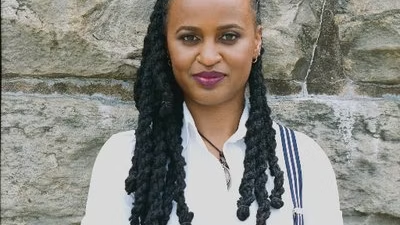
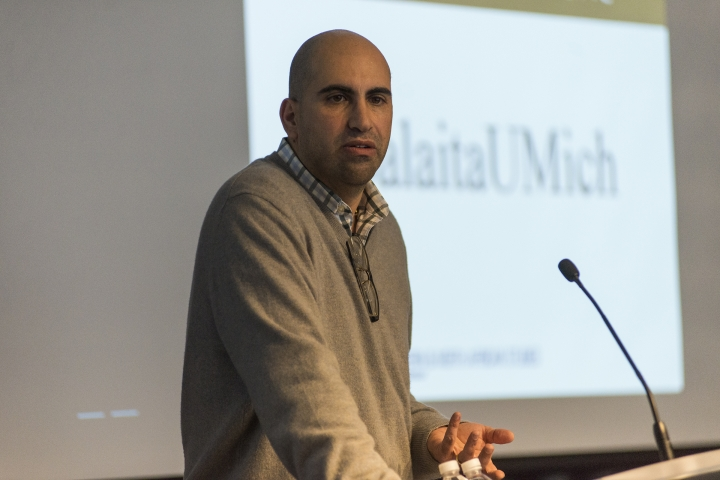
Re-posted from the social media account of Ashon Crawley (above), Professor of Religious Studies and African-American Studies at the University of Virginia
i am an abolitionist. i think naming harm is important so that you can repair. in this political climate, it can feel like the democratic candidate said at an event a couple weeks ago—”i told you so”—but, honestly truly, that’s not what the moment requires. the moment requires clarity and honesty. it is easy to misremember the past especially in times of political and economic tumult but that misremembering don’t change what things happened.
so a reminder:
people were being arrested and fucked up for saying free palestine. artists were losing installations, gallery representation and exhibits for watermelon in bios. professors and folks in other industries were losing jobs for even a suggestion that there should be a ceasefire. college presidents were giving hella milquetoast responses, being hella islamophobic, and still losing their jobs because it was determined they were not serious about antisemitism. people protested at mother emanual the violence palesinians were experiencing to the then-sitting president that was bypassing congress to provide that place with more weapons, and in the church shushed them, said it was shameful, and in the church cheered on biden and “four more years!” and said he and kamala were working “endlessly on a ceasefire agreement,” and this they said as that administration continued to bypass congress to provide weapons and money. my students were brutalized by police. and so many of my friends’ and colleagues’ students were too on campuses across the united states. no pro-palestinian voice was allowed to speak at the dnc, and as they protested by offering names and ages of those that were dying, they were literally laughed at and mocked. there was no general rebuke for this laughing and mocking. if mentioned at all, it was explained away.
and but also just yesterday, april 29, 2025, The Times of Israel periodical published the following: “God did the State of Israel a favor that Biden was the president during this period… We fought [in Gaza] for over a year and the administration never came to us and said, ‘ceasefire now.’ It never did. And that’s not to be taken for granted,” stated by former Israeli ambassador Michael Herzog.
that administration lied. explicitly. and continually. and they tried to suppress any organizing that third party folks were doing. the attempt to embarrass jill stein on the breakfast club, and then the advertisement to discredit her, both happened with these particular lies as the pretext for criticizing her and any third party folks in general. call it voter suppression. but no, the current conditions isn’t the fault of third party voters and leftists.
Another compelling offer from Christians for a Free Palestine on May 15 at 8pmEDT. Register HERE.
As Christians who recognize the troubling legacy of Christian supremacy and are committed to the safety and liberation of all people, we have a responsibility for the Christian roots of anti-Muslim hatred, its impact on U.S. foreign policy, and its implications for Palestine. More details to come.
This is the second in a series on Confronting Christian Supremacy. In April we discussed Christian supremacy, antisemitism, and Project Esther.
From Dr. Ezzideen Shehab (above), re-posted from social media on April 25, 2025. Support the publication of his first book here. Support his medical clinic in Northern Gaza here.
This morning, the heralds of decay, UNRWA and the World Food Programme, proclaimed what was already written in the bones of the living: the flour is gone, the food is spent, and the age of starvation has officially begun.
No more bread for the condemned.
No more hollow ceremonies of distribution.
Now, the mask has been torn away: the people are sentenced to death by hunger, and the world has chosen not to hear the verdict.
Behold! There is no economy, no labor, no dignity of exchange. The body, stripped of its last illusions, becomes an animal clawing at the dust. The soul, once capable of hope, sinks into a silent, grey despair.
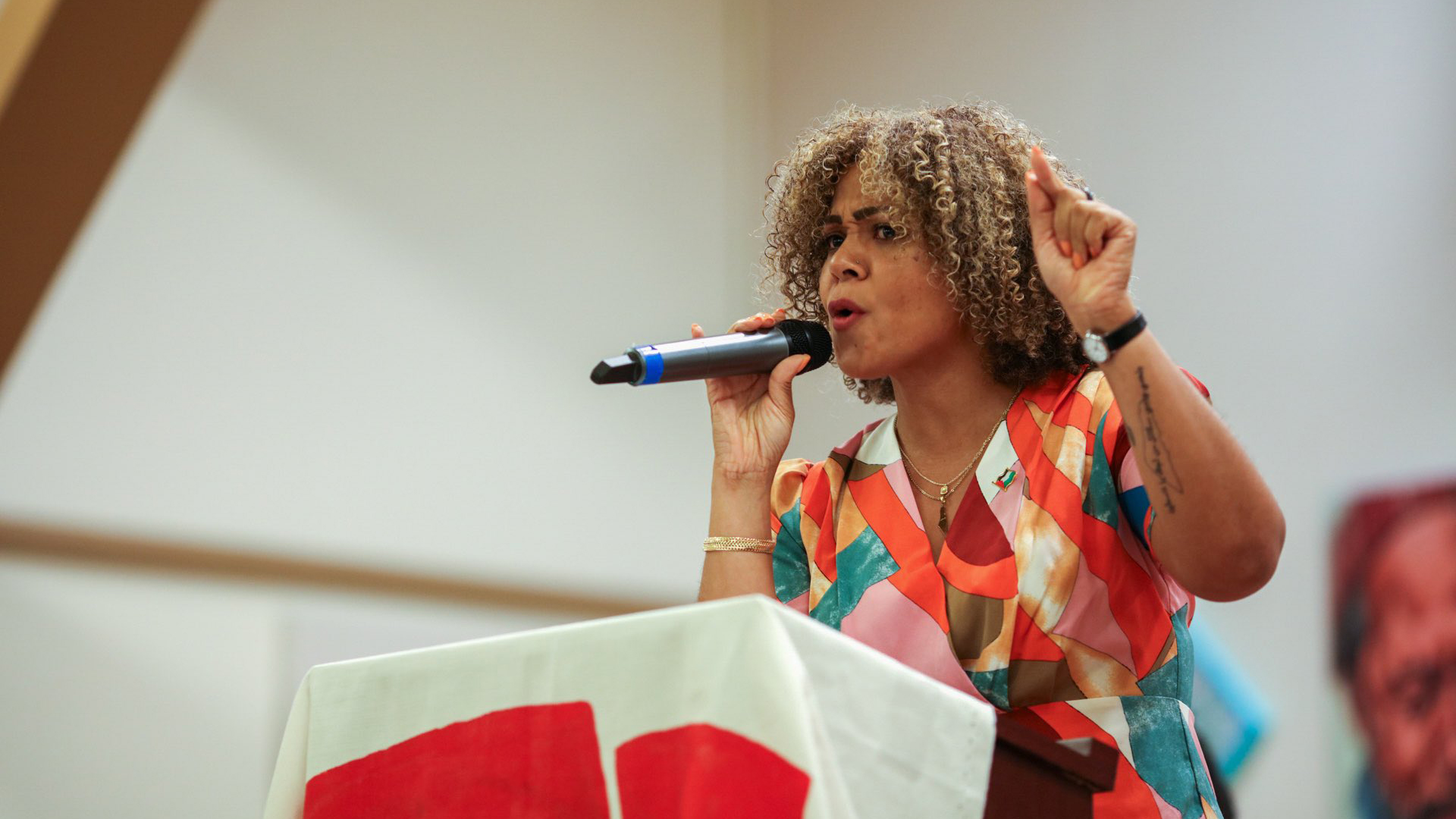
From organizer and theologian Claudia de la Cruz, re-posted from X (04.21.2025).
In November 2016, I participated in the 3rd Gathering of Social Movements in Rome. A process initiated by the @MST_Oficial
Pope Francis shared a powerful message that day which was anti capitalist and centered humanity and the planet as sacred. His message was one in defense of people’s dignity and the right to housing, land and work. He also shared a very humble request – “if you pray, pray for me. If you don’t, send me good vibes!” I couldn’t help but do both, after all, he was speaking these words from The Vatican- a place of power and contradictions.
As it is with many, his life wasn’t a straight line, but it was filled with moments of great courage and love for the people. He stood against blockades, sanctions, capitalism, militarism and genocide. He spoke up for Cuba, Palestine and all who’ve suffered as a result of oppressive and exploitative systems. His faith and convictions moved him in the direction of the people- as it should be.
Words from his speech to the movements who were present in Rome in 2016.
“Who is really in charge, then? Money. How does it govern? With the whip of fear, of inequality, and of economic, social, cultural, and military violence—a violence that breeds more and more violence in a downward spiral that seems never-ending. So much pain, so much fear!
As I’ve said before, there is a foundational terrorism that arises from the global control of money over the earth and threatens all of humanity. Terrorism truly begins when “you have cast aside the wonder of creation—man and woman—and replaced it with money.” That system is terrorist.
This warped system may offer certain cosmetic implants that are not true development: economic growth, technological advances, greater “efficiency” in producing things that are bought, used, and thrown away—dragging us all into a frenzied cycle of waste…
But this world does not allow for the full development of the human being —development that cannot be reduced to consumption, that is not limited to the well-being of a few, but that includes all peoples and individuals in the fullness of their dignity, allowing them to share as brothers and sisters in the wonder of Creation. That is the kind of development we need: human, integral, respectful of Creation, of this common home.”




 Radical Discipleship