What Would Happen if Jesus Came to Your Home?

ChedBy Ched Myers, Fifth Sunday in Epiphany (Mk 1:29-39)

Note: This is an ongoing occasional series of Ched’s brief comments on the Markan gospel readings from the Revised Common Lectionary during year B.
———————
In Mark 1:28, Jesus retreats to a home from his confrontation with the “Powers” occupying the synagogue, having created space for change. In Mark’s story, the home seems to be a safe site (5:38; 7:17, 24; 9:33; 10:10; 14:3), in contrast to the synagogue and Temple as places of conflict. Such “politics of space” no doubt reflected the experience of the earliest church—or of any social renewal movement’s relationship with established institutions of control. In this case, we should note that Jesus avails the hospitality of a peasant fisherman, setting the pattern that will continue throughout this story: Jesus abides with the marginalized.
Continue reading “What Would Happen if Jesus Came to Your Home?”

Agents of God’s Invasion

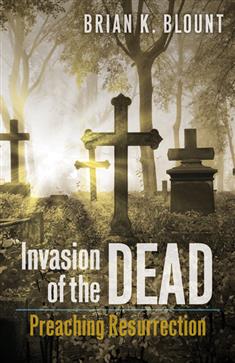
Invasion-of-the-DeadSince 2007, Brian Blount has been the president and professor of New Testament at Union Presbyterian Seminary, Richmond, VA, and Charlotte, NC. Before that, Dr. Blount was the professor of New Testament Interpretation at Princeton Theological Seminary for 15 years. In this interview, we focus on his most recent publication Invasion of the Dead: Preaching Resurrection (2014).
——————–
RD: What led you into researching and writing Invasion of the Dead?

BB: I initially wanted to write about our contemporary understanding and misunderstanding of apocalyptic literature. I was very interested in trying to help the church read apocalyptic literature in the context of the 21st century, particularly in light of the way contemporary popular culture was reading apocalyptic language and imagery. This concern developed because of my sense that popular culture had really taken a liking to material that the church had given up on, even though apocalyptic imagery is a part of Christianity’s birthright. The more I worked on it, the more I realized that there were many persons, like my former teacher, J. Christiaan Beker, already speaking to this issue. What they were not speaking to more specifically was the language of resurrection, which is consummate apocalyptic language. As I focused more and more, my interest went more and more to reading resurrection as an apocalyptic theological reality.
Continue reading “Agents of God’s Invasion”

Prayer

ripple_effectby tommy airey

Prayer from the heart can achieve what nothing else can in the world.
Gandhi

We do not want to be beginners [at prayer], but let us be convinced of the fact that we will never be anything but beginners, all our life!
Merton
…………………..
Prayer is a pilgrimage into the deepest recesses of our being. It is being attentive to God’s active presence both with us and within us. The 15th century Indian contemplative Kabir wrote that “God is the breath inside the breath.” The Apostle Paul quoted the philosopher Epimenides as he sermonized the Athenians: “For in him we live and move and have our being.” God is that energy and power and inspiration that we draw upon to live and thrive. Continue reading “Prayer”

The Movement For God’s Beloved Community

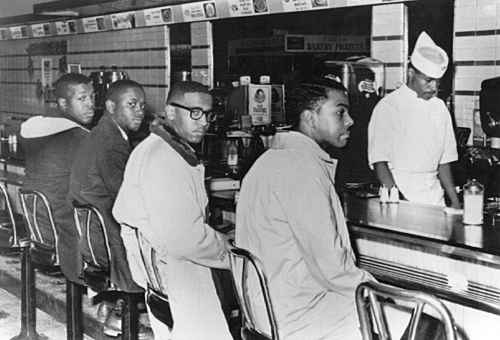
greensboro1Today, we honor those nonviolent freedom fighters who sparked the sit-in movement at lunch counters exactly 55 years ago. It is also the 50th anniversary of the first mass arrests in Selma–Dr. King and more than a thousand demonstrators, including more than 500 children were jailed on February 1, 1965 (many these same children prayed for Sheriff Clark’s speedy recovery from exhaustion outside a hospital days later). Lastly, we celebrate the 60th birthday of Ched Myers, a man who has committed his life to the legacy of Jesus & Martin Luther King. This is an excerpt from an article he published 10 years ago in Transmission (U.K) titled “Was Jesus a Practitioner of Nonviolence? Reading through Mark 1:21-3:19 and Martin Luther King”, an appropriate piece of vision-casting for all of us who dare to resist like it’s 1960 Greensboro & 1965 Selma:

At the end of their lives, Jesus and King were each hemmed in by all the factions of their respective political terrains. They had to navigate death threats from without, dissent from within their own movements, and had as colleagues only a relatively tiny group of feckless companions. But that is how it always is struggling for the Kingdom of God in a world held hostage by tyrants, terrorists, militarists, and kingpins, unaided by ambivalent religious leaders and insular academics and utterly distracted young folks. Despite all this, however, both Jesus and King chose nonviolent love without compromising their insistence upon justice. They believed that the movement for God’s Beloved Community was worth giving their lives to—and they invite us to do the same.

Breakin’ Down Messianism With Dr. Jim Perkinson

messianismJim Perkinson is a long-time activist and educator from inner city Detroit, where he has a history of involvement in various community development initiatives and low-income housing projects. He holds a PhD in theology from the University of Chicago and is in demand as a speaker on a wide variety of topics (especially race, class & colonialism). He is also a recognized artist on the spoken-word poetry scene in the inner city. Many of his works are published. In this interview, we home in on his 2014 work Messianism Against Christology: Resistance Movements, Folk Arts and Empire.
————–
RD: What’s the difference between “messianism” and “christology?”

J-PerkMessianism Against Christology: Resistance Movements, Folk Arts and Empire is a work committed to re-thinking the Christian tradition from the point of view of social movements rather than magnified individuals.   Jesus was a movement man—as were Moses and Elijah before him, and John the Baptist alongside him. “Messianism” is a word drafted into service as a movement term. Rather than focus on a great individual called “Jesus” comprehended as “the Christ,” the book examines his effort as part of a broader resistance initiative. The social movement launched by John was already in motion when Jesus first opts to begin public action. Continue reading “Breakin’ Down Messianism With Dr. Jim Perkinson”

Challenging the Status Quo: Jesus Contests Scribal Authority

Healing_of_the_demon-possessedBy Ched Myers, Fourth Sunday in Epiphany (Mk 1:21-28)

This is an ongoing occasional series of Ched’s brief comments on the Markan gospel readings from the Revised Common Lectionary during year B.

The first major narrative section of Mark’s gospel begins (1:16) and ends (4:36) by the shores of the Sea of Galilee. In it Mark paints a portrait of Jesus’ public ministry in and around the Galilean city of Capernaum. This series of episodes exhibits the three essential characteristics of Jesus’ mission: the healing and exorcism of marginalized people, the proclamation of God’s sovereignty and the call to discipleship. These practices result in escalating confrontations with the local authorities, culminating with open conflict in 3:1ff.
Continue reading “Challenging the Status Quo: Jesus Contests Scribal Authority”

The Unforced Rhythms of Grace

rest-and-recoveryBy Amy Epp, Associate Pastor for Christian Formation and Worship, Seattle Mennonite Church (you can read more of her writings here)

I have this knot in my shoulder.  It’s actually kind of dormant right now.  But when my shoulders start getting really tight, I know I’ve been working too much – or at least too much at my desk.  It’s the knot that tells me I’ve been carrying around the tension that is worry and stress and anxiety that comes from work.  I’m sure I’m not the only one who carries my work around in my body – ulcers have a kind of bad reputation for be the result of work-related stress.  Some people experience lower back strain.  Our bodies notice when we are working too much.
Continue reading “The Unforced Rhythms of Grace”

“Let’s Catch Some Big Fish!” Jesus’ Call to Discipleship in a World of Injustice

FishermenBy Ched Myers, Third Sunday in Epiphany (Mk 1:14-20)

This is an ongoing occasional series of Ched’s brief comments on the Markan gospel readings from the Revised Common Lectionary during year B.
——————-
The Sea of Galilee is the ecological and social setting of the first half of the gospel of Mark. A large freshwater lake about seven miles wide and 13 miles long, its shore is dotted with villages connected with the local fishing industry, the most prosperous segment of Galilee’s economy. The lake (also called Sea of Genneseret, Lake Kinneret or Lake Tiberius) is fed by the Jordan River, which flows in from the north and out to the south. Some 209 meters below sea level, it is the lowest freshwater lake on Earth. Due to this low-lying position in a rift valley, the sea is prone to sudden violent storms, as attested in the gospel stories.
Continue reading ““Let’s Catch Some Big Fish!” Jesus’ Call to Discipleship in a World of Injustice”

Claiming his body as his Own

ww communionWritten by Lydia Wylie-Kellermann for a neighborhood Eucharist.

In a time when we are so mindful of the violence and racism done to black bodies and mindful of the privileges of our own bodies, we pause as a community to remember another body. One that was targeted and murdered by another violent system over 2000 years ago. Continue reading “Claiming his body as his Own”

Baptized Into Our Bioregion

the-Baptism-of-JesusBy Ched Myers of Bartimaeus Cooperative Ministries, hosting the Festival of Radical Discipleship in mid-February in Oak View, CA:

Yesterday, the First Sunday after Epiphany, was the Feast of Jesus’ Baptism. In the gospel reading, a particular preposition is used in refrain in Mark 1:9-12. Everyone else is baptized by John in the Jordan, but Jesus is baptized into the river (Gk, eis ton Iordanēn). Then that wild bird descends onto or into Jesus (eis auton). And right after this, Jesus journeys deep into the wilderness (eis tēn ‘eremon), on his “vision quest.”
Continue reading “Baptized Into Our Bioregion”