The Recovery Room

By Tommy Airey

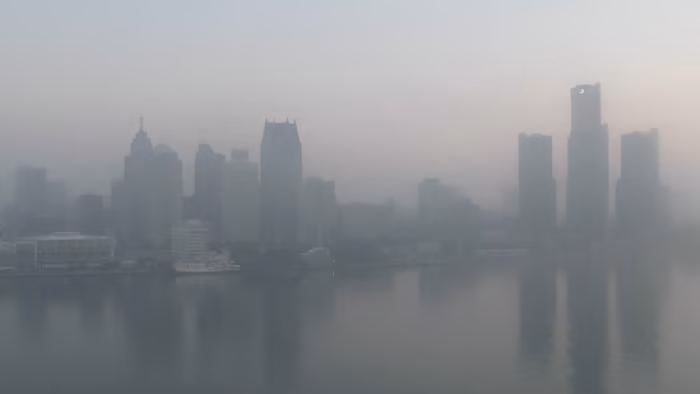
After a thirty-month delay, I finally went in for hernia surgery last week. Lindsay hauled me over to the hospital in Grosse Pointe, Michigan – Detroit’s eastern adjacent suburb. As soon as we crossed Alter Road, everything changed. The mourning turned into mansions. Dr. King gave a speech in the high school gym in Grosse Pointe three weeks before he was assassinated. He talked about the two Americas. Those who grow up in the sunlight of opportunity – and those barely surviving in the fatigue of despair. During the speech, he was shouted down – several times – by white people who did not appreciate some outsider telling them that racism was still a real thing.

The day before my surgery, I drove to the lab in Grosse Pointe to get my pre-surgery blood screening. A Black woman was working the front desk. While I was waiting, an unmasked white man in his seventies walked in asking where to sign in. She pointed to the table and told him he needed to put on a face covering. He looked at me and shook his head, muttering that he had one in his bag. I stared him down. He didn’t sign in. When he found his seat across the room, he looked at me again. I just stared back. We both grew up in the sunlight of opportunity, but I wanted him to know that I would not be signing off on his supremacy story.

Across Jefferson Boulevard from the hospital, the yards of the mansions are lined with election signs promoting the GOP candidate for Secretary of State who got her masters degree in Christian Apologetics from BIOLA and is adamant the 2020 election was stolen. Many signs say, “Vote No on Prop 3,” the reproductive justice measure that got more signatures than any initiative in Michigan history. When we arrived at the hospital on the morning of my surgery, everything was quick and convenient. Parking spaces were abundant and free-of-charge. It was a close walk to the lobby. The surgery wing was a well-oiled machine. I did not wait long to get in.

Continue reading “The Recovery Room”

Taking Sides

An excerpt from Jonny Rashid’s new book JESUS TAKES A SIDE (2022). See below for details of an online event Jonny is hosting with The Alternative Seminary this Saturday!

Our church’s first love feast after Donald Trump was inaugurated as president of the United States changed me.

Our church celebrates something called the love feast, also known as an agape feast in some traditions. It is a worship meeting where we fellowship and reconcile among one another, letting our love and unity prevail. You can find references to love feasts in Jude and 1 Corinthians 1. At them, we eat together, welcome new members, and take communion. At our love feast in January 2017, our team had assigned me to offer the words of institution and the elements of communion to the assembly.

Admittedly, my mind was elsewhere. Donald Trump’s first executive action as the new president was in effect. We know it colloquially as the Muslim ban, but formally it is Executive Order 13769: Protecting the Nation from Foreign Terrorist Entry into the United States. It was a travel ban against people from a list of Middle Eastern countries and it had gone into effect that Saturday. It barred entry for anyone (with some exceptions) from Iran, Iraq, Libya, Somalia, Sudan, Syria, and Yemen. I got a notice on my phone that there were Arab immigrants in airports and they could not enter into the country because the ban was in effect.

Continue reading “Taking Sides”

Salvation as Wealth Redistribution

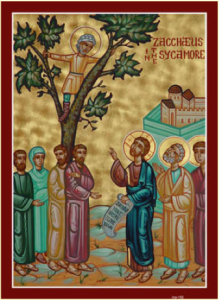
zaccheusBy Ched Myers, on Luke 19:1-10, re-posted from October 2016

First, as always, let’s put this Sunday’s gospel reading in its broader narrative context. The story of Zacchaeus represents the culmination of one of Luke’s important subplots: Jesus’ challenge to rich men (Gk plousios) to “turn their lives (and assets) around.” As pointed out in previous posts, this narrative strand forms the backbone of Luke’s “Special Section” (Lk 11-19), a pattern worth reiterating here (with links to my comments earlier this year):

Continue reading “Salvation as Wealth Redistribution”

The Universe’s Hubs of Unspeakable Creativity

By Bayo Akomolafe, re-posted from social media (October 18, 2022)

An obstacle is the richest, thickest, densest place in the universe. This is so because it is where things stop and often die, failing to continue on their way. It is where carcasses of hope rot into the ground, inadvertently fertilizing it. It is a place of desperation and longing and roaming ghosts.

All of this is my way of saying that I think it is not empty. This place – an obstacle – is bursting with activity, with microbial adventures, with dancing generativity, with experiments into continuity, with playful meanings and alchemical shifts, with eloquent invocations and stuttered words.

Continue reading “The Universe’s Hubs of Unspeakable Creativity”

The Cross in the Midst of Creation

How do activism and scholarship contribute to our understanding of Scripture in the world today?

October 20, 2022, 7:30pmEDT on Zoom

CLBSJ and the Alternative Seminary warmly invite you to join us for a dialogue emerging from Rev. Sharon Delgado’s new book, The Cross in the Midst of Creation: Following Jesus, Engaging the Powers, Transforming the World. Joining Delgado in conversation will be Daryl Grigsby, author, community organizer and lay theologian. Both Delgado’s and Grigsby’s theological reflections are rooted in their decades of work for economic equality, climate justice, racial healing, and peace. Today’s society is increasingly difficult to navigate, burdened as it is with violent political discourse, widening racial division and lies accepted as truth. This difficulty is compounded with increasingly virulent public manifestations of white Christian nationalism that convey exclusion and violence. Delgado and Grigsby will explore how their understanding of scriptures, spiritual practices, and lifetimes of struggle inform their mutual conviction that despite all the bad news, the message contained in Jesus’ life, ministry, crucifixion and resurrection — which Paul called “the word of the cross” in 1 Corinthians 1:18 — offers good news that is deeply relevant today.

Continue reading “The Cross in the Midst of Creation”

Between Red Bird Songs and Brown Squirrel “Skalds”: Learning from the Poetry Outside My Door

By Jim Perkinson, a sermon for St. Peter’s Episcopal, a riff on Luke 12:22-31 for “Animal Sunday” in the Season of Creation Readings: Year C

I woke up this morning an old man—an experience recurrent over recent months here at the far end of pandemic shifts in life and schedule and interaction.  I have not the energy I had before my classrooms miniaturized from a 20 by 30 ft space of animated bodies to a 12 by 15 inch screen flattened into pixelated colors and shapes.  I cannot strut and gesture, advance and retreat with my ideas taking on flesh and then resounding, reverberating, up-thrusting like rock or quieting like mist in the rhythmic back and forth of in-person engagement.  My body is bereft and grieving.  And that grief is but a minute fragment of what ghosts my bones now, as I become ever more aware of what I have lost—not just in recent years, but recent centuries and indeed millennia, that yet echo as traces and sighs, unspoken and unspeakable in my veins and hair, my nose and ear—ancestors that whisper and pulse and haunt, whose own grief and jubilation has no anatomical muscle adequate to its tones and cadence. 

Continue reading “Between Red Bird Songs and Brown Squirrel “Skalds”: Learning from the Poetry Outside My Door”

Prodigal Prodigality Versus Village Party: On Not Killing the Fatted Calf

By Jim Perkinson

One of the effects of the irruption of Global South thought into Global North theology in the last half century is a re-reading of the bible from within the experience of poverty.  Not least among the new insights occasioned by this re-reading is that concerning the parables.  Scholars like Walter Wink and William Herzog and popular cultural educators like Ched Myers have made us aware that such folk stories, read in social context rather than spiritualized and universalized, have the character of political cartoons.  Rather than allegories offering us characterizations of God or Jesus, they are better understood as politically-coded riddles, inviting their hearers to judge for themselves the situations they find themselves in.  In 1st century Palestine among an oppressed people, they often served a function of consciousness-raising, provoking peasant listeners to dare risk thinking and voicing their own interpretation of events and discover their own wisdom.  Only indirectly and obliquely do the parables speak about God, and then only by way of unmasking domination and uncovering the cry of anguish it silences.  The results of such a contextual reading can be startling. 

Continue reading “Prodigal Prodigality Versus Village Party: On Not Killing the Fatted Calf”

Dirt Clods for Love

By Nichola Torbett, a sermon re-posted from The Longing is the Compass (September 6, 2022)

I was honored to preach the following sermon at Skyline Congregational Church, UCC, on September 4, 2022. The focus scripture was Luke 14: 25-33.

That subtitle comes from a quote from Carl Jung, from a part of his Red Book in which he was describing his spiritual journey. He says, “In my case, Pilgrim’s Progress consisted in my having to climb down a thousand ladders until I could reach out my hand to the little clod of earth that I am.”

[Invite people to visualize this in a little guided meditation–descending the ladders, the clod of earth that is myself. Notice sensations in the body, emotions (grief? fear? relief?), resistance.]

I think this “dirt clod” image provides us with a key to this very challenging text from the gospel of Luke.

Continue reading “Dirt Clods for Love”

The Way Costs Exactly Everything

BabelBy Wes Howard-Brook & Sue Ferguson Johnson, a commentary on this weekend’s Gospel text, re-posted from September 1, 2016

It is no mystery who Luke’s audience is in this week’s Gospel (14.25-33): “For which of you, intending to build a tower (Gk, purgon)…” (14.28). Clearly, this is not a building plan envisioned by landless peasants, lepers and other poor and marginalized people. Luke is speaking here to the young elite of the Roman Empire, seeking to instill in them the cost of rejecting their imperial formation and choosing Jesus’ Way of discipleship. Continue reading “The Way Costs Exactly Everything”