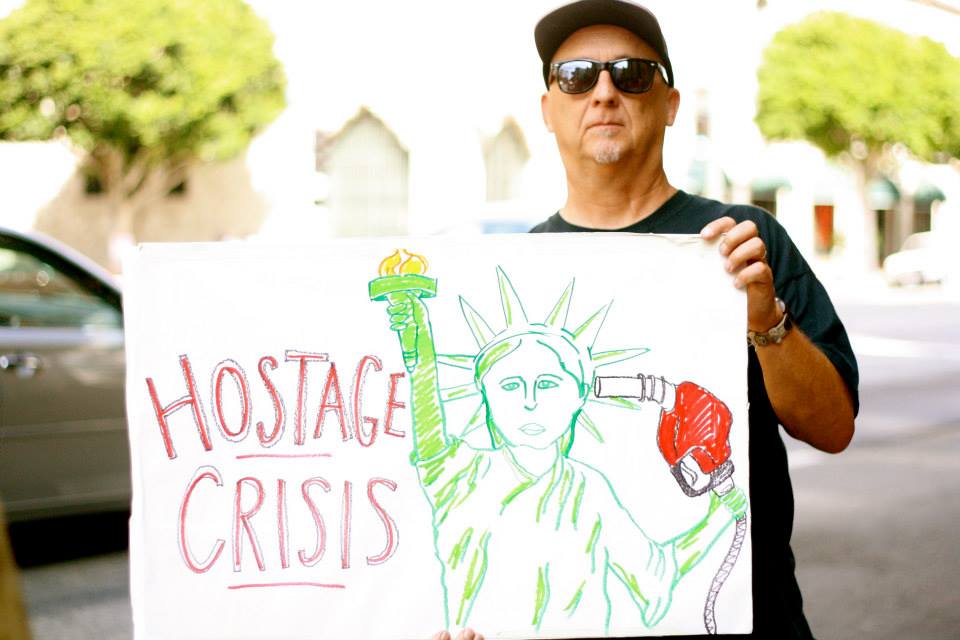
Common Sense

By Tommy Airey

*Trigger warning: this post includes content, straight out of Rush Limbaugh’s mouth, that some readers may find offensive and/or traumatizing.  

“I take no pleasure in the death of the wicked man, says the Lord,
but rather in his conversion, that he may live.”—Ezekiel 33:11

Rush Limbaugh died last week. When I heard the news, it took me back thirty years. During the Fall of my senior year in high school, I went on a weekend road trip from Orange County to Berkeley to surprise one of my best friends at college. I drove up with his dad. We parked a block from the hippies and unhoused on Telegraph Avenue. When my friend came down from his dorm room, I was hiding in the trunk of the car. His dad handed him the keys to open the trunk. I scared the living tar out of him.

I will never forget the look on his face.

I will also never forget stopping at In-n-Out Burger three times during our drive up.

And I will never forget listening to Rush Limbaugh for three straight hours through the most boring stretch of the 5, plowing past towns like Buttonwillow, Lost Hills and Los Banos. Spanish for “the bathrooms.” Plural and Providential. What we needed for all that bullshit blaring through the speakers.

Continue reading “Common Sense”
Nerve Us Up

By Ken Sehested

This past Sunday one of our members, Stan Wilson, offered the “call to the table” in our congregation’s zoom worship screen-gathering. He led with a suggestion that was equivalent, in my hearing, to a thunderclap.

“How about for Lent this year we give up Donald Trump?”

It was a table invitation (we celebrate the Eucharist every week) and an altar call rolled into one. And it certainly had my name on it.

The last four years in the US have been a national demolition derby, a Three-Stooge-esque comedy of incompetence and disrepute, a racketeer’s paradise and grifter’s playpen—only with real-world torment, particularly for those here and abroad with little shelter from the abuse.

Continue reading “Nerve Us Up”

A Deeper Lent

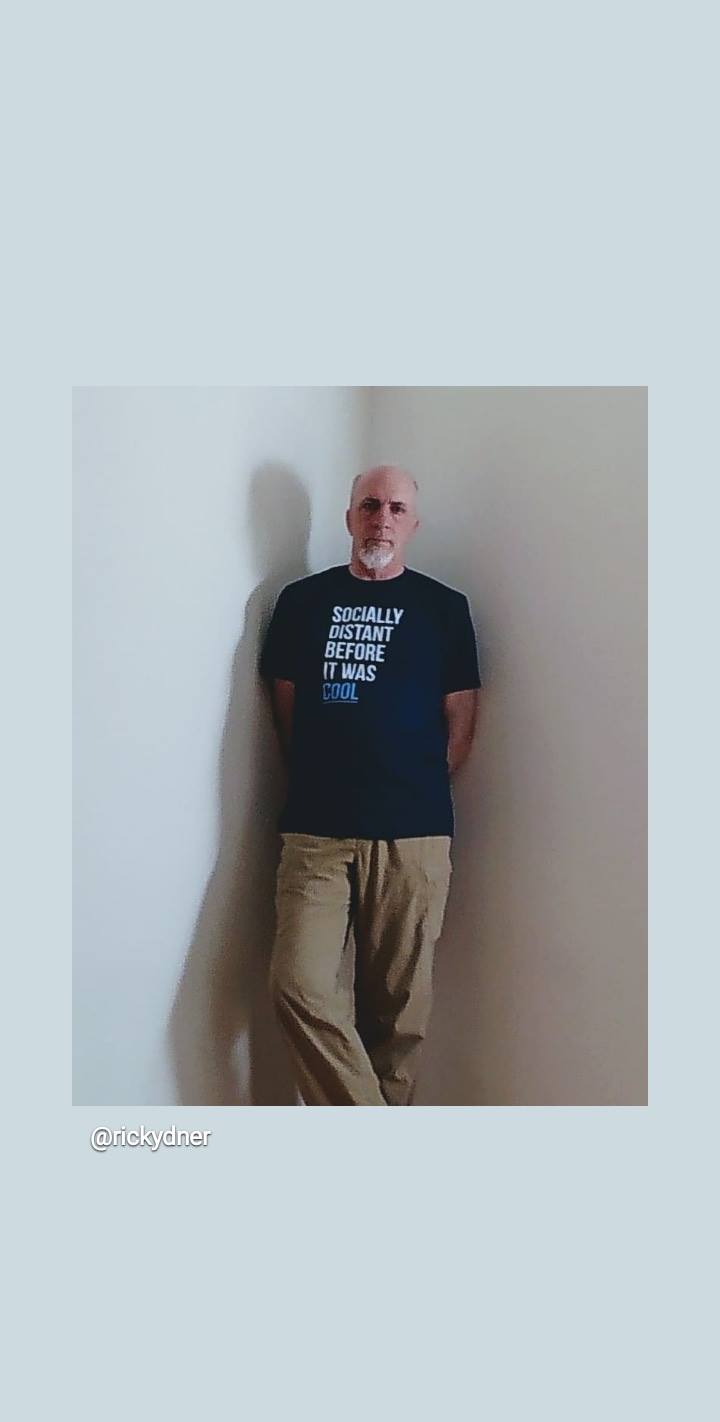
By Ric Hudgens (right), a reflection from the Ash Wednesday service at North Suburban Mennonite (2/17/2021)

It feels as if we’ve been observing Lent all year. Always Lent and never Easter.

Almost a year ago we started wearing masks, separating from family and friends, working from home, moving to remote worship services, learning to sublimate desire on a daily basis. As the poet Anne Sexton wrote: “Your courage was a small coal that you kept swallowing.” 

I’m tired of swallowing coal.

Under normal circumstances (remember those?) I anticipate and savor the season of Lent. I savor how it focuses on our finitude, the certainty of our death, and our organic connection to the earth. The imposition of ashes and the declaration “dust thou art, to dust thou returneth” is a clarifying reassurance in the midst of much that is uncertain and confusing.

Although these elements are not the entirety of the Christian message, they have always seemed to me fundamental and necessary.

I love this season for its potential earthiness. Lent’s ability to ground us in the physical realities of our bodies and of our daily lives. I appreciate that recurring discovery that an annual confrontation with death can be a life-giving experience.

Continue reading “A Deeper Lent”

THE CROSS OF CHRIST: A JUSTIFICATION FOR REDEMPTIVE VIOLENCE OR A CALL TO GOSPEL NONVIOLENCE?

A timely Lenten offering from the Alternative Seminary in Philly. An online gathering on Saturday morning.

The cross can heal and hurt; it can be empowering and liberating but also enslaving and oppressive … I believe that the cross placed alongside the lynching tree can help us to see Jesus in America in a new light, and thereby empower people who claim to follow him to take a stand against white supremacy and every kind of injustice.” 
― 
James H. Cone, The Cross and the Lynching Tree

 We are witnessing how the Christian faith has been contorted to almost unrecognizable shape and put at the service of empire – even though the founder of the faith was executed by empire. The cross of Christ, perhaps the central image of Christian life and thought, has been frequently been used to promote the idea of “redemptive violence,” and has been directly or indirectly used to vindicate and even bless human violence.

Continue reading “THE CROSS OF CHRIST: A JUSTIFICATION FOR REDEMPTIVE VIOLENCE OR A CALL TO GOSPEL NONVIOLENCE?”

The Liberating Spirituality of Vincent Harding

By Ric Hudgens

PC: Ryan Rodrick Beiler

In homage to Black History Month, I’m reposting this essay about one of my heroes Dr. Vincent Harding (1932-2014). This is slightly edited from the original which was written for “The Movement Makes Us Human”, Rock! Paper! Scissors!, Vol 1, No 1, edited by Joanna Shenk, 2018. A bit out of the beaten path of these essays, but revealing the roots of my own journey through this time.

Introduction

We knew how blessed we were by the gifts of Vincent Harding as a historian, educator, and “veteran of hope.” Less known is the contribution Harding made to the development of the first generation of black theology. 

Theologian Dwight Hopkins writes that Harding “has had a profound effect on the development of contemporary black theology in the United States, particularly the young black theology of the 1960s and early 1970s.” Harding’s essays in the mid-1960s preceded James Cone’s writings and described a religious spirit rooted in the beauty, horror, and creativity of the black experience. But Harding disavowed any formal interest in black liberation theology. “I’m much more interested,” Harding told Hopkins, “in the liberation of spirituality.” It’s the contribution of Vincent Harding to liberation spirituality that interests me here. [See Dwight Hopkins, Black Theology USA and South Africa: Politics, Culture, and Liberation, “Vincent Harding,” Wipf & Stock, 2005, pages 81-84].

Continue reading “The Liberating Spirituality of Vincent Harding”

There is Still No More Compelling Alternative

Happy Birthday to Ched Myers! Today, we honor this cherished mentor and elder with an excerpt from Binding the Strong Man, Uncle Ched’s groundbreaking political reading of Mark’s Gospel. Written in the late 80s. More relevant than ever!

The radical discipleship movement today is beleaguered and weary. So many of our communities, which struggled so hard to integrate the pastoral and prophetic, the personal and the political, resistance and contemplation, work and recreation, love and justice, are disintegrating. The powerful centrifugal forces of personal and social alienation tear us apart; the “gravity” exerted by imperial culture’s seductions, deadly mediocrities, and deadly codes of conformity pull our aspirations plummeting down. Our economic and political efforts are similarly besieged. The ability of metropolis to either crush or co-opt movements of dissent seems inexhaustible.

Continue reading “There is Still No More Compelling Alternative”

Enabling America’s Racial Violence

By Rev. Graylan Scott Hagler, Senior Minister, Plymouth Congregational United Church of Christ and Director and Chief Visionary, Faith Strategies, LLC

In my ministry in the 1980s in Roxbury, Massachusetts with the recovering community from drug addiction, I encountered one of our struggling addicts and his spouse.  He had been using though he was supposed to be in recovery.  I shall never forget his explanation of his struggle to remain clean.  He said when questioned by me, that I did not understand, his “relapses were getting shorter and his recoveries were getting longer!”  His spouse agreed with that reasoned explanation, though I realized his con, but unfortunately his spouse enabled his addictive behavior until he died of an overdose.  This was a poignant lesson for me. I see in this lesson how we may enable destructive behavior seeking and hoping that the reasoning and rationalization is true.  The rationalization deters us from confronting the real issues where the so-called recovering addict was not recovering, but the avoidance of the issue and the realities would offer some comfort even while eventually leading to death. 

As I see it, the United States is in the same boat as the recovering addict. The nation claims to be dealing with its problem of racism, white supremacy, and white idolatry, or claims at times that it has dealt with its problem, rationalizing the progress, when the progress is strained if at all existent. Our behavior as a nation has not changed, and we rationalize our race problems, and pretend that what exists does not exist, and that before long we will be cured.  This is how racism and white supremacy remain a persistent disease in the country, and after more than 400 years have not been dealt with, and we continue to claim that our “recoveries are getting longer” and our “relapses are getting shorter,” but the problems of racism and white supremacy remain a fixed reality as most of America delude itself believing that we as a nation is getting better. 

Continue reading “Enabling America’s Racial Violence”

A Vision of Beauty

By Rev. Solveig Nilsen-Goodin, Salt and Light Lutheran Church, Sunday, January 24, 2021, Mark 1:14 – 20

Well friends, it’s January 24. Far and away the most common response I’ve received to the question, How are you feeling since January 20? is…RELIEVED. Not a naive, “Oh everything is going to be fine now” kind of relieved, but a clear and palpable sense of relief nonetheless. 

Two images of the nation’s capitol, two weeks apart, have now been seared into our psyches and could not be more striking…one from January 6, and one from the very same place just two weeks later on January 20. Nearly everyone who spoke on Inauguration Day spoke to this stark contrast, though Amanda Gorman said it best:

“We’ve seen a force that would shatter our nation rather than share it, would destroy our country if it meant delaying democracy. And this effort very nearly succeeded. But while democracy can be periodically delayed, it can never be permanently defeated.”

Continue reading “A Vision of Beauty”

A Cadence

By Tommy Airey

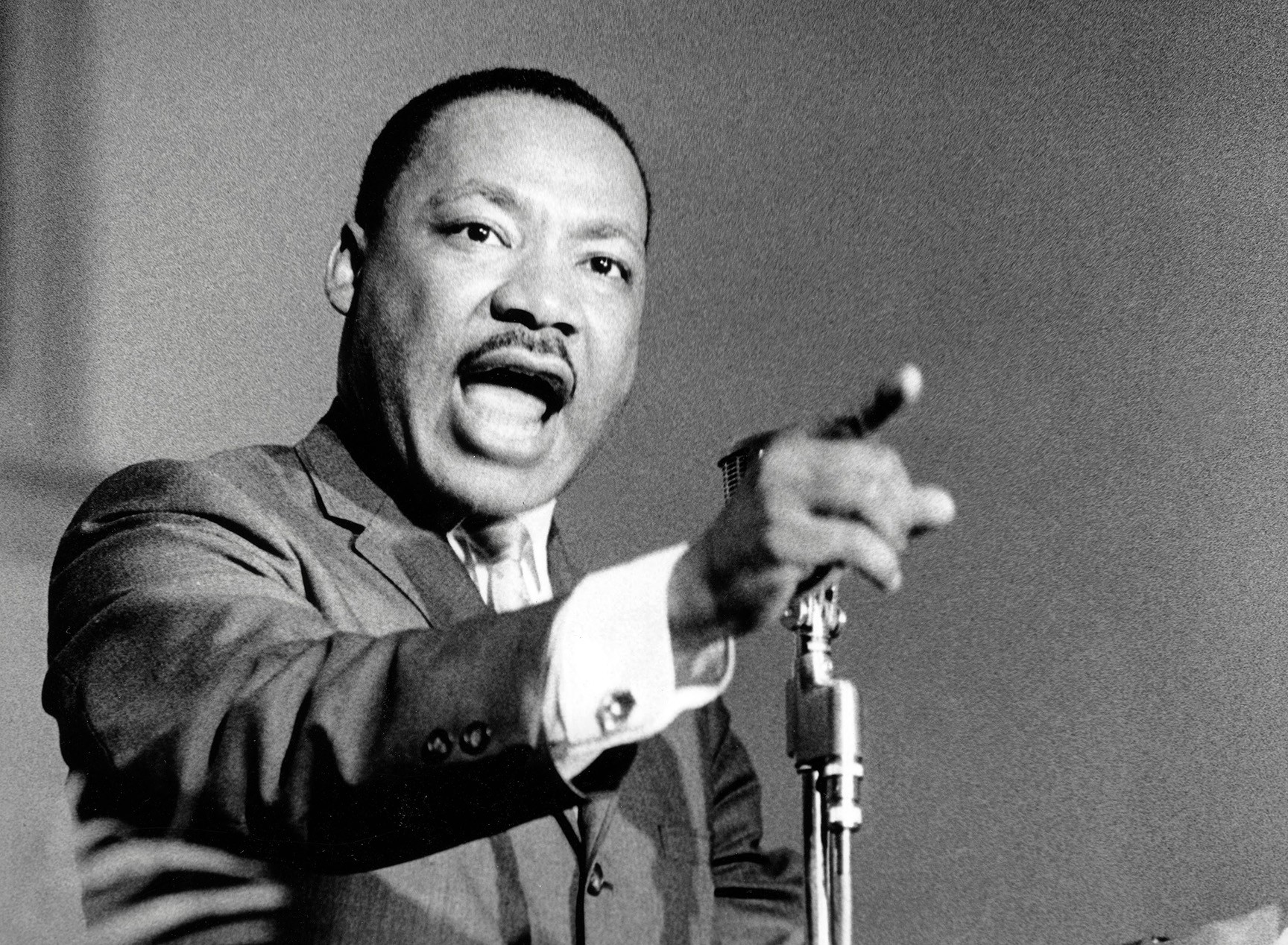
It is significant that the federal holiday that honors Rev. Dr. Martin Luther King, Jr. is celebrated in January. On his birthday. Not in April when he was murdered. It is also significant that this year, Easter Sunday is penciled in for April 4, the anniversary of King’s assassination. Spirit is seconding the motions, putting our resurrection theology to the test. So that we might bear witness to Dr. King’s ongoing life and breath in America. King, like Jesus, was killed by empire—and, like Jesus, King is still with us. Not as a symbol or token, but in spirit and truth. Like Jesus, he lives forever to intercede for us.

Last month, I was texting with Rev. Dr. Timothy Adkins-Jones about resurrection. He got me contemplating how the death of Jesus does an awful lot of theological digging for me, especially in the wake of so much senseless dying. However, resurrection has the power to break the seal of empire with subversive energy. The empty tomb opens up a kind of wonder. I’m not referring to a resurrection that just moves on by holding our loved ones in our hearts because they are in heaven. I am awakening to a brand of resurrection where the dead transition to a new realm in our midst, where we can renew our relationship, where we listen for an ancestral cadence calling us beyond the grave to re-connect with them in a redemptive dance on earth as it is in heaven.

Continue reading “A Cadence”

A Cop-Out

By Cynthia R. Wallace, PhD,  Associate Professor of English, St. Thomas More College, University of Saskatchewan, re-posted from her IG account

Just a gentle reminder for the nice white ladies that opting out of politics is still a deeply political choice. 

I’ve seen several post this week from beautifully curated accounts, mostly homeschooling and white evangelical-adjacent, touting the idea that when the news gets “too confusing” we can/should pull back into our homes and focus on making them beautiful and comfortable, raising our children with kindness, pouring into our families. 

To be clear, there are absolutely times for rest and retreat, especially for folks who’ve been retraumatized by current events. Doomscrolling, obsessively deep dives, and incessant news updates are probably not conducive to our wellbeing, parenting, or social action. And I’m not talking about performing or proving our political engagement on social media (although I think those with broader influence have platforms that carry certain responsibilities). Much of the meaningful work to understand, connect, and act happens offline or away from social media. 

Continue reading “A Cop-Out”