March Madness and the Other America

By Tommy Airey

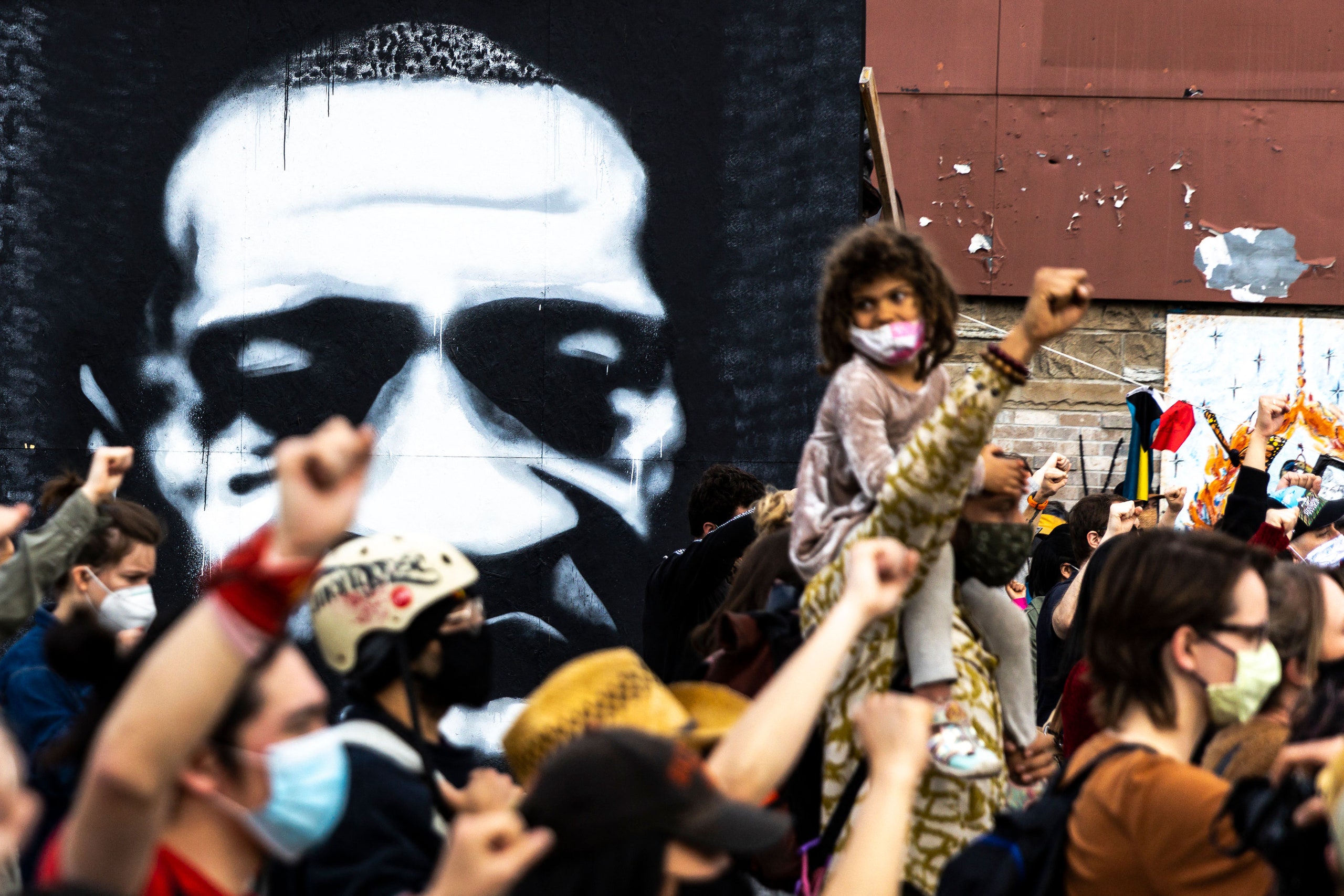
March Madness is back. The men’s and women’s NCAA basketball tournaments caught the coronavirus last season right when my Kansas Jayhawks were ranked number one. That was before police murdered George Floyd and Breonna Taylor, before the NBA bubble almost burst after police shot Jacob Blake seven times in the back. This year, I couldn’t bring myself to fill out a bracket, but I have watched a lot of basketball. This year, more than ever, I have embraced the tension between sports and social analysis—a glorious tension released by a sabbath-jubilee Spirit soaked in a trifecta of Hebrew words: hesed (steadfast love), mispat (justice) and sedekah (faithfulness to the most vulnerable). My wife-partner Lindsay, a licensed marriage and family therapist, says that my devotion to the game is not about escaping the real world, but integrating it.  

This year, my mind is penetrating past Magic Johnson and pivoting towards Lyndon Baines Johnson, the last Democratic Presidential candidate to get a majority of the white vote. In 1967, in the wake of anti-racist uprisings in Detroit, Chicago, Los Angeles and Newark, LBJ commissioned a congressional investigation. He wanted to know what happened, why it happened and what could be done to prevent it from happening again. The so-called Kerner Commission released its findings seven months later, on the last day of February 1968. The scary thing is that the results of the investigation are still ruthlessly relevant today: Our nation is moving toward two societies, one black, one white—separate and unequal.

Continue reading “March Madness and the Other America”

PALM SUNDAY AS SUBVERSIVE STREET THEATRE: SIXTH SUNDAY IN LENT (MK 11:1-11)

By Ched Myers

Note: This is a re-post from an ongoing series of Ched’s brief comments on the Markan gospel readings from the Revised Common Lectionary during year B, 2015.

Jesus’ long march to Jerusalem takes Mark’s story from the margins of Palestinian society (the Jordan wilderness and Capernaum in Mk 1) to its center. Arriving at the suburb of Bethany (11:1), Jesus prepares to enter the Holy City not as a reverent pilgrim demonstrating allegiance to the Temple, but as a subversive prophet challenging the foundations of State power. Mark 11-12 narrates Jesus’ second “campaign of direct action.” In the first campaign in Galilee (1:20-3:35) he confronted the status quo with his powerful actions of exorcism and healing. Now he takes on the Temple system and its stewards: the Jerusalem clerical establishment. This campaign, like the first, will culminate in polarization and rift, and will conclude with Jesus’ withdrawal to further reflect upon his mission in a second sermon about revolutionary patience (13:1ff; see 4:1ff). Continue reading “PALM SUNDAY AS SUBVERSIVE STREET THEATRE: SIXTH SUNDAY IN LENT (MK 11:1-11)”

We Are Seeds

By Ric Hudgens

I am thinking about people who live their lives as if they were seed.

The Greek poet Dinos Christianopoulos (1931-2020) wrote in 1978: “what didn’t you do to bury me / but you forgot that I was a seed.” (translated by Nicholas Kostis).

Young Mexican activists started a movement using a similar phrase in 2013 after 43 students disappeared in Iguala, Mexico: “They tried to bury us, they didn’t know we were seeds.” (see the blog entry with the same title, An Xio, Hyperallergic, July 3, 2018).

Even Jesus of Nazareth had said something similar 2,000 years ago: “unless a grain of wheat falls into the earth and dies, it remains alone; but if it dies, it bears much fruit.” (John 12:24).

We often think in metaphors about human life and the living of our own lives. Kirstie Pursie offers seven that are common: climbing a mountain, taking a journey, tending a garden, building a house, a race, a battle, a prison. (Kirstie Pursie, “7 Metaphors for Life: Which One Better Describes You and What Does It Mean”, Learning Mind, March 20, 2019). All of these are illuminating. There is probably a metaphor (or several) hidden in your life.

Continue reading “We Are Seeds”

Depression as Political Resistance

Dr. Bruce Rogers-Vaughn speaks at Mental Health Counseling Conference at Belmont University campus in Nashville, Tennessee, September 21, 2018.

By Dr. Bruce Rogers-Vaughn, an excerpt from his article “Blessed are those Who Mourn: Depression as Political Resistance” (2013). You can find more of Bruce’s work here.

What can it mean to proclaim “those who mourn,” the gathering of the depressed, to be “blessed” (Matt. 5:4)? In normative New Testament scholarship, and certainly within Christian popular piety, this text is usually employed to address the private sufferings of individuals. According to Carter (2005), such an emphasis “says much about . . . contemporary individualism that conceives of religion as a private matter isolated from sociopolitical matters” (p. 150). Postcolonial readings, however, take a different turn. This approach focuses on “retrieving silenced voices” and “foregrounding the political” in biblical texts. Particular attention is given to “challenging dominant scholarship by foregrounding empire and related issues in texts and interpretations” (Segovia 2009, p. 207). In this spirit, Carter contends that Roman imperialism provides the context for interpreting the gospel of Matthew. According to Carter (2005), Matthew’s audience suffered under the conditions of imperial Rome, a world marked by: (a) “vast societal inequalities, economic exploitation, and political oppression,” (b) “tensions between the rich . . . and poor,” (c) “pervasive displays of Roman power and control, including military presence,” (d) “no separation of religious institutions and personnel from socioeconomic and political commitments,” (e) “imperial theology or propaganda,” and (f) “obvious signs, sounds and smells of the destructive impact of the imperial sociopolitical order structured for the elite’s benefit: poverty, poor sanitation, disease, malnutrition, overwork . . . and social instability” (pp. 150–151).

Continue reading “Depression as Political Resistance”

did the psalm get it wrong?

by jim perkinson, on psalm 19 and john 2:13-22

what is this language the psalmist,
in fervor, trumpets forth like a meteor?
it is loud today, and harsh as silence,
reverberating, pounding, whispering,
like a flame going up a pine, or a wave
on a city street in flood, as unseen as
a virus, or potent as a blizzard in texas
indeed, these have no words
they have no need of words
they have no need of bombast and advertising

Continue reading “did the psalm get it wrong?”

Lent: A Confusion Before the Cross: Confronted by the Powers in Prayer

seasonsExcerpt and reflection from Bill Wylie-Kellermann’s Seasons of Faith and Conscience: Explorations in Liturgical Direct Action (1991):

It can be fairly said that discipleship is the topic of Lent. The liturgical road from Ash Wednesday leads straight to Passion-week Jerusalem. To enter wholeheartedly into the season costs more than tag along admiration from the margins of a multitude. A call and a choice are put point blank: take up your cross and follow.

Lent was first and still remains a season of baptismal preparation. Before the church year took shape there was only the unitive feast of Easter which went on for fifty days until Pentecost. But for some (those initiates to be baptized into the death and life of Christ on Easter) it was the culmination of a three year period of instruction and discipline. In the underground rigors of pre-Constantinian faith the scrutiny was serious, the preparation prolonged, and the prayer intense. Those demanding final days before baptism were marked with a fast. In part, by a simple act of solidarity and intercession, other members even whole congregations, were drawn instinctively to join the fast and renew their own sacramental vows come Easter sunrise.

Continue reading “Lent: A Confusion Before the Cross: Confronted by the Powers in Prayer”

The Only Option Left

A Letter from Joshua Weresch to the Corporate Services Department, Tax Division, of the City of Hamilton, Ontario (February 26, 2021). #LentenAbolition

Good day. I hope this finds you well. My name is Joshua Weresch. My family and I live in Ward 8, non-Indigenous people on Indigenous Anishinaabeg land, and I write as a Christian, a socialist, and as a parent to my wife and I’s four children. I write particularly in regards to the payment of property taxes and use of those taxes for the support of the Hamilton Policing Services. I have carbon-copied my ward councillor’s office as well as the city clerk so that my letter to your department can be included as public correspondence on the agenda of the next city council meeting.

Continue reading “The Only Option Left”

Common Sense

By Tommy Airey

*Trigger warning: this post includes content, straight out of Rush Limbaugh’s mouth, that some readers may find offensive and/or traumatizing.  

“I take no pleasure in the death of the wicked man, says the Lord,
but rather in his conversion, that he may live.”—Ezekiel 33:11

Rush Limbaugh died last week. When I heard the news, it took me back thirty years. During the Fall of my senior year in high school, I went on a weekend road trip from Orange County to Berkeley to surprise one of my best friends at college. I drove up with his dad. We parked a block from the hippies and unhoused on Telegraph Avenue. When my friend came down from his dorm room, I was hiding in the trunk of the car. His dad handed him the keys to open the trunk. I scared the living tar out of him.

I will never forget the look on his face.

I will also never forget stopping at In-n-Out Burger three times during our drive up.

And I will never forget listening to Rush Limbaugh for three straight hours through the most boring stretch of the 5, plowing past towns like Buttonwillow, Lost Hills and Los Banos. Spanish for “the bathrooms.” Plural and Providential. What we needed for all that bullshit blaring through the speakers.

Continue reading “Common Sense”

Nerve Us Up

By Ken Sehested

This past Sunday one of our members, Stan Wilson, offered the “call to the table” in our congregation’s zoom worship screen-gathering. He led with a suggestion that was equivalent, in my hearing, to a thunderclap.

“How about for Lent this year we give up Donald Trump?”

It was a table invitation (we celebrate the Eucharist every week) and an altar call rolled into one. And it certainly had my name on it.

The last four years in the US have been a national demolition derby, a Three-Stooge-esque comedy of incompetence and disrepute, a racketeer’s paradise and grifter’s playpen—only with real-world torment, particularly for those here and abroad with little shelter from the abuse.

Continue reading “Nerve Us Up”

A Deeper Lent

By Ric Hudgens (right), a reflection from the Ash Wednesday service at North Suburban Mennonite (2/17/2021)

It feels as if we’ve been observing Lent all year. Always Lent and never Easter.

Almost a year ago we started wearing masks, separating from family and friends, working from home, moving to remote worship services, learning to sublimate desire on a daily basis. As the poet Anne Sexton wrote: “Your courage was a small coal that you kept swallowing.” 

I’m tired of swallowing coal.

Under normal circumstances (remember those?) I anticipate and savor the season of Lent. I savor how it focuses on our finitude, the certainty of our death, and our organic connection to the earth. The imposition of ashes and the declaration “dust thou art, to dust thou returneth” is a clarifying reassurance in the midst of much that is uncertain and confusing.

Although these elements are not the entirety of the Christian message, they have always seemed to me fundamental and necessary.

I love this season for its potential earthiness. Lent’s ability to ground us in the physical realities of our bodies and of our daily lives. I appreciate that recurring discovery that an annual confrontation with death can be a life-giving experience.

Continue reading “A Deeper Lent”