Anarchist Christianity: The Sermon on the Mount in Action

Another compelling offering from the Alternative Seminary.

AN ONLINE GATHERING: Saturday morning, September 6, 2025 from 10:30 am – 12:30 pm EST

What fellowship has anarchy with christianity?

Empowering small communities of people to take care of their own needs at the local level. Rejecting rulership and making decisions by consensus through face-to-face deliberation. Constructing societies in which people are placed above profit and systems are built on solidarity and mutual aid.

It is no coincidence that this describes both the historical movement of anarchism and the early church as described in the Acts of the Apostles.

In this gathering, we will explore the history, philosophy, and practice of anarcho-communism and how they cohere with the teachings of Jesus and the practices of the early christian communities. We will dive into how theologies touching on God, humanity, divine-human interaction, the Bible, and more can be illuminated and faithfully reformulated through an anarchist lens. And we will chart a christian praxis based on voluntary cooperation, the goodness of all people, and faith in God. We can build an ethical world – one built on structures of care – and anarchy might just be the unlikely key.

The Rev. Terry J. Stokes (he/they) is an anarchist theologian who seeks to foster political and spiritual radicalization through his writing and speaking. He holds degrees from Yale University and Princeton Theological Seminary and was ordained as a minister of word and sacrament by Park Avenue Baptist Church. He is a youth worker and associate minister in Trenton, NJ, and a group facilitator at The Wooden Shoe anarchist infoshop in Philadelphia. Their latest book is Jesus and the Abolitionists: How Anarchist Christianity Empowers the People. 

Registration is required. Click HERE to register.

The cost is $10 (or whatever you can afford).

The deadline for registration is September 2.

The Facebook page is HERE.

If you have any questions, please contact Will O’Brien at willobrien59@gmail.com or 267-339-8989.

The Alternative Seminary is a program of biblical and theological study and reflection designed to foster an authentic biblical witness in the modern world.  

A Sophisticated Art Form

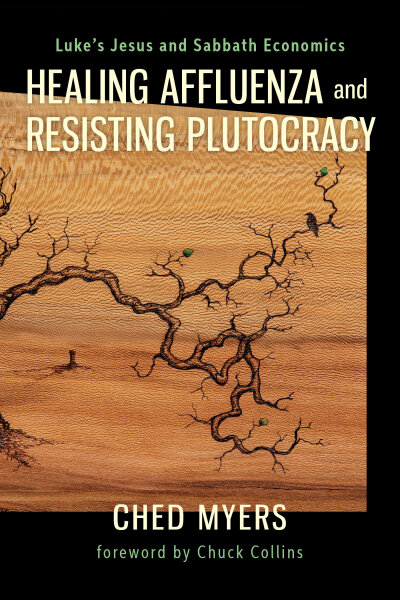
An excerpt from Ched Myers’ commentary on this week’s Gospel text in Luke. The entire post is well worth reading, as it is every week. Check out Ched’s blog for his weekly comments and subscribe to his emails here. Also, check out his recent release (above) Healing Affluenza and Resisting Plutocracy.

There are three main problems with how church folk have been socialized to encounter scripture:

  • We handle texts as fragments, rarely grasping the narrative whole and flow;
  • Our habits of “fast food Bible study” allow only limited time and attention to “get to the point,” which fosters either overdependence upon an authority figure to tell us what the text means, and/or a settling for vast simplifications;
  • The focus of interpretation is almost always “personal application,” quite apart from social and historical context (ours and the text’s)—treating the Bible as an “answer book” or doctrinal rulebook.

The problem is, ancient storytelling was not simplistic, but a sophisticated art form using a variety of techniques to educate, preserve culture, and explore the human experience.

Click here to read the rest!

A Renewed Prayer

By Jennifer Maidrand, a professor of Bible, Culture, and Interpretation at United Theological Seminary in the Twin Cities. This is re-posted with permission from her social media page (07.29.25).

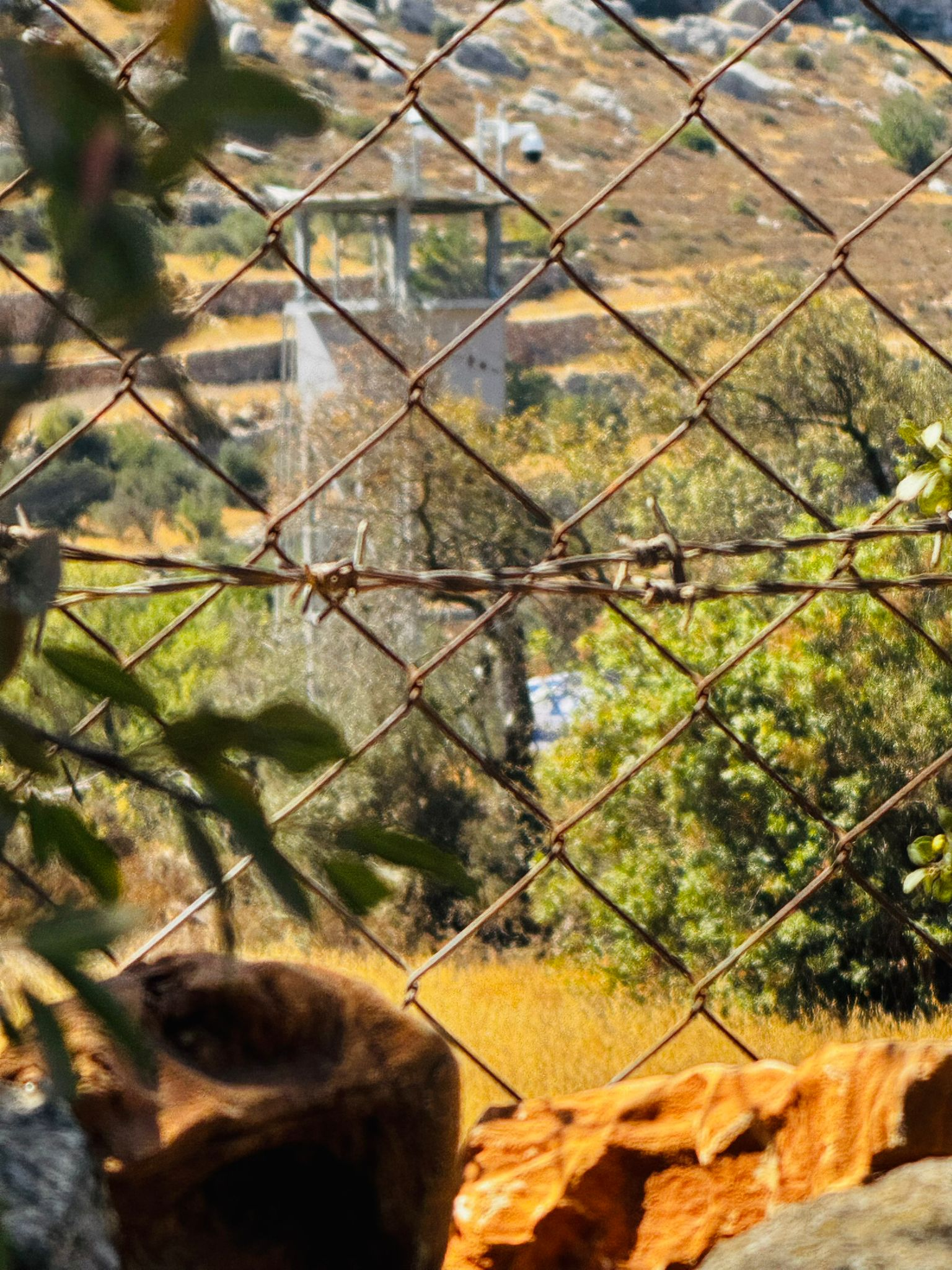
After spending the last month and a half in Palestine-Israel for research, I feel a clear affirmation in the work that is ahead and found a renewed prayer of sorts for the journey. And now that I’ve returned to the U.S., communicating what I witnessed during my time in occupied Palestine feels nearly impossible to yet urgent. Research aside, what did I see?

A situation more dire than I’ve seen in the last 11 years of spending time in the region

Countless new checkpoints and gates separating Palestinian society (from Israeli society and from itself) and restricting Palestinian freedom of movement—apartheid at work

The manifestation of the U.S. and Israel’s greenlighting of illegal settlements—outposts being built in hours, rampant settler violence and pogroms (protected by the Israeli military), more cars with Israeli than Palestinian plates in the West Bank

Palestinian homes being seized, demolished, and coercively sold left and right

More than 1,000 Palestinians in the West Bank have been killed since October 2023

Continue reading “A Renewed Prayer”

Daily Bread? Or Three Loaves at Midnight?

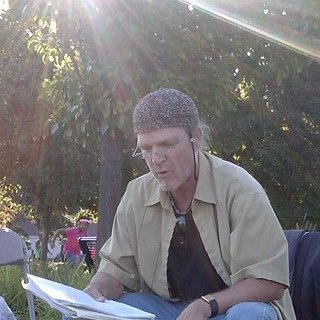
By Jim Perkinson (above), a sermon for St. Peter’s Episcopal Church in Detroit (July 27, 2025)

The disciples want to know how to pray.  About time, huh?  Actually, there is more going on here than we usually register.  This is a typical disciple-request of chosen rabbis in 1st century Palestine.  They are really asking for the Teacher to distill the heart of his teaching in a pray-able formula.  They want the essence, the unadulterated core of what is being admonished.  But here the ante is upped. 

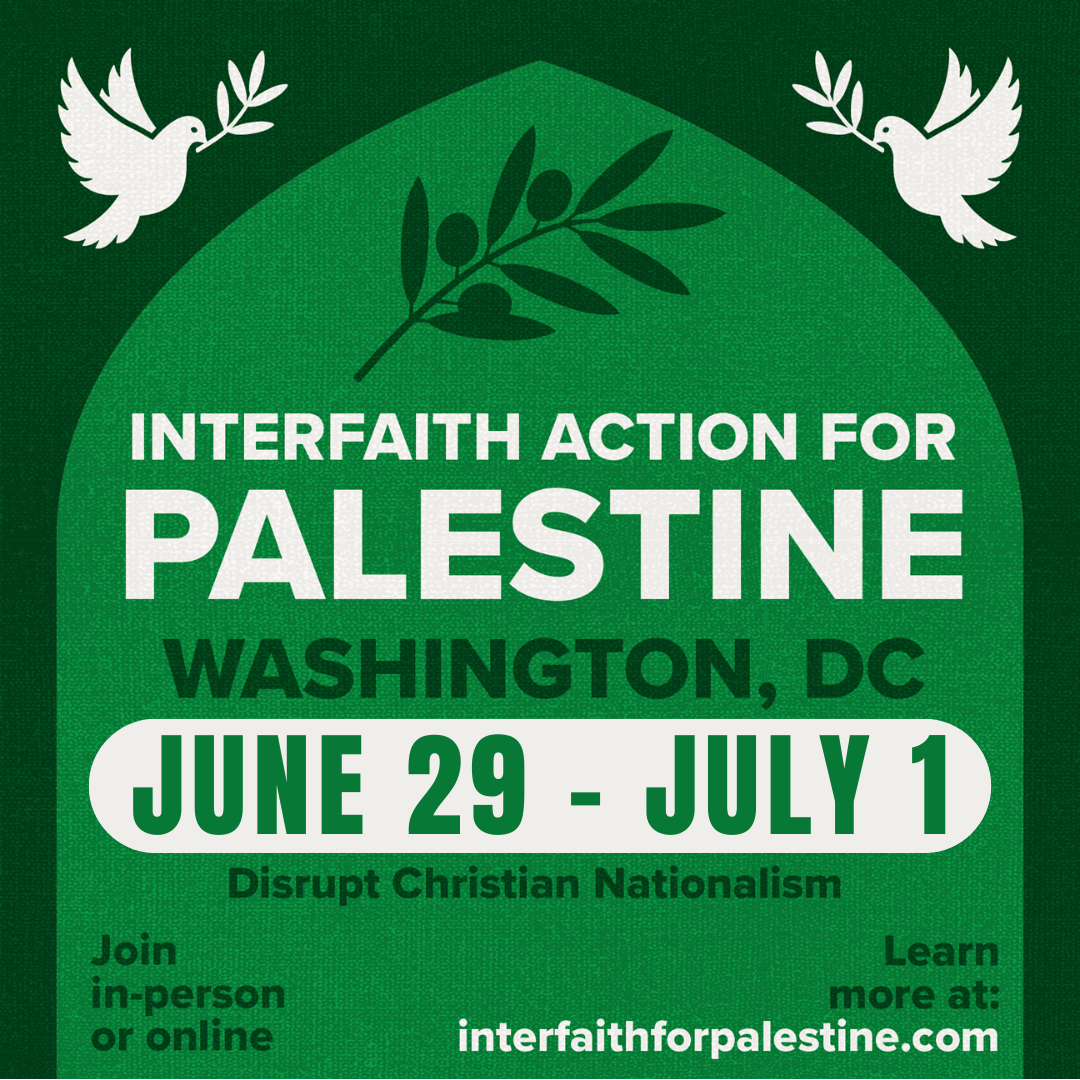
Jesus has just set his face to take his show to Jerusalem for the high-noon show-down with the Powers-that-be at the end of chapter 9.  They are going for broke—like going up into White House today to shut down operations in protest of Palestinian genocide while carrying a green card from some place called “Galilee.”  Jesus has just predicted his death in the process in a huddle with his inner circle.  The disciples are beginning to entertain the thought that he might not be around much longer.  So, indeed, what is it he is saying to do?

The so-called “Lord’s Prayer”—that the Black Church in this country more accurately calls the “Disciples Prayer”—is a stripped-down version of the more lyrical rendition we meet with in Matthew.  And its heart is food and debt.  “Give us this day our daily bread” is an invocation of the prime lesson of the Exodus walkout from Egypt when escaped slaves were directed to “gather”—as in hunt-and-gather—”manna,” which literally, in Hebrew, means “what the F is it?”

Continue reading “Daily Bread? Or Three Loaves at Midnight?”

Behind the Scenes

By Tommy Airey, re-posted from his Substack newsletter. Audio version available here.

Two weeks before Donald Trump bombed Iran under false pretenses to protect an apartheid state’s right to commit genocide on Palestinians and then (true to form) tweeted “now is the time for peace,” the Waymos were burning up in Los Angeles.

Watching that scene from 2,000 miles away brought me back to a Saturday in early Spring, when my friend Sheldon and I drove to downtown LA to march with staff and faculty from UCLA demanding the protection of their international students who have publicly demanded that the university divest from occupation and genocide.

We parked and walked a dozen blocks to the corner of Broadway and Temple. On our way, we were stunned to see our first Waymo, the uber that runs on a Silicon Valley algorithm, now operating in a handful of cities. We struggled to come up with adjectives as we watched this moving car, in the middle of downtown, with no one at the wheel. 

After we drove back to Orange County and had dinner, I was cleaning the kitchen when I heard a horrible crash in front of my mom’s house. Sheldon and I ran outside to find a car up in the bushes of the front yard right across the street.

There was a human driving this car. While we were trying to figure out how he got up there in the bushes, he was revving the engine to the limit, trying to get out. We could see that he hit a parked car next door and then demolished the electric box.

Continue reading “Behind the Scenes”

Idols

The beginning and conclusion of Chris Hedges’ latest piece “The Last Days of Gaza.”

This is the end. The final blood-soaked chapter of the genocide. It will be over soon. Weeks. At most. Two million people are camped out amongst the rubble or in the open air. Dozens are killed and wounded daily from Israeli shells, missiles, drones, bombs and bullets. They lack clean water, medicine and food. They have reached a point of collapse. SickInjuredTerrifiedHumiliatedAbandonedDestituteStarvingHopeless.

In the last pages of this horror story, Israel is sadistically baiting starving Palestinians with promises of food, luring them to the narrow and congested nine-mile ribbon of land that borders Egypt. Israel and its cynically named Gaza Humanitarian Foundation (GHF), allegedly funded by Israel’s Ministry of Defense and the Mossad, is weaponizing starvation. It is enticing Palestinians to southern Gaza the way the Nazis enticed starving Jews in the Warsaw Ghetto to board trains to the death camps. The goal is not to feed the Palestinians. No one seriously argues there is enough food or aid hubs. The goal is to cram Palestinians into heavily guarded compounds and deport them…

…There are people I have known for years who I will never speak to again. They know what is happening. Who does not know? They will not risk alienating their colleagues, being smeared as an antisemite, jeopardizing their status, being reprimanded or losing their jobs. They do not risk death, the way Palestinians do. They risk tarnishing the pathetic monuments of status and wealth they spent their lives constructing. Idols. They bow down before these idols. They worship these idols. They are enslaved by them.

At the feet of these idols lie tens of thousands of murdered Palestinians.

The Radical Power of the Poetic Word

By Rev. Bill Wylie-Kellermann

Walter Brueggemann: A Remembrance (March 11, 1933 – June 5, 2025)

When I was a student at Union Seminary in New York, Abraham Heschel taught at Jewish Theological Seminary across the street. Though he died within my first year, the author of The Prophets, was notorious, it was said, for being the professor who actually believed in God. Something related might be said about Walter Brueggemann who crossed over to the ancestors and saints June 5.

He was an eminent scholar, among those like Norman Gottwald who altered the landscape of biblical studies by bringing sociological analysis to interpretation, and for such reason presided for years in the biblical guild. Yet, as a discipline, he was eminently readable and accessible to movement and church for whom the work was ultimately intended.

Once in a footnote to Israel’s Praise, he cited a 1985 order of the Pretoria regime prohibiting Blacks from singing Christmas carols in the townships because they generated such revolutionary energy. The newspaper report quoted a South African police agent: “Carols are too emotional to be sung in a time of unrest…Candles have become revolutionary symbols.” Which is to say, he could write an analysis of the world-shaking and world-making power of Israel’s liturgy and psalms, but then put out a book of prayers for our own moment. He prayed. He imagined a new world with all his heart. He invited us likewise.

Continue reading “The Radical Power of the Poetic Word”

What is Radical Discipleship?

From Ched Myers, posted to social media last week in eager anticipation for the Second Festival of Radical Discipleship in Bangor, PA over this so-called “Memorial Day Weekend.”

I want to offer the edited and abbreviated version below of a “rant” I gave at the 2015 BKI Festival for Radical Discipleship here in Oak View, as a paean to this work and to the vision of radical discipleship that animates our mission at BCM, which will be celebrated this weekend at the Second Festival at Kirkridge Retreat Center. May this tradition carry on!

What is Radical Discipleship?

The etymology of the term radical (from the Latin radix, “root”) is the best reason not to concede it to nostalgia. To get to the root of anything we must be radical. No wonder the word has been demonized by the elite and co-opted by marketing hucksters, and that no one in conventional politics dares use the word favorably–much less track any problem to its root. It is also curious and revealing that the notion of discipleship is so marginal in our churches. Curious, because discipleship is unarguably the central theme of the gospels. Revealing, because it shows how wide the gulf between seminary, sanctuary and streets has become in North America.

The prevailing expressions of faith among Protestant churches—evangelical decisionism, mainline denominationalism and fundamentalist dogmatism—are each problematic in a society that is mired in dysfunctional politics, delusional economics and a distractive culture. Faith as discipleship remains the “road rarely taken” here at the heart of empire. We have yet truly to reckon with Dietrich Bonhoeffer’s famous warning, delivered under the shadow of fascism, that “cheap grace is grace without discipleship.” Radical Discipleship thus calls us to a double commitment: to reveal the roots of personal and political pathologies that continue to shape our imperial society, and to recover the roots of our biblical tradition: the messianic movement of rebellion and restoration, of repentance and renewal, and of a “Way out of no way” that has been going on since the dawn of resistance to the dusk of empire…

Read the entire post here.

We are in the Spirit

An excerpt from Jim Perkinson’s sermon on John 6 during the Summer of 2018 called “I Am Wind.”

“God” in Hebrew writ, as we have it from Genesis to Malachi, is double-named, a hyphen-Deity, Elohim of the cool, wet coastal mountains, YHWH of the hot sands south and east. And this is likely because Israel was a hyphen-people, a mixed lot, a creole crowd, partly composed of pastoral nomads following Moses and Joshua, coming into Canaan from the forty years of desert wandering, once crossing the Jordan from the east, joining with rebelling Canaanite peasants, going feral up in the central highlands from seaboard cities on the Mediterranean to the west. A motley crew, each group bringing their God into the stewpot, a Midianite-Canaanite mix, worshipping a YHWH-Elohim amalgam of deities. YHWH is a dust-storm deity encountered by a renegade herder horde on a Sinai desert mountain in lightning and thunder. Elohim is a rain-storm deity encountered by an outlaw peasant crowd on a Canaanite coastal mountain in lightning and thunder. One flashes over the vastness of sand; the other over the expanse of sea. And though the name YHWH comes to predominate, Elohim remains in use more than 2500 times in the Hebrew text.

We could go on if there were time. The word for Wind in Hebrew is “ruach,” which also means “Air,” “Breath,” “Spirit.” Gendered female.   These are not fully separable ideas. For many indigenous and antique peoples, the Spirit-World is the Natural World, especially in its fluidity as Air, Wind, Breath. It is not so much the case that the Spirit is in us, as it is we are in the Spirit. It moves through and among us all the time.

Everything is breathing Spirit, in and out, every second. And the bodies that navigate the realm of air, the bodies exquisitely attuned to sense every nuance of wind wafting, whispering, upwelling, down-blowing, scudding or sheering—birds—are quintessentially Spirit-Messengers in culture after culture. We, in the biblical tradition, just freeze-frame them and call them “angels”—winged creatures that sing, and bring messages from heaven!

It is the Wind-Spirit that hovers, Dove-like, over the Great Waters of Chaos in Creation in Genesis 1. It is that same hovering Spirit-Wind-Dove that blows back the Red Sea waters for the escaping slaves. It is the Wind-Cruising-Dove that Noah sends forth from the water-bound ark to find land. It is that Dove-Bodied-One who falls on Jesus coming up from Jordan waters, as the Holy Spirit incarnate, says Luke. God as Dove-Animal, shaped by Wind-Air-Breath, tutoring the Messiah in his wilderness vision-quest and then accompanying him at every step along the way as that Spirit-Bird-Familiar by which he confronts demons and exposes Principalities. Spirit-Wind, if you want, as the Third Person of the Trinity, moving in and out of us and of every other living thing on the planet, at every millisecond!