Bound By Love

We The People, Delivery
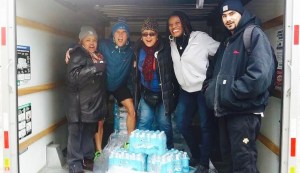
Monica Lewis-Patrick and Debra Taylor leading up the ideology of the beloved community in Detroit

By Tommy Airey, on the Parable of the Good Samaritan

When the lawyer finally got face-time with Jesus, he poured out what was heaviest on his heart, “Teacher, what must I do to inherit eternal life?” He groped for a guarantee. He wanted a divine will and testament. He was begging for a bill of rights.

As usual, Jesus pivoted on freedom. He was never much into being The Bible Answer Man. He asked the lawyer how he interpreted the sacred text. The lawyer’s answer, according to Jesus, was spot-on. Eternity’s most valuable asset has nothing to do with where we go when we die. It is a gut-busting love for both our higher power and our lowly neighbors. Right here. Right now.  Continue reading “Bound By Love”

Collapse, Part II

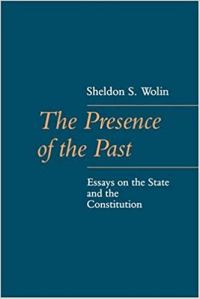
WolinBy Ric Hudgens

In this apocalyptic age where if the politics don’t kill you the ecology will, I am pondering a distinction made three decades ago by the political philosopher Sheldon Wolin. Wolin distinguished between a politics of intending and tending. Comparing these two modes of thinking Wolin saw one as prone to control and power and the other as a means of attention and care.*

The politics of intention requires power, as we strain toward a future that is not yet guaranteed. Continue reading “Collapse, Part II”

To Do Is To Know

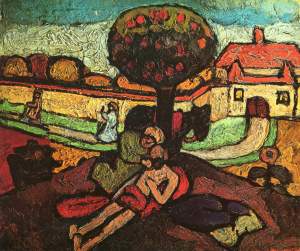
the-good-samaritan-1907By Ched Myers, a short commentary on this weekend’s Gospel Story (Luke 10:25-37; right: “The Good Samaritan” by Paula Modersohn-Becker)
Note: This piece was originally posted on Radical Discipleship on July 7, 2016.

The famous Parable of the Good Samaritan is often sentimentalized, but its subversive character and genuine profundity can never be exhausted. It comes on the heels of Jesus’ sending out of the “seventy,” and his long “missionary discourse” (Lk 10:1-24).  How different the history of Christianity would have been had disciples in every age followed these relatively simple but incisive instructions to travel with the gospel in a vulnerable and provisional mode, rather than a dominating one! But if the unholy joining of mission and empire has been the first pillar of Christendom’s apostasy, surely the second has been the church’s tendency to define faith through dogma. It is this religious bad habit that Luke addresses in this Sunday’s parable. Continue reading “To Do Is To Know”

Wild Church: Plumb Lines and Prophets

processed with darktable (www.darktable.org)
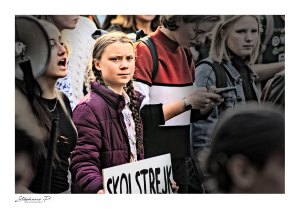
Greta Thunberg by Stephane P cc

Proper 10(15) C

Amos 7:7-17

By Matthew Humphrey

“See I am setting a plumb line in the midst of my people.”

So Amos prophecies in today’s lectionary reading. This shepherd-turned prophet emerges from South of the Border to unleash a fiery word upon Israel and King Jeroboam. Like Hosea before him, he professes, “I was no prophet, neither was I a prophet’s son; but I was a shepherd, and a dresser of sycamore-trees.” This location that makes him the choice instrument of God’s word to Israel. Continue reading “Wild Church: Plumb Lines and Prophets”

An Uneasy Peace

NicholaBy Nichola Torbett (in center of photo, blockading Wells Fargo in San Francisco in solidarity with Line 3 Pipeline fighters/water protectors). Sermon re-posted with permission from The Longing is the Compass blog
I choked my own self up preaching this sermon (Sunday, May 26) at the very hospitable and loving Park Presidio United Methodist Church. The scripture is John 14: 23-31.

Happy Eastertide! Although, if you’re anything like me, Easter feels like a long time ago, we are still in the liturgical season of Easter, which I think maybe we take a little too blithely, honestly. I mean, resurrection is just plain weird. Let’s admit it. The guy was dead, and then he wasn’t.

Isn’t. Continue reading “An Uneasy Peace”

Confessions of a Westward Expansionist

PrintBy Tommy Airey

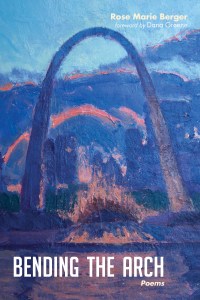
This book review of Rose Marie Berger’s Bending the Arch originally appeared in the Spring 2019 issue of Geez Magazine.

The day after the brutal massacre at Wounded Knee in 1890, there was a blizzard. The snow highlighted the innocence and purity of the victims. However, the whitest of snow could not cover the extent of Indigenous blood.

I recently heard this story told by Rev. Jim Bear Jacobs, and a few days later I found myself stranded under two feet of snow in Northern Paiute land, sitting next to the fire with Rose Marie Berger’s newly released book of poems, Bending the Arch. Continue reading “Confessions of a Westward Expansionist”

Hospitality and the People of God

Emma LazarusBy Wes Howard-Brook and Sue Ferguson Johnson, for this weekend’s lectionary Gospel story (Luke 10:1-11, 16-20)

*Originally posted on RadicalDiscipleship.Net on June 30, 2016.

For Jesus followers in the US, this week’s Gospel offers a powerful counter-narrative to the flag-waving patriotism of the 4th of July. Nearly every detail challenges those of us who live and thrive at the heart of empire to reconsider which “sacred story” binds us together as a people. Continue reading “Hospitality and the People of God”

I Can Go My Own Way

Alice WalkerFrom an interview Alice Walker did with The New York Review of Books in 2018.

Rudyard Kipling’s poem “If” had a great impact on me as a very young child. It opens with the lines, “If you can keep your head when all about you/ Are losing theirs and blaming it on you” and the last line is, “you’ll be a Man, my son!” Well, I don’t care about the man part, but I did know at that age whenever I heard it, it gave me permission to understand that I can go my own way. I can keep my head and not care what everyone else is doing with their heads, but I need to keep mine. That’s the kind of power that poetry has.

Poor People Have Not Heard Their Names

barberAn excerpt from Rev. William Barber’s “The Economy Doesn’t Work for Most Americans,” an article published in The Guardian this week. 

One hundred and forty million poor and low-income people in America are a $400 emergency away from not being able to pay their bills next month. That’s 43.5% of the population in the world’s richest nation. While Democrats have championed the middle class and Republicans have promoted tax cuts and corporate welfare, poor people have not heard their names in American public life for the past 40 years, even as the gap between the rich and the poor has grown to levels of inequality we haven’t seen since before the Great Depression.

While both parties work to energize and mobilize their base, it is no accident that the single largest voting bloc in American politics is not those who voted Republican or Democrat in the last presidential election, but those who did not vote at all. Roughly 100 million Americans who were eligible to vote in 2016 didn’t cast a ballot. In 2018, while many celebrated a historic turnout for a midterm election, the numbers of those who didn’t participate were still higher.

Jesus and the Way of the Cros

CPTBy Mark Van Steenwyk, the executive director of the Center for Prophetic Imagination in Minneapolis. This is from his weekly blog (June 24, 2019). To sign up to get these in your email inbox, click here (top of the page). Also, their two-year program in Prophetic Spirituality launches in September!

Jesus’ compassion led to the cross. In an unjust world, love confronts injustice. In an oppressive world, love challenges oppression. Because of this, love leads to the Cross.

When he broke bread with sinners and fellowshipped with outcasts, he drew the ire of religious gatekeepers. When, in the temple, he raised a ruckus over the exploitation of the poor, he upset the religious elite. And his words of dangerous liberation sealed his fate. He was betrayed and summarily executed by the state. And he decomposed in the grave for three days. Continue reading “Jesus and the Way of the Cros”