Wild Lectionary: Pentecost

20190221_073837Pentecost, Year C
Acts 2

By Wes Howard Brook and Sue Ferguson Johnson

“In the last days it will be, God declares, that I will pour out my Spirit upon all flesh, and your sons and your daughters shall prophesy, and your young people shall see visions, and your old people shall dream dreams.” (Acts 2.17)

Late this past winter, we had to remove a big, old spruce tree from the south side of our little house here in the Issaquah Creek watershed. The City had replaced a sewer line adjacent to our house a few years earlier, and it had severed a major root of the tree. We knew it was only a matter of time for that old spruce. It finally gave up and down it came to protect our house from the risk of it falling on the roof. Continue reading “Wild Lectionary: Pentecost”

To Flip the Script of What a Christian Minister Can Be

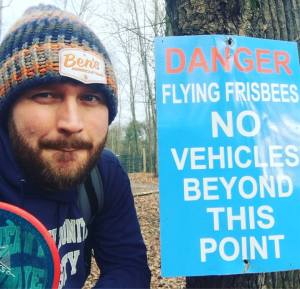
Ben2By Ben Wideman, campus minister for the 3rd Way Collective in State College, PA

*This is part of a series of pieces from contributors all over North America each answering the question, “How would you define radical discipleship?” We will be posting responses regularly on Mondays during 2019.

Discipleship is a word that gets tossed around a lot in campus ministry. It is at the core of many different organizations on our campus. We even have a campus ministry that was founded at Penn State and now present on more than a dozen campuses across the country called DiscipleMakers. Most of these organizations see discipleship as a sending call to embody a literal biblical call to make non-believers or non-practicing Christians into disciples of Christ (based on the Matthew 28 passage often referred to as the Great Commission). Continue reading “To Flip the Script of What a Christian Minister Can Be”

Freedom Movements

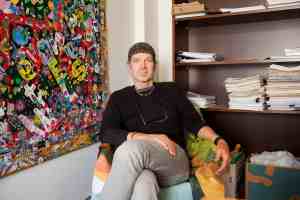
RubyFrom the front porch of Mother Ruby Sales (May 19, 2019).
Do freedom movements seek to build a new table or do they seek to gain more seats at a broken down one? Do they create new powerful people or do they create new token elites? Do nonviolent movements use the same language to talk about ourselves and lives that we learn from the guardians of power or do we speak in new and multiple tongues that express the largeness of our individual and collective lives?

Confronting U.S. Warring Madness

CPT IK
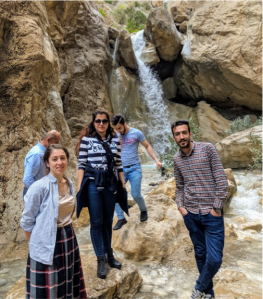
Rebekah, Runak, Kamaran (foreground left to right), and I hiked to a cave and waterfall. PC: Weldon Nisly                  

An excerpt from the monthly update of Weldon Nisly, a retired Mennonite pastor and part-time member of the Christian Peacemaker Teams Iraqi Kurdistan (CPT IK) delegation. 

A few years ago, after 25 years as a human rights and women’s rights activist, Gulistan Saeed decided to seek change within the political system. Elected as a Member of Parliament of the KRG, she was granted her request to serve on the human rights committee.

Gulistan welcomed the CPT IK team to the KRG Parliament and listened as we shared the Deraluk families’ sorrow and request for assistance. She promised to take their case to her committee and to an independent Kurdish human rights committee to help the families find their missing loved ones. She also expressed eagerness to work with CPT on future human rights cases and encouraged CPT to bring these Deraluk families to Erbil to meet with other Members of Parliament. She recommended that CPT and the families have a press conference to help the people of Iraqi Kurdistan and the world hear the traumatic impact of Turkey’s cross border bombing of civilians. Continue reading “Confronting U.S. Warring Madness”

Why is This the Only Issue?

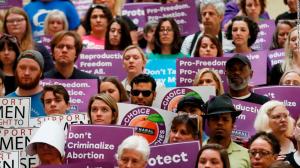
RallyAn excerpt from The Atlantic‘s interview with Rev. Jen Kast, a UCC pastor who grew up in hyper-Evangelical Western Michigan.

I began to understand myself as a woman in ministry. I began to see myself as this Christian feminist. I began to own my voice differently, and to question the rules of engagement of Christianity that I was raised with.

I began saying things like, “Why is it that abortion is the only issue that my parents and family really care about?” I have a very good relationship with my family. I’m not trying to paint them in negative light. But why? Why is this the only issue?

Like many Millennials coming out of evangelicalism, I began to care about different justice issues. I began to care about the Earth, and racial justice, and interfaith justice. And one of the topics that arose for me was abortion.

I began questioning: What about bodily autonomy? Isn’t that justice? How would God ever infringe upon that?

And this was a big one for me: Why is it that when it comes to this topic, it’s almost always white, straight, Christian men who are the loudest?

Radical Discipleship: An Invitation to be Led by the Spirit in Prayer

JoBy Rev. Joanna Lawrence Shenk

*This is part of a series of pieces from contributors all over North America each answering the question, “How would you define radical discipleship?” We will be posting responses regularly on Mondays during 2019.

A version of this article was first preached at First Mennonite Church of San Francisco on March 31, 2019

During Lent this year I experienced a stripping away, a reorientation in a vulnerable and uncomfortable way. I recognized my need for God and guidance by the Spirit anew. It has led to questions such as:

Where is the Spirit at work?
Am I attentive enough to follow the Spirit’s leading?
Am I courageous enough to follow?
Do I actually need God or do I think I’m okay with my analysis and intention to do good in the world?


In this time prayer has become a central practice. Continue reading “Radical Discipleship: An Invitation to be Led by the Spirit in Prayer”

The Intensity of the Witness

ClarenceFrom the Essential Writings of Clarence Jordan, founder of Koinonia Farm and author of the Cotton Patch paraphrase of the New Testament.

The history of the Christian movement demonstrates that the intensity of persecution is geared, not to the moral level of the non-Christians, or persecutors, but to the intensity of the witness of the Christian community. The early believers were not persecuted because the Romans were such bad people. In fact, on big occasions they would throw a thousand or two helpless people into the amphitheater to be clawed to pieces by lions, but the thought of atomizing [with a nuclear bomb] a whole city probably would have horrified them. The strong conviction of the believers might not have caused the Romans to persecute them, but there could have been no persecution without such faith. One wonders why Christians today get off so easily. Is it because unchristian Americans are that much better than unchristian Romans, or is our light so dim that the tormentor can’t see it? What are the things we do that are worth persecuting?

To Enlist

J PerkAn excerpt from Detroit-based theologian Dr. Jim Perkinson’s classic piece “Theology and the City: Learning to Cry Struggling to See.
*To live in a suburb “neutrally” is to participate in the American fiction of innocence.

…In complex, globally interdependent societies like those we now live in, theology that is not simply ideology requires a kind of militancy. It must enter a fray that is neither gentle nor innocent. But it has not ever been different for Christian “God talk.” In the first centuries of the church’s life, for instance, the early meaning of paganism was both “rural-dweller” and “noncombatant.” To become a believer in the early church meant to enlist. In the Roman imperial order, a sacramentum was an oath of loyalty taken by a soldier to Caesar. For Christians living under that imperial regime, celebrating “sacraments” like the Eucharist was a practice of political resistance in a struggle that engaged war-making as its nonviolent, but combative opposite. From the beginning, Christianity has been about spiritual warfare, when it has not forgotten its calling. And Christian theology in the mix is the articulation of where God is most likely to be encountered in the ongoing conflict.

Wild Lectionary: God’s Own Pocket

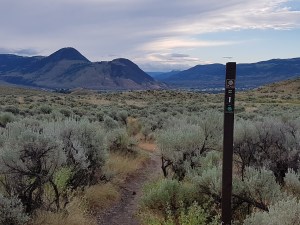
Batch hills(1)
Bachelor Hills, Secwepemc Territory

Easter 6C

Revelation 21:10; 21:22-22:5

And in the spirit he carried me to a great, high mountain and showed me the holy city Jerusalem coming down out of heaven from God…I saw no temple in the city.

by Rev LeAnn Blackert

Forty-five minutes into our hike, we crest the last steep stretch and find ourselves standing on a flat section of land with limitless views in all directions. The snow covered peaks of the mountains of Wells Gray Park highlight the northern view, while off to our west the sun begins its descent to the horizon. Blue gray hills rim the southern exposure and to the east the city of Kamloops nestles in the valley. I recall words offered to me years ago on a trail leading to the water’s edge in western Vancouver: “Truly we are being held in God’s own pocket.” Our Wild Church group’s experience atop one of the hills in Kenna Cartwright Park in Kamloops, BC, comes to mind when I read the words from Revelation. Continue reading “Wild Lectionary: God’s Own Pocket”