Fallow Trees and Falling Cities

A sermon from Jim Perkinson on Luke 13:1-9 (March 23, 2025 at St. Peter’s Episcopal Church in Detroit, MI)

13 There were some present at that very time who told him of the Galileans whose blood Pilate had mingled with their sacrifices. And he answered them, “Do you think that these Galileans were worse sinners than all the other Galileans, because they suffered thus? I tell you, No; but unless you repent you will all likewise perish. Or those eighteen upon whom the tower in Silo′am fell and killed them, do you think that they were worse offenders than all the others who dwelt in Jerusalem? I tell you, No; but unless you repent you will all likewise perish.”

And he told this parable: “A man had a fig tree planted in his vineyard; and he came seeking fruit on it and found none. And he said to the vinedresser, ‘Lo, these three years I have come seeking fruit on this fig tree, and I find none. Cut it down; why should it use up the ground?’ And he answered him, ‘Let it alone, sir, this year also, till I dig about it and put on manure. And if it bears fruit next year, well and good; but if not, you can cut it down.’” (Lk 13:1-9)

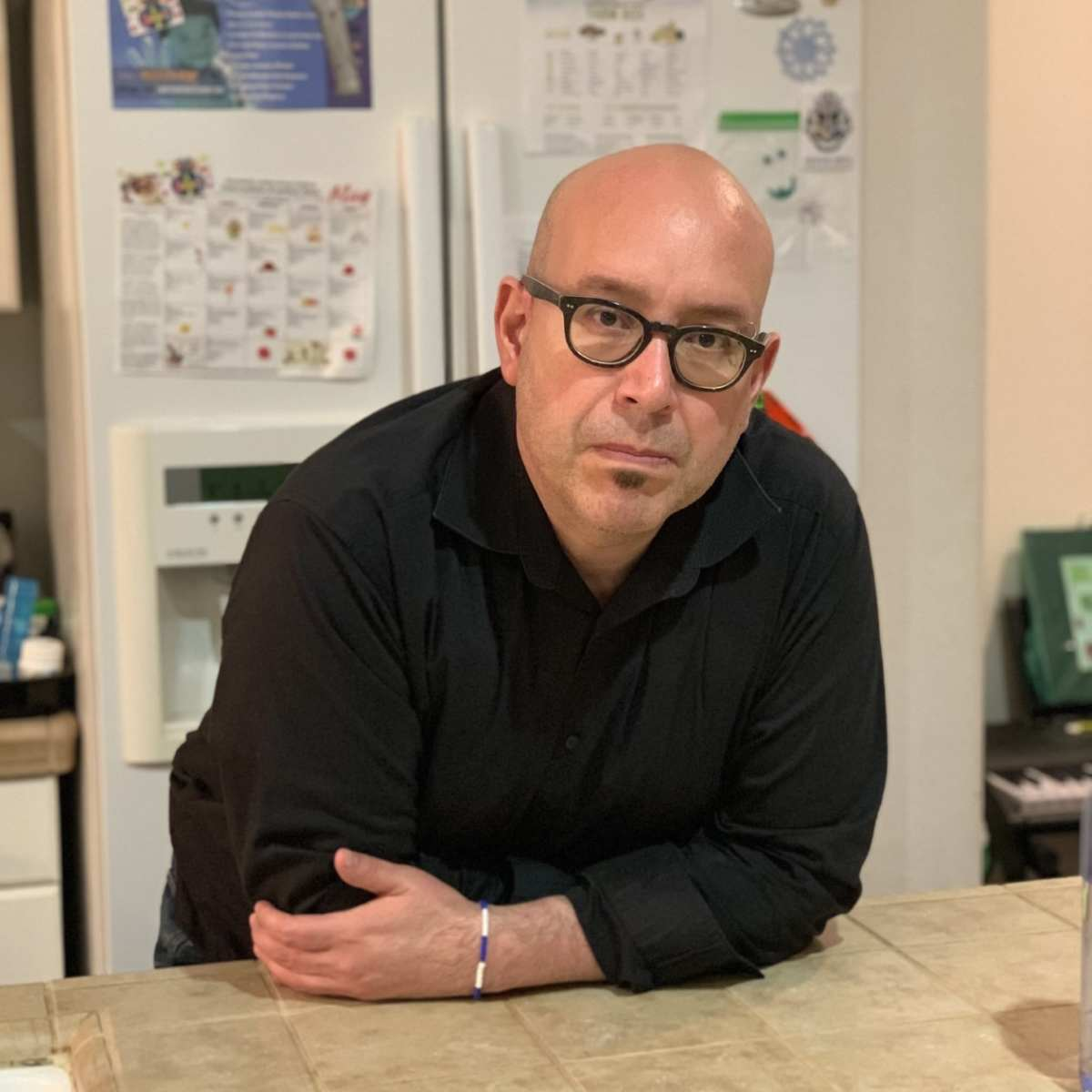
You know me, always trying to get down under the meaning, looking for an unforeseen seed going on journey in the soil, suddenly bursting unanticipated from below ground.  Well, it happened here. In today’s text   We read our bibles in English. Which translates the ancient Latin (Vulgate). Which translates the Greek.  Which translates the Aramaic. Which translates the Hebrew.  We are more than four times removed, more than four cultures out of sync with the text.  We can’t really get back there in any pristine form but can at least muse.  Let some things happen with images that provoke consternation or amusement!  So come with me for a minute.

Our indigenous teacher, Martín Prechtel is always telling us, “Pay attention to the etymology, to the sequence of meanings that a given word harbors over time.”  Underneath this word right here, that seems mundane and boring to you, there is an older meaning, and under it an even older meaning, and then another and another and another.  Follow the root of the word back and down and ultimately you come out in place that is likely ancestral and indigenous and very different than here in the seemingly “ordinary” sense the word now conveys.  There are ancestors and grand mysteries up inside many of our words, but deep under their present appearance and sound—like the hair on the side of a root of a mushroom under the soil, leading into a network as wide as an entire forest. 

Continue reading “Fallow Trees and Falling Cities”
The Plutocrat and the Prophet

By Ched Myers, a few comments about the Gospel texts for the 2nd and 3rd Sundays of Lent, re-posted from Bartimaeus Cooperative Ministries. If you are in Southern California in early April, register to attend the official launch of Ched’s new book here.

In a sequence that runs from Luke 12:35–13:9, Jesus names five examples of brutality endured by poor and working classes who labor and live in the world of wealthy “lords”:

  1. household servants enduring sleeplessness (12:37) and beatings (12:47);
  2. debtor’s prison (12:58–59);
  3. Galileans suffering violence at the hands of Roman authorities (13:1–3);
  4. pedestrians killed by dangerous urban construction (13:4–5); and
  5. oppressive demands on peasants for agricultural production by absentee landlords (13:6–9).

Jesus’s warning to “settle out of court” (2) refers to a judicial system controlled by the landlord class that routinely imprisoned the poor for indebtedness.” Pilate’s massacre of Galileans (3)—perhaps during a Passover pilgrimage, hence the reference to “their sacrifices” (13:1)—could refer to any number of skirmishes between Roman authorities and Judean dissidents during the first century CE, many of which were documented by the Jewish historian Josephus. Urban construction accidents (4) were common, given the notorious working conditions and “code violations” that characterized ambitious and hasty Herodian building projects. Those two incidents might be connected if the Tower of Siloam was part of Roman aqueduct construction, since Josephus reports that Pilate killed a group of Jews who were protesting his seizure of Temple funds to pay for imperial waterworks projects in Jerusalem. . Jesus’s emphatic refrain—“I tell you, unless you repent, you will all perish as they did” (13:3, 5)—implies that unless his people defect from this system, they too would be killed by its oppressions (Luke uses apollumi far more frequently than any other N.T. writer). These are some of many reasons that Jesus repudiates the “peace” of an imperial system that routinely generates such violations (12:51).

Continue reading “The Plutocrat and the Prophet”

You Will Cry Out Because of Your King

By Rev. Graylan Scott Hagler (above), Pastor Emeritus of Plymouth Congregational United Church of Christ and Director and Chief Visionary of Faith Strategies, LLC

As a clergy person who has served congregations in the Black and of-color communities in Chicago, Boston and Washington, DC for over 45 years I am acutely aware of the traumas and anxieties that are encountered because of changing political administrations nationally, regionally, and locally, and how they impact families and lives. Politicians and even the media often speak in broad generalities of what a change means statistically, according to the latest poll, and its implications for government and how it may set a precedent or not. But those of us serving pastorally in local communities are called upon to allay fears, to bind the wounds, make meaning out of the meaninglessness, find silver linings amidst the dark clouds, and to identify hope in the despair and confusion. We have done this many times, but at no time has the impact been as stark, devastating, or as frightening as it is now. 

With Trump/Musk/DOGE, and their radical approach to government there are many lives traumatized by the fears and are suffering from the emotional abuse inflicted on those who have worked for the federal government and their families. There are also many contractors and vendors associated with government work experiencing the same high anxieties that comes with the uncertainty and worries associated with the political battering of uncertainty and threats inflicted on families and their sense of stability and security.

Continue reading “You Will Cry Out Because of Your King”

Soul Care for Weary Activists

A potent word for this particular moment from Rev. Dr. Edgar Rivera Colón (above). The intro is re-posted here from Sojourners.

LIKE THE AUTHOR of the First Letter of John, we are living in a time for “testing the spirits.” That is, we must discern the forms of freedom, or unfreedom, offered to us as we read the signs of our historical moment — a time in which the catastrophic is often our daily bread.

Many of us have made homes in religious traditions where we have found collective love, care, community-building, and resilience. But so much of what passes as spiritual in the United States — churches who only see their work as therapeutic, prosperity gospel proponents, white evangelical nationalists, New Age movements — is commodification by other means. John warns us against false prophets who, through quick fixes and distorted spiritual comforts, foster division and confusion in the service of lucrative self-aggrandizement.

I am an ordained minister in the Fellowship of Affirming Ministries, and I work as a movement chaplain in Los Angeles. I was trained as a spiritual director, and I have been doing ministry with faith-rooted activists since 2016. My work is informed by my primary training as a medical anthropologist and community researcher. I know that Jesus said that we humans are of more value than many sparrows, but I’ve found that we are a lot like them. We need refuge and sustenance. We need shelter. We need to nest somewhere. But with whom shall we do this for the short and long haul? And where shall we build our nests?

Read the rest of the article HERE.

Edgar Rivera Colón, a movement chaplain, spiritual director, and medical anthropologist, teaches health justice and the history of racism in U.S. medical institutions at the University of Southern California’s Keck School of Medicine.

Level Ground

By Ched Myers, a reflection on Luke 6:17-26, re-posted from Bartimaeus Cooperative Ministries. We are eagerly awaiting the release of Ched’s newest book on Luke’s Gospel Healing Affluenza and Resisting Plutocracy (above) in early April. Pre-Order it here.

In the gospel text for the Sixth Sunday in Epiphany, Luke brings Matthew’s Sermon on the  Mount down to “level ground.” Its rhetorical fire “raises up” the poor and “brings down” the rich, just as the Magnificat promised.  

David King’s 2022 Reclaiming the Radical Economic Message of Luke is one of the few other contemporary studies of Luke’s radical economics out there. He points out that Jesus’ opening lines to the Sermon on the Plain contains curses which parallel the beatitudes in the Sermon on the Plain. “Damn you rich! You already have your consolation. Damn you who are well-fed now! You will know hunger”… It is part of the standard theme of reversal, but it is also an acknowledgement of God’s disdain for wealth.

As such, it is truly a text of terror for contemporary middle class readers. (For a recent sermon that faces squarely the “discomfort” this text brings to middle class ears, see here).

Continue reading “Level Ground”

Spiritual Genius

The opening paragraphs of “Communities of Care and Concern” by Rev. Dr. Nick Peterson, an assistant professor of Homiletics and Worship at Christian Theological Seminary in Indy. As a practical theologian, Nick interrogates how intentional and unintentional practices shape Christian identities and configure worldviews. Click on The Political Theology Network here to read it in its entirety.

Oppression overwhelms. Its incessant dehumanizing and dishonoring practices work together to undermine human dignity and quench the spark of hope that dreams of otherwise possibilities. Surviving and overcoming oppression require what Mother Ruby Sales has coined “spiritual genius.” This genius represents a determined refusal to surrender one’s value and worth to the deformed imagination of the oppressor.

Sales describes this genius as conscience-making work, where the fundamental narratives that make life meaningful affirm self-love without requiring hatred of others. For Sales, spiritual genius requires intimacy with the Creator and the ability to never let hate take root in the heart.

Similarly, Martin Luther King Jr., whose birthday is on the 15th,  said in his final book, Where Do We Go from Here: Chaos or Community?,

“The worth of an individual does not lie in the measure of [their] intellect, [their] racial origin or [their] social position. Human worth lies in relatedness to God.”

The ultimate problem with oppression is its intention to profane – to render the oppressed beyond divine relationality – to violently desacralize the human subject.

Click here to keep reading.

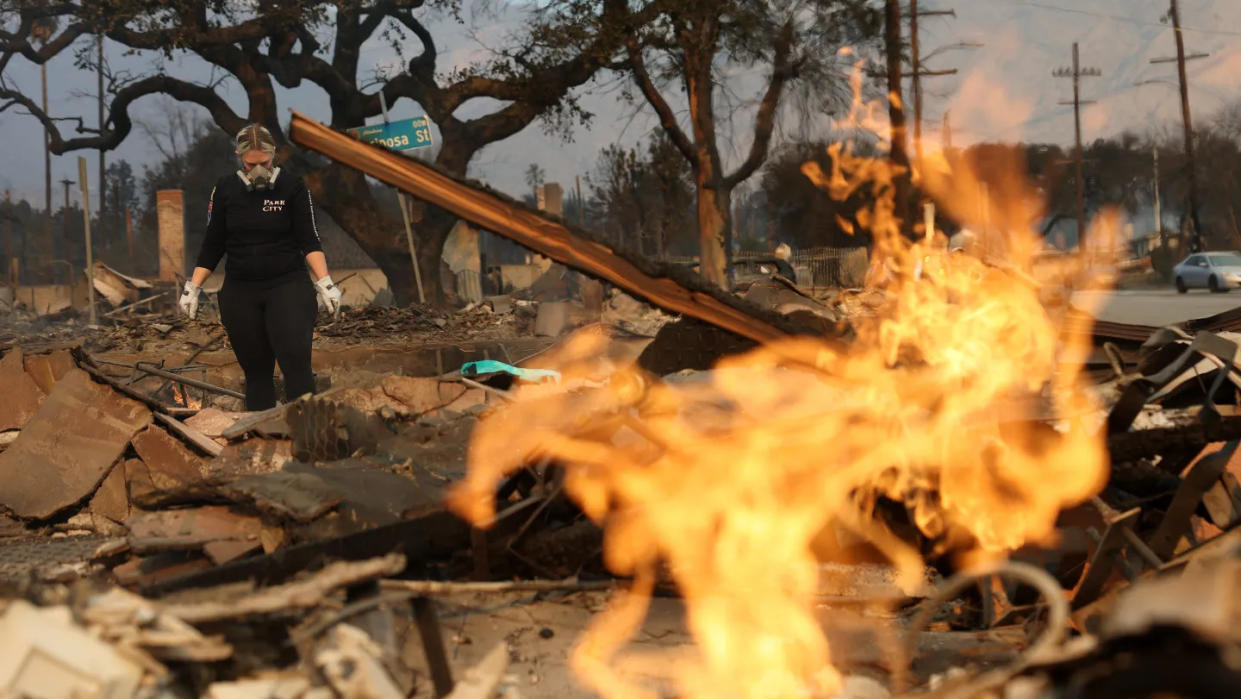
Altadena

Re-posted from Word in Black, a ground-breaking collaboration of ten legendary Black news publishers.

As the rapidly-spreading Eaton wildfire in Los Angeles crept closer to the home he’d lived in for nearly six decades, Rodney Nickerson, 83, wasn’t going to panic. Despite the pleas of his worried daughter and anxious neighbors, he was staying put. 

It apparently made sense for him to hold on: he bought the house in 1968, back when it wasn’t easy for Black people to own property in L.A., much less in a great neighborhood like Altadena. To Nickerson, a retired engineer who clocked in at Lockheed-Martin for almost half a century, there was no reason to panic. He would ride it out. 

“He said, ‘I’ll be fine,’” his daughter, Kimko Nickerson, told a reporter for KCAL, a local TV news station. “He said, ‘I’ll be here when you come back and the house will be here.’” 

Tragically, he miscalculated: when she returned to the house, Kimko Nickerson found her father’s body in the charred, smoldering ruins. 

Continue reading “Altadena”

No Matter What the Colonizers Say or Do

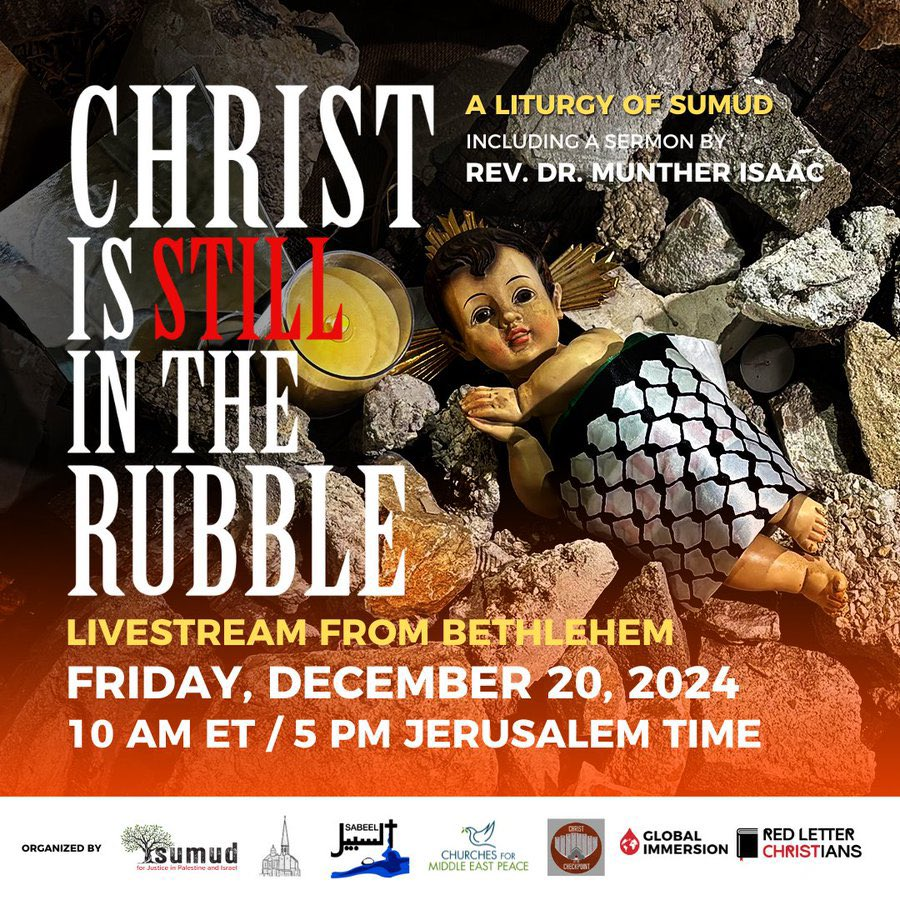
White Christians and Jewish Americans have been socialized to be scared of images like this. But isn’t this is pretty much what Mary the Palestinian Jewish teen mother of Jesus would have looked like?

In the Gospel of Luke, it says that Mary prayed to a God who brought down the powerful from their thrones, and lifted up the lowly. A God who has filled the hungry with good things, and sent the rich away empty!

Mary was part of the resistance.

As she called on a Power greater than empire, Mary summoned what Palestinians call sumud.  Steadfastness. Standing firm in the face of occupation. Never surrendering their humanity and dignity. No matter what the colonizers say or do.

Here’s to all the courageous young people on college campuses in 2024 who pitched tents and got arrested as they demanded that their campuses divest from companies profiting off of land theft and genocide.

And Every Mountain Brought Low: The Voice in the Wilderness

By Jim Perkinson, a sermon on Luke 3:1-6 for St. Peter’s Episcopal Church in Detroit, MI (December 8, 2024)

So, we’ll begin way out in left field.  The indigenous teacher my wife and I have been frequenting for more than 12 years now—half white, half Native, growing up among the Pueblo folk of northern New Mexico, adopted into, trained by, and living among the Tzutujil Maya of Guatemala for more than 10 years before being sent back to the States to keep their traditions alive as the civil war there was destroying their culture and indigenous ways—wrote a book a few years ago called The Unlikely Peace of Cuchumaqiq: The Parallel Lives of People as Plants: Keeping the Seeds Alive.  In it, he—Martín Prechtel— recounted his experience of the Feb. 4, 1976 earthquake in Guatemala whose 7.6 rumble on the Richter scale killed more than 22,000 people and displaced some 1.2 million. 

Curiously, Prechtel begins that book with stories of Native kids running 15-kilometer races in area high school competitions, through the canyons near the Pueblo, which they almost always won, but refused to win as individuals.  Rather they would wait for each other before crossing the finish line, so only the entire Native group of kids, not an individual, would be crowned winner.  Or not. Running wasn’t about winning.  It was about running.  Being magnificent in your movement.  Interesting, but why begin a book on a mega-earthquake experience by talking about running?  We’ll get to that later.

Continue reading “And Every Mountain Brought Low: The Voice in the Wilderness”