By Jim Perkinson (above), a sermon for St. Peter’s Episcopal Church (Detroit, MI)
And he said to her, “Let the children first be fed, for it is not right to take the children’s bread and throw it to the dogs.” (Mk 7:27)
Note, right up front, how rapidly the subject shifts topic in this Marcan vignette. It goes from unclean spirit to bread to puppies and argues about priorities. Pretty easy for somebody eclectic like me to open up, in response, a fire hydrant of ideas without any hoses attached. So, my title is an attempt to organize the flow a bit. We begin (ha!) with the word “first.”
The sacred Jewish writing known as the Talmud (Brachot 40a) asserts: “It is forbidden for people to eat before they give food to their animals as it says (Dvarim 11:15), ‘I will provide grass in your field for your cattle’ and only then does the verse state ‘and you will eat and be satisfied’” (Rav Yehuda, teaching in the name of Rav, quoted by Halickman)[1]
But, but then in the Gospel of Mark today (as we read), Rabbi Jesus says: “Let the children first be fed; it is not right to take the children’s bread and throw it to the dogs” (Mk 7: 27).
And those “buts” (plus a bunch more) will be central in the riff to follow here—one thing going one way, and then suddenly the same thing going another way, or even a line of anatomy curving around against itself and in “cheeky” fashion, doing so twice. There are buts and then there are “butts.” As we shall note.
By Rev. Dr. Nick Peterson, Professor of Homiletics and Worship at Christian Theological Seminary in Indianapolis. In his work, Nick explores how black faith engenders intramural care practices, which he calls “black-on-black care” – a transformative care that contends with and sometimes exceeds the constraints of antiblackness. Rev. Dr. Peterson offered this up to celebrate the 10-year anniversary of RadicalDiscipleship.net.
I traffic in primarily liberal Protestant circles where discipleship often gets a bad rap, largely due to its association with evangelical circles whose theologies frequently oppose liberation and inclusion. Still, I think it’s important not to abandon the idea or concept to its popular usage, but rather to recognize its potential to sow the seeds of God’s will on earth as it is in heaven.
We all know that Jesus called and chose his disciples—like any good rabbi, he wanted to select people who could carry forward his teachings and his orientation toward life and God’s purpose in the world. The thing is, Jesus didn’t seem particularly selective about whom he chose, or at least that’s how the gospels tell it. He was simply walking along and called men as he encountered them, and, across the board, they stopped what they were doing to follow him. These were not generally men trained in the specifics of Jewish law or religious practice. They were not of noble birth or high standing, with few exceptions. Still, Jesus chose to give the best of himself to a group of ordinary, everyday people.
Jesus calls disciples who will follow. And that’s the challenge, because following Jesus doesn’t necessarily make the path any clearer. The road of discipleship does not lead to easy living; in fact, it leads to a radical disposition. This disposition confronts suffering, pain, neglect, and oppression with truth, words of hope, and life itself. The discipline of discipleship is less about having the right answers or being a superb apologist, and more about being willing to witness pain that we’d rather not see—and remaining bold enough to believe and wait for God to show up in it.
The radical call of discipleship remains a daunting proposition because Jesus ultimately chose to show his greatest power by entering into death and waiting with it until even death surrendered to God’s purposes. The world we inhabit is death-dealing as well, because of the evil born of human hands. From our children killing each other at school and at play, to our dollars funding the bombing of children thousands of miles away—death has become a universal currency. And in the face of this, God calls a remnant, raises a witness in the world, to remind us that this is not how we are meant to live.
The ubiquity of violence and death can be so overwhelming that it may feel like our labor and waiting are meaningless. This feeling is amplified by the pressure to make a large impact, to equate witness with notoriety or platform. But God’s call has never been about winning on the world’s terms or even on our own terms. God does not call disciples to play and win the game of domination. God calls disciples to lavish love on the world until Love wins. God calls disciples to pour out mercy and grace on the neglected and the maligned, like water on thirsty ground. God calls disciples to a steadfastness that does not confuse urgency with anxiety or inclusion with passivity. The radical call of God is like the wind of the Spirit, moving where it will, connecting inspired breaths across time and space.
For the gift of the invitation to follow, we give thanks. For those whose footprints reveal new paths in this journey, we give thanks. Thank you, radical disciples, for nurturing this oasis in a dry land.
A decade ago, I was teaching Bible and theology full-time at our local Jesuit school, Seattle University. Now I am retired.
A decade ago, my wife and ministry partner, Sue, were part of our local Mennonite congregation. Now, we do not attend church.
A decade ago, I identified as a Christian. Now, I have reclaimed my birth identity as a Jew who loves the Jewish Jesus.
A decade ago, Sue and I were in the midst of an eighteen year stretch of hosting and leading a Scripture group that met every Thursday for two hours in our living room. Now, it is hosted elsewhere.
There are many reasons for these changes, some which we all share—the pandemic, for instance—and others that are personal to my own journey. But as a result of these choices, I now am experiencing life much differently than I was a decade ago.
Today is the ten-year anniversary of our first post on Radical Discipleship. It’s been a whole decade of platforming expressions of Christian faith committed to breaking rank with supremacy of every form.
When we started, folks were still marching in Ferguson, in the aftermath of the murder of Michael Brown.
Since then, we’ve become unstitched. Which is another way to say we are getting free.
This is Zachary Foster’s response to a tweet from Emily Schrader that said, “I’m not sure why this needs to be said, but we don’t need non-Jews to be lecturing Jews about what Zionism is or isn’t.” Foster is a Jewish-American historian of Palestine who received his PhD in Near Eastern Studies from Princeton in 2017.
Of course, Christians don’t need to be lecturing Jews about anything. We have our own intramural issues – and Christian Zionism is a big one that heavily influences conservative and liberal followers of Jesus.
Zionism was initially a Christian phenomenon before it was a Jewish phenomenon.
→ Anthony Cooper (Lord Shaftesbury) (1801-1885) published a tract in 1838 claiming that Jewish “restoration” in Palestine would benefit Great Britain’s geopolitical position and would hasten the second coming of Jesus.
→ Charles Henry Churchill (1807-1867) proposed a plan for establishing a Jewish state in Palestine in the 1840s as British Consul in Damascus.
→ James Finn (1806-1872), British Consul in Jerusalem, member of the London Society for Promoting Christianity Amongst the Jews, bought land in the 1850s in the Palestinian village of Artas for the purpose of employing destitute Jews there.
→ James Bicheno’s (1880) “The restoration of the Jews, the crisis of all nations”: purpose to “stir up public attention to the prophecies which relate to the restoration of this singular people in the latter days.”
→ William Hechler an Anglican clergyman in 1884 wrote “The Restoration of the Jews to Palestine” in which he argued that Jewish settlement in Palestine was a precondition for the return of Jesus.
Maybe the more sensible question is, why did Jews hijack the idea of Zionism from non-Jews?
Sources: Ilan Pappe, Lobbying for Zionism; Masalha, The Zionist Bible
Today we celebrate the recent release of a new book by Lydia Wylie-Kellermann, the co-founder of RadicalDiscipleship.net! You can order This Sweet Earth right here. We were fortunate enough to have the opportunity to ask her a few questions about it. See below for book tour dates!
RD: We are interested in what led you to write this book. Are there specific experiences or situations that you can go back to that told you that this book needed to be written and that you needed to write it?
LWK: I think more than anything I had this ongoing nagging feeling for a few years that there was this book inside of me. I just needed to make space to see what would pour out.
A big part of why I personally needed this book was because I was shocked by the level of immobilizing anxiety I was experiencing. I was reading scientific studies that kept saying how much worse things are than we thought. I was witnessing predictions for human extinction. The doomsday scrolling was making it hard to breathe. There was so much grief and rage stuck in my body all the time. And I don’t think I’m alone in that. I realized that if I held these feelings by myself that they would turn either towards total despair or I would have to pretend it wasn’t happening just to keep going.
Yet I know that this rage and grief and anxiety are holy. They are how we express how much we love this world. And that if we hold these emotions in community, then there is beautiful, transformational power in it all.
When I was overcome with pain around climate crisis, it was my kids that would grab my hand and pull me over to watch the caterpillar devouring the milkweed. Their ability to slow down and intimately rest in this ecosystem changed my posture.
And as I look out into the future and what I want my kids to know and learn, I find myself leaning on the theological imagination and political analysis of my childhood. My parents and the community around me taught me so much about what it means to be human….what we say yes to with our whole bodies and how we also say no by putting our bodies on the line.
This book in many ways is a love letter to the generations before me and the generations after. I am constantly stumbling over gratitude for the lessons they teach me daily.
A stunning open letter from Kairos Palestine in response to this letter from the Word Council of Churches last month. This is an invaluable resource for liberal Christians who painfully continue to “both sides” this decades-long oppressive situation. [RD.net bolded portions below for our own emphasis]
Open letter to the Executive Committee of the World Council of Churches
”But based on his promise, we wait for new heavens and a new earth, where righteousness dwells.” (2 Peter 3:13)
Esteemed Members of the Executive Committee,
We at Kairos Palestine extend our appreciation of your statement issued in Bogota, Colombia by your esteemed Committee (6-11 June) titled: ”THE ESCALATING CRISIS IN GAZA”. We trust that the statement was issued with great concern and with the urgent need to terminate the atrocious crimes in Gaza.
However, as Palestinians, as Christians and as your partners, we would like to bring to your attention the following points pertaining to the content and the calls included in the statement:
1- We believe that the title ”Escalating Crisis in Gaza” is neither accurate, nor adequate. The protracted ”crisis” is a result of 8 months of Israel’s incessant large-scale military aggression which mounts to acts of genocide, prior to which, Gaza has been strangled by a 17year blockade that forced 2.3 million people to become aid-dependent and extremely vulnerable to famine and starvation. Especially with WCC being one of the key partners of the Office of the UN Special Adviser on the Prevention of Genocide in the drafting of the Plan of Action for Religious Leaders and Actors to Prevent Incitement to Violence that Could Lead to Atrocity Crimes (’the Fez Process’), it holds an elevated responsibility in identifying a genocide, condemning it with the strongest possible terms and acting to end it immediately. Besides our own accounts and meticulous documentation of the genocide as Palestinians, the International Court of Justice (ICJ) did confirm in its provisional measures that Israel’s is plausibly committing genocide. Not only is the term genocide absent from the title, it is marginalized in the body of the statement instead of being the essence of what the statement is condemning and calls for ending immediately. Investigation after investigation concludes that Israel is committing atrocious crimes under international law, including the most recent report[1] by the UN Commission of Inquiry which concluded that Israel is committing the crime of Extermination against the Palestinian people. It cannot be acceptable that crimes of such scale, committed deliberately over 8 months, be narrowed down to a ”crisis”.
By Joanna Lawrence Shenk, a pastor at First Mennonite Church of San Francisco
A sermon on Psalm 85:8-13
Thank you, Sarah, for that reading which offers us a compelling vision of the kindom of God. The writer of this psalm is reflecting on who they know the Divine to be – one who brings peace and thriving to a community – to the land and the people. There is so much beautiful imagery: love and faithfulness meeting, justice and peace embracing (or kissing!). Fidelity sprouting from the earth and justice leaning down from heaven. It’s an ecosystem of care and connection. The writer has a trust in something greater that is holding the world. They were part of a community that they knew was held in the care of the Creator.
Given the national and global happenings of recent days, weeks and months, some of us may say “well that sounds like a nice little image for a children’s bible, but how does it relate to the mess of a world we’re living in?! Where exactly are justice and peace kissing each other right now?”
Without a doubt, many of us have heavy hearts this morning (and what a balm to celebrate the life of little Joaquin as he was dedicated in this congregation today). We see and feel the way that capitalism is crumbling down on top of the most vulnerable. We grieve and we rage at the ongoing environmental polycrisis. We’ve said no over and over again to the bombardment of Gaza and yet the missiles paid for by our tax dollars keep raining down on Palestinians, destroying life.
So grateful for Ken Sehested’s ongoing work and witness over at prayerandpolitiks.org. This is from his intro to Queer Theology 101. Ken is not new to this. He is true to this.
Years ago I represented the Association of Welcoming and Affirming Baptists on the board of the Institute for Welcoming Resources, an ecumenical coalition of networks within multiple Protestant bodies advocating for the full inclusion of the LGBTQ community within the life of the church. On the way home from one of those meetings, I began a mental outline of what would become my sermon on Epiphany Sunday. Below is an excerpt (with some revisions).
On the plane coming home I began composing a new sermon or essay—Queer Theology 101—dealing with the unpredictability, the “foolishness,” the queerness of God in choosing covenant partners and the destabilizing effect on all existing political arrangements and established orthodoxies.
While queer theology flows from the historically particular experience of the LGBTQ community, it is not only for them. I don’t think this is a cultural co-opting but rather an enrichment of theological insight nourishing the whole community.
The queer theology I envision points to the insistence of the Apostles Peter and Paul that Gentiles were to be welcomed into the household of faith. I can assure you that that the question was as controversial then as the question of queer folkx in the church over the past decades.
Queer theology references Jesus’ selection of the unclean Samaritan as a model of faith in the coming Reign of God; of pagan astrologers as the first to recognize the significance of that bright star announcing Mary’s birth pangs; of Ruth’s inclusion in Jesus’ genealogy, even though she was a Moabite, a stranger to the household of faith; of a black Baptist preacher, from Georgia of all places—Martin Luther King Jr.—who would come to be recognized among the leading figures in our republic’s pantheon of heroes and the church’s prophetic tradition. The Bible, and history, is chocked full of such queerness.
This is the heart of Epiphany’s announcement. Though the news is good, especially for those who have had no place at the table of bounty, those currently managing and policing the table sense the terror of this message. And they will resist it, with vicious propaganda, virulent threats and public intimidation, even with bloody violence.
News of Jesus’ birth, as T.S. Eliot wrote in his “Magi” poem, will be “hard and bitter agony” for some. And we could find (and have found) ourselves in the middle of such a tumultuous backlash.
As one of my theology professors, James Cone, was fond of saying, to understand the goodness of the Gospel news we must inquire as to when, why, and for whom such news is troublesome and unwelcome.
It is no accident that history is littered with marginalized, disenfranchised and excluded people. Powerful interests, often hidden from public view, are at work in maintaining established order. Disrupting this order will be considered a disruption of the “peace” and be met with demands that public authority reassert “law and order.”
Those captivated by the vision of a different Order will always chaff at the present disorder. Don’t let the bright lights and bustling headlines distract. Our job is to keep our sight on that distant horizon which, ironically enough, trains our eyes to spot the Spirit’s efflorescent work here and now—even as we speak!—with buds breaking through resistant ground and in the most unlikeliest of places, where God’s odd, irregular, unexpected, overlooked ones are at work.
By Tommy Airey, a re-posted and slightly abridged version of his weekly newsletter
Bernadette Atuahene is a Black woman who grew up fifty miles north of me in Southern California. She is my age and has multiple degrees from places like UCLA, Harvard and Yale. A couple years after Lindsay and I moved to Southwest Detroit, she moved to the Eastside to study the city’s housing crisis. Her research unveiled something truly apocalyptic.
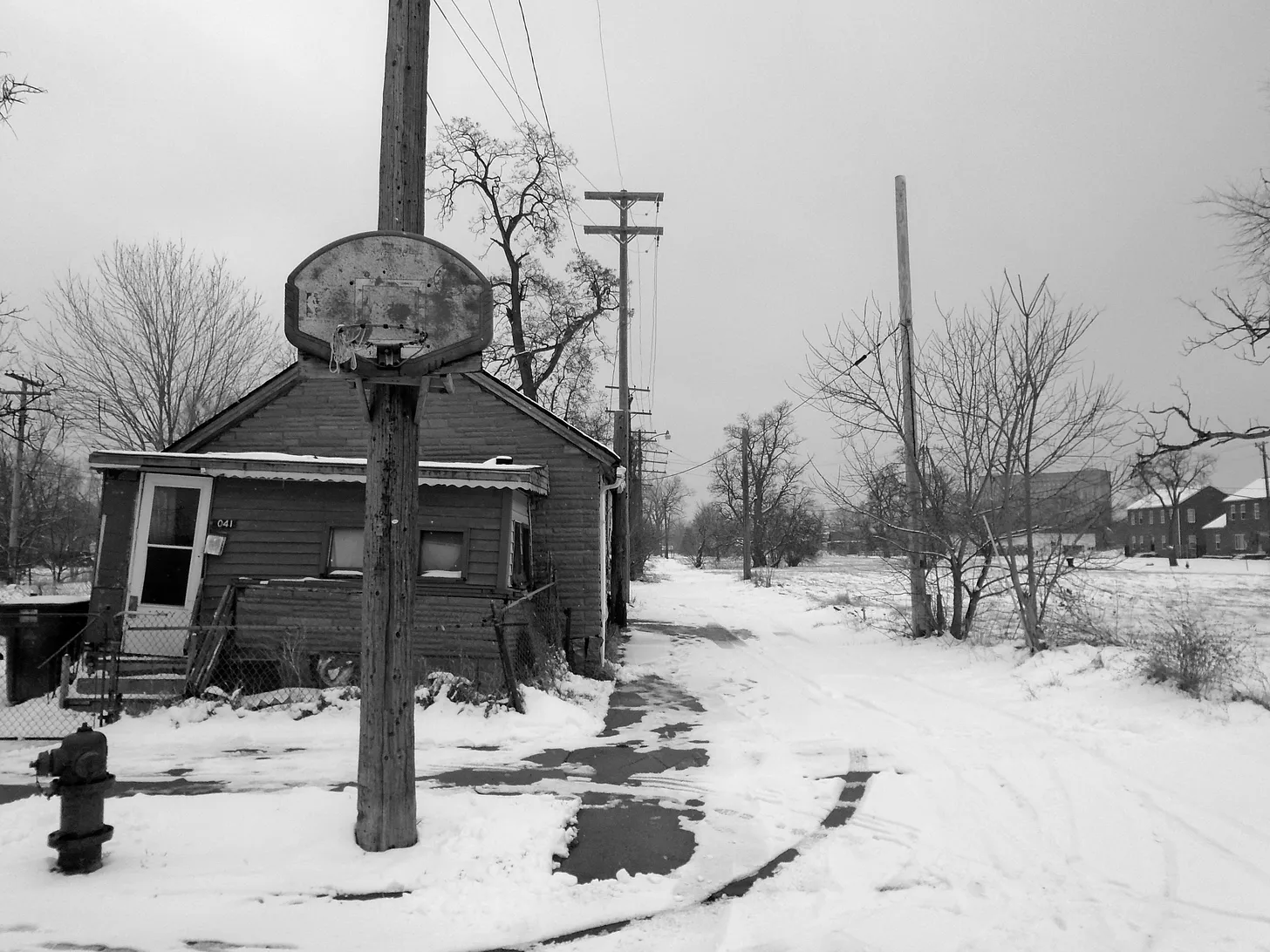
In the decade spanning Barack Obama’s inauguration to George Floyd’s murder, one-third of the entire city of Detroit lost their homes to illegal tax foreclosures. The city overcharged its poorest residents, almost all of them Black. Residents were evicted. Homes were seized and auctioned off. At the same time, the city spent more than a half billion dollars to demolish many of these homes and wealthy white investors were given hundreds of millions of dollars in subsidies to redevelop the land in their own image.
The only reason that we know about this epidemic of illegal tax foreclosures in Detroit is because Bernadette Atuahene devoted three years of her life to doing the research. The only reason that we know about the poisoning of faucets in Flint is because Black women testified and tested the city’s water on a mass scale. The only reason that we know about the police murder of George Floyd is because a Black woman filmed it on her phone and posted it to her socials. The more I see this trend, the more I wonder what else is happening, hidden behind the curtain called American exceptionalism.






 Radical Discipleship