Wild Lectionary: Fishing On Our Ancestral Territory

pic 2
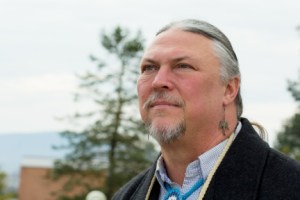
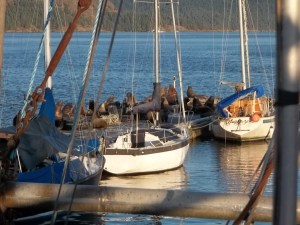
My late father, on our traditional Nisga’a fishing territory. Photo credit Tanya Stanley, summer 2011.

Epiphany 3B
Mark 1: 16-18

By: Jeffery Stanley

May the words of my mouth, and the meditation of my heart, be acceptable unto you, Oh God our rock and Redeemer.

“As Jesus passed along the sea of Galilee, he saw Simon and his brother Andrew casting a net into the lake – for they were fishermen. And Jesus said to them ‘follow me and I will make you fish for people.’ And immediately, they left their nets and followed him.”

In the days of Jesus of Nazareth it was the custom for teachers to gather their students from the people of any community and lead them as a company from place to place as they taught. He (a teacher) would from time to time, talk to people and share truths with them. Certain students would be attracted to him and would come to listen to him from time to time. Sometimes they would linger at some favorable spot for awhile and persons would join them to listen and often respond to the message. Gutzke, Manford George. “Plain talk on Mark” pp. 18 Continue reading “Wild Lectionary: Fishing On Our Ancestral Territory”

The Left Cheek

BayoBy Bayo Akomolafe, Nigerian author and “walkout academic,” [re]posted from his blog

Through this year, my explorations into new materialisms possessed me. In talks and text, in teachings and learnings, I dived into the queerness of seriously rethinking the boundaries I had been conditioned to erect between me and nature. I asked the question: what if we really took seriously the idea that the world is alive, that nature is more mind-like, magical and incorporeal than we know how to speak about, and that humans are more animal-like, embodied and carnal than our stories of centrality allow us to see? My book, These Wilds Beyond our Fences, struggled with these ideas and their implications for the ways we understand race, social justice, culture, loss, environmental degradation, and our perennial fascination with scaling heights. Continue reading “The Left Cheek”

Wild Lectionary: Woven in the Depths

Womb_2_Kovil_BG
Womb 2 Kovil BG Photo Credit: Fillipov Ivo, Creative Commons

Epiphany, Year B
Psalm 139:1-6, 13-18

By Ragan Sutterfield

E. Stanley Jones once wrote that if there is an instinct in the human heart to conceal there is also a deeper instict to reveal” (Victory Through Surrender). And yet, our culture keeps from authentic disclosure. We are invited, instead, to a kind of performative exposure, a way of revealing that also hides. We want to be known and seen but we do not trust those who might see us. We are afraid of what might happen if we are known, fully, authentically. So we manufacture disclosure on Facebook, hoping that in the commiseration of comments or praise of likes we will achieve what we are afraid to risk through a real openness. It is disclosure at the surface rather than at the depths.

Continue reading “Wild Lectionary: Woven in the Depths”

Ratzlaff Reviews: The Pagan’s Apostle

Vern RAnother short and sweet book review-summary from legendary pastor Vern Ratzlaff, posting up on the Canadian prairies, pouring his heart and mind into anti-imperial theology and soul-tending.  

Paul: the Pagans’ Apostle. Paula Fredriksen. Yale University Press, 2017.

Paul’s letters concentrate on two ancient worlds, one Jewish, one pagan. The first is incandescent with apocalyptic hopes, expecting G-d through his messiah to fulfill his ancient promises of redemption to Israel. The second teems with human and divine actors, with superhuman forces and hostile cosmic gods. Fredrikson clearly outlines Paul’s situation within the social/cultural content of gods and humans, pagans and Jews, cities, synagogues and competing Christ-following assemblies, with particular attention to Paul’s letter to the Roman church. Continue reading “Ratzlaff Reviews: The Pagan’s Apostle”

Wild Lectionary: Metanoia and John – Transformation in Wilderness

Jan 7 photo.jpgBy Valarie Luna Serrels

Epiphany 1B
Mark 1:4-11

There’s a story in Greek mythology about Kairos, the young, swift god of opportunity, with wings on his feet. When he passes by you, it’s too late to grab hold of said opportunity. However, in the wake of Kairos’ fleeting journey, stands the sorrowful goddess Metanoia. She invites those passed by with opportunity for reflection, mourning, and space to make a decision. An urgent decision. Metanoia literally means change. A changed mind, heart, behavior, life. Continue reading “Wild Lectionary: Metanoia and John – Transformation in Wilderness”

Advent Song

imagesBy Kim Redigan

this advent i need a woman’s space.
a dark space.
a silent space.
somehow i’ve got to find my way
back to the womb of my own life.

this advent i need shawls and songs.
the sacramentals of ceramic mugs
and solitary candles
standing like sentries
throwing shadows on the darkened walls
of my winter heart. Continue reading “Advent Song”

Wild Lectionary: Mary, Hildegard and the anawim

IMG_2855Advent 4B

Luke 1:26-38, 46b-55

You have deposed the mighty from their thrones and raised the lowly to high places. Luke 1:52

By The Reverend Marilyn Zehr

I met her this afternoon when I went for a walk. She was throwing the ash from her woodstove onto the snowy road just outside her front door.

“Helps the cars get traction,” she said. “You’re the new minister aren’t you? Want to come in and see my Christmas decorations?” Continue reading “Wild Lectionary: Mary, Hildegard and the anawim”

An Alternative Seminary Experience

24254683_1992621874348930_4807097317723441469_o (1)By Laura Newby of Twin-Cities-based Underground Seminary

*NOTE: Underground Seminary is now accepting applications for their 3rd cohort starting Fall 2018. 

Christian leadership requires radical revisioning in the twenty-first century. The patriarchal, white, Western, capitalist framework that has dominated the globe the last few hundred years has lost credibility. Whiteness was birthed in conquest and theft, and has led to a global neoliberal system where everything is a commodity to be devoured for profit. The earth cries out on the brink of eco-systemic collapse.

This is an age for prophets and healers. Yet we are heirs of a religious tradition that is deeply complicit in our apocalyptic moment. What does it mean to serve as Christian leaders when Christianity has been the primary ideological center of this destructive colonial worldview? Do we realize the extent to which our ideas about leadership continue to be shaped by the chimera of whiteness? Continue reading “An Alternative Seminary Experience”