
First Sunday of Advent


by jim perkinson (St. Peter’s Episcopal Church, Detroit, 11-26-17)
the sheep and the goats
the goats and the sheep
the left
the right
the day
the night
nothing here about church
but the good fundies all say
you must believe with your heart
have the word on your lips
insist jesus is lord
or you will have no part Continue reading “sheep and goats, meat and drink”
 Advent 1B
Isaiah 64:1-9
Psalm 80:1-7, 17-19
1 Corinthians 1:3-9
Mark 13:24-37
By Jessica Miller
Many years ago, on a prairie in Michigan, I became a student of the landscape. Officially, I tracked phenology, or the study of seasonal phenomena. Mostly I would wander the tall grass, seeking changes in the flowers. Who is blooming? Who is senescing? Whose shoots are green and growing? Some days would be punctuated by the commanding, haunting, rolling trumpet-call of sandhill cranes. The sound yanked my head up out of the grass and up to the sky. Where were they coming from? Where were they going? Learning the birds and plants and just a tiny fraction of the invisible strings that tie them to the world (the temperature, the direction of the wind, the rising and setting of the sun) taught me how to listen to the Spirit. Where does she come from? Where is she going? You can never know for sure, and yet you can become familiar with her flight-paths. Continue reading “Wild Lectionary: Learn from the Fig Tree”
 The Alternative Seminary will be un-domesticating biblical tales of liberation for all radical disciples in the Philly area next weekend:
Saturday morning, December 9
9:30 – 11:30 a.m.
Project HOME, 1515 Fairmount Avenue
Part of President Trump’s vision of “making American great again” is that – to hell with political correctness – we will all be able to say “Merry Christmas!” again.
This is deeply ironic but sadly telling: Much of the Christian church in the United States has been co-opted by an American gospel of prosperity, racism, violence, and militant nationalism. The celebration of Christmas is often wrapped in innocent, feel-good, Hallmark-card imagery. But in fact the biblical texts describing the coming of Jesus are making powerful assertions about the politics of the Bible that speak very much to our contemporary global crises. We will reflect on the “nativity narratives” in the Gospels of Matthew and Luke to see how they express core biblical themes of justice and liberation. We will try to “un-domesticate” these tales of liberation and reflect on how they are truly challenging us in terms of our allegiance and our discipleship. A perfect event for Advent. A light breakfast will be served. A $5 donation is requested to cover costs.
If you are interested in participating, please contact Will O’Brien at (215) 842-1790 or wobrien@alternativeseminary.net by December 3.
The Alternative Seminary is a program of biblical and theological study and reflection designed to foster an authentic biblical witness in the modern world. For more information, see www.alternativeseminary.net.
 By Lydia Wylie-Kellermann
November 26, 2017, at Day House Catholic Worker in Detroit
“Let me show you how to fold this, Grandpa,” Isaac said after he picked up a dish rag off my dad’s kitchen floor. He carefully folded it just as he had learned at school. At night, we’ve been reading The BFG and it is slowed down by the fact that Isaac pauses regularly to point out all the words he can read on each page. It’s incredible! I love watching all these incredible things he is learning and knowing that I am not responsible for it. I just get to delight it in. Continue reading “Christ the King Sermon: Bossy and Beautiful”
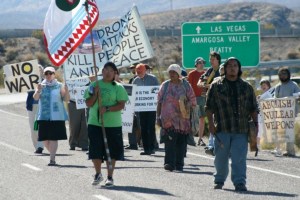
Feast of Christ the King
Ezekiel 34.11-12, 15-17
1 Corinthians 15:20-26, 28
Matthew 25:31-46
Today is the feast of Christ the King or Reign of Christ Sunday. The mental images that the words “king” and “reign” bring to mind are based on our knowledge of the actions of kings and political leaders. Today’s first reading from the prophet Ezekiel gives us God’s view of leadership. The image of the shepherd is commonly used to portray monarchs in biblical literature. So, if we think of Christ the King as Christ the Good Shepherd, we have a truer sense of what this day is about. Continue reading “Wild Lectionary: Soothe the Earth and Heal the Waters”
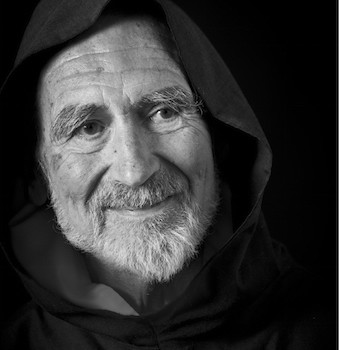 From Benedictine monk David Steindl-Rast in an Onbeing interview with Krista Tippett (January 2016):
I remember, the grace that Buddhists pray before a meal starts with the words, “Innumerable beings brought us this food. We should know how it comes to us.” And when you put that into practice and look at what’s there at your table, on your plate, there is no end to connectedness. In the end, for instance, most people don’t think of it, but in the end, we always eat earth. We eat earth. Not in an abstract way, in a very concrete way. This humus is what we eat, or crystals when we eat salt, it’s pretty obvious that comes out of the earth. That’s earth, directly.
When we eat vegetables, well, the vegetables were nourished by all the nutrients in the earth, and then now we eat them, or the fruits of these plants. If you eat meat or fish, then they were nourished by vegetables, and they were nourished by the earth. Always comes back to earth. But that is only one aspect. Most of it was grown, so people had to work on sowing it, and harvesting it, packaging it, transporting it. There you have already a couple of thousand people whom you will never see, never know by name, never meet, and yet without them, there wouldn’t be anything on your plate. There’s this wonderful cartoon where the family sits at Thanksgiving around the table and says, “Thank you, Jesus.” And then in a cloud comes a farm worker, whose name happens to be Jesus, like the Mexican farm workers.

Proper 28(33) A
Pentecost + 24
Matthew 25:14-30
By Ragan Sutterfield
I have been spending my mornings in the woods lately, a short hike before I begin to work on the tasks of the day. As fall finally arrives here in Arkansas the juncos have returned, twittering as they flash the white of their tails, and the long metallic notes of white-throated sparrows echo in the understory. Each step along the trails comes with a crunch, not only of the newly fallen leaves, but also of the acorns, cracking orange against the gray shale of the hillsides. Continue reading “Wild Lectionary: Look to the Acorns”
 By Tommy Airey
Like every good Evangelical, my adolescent faith was about giving all glory to the Lord. I sang praise songs to a “high and lifted up” Jesus and always concluded my prayers “in Jesus’ name” (I signed off my emails “Fool For Christ,” but that’s a story for another time). I was taught to utilize “apologetics” to defend the faith and prove that Jesus was, in fact, Divine. I revered C.S. Lewis whose Mere Christianity made a water-tight case for my beliefs. Lewis left readers three choices for who Jesus really was: a lunatic, a liar or the Lord Himself:
Either this man was, and is, the Son of God, or else a madman or something worse. You can shut him up for a fool, you can spit at him and kill him as a demon or you can fall at his feet and call him Lord and God, but let us not come with any patronizing nonsense about his being a great human teacher.
Lewis claimed that, when it came to the people who actually met Jesus, they responded in three ways: hatred, terror or adoration. There was no middle ground. Continue reading “It’s Time to Take Jesus Off the Pedestal”
 Proper 27(32)A
Pentecost + 23
I Thessalonians 4:13-18
Matthew 25: 1-13
Keep awake therefore, for you do not know the day or the hour. (Mt 25:13)
…so that you may not grieve as others do who have no hope. (1 Th 4:13)
By Andrew Hudson
I’m an empty-nester, twice over. I sent my son off to college a couple years ago, and I’m still not through adjusting. And just recently, I had a similar experience, sending off a good, small Mennonite congregation to a new location at the end of my being their interim pastor. Continue reading “Wild Lectionary: Letting it flow down the creek”
 Radical Discipleship