Thursday evenings, June 27 – July 25 (no class July 4)
7:00 – 8:30 p.m. EST
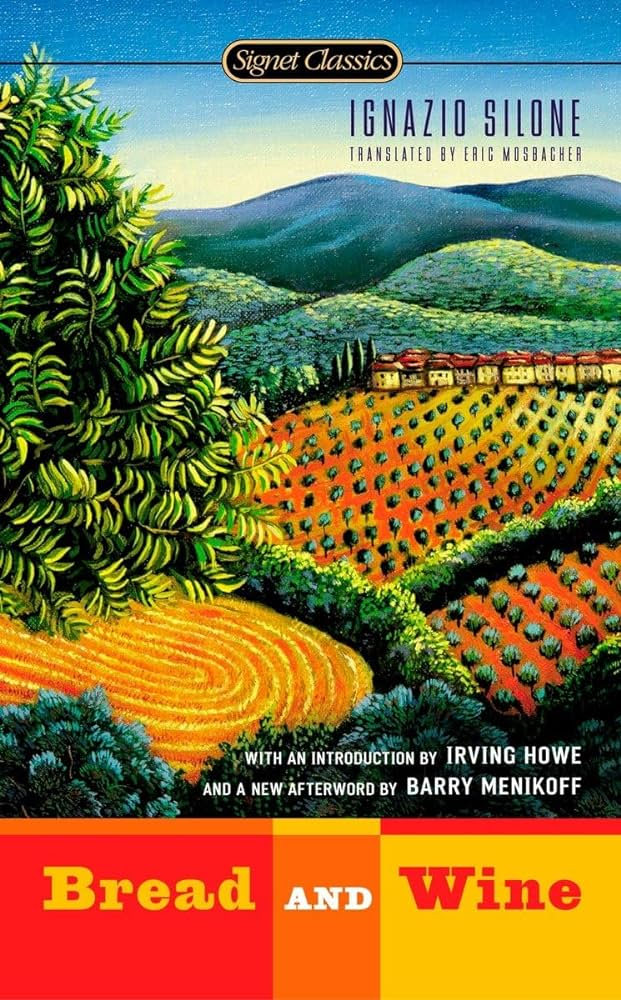
“In wrestling with the problem of how to present the teachings of nonviolence in an age of mass violence, it seems to me that the writings of Ignazio Silone are of immense importance.” – Dorothy Day
Catholic Worker founder Dorothy Day often cited the novel Bread and Wine by Ignazio Silone as one of the most influential works of fiction in her life. A deeply humane and compassionate novel, it was written in 1936 while Silone was in exile from his native Italy for his resistance work against the fascist government of Benito Mussolini. He recounts the story of an idealistic revolutionary who tries to organize Italian peasants against a repressive regime.
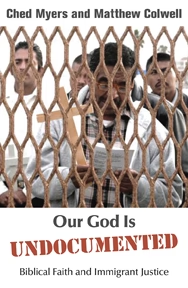
If we are going to talk about how undocumented immigrants impact our society, we ought to first address how our national policies have disrupted their lives. Above all, solidarity with the immigrant poor should seek to know them not as statistics, but as human beings who endure extraordinary hardship and trauma in their struggle just to survive–especially since the structural causes of their impoverishment lie on our side of the border.
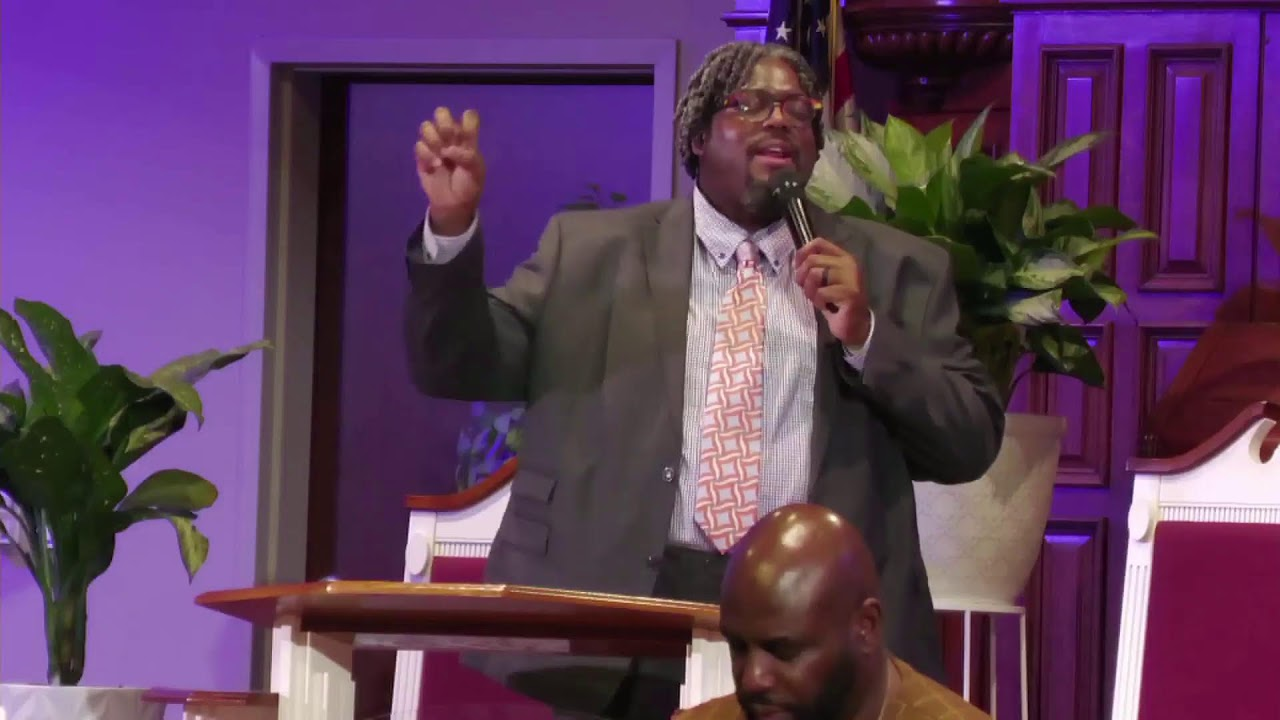
This is an excerpt from the beginning of Rev. Dr. Nick Peterson’s Pentecost Sunday sermon “I Got Issues” (preached to Mr. Carmel Christian Church in Indianapolis on May 19, 2024) on Luke 8:1-3, 42b-48. Watch the whole thing here (jump ahead to 58:53).
I got Issues, you got issues, they got issues, we all got issues.
I’m unsure when that phrase became popular, but its broad and continued use functions as a diagnostic. It is a confession that you have observed a problem. To confess that I have issues is to acknowledge that inside me, my head, my heart, and or my body, there is something askew, something that ain’t quite how it should be, that something is not in its ideal ordering, and the dis-order is mine to contend with. It is also the case that when we say you, or he, or she, got issues, we are again confessing that we have determined that somewhere in your corporeal schema, in your person or personality – something ain’t up to snuff, something is off kilter.
Whether its you or me, he, she, it, or they – to have issues is to confess that the math ain’t mathing, the sense ain’t sensing, the health ain’t healthing, and the mind ain’t minding. I got issues, you got issues, we all got issues. And while our issues are different, and our conditions particular to our life’s circumstances – it is a shared phenomenon to live knowing that we got problems – recognizing that there are some things in our lives that are not how they ought to be or how we want them to be and as issues they trouble us and flow out from us to the world around us.
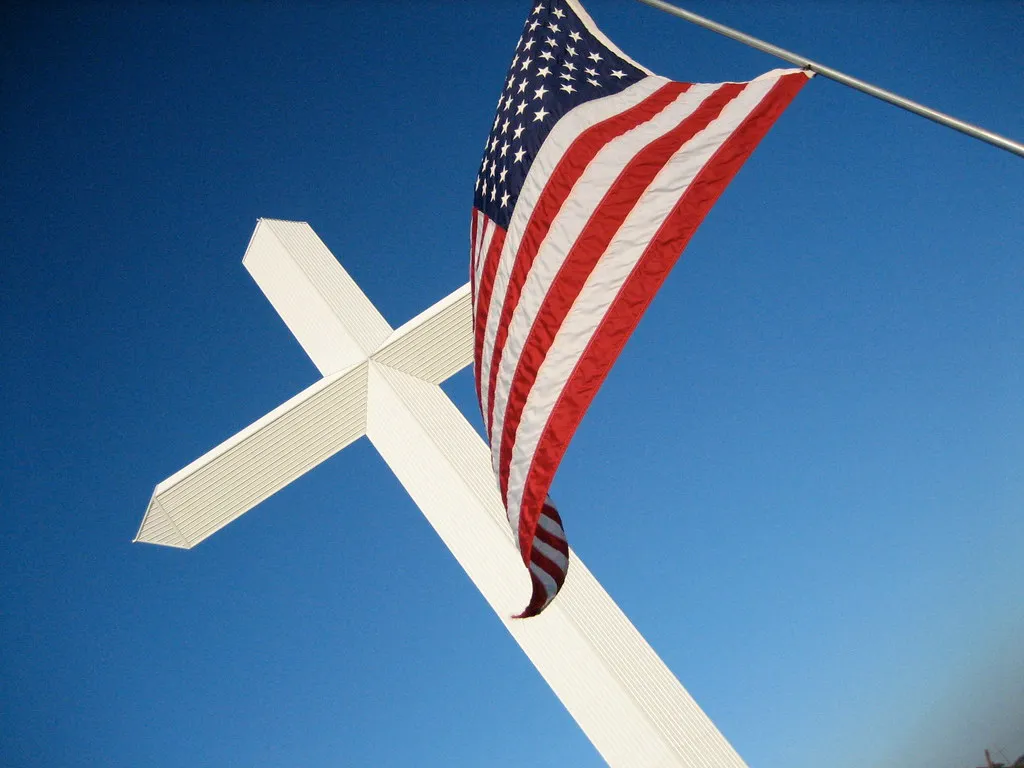
There are numerous organizations holding conferences and meeting, circulating petitions, making statements, and collecting prominent names to condemn Christian Nationalism. Coalitions and religious entities have been coalescing to resist what is being portrayed as an almost new and alarming phenomenon that is gripping the US’s cultural, political, and theological landscape with sharpened and ravenous claws. Though I fundamentally agree with those concerns I have some reservations about the timing and sense of urgency.
One of my questions is how closely are the concerns of these groups designed to coincide with the upcoming presidential elections? Is the timing of the objections, and the sense of urgency surrounding Christian Nationalism more allied with the Democratic Party instead of with the theological and ideological ethics and implications of Christian Nationalist in and of itself.
Happy Passover. A shout out to all our Jewish friends and comrades who, over the past two hundred days, have modeled for us the true meaning of peace. This shalom has nothing to do with staying civil or steering clear of conflict in an aggressively unjust world. This shalom demands the health and harmony of the whole community. It is committed to collective liberation. The assurance that all God’s children will be protected and provided for — no matter what we look like, where we were born, who we love, or how we worship.
In the spirit of biblical shalom, we offer this story about a journalist asking Rabbi Abraham Joshua Heschel why he was attending a protest against the war in Vietnam. Heschel answered, “I am here because I cannot pray.” The journalist was annoyed and asked him what he meant. Heschel replied:
Whenever I open the prayerbook, I see before me images of children burning from napalm. Indeed, we forfeit the right to pray, if we are silent about the cruelties committed in our name by our government. In a free society, some are guilty, but all are responsible. How dare we come before God with our prayers when we commit atrocities against the one image we have of the divine: human beings?
Do you ever wonder about how early church thinkers viewed wealth and poverty? Have the messages on stewardship that you’ve heard from the pulpit sounded contradictory to Scripture — or have you not heard many messages from church leadership on money at all?
If you’re curious to learn more on your journey of connecting your financial decisions with your faith, we invite you to join us for a live webinar: Scandalous Money with Miguel Escobar.
Escobar is an author and director of strategy and operations at Episcopal Divinity School. His book, The Unjust Steward: Wealth, Poverty, and the Church Today, explores Christianity’s complicated and conflicted relationship with money. He will join us for a live Zoom webinar on Wednesday, April 24, from 7:00-8:30 pm Eastern.
“The idea of sumud has become a multifaceted cultural concept among Palestinians: it means steadfastness, a derivative of “arranging” or “saving up”, even “adorning”. It implies composure braided with rootedness, a posture that might bend but will not break.” – Hala Alyan
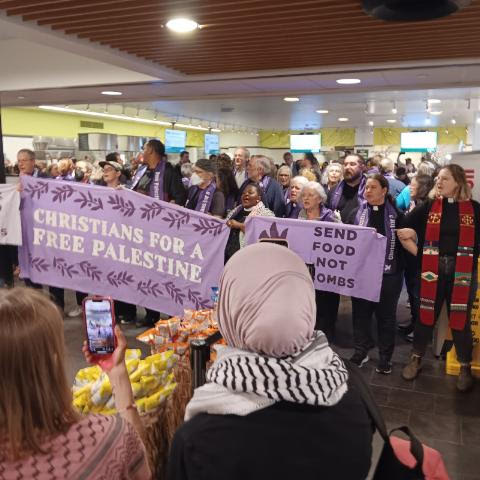
This week, on the anniversary of the execution of Dietrich Bonhoeffer, I watched my spouse get arrested. Lindsay joined dozens of other members of Christians for a Free Palestine publicly calling out the role of the American government and American churches in supporting the apartheid state of Israel’s decades-long occupation and blockade of Gaza, now spiraling into a genocide. After a short worship service of confession, communion and commission under a Magnolia tree a stone’s throw from the Capitol in DC, these parents, professors, engineers, social workers, retired seniors, seminary students and ordained ministers bee-lined for the cafeteria in the basement of the US Senate building. They planned to get “lunch” together.
The cafeteria was crowded and noisy. The Jesus people were ready to turn over tables. But they walked in casually, blended right in, played cool, waiting for their cue. Then, a few of the faithful started singing.
Palestine will be free. Palestine will be free We will not avert our eyes. Palestine will be free.
Over and over again. They rose from their seats and walked to the front of the line and locked arms behind banners that read Send Food Not Bombs and Christians for a Free Palestine and Woe to you who Slay the Hungry and Break Bread not Bodies. They stood in front of the cashiers to block customers from paying. They locked arms, connecting the dots and telling the truth together with loud, coordinated chants. It was more than a symbolic action. If American leaders won’t let Gaza eat, then they don’t deserve to eat lunch. A minor inconvenience compared to forced starvation.
***
In that moment, I was reminded of something I once heard from Lindsay, who not only has a criminal record, but is also a licensed marriage and family therapist. These two credentials are connected. The year after Minneapolis police murdered George Floyd, she told me that whenever we repress or guard or just go along to get along with something that is counterfeit, then the counterfeit will inevitably come out sideways. If we stay silent in the face of injustice, exploitation and oppression built on disinformation, myths and lies, then it will do something serious to the deepest parts of who we are. Because the soul is a web that connects everyone to everything else.
Living otherwise means living according to the Great Economy.
Wendell Berry’s notion of the Great Economy contrasts with what he terms the Little Economy. The Little Economy is the industrial, globalized economic system that prioritizes profit and exploitation of resources over sustainability and community well-being. Berry’s discussion of the Great Economy is a central theme in his critique of contemporary society and his vision for a more sustainable and harmonious way of living.
The Little Economy has had detrimental effects on our environment, local community, and the human spirit. The Great Economy reveals the interconnectedness of economy, ecology, and culture. In some places, Berry literally equates the Great Economy with what Jesus called the kingdom of God. (See the essay “Two Economies” in The Art of the Commonplace: Agrarian Essays, 2003).
By Bill Wylie-Kellermann, an Easter vigil homily from Detroit
So good to be in this service, in this hour and house – thanks to all who have returned or stepped up to make it happen. I speak the thanks of many hearts.
Two memories always wash over me when I come to this service.
One, is of 1983 when at the inspiration of Tom Lumpkin, seven of us including Maria West and Gordon Judd, walked the easter vigil onto Wurtsmith AFB when first-strike cruise missiles were then being loaded on B52s. We cut the fence, breaking the seal on death, walked down the 3 ½ mile runway, pausing at a small building to spray paint “Christ Lives! Disarm” and there renewed our baptismal vows – renouncing Death and all its works – finally partaking eucharist on our knees at the open gate to the high security area of loaded bombers. Our Easter declaration, that we were free to unmake these weapons, changed then and there my understanding of resurrection.
The other is during the service in this sanctuary, in 2001 – as we gathered in a circle to receive eucharist, just as Jeanie Wylie was passing the bread to her daughter, she went into a seizure. The circle were all people who had loved and supported her through her brain-tumored illness, so folks beside her instinctively lowered her to the floor and the loaf and cup continued round. Before it was complete she was sitting up and insisted on receiving. By the time we sang Jesus Christ is Risen Today, her voice was back and almost full throated. She herself lived a resurrected life. Today when we invoke the ancestors and saints, join our voices with them, she, like others we name, will be present to us. Holy Holy Holy – Hosannah in the Highest.




 Radical Discipleship