Wild Lectionary: Leafy Branches Sunday – Domingo de Ramos

imagejpeg_0-5Palm Sunday, Year B
Mark 11:1-11

By Carmen Retzlaff

The Palm Sunday story in the Gospel of Mark says that

Many people spread their cloaks on the road, and others spread leafy branches that they had cut in the fields. (Mark 11:8)

The Greek (from Thayer’s Greek Dictionary) is:

stiba¿ß; stibas, stibados; a. a spread or layer of leaves, reeds, rushes, soft leafy twigs, straw, etc., serving for a bed; b. that which is used in making a bed of this sort, a branch full of leaves, soft faliage Continue reading “Wild Lectionary: Leafy Branches Sunday – Domingo de Ramos”

On These Holy Mountains: From Rio Negro to Burnaby Mountain

rionegroBy Emilie Smith. Re-posted from Narrativa Y Ensayo

On this day, as I do every 13th of March, I turn my heart to the women and children of Rio Negro. On this day in 1982, during the peak of the Guatemalan genocide, 177 Achi-Maya women and children were pulled from their homes, forced to march up a mountain, and then made to dance. Then many of them were raped and finally most of them were killed and left in a shallow hollow. Continue reading “On These Holy Mountains: From Rio Negro to Burnaby Mountain”

Bright Sadness

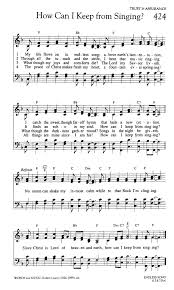
indexA litany for Lent, to be read while “How Can I Keep From Singing” is played in the background, after which the congregation sings one or more verse of the song

by Ken Sehested

In the Eastern Orthodox tradition, the season of Lent is described as a “bright sadness.”

In the sadness that surrounds our lives, our community, our world, we give thanks, nevertheless. More is at work than we can see. Continue reading “Bright Sadness”

“Let Us Not Forget, So That We Never Repeat” My Lai: A Litany of Remembrance and Repair

White_House_DCWritten by Bill Ramsey and Joyce Hollyday. The litany is being read and prayed in front of the White House today on the anniversary.

We remember those victims whose names we read today, and all the residents of My Lai who were killed while cooking breakfast, huddling beneath their homes, shielding their children, running from danger, or being herded into ditches.

Let us not forget, so that we never repeat. Continue reading ““Let Us Not Forget, So That We Never Repeat” My Lai: A Litany of Remembrance and Repair”

Wild Lectionary: Purge Me with Hyssop

Screen Shot 2018-03-04 at 8.43.44 PMLent 5B
Psalm 51:7b

By Laurel Dykstra

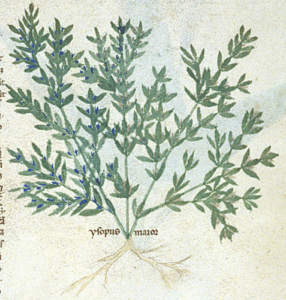
The psalmist says “purge me with hyssop” –clean me with a scrubby aromatic plant.

Mediterranean Hyssop— Hyssopus officinalis is a pungent-leafed bush with blue flowers that is used medicinally, mostly in teas as an expectorant, antiseptic and for cough relief. But the qualities that the bible ascribes to Hyssop: it grows in walls, can hold moisture, has a long, stiff stalk, has a purgative effect, appear in no one plant. Other suggested candidates for biblical Hyssop include caper, Syrian oregano, and za’atar a word which Palestinians use for a family of aromatic herbs (and the ubiquitous condiment made from their dried leaves). Continue reading “Wild Lectionary: Purge Me with Hyssop”

Let the Children Lead Us

index#enough
By Leah Grady Sayvetz, Ithaca, NY. 3/14/18

This morning, March 14, I woke late and as I looked at the numbers 9:24 on the clock I remembered that today is National School Walkout Day. At 10am, the students from the middle/high school across the street from my house would be leaving school, walking out of class as part of a nationally coordinated protest for an end to gun violence. I wanted to be with them. Thirty-five minutes later, as I stepped out of my front door, my breath caught in my chest: hundreds of children clad in coats and boots filed silently past. They filled the snowy sidewalk as far as I could see, many carrying signs drawn with colored markers on pieces of large white paper. My first instinct was to cheer, to encourage the students, to let these youngsters know how proud of them I am. But each small face passed me by in solemnity; a quiet, focused march through the falling snow. Their spirit drew me, then, into reverence. I fell in step with the crowd, following in silence, letting the children lead. The beanie-clad heads before and behind me rose no higher than my chest. I felt a deep sense of humility to be following the lead of such little ones. Today the children are showing us where we need to be.

Continue reading “Let the Children Lead Us”

The Ties that Bind: The Integrity of Penitence, on the 50th Anniversary of the Massacre at My Lai

my-lai-1024x683By Ken Sehested

Concealment makes the soul a swamp. Confession is how you drain it.

—Charles M. Blow

Except in a few traditional religious settings, penitence is a relatively unknown word. While its more common synonyms—confession, apology, contrition, and repentance—are standard parts of many church liturgies, the images they convey have generally fallen out of favor. There are good reasons why this is so. The primary definition of penance is “voluntary self-punishment inflicted as an outward expression of repentance for having done wrong.” A web search for penance reveals more than a few pictures of people whipping themselves. Continue reading “The Ties that Bind: The Integrity of Penitence, on the 50th Anniversary of the Massacre at My Lai”

Dos ancianos locos una para otra

OLYMPUS DIGITAL CAMERAAuthor asked to remain Anonymous.The author and her novio have been in relationship for over six years. When people ask why they don’t get married so he can get a green card, her answer is, “It only works that way in the movies.
So we’re walking through slush on a February Sunday

Going up to the drugstore so you can get some medicine for your friend Continue reading “Dos ancianos locos una para otra”

Wild Lectionary: This Text Bites Back

17626669_10154197866197434_8979553795951658612_n copy(2)
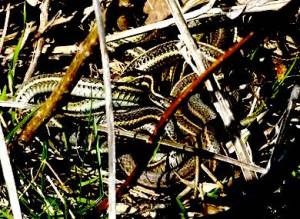
Mating ball of garter snakes, Lent 2017, Richmond BC

Lent 4B

Numbers 21:4-9
John 3:14-21

By Laurel Dykstra

Today’s gospel reading contains perhaps the best-known verse in the bible, certainly the New Testament passage that is known best in modern North America.

It begins like this, “For God so Loved the World… Continue reading “Wild Lectionary: This Text Bites Back”

Predators, Profit, and Precarity

el-refugio.pngBy Joyce Hollyday

To get to Lumpkin, Georgia, you have to really want to be there—or be taken against your will. The highways wind southwest of Atlanta, roughly paralleling the Chattahoochee River, for 143 miles. The town is parked on red clay amid tangles of kudzu, its square a cluster of shuttered storefronts next to an abandoned gas station, where the only visible signs of life on a mid-morning in early January were at the courthouse and a store labeled Christian Gun Sales (motto: “Guns Cheaper Than Dirt”). Continue reading “Predators, Profit, and Precarity”