
Art and Politics of Indexing

index.jpgBy Bill Wylie-Kellermann, re-posted from his facebook.

A long aside. I’ve been indexing a book on the principalities and powers which will appear in October from Fortress Press. “Principalities” is a new testament name for spiritual structures of power (a notion important to movements various) – and I’ve actually been writing about them in the concrete for four decades or so. The index has been kicking my butt and taken a chunk out of my life at a very hectic time of transition. But in point of fact, and unlikely as it may seem, I love indexing. My first, twenty-five years ago, involved a highlighter, note cards and a shoe box. The process is still layered, but electronic search functions come into play now (toward the end). I always do them myself because there’s often a politics involved. A hired indexer is unlikely to enter, “Immigration and Customs Enforcement (ICE). See also Ku Klux Klan.” Plus I love the ironies and accidental poems which surface. In my recent Detroit book (if you bought one and it doesn’t have an index, email or inbox me), we get: “Hicks, Charity; Hitler, Adolph: Homrich Wrecking; House, Gloria.” Or how about: “Climate change; Columbus, Christopher; Commodity fetishism; Conservancy; Corktown”? I smile at such conjoinings. In this current one, an entry can have 20 subheads that amount to a theological or biographical snapshot. Indexes are for the sake of the reader’s search, but can be a sly pedagogy tagging along. I also surmise that what’s turned so long and exhausting on this current one is to a certain extent personal. This collection does cover a broad range of topics (think: barbed wire, drugs, family, commercial sports, nuclear weapons, emergency management…) and yet because it’s a series of articles there’s a good bit of repetition on theological framing. Page mark every reference to demonic, war, or hope? Decisions at every click. But the real thing is that this is an integrative process in my own head – making connections and cross-connections in my life and world over four decades of work, right at a point where I’m trying to make sense of my history and discern what’s next. Sifting and sorting what’s incidental from what is absolutely crucial.
Wild Lectionary: Soothe the Earth and Heal the Waters

at_Nevada_National_Security_Site_2011
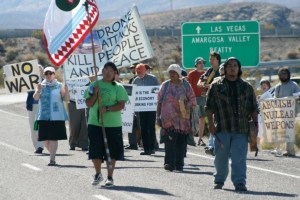
Western Shoshone and North American Catholic Workers at the Nevada National Security Site.

Feast of Christ the King

Ezekiel 34.11-12, 15-17
1 Corinthians 15:20-26, 28
Matthew 25:31-46

By Victoria Marie

Today is the feast of Christ the King or Reign of Christ Sunday. The mental images that the words “king” and “reign” bring to mind are based on our knowledge of the actions of kings and political leaders.  Today’s first reading from the prophet Ezekiel gives us God’s view of leadership. The image of the shepherd is commonly used to portray monarchs in biblical literature. So, if we think of Christ the King as Christ the Good Shepherd, we have a truer sense of what this day is about. Continue reading “Wild Lectionary: Soothe the Earth and Heal the Waters” →

Making a Difference

joyceBy Joyce Hollyday

In October 1983, two dozen peace activists gathered in Philadelphia as war raged in Nicaragua. U.S.-backed forces known as contras were carrying out a campaign of terror and mayhem against the civilian population. A woman from North Carolina, who had led a church delegation to the embattled country three months before, reported that while she and her colleagues were there the mortar attacks, kidnappings, and massacres had temporarily ceased. What to do? Continue reading “Making a Difference” →

When Networking Goes Wrong: The Trouble With “Come Meet a Black Person”

jyarlandBy Jyarland Daniels, CEO and Founder of Harriet Speaks
I wish we lived in a world where I didn’t have to write this blog post. But, alas, when bad ideas arise, some people need an explanation for why the idea is bad and we should just throw the entire thing away. So, here goes… For 400 years – before and since Emancipation — among Black people, there have been differing ideas on how to get free; on how to escape the system of racism that exists as a web, touching all aspects of our existence from cradle to grave. There have been those who have advocated patience, hoping that the oppressors would change their ways. There have been those like Harriet Tubman who, while willing to work with white people who supported her cause, did not seek to change the minds of her captors. Tubman, and others like her, simply took their freedom and invited other enslaved persons who understood that their humanity was neither something to be given by another nor had to be earned, to join their efforts. Today, too, those differences remain. The latest example of how to get free can be found in a networking event just outside of Atlanta, Georgia, created by a Black person, inviting white people to, “Come Meet a Black Person.” Continue reading “When Networking Goes Wrong: The Trouble With “Come Meet a Black Person”” →

Song for Autumn

6786303-A-stack-of-firewood-covered-in-snow--Stock-PhotoBy Mary Oliver
 
In the deep fall
don’t you imagine the leaves think how
comfortable it will be to touch
the earth instead of the
nothingness of air and the endless
freshets of wind? And don’t you think
the trees themselves, especially those with mossy,
warm caves, begin to think
 
of the birds that will come — six, a dozen — to sleep
inside their bodies? And don’t you hear
the goldenrod whispering goodbye,
the everlasting being crowned with the first
tuffets of snow? The pond
vanishes, and the white field over which
the fox runs so quickly brings out
its blue shadows. And the wind pumps its
bellows. And at evening especially,
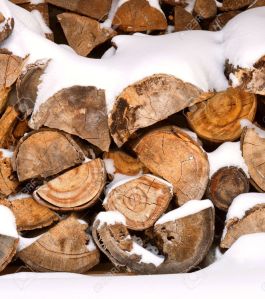
the piled firewood shifts a little,
longing to be on its way.

Wild Lectionary: Look to the Acorns

IMG_2956.JPG
Dark-eyed Junco
Photo Credit: Laurel Dykstra

Proper 28(33) A
Pentecost + 24

Matthew 25:14-30

By Ragan Sutterfield

I have been spending my mornings in the woods lately, a short hike before I begin to work on the tasks of the day. As fall finally arrives here in Arkansas the juncos have returned, twittering as they flash the white of their tails, and the long metallic notes of white-throated sparrows echo in the understory. Each step along the trails comes with a crunch, not only of the newly fallen leaves, but also of the acorns, cracking orange against the gray shale of the hillsides. Continue reading “Wild Lectionary: Look to the Acorns” →

Fall Planting

images.jpgBy Rose Marie Berger (23 September 2017)
A poem on the feast day of St. Adamnan,
ninth abbot of Iona

Today, planted scarpered kale
liberated by Grace. Winter comes
to risen beds. Leafy tough, stolen,
abundant delight! Rogation prayers
go in with roots. Ilhui’s garden blessing
Lingers below purple basil, bible leaf,
Mary’s milkweed (for 3 monarchs,
should they arrive). Ilhuicamina
Long-limbed, beautiful, copal skin,
trusting palms
soles to seal the deal. These child-plantings
uprooted, transported, here.
Now let soil hold you. Continue reading “Fall Planting” →

I is not understanding human beans

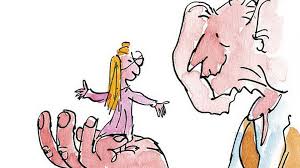
images.jpg“Giants isn’t eating each other either, the BFG said. Nor is giants killing each other. Giants is not very lovely, but they is not killing each other. Nor is crockadowndillies killing other crockadowndillies. Nor is pussy-cats killing pussy-cats.

‘They kill mice,’ Sophie said.

‘Ah, but they is not killing their own kind,’ the BFG said. ‘Human beans is the only animals that is killing their own kind.’ Continue reading “I is not understanding human beans” →

Learning from Laughter and the Trees: Under the Apple Tree Again

IMG_2463
Grandpa, Cedar, and Isaac digging the hole for Scatters under the apple tree.

By Lydia Wylie-Kellermann

The rain is pouring down with periodic rumbles of thunder. It is cold and the sun has set, but we can tell that there is a need in Isaac’s heart to make this trek. We put on hats and shoes and give into the rain as we walk down the street and into the backyard of my dad’s house.

It’s too dark to see the loosened soil, but we bend down low and Isaac says, “This is where we buried Scatters.” Cedar, who is almost two, bends down too and after a minute looks up at Erinn and says “Meow” and points to the dirt. Erinn says, “Is this where Scatters is? Did he die?” Cedar responds, “Meow die.” Continue reading “Learning from Laughter and the Trees: Under the Apple Tree Again” →