
we are living in impossible times. if it were fiction it would be critiqued as hyperbolic. if it were nightmares we would never sleep.
we are living in times created by our own species. I can’t remember the last time my tears weren’t man-made.
it feels like everything is broken. we must, each of us, fix our attention on the nearest wound, conjure within us the smallest parts of ourselves that are still whole, and be healers. heal with words and prayer and energy, heal with money, clean water, time and action.
there’s enough destruction. there’s enough nothingness swallowing the living world. don’t add to it. there’s enough.our visions are ropes through the devastation. look further ahead, like our ancestors did, look further. extend, hold on, pull, evolve.
Category: Uncategorized
Wild Lectionary: Until there is room for no one but you
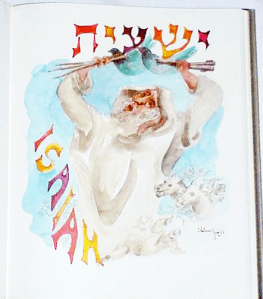 Continued from yesterday’s reflections on the lectionary for the 18th Sunday after Pentecost
Isaiah 5:8-23
By Ched Myers
Isaiah articulates the contemptible socio-economic disparity in Israel. A series of prophetic “woes” (howy) commences in verse 5:8 that extend through 5:23, and the first one summarizes starkly and succinctly all that will follow. The image of “joining house to house and field to field” specifically refers to the phenomenon of “latifundialization,” the economic process by which large landowners increase their holdings by foreclosing on indebted small farmers. Theologians Urich Duchrow and Franz Hinkelammert point out that the 8th century BCE saw history’s first wave of “privatization” spread throughout the Mediterranean world, including Israel: Continue reading “Wild Lectionary: Until there is room for no one but you”
Wild Lectionary: Ecological Theology of the Vineyard
Proper 22 (27)
18th Sunday after Pentecost
Isaiah 5:1-7
Matthew 21:33-46
By Ched Myers
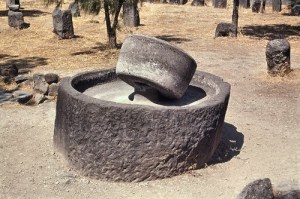
The 18th Sunday after Pentecost this year comes on the heels of the “Season of Creation,” a contemporary liturgical and lectionary movement celebrated during the four Sundays in September prior to St Francis of Assisi Day (4 October). Today’s haftorah—Isaiah’s famous “Song of the Vineyard”—continues this vein of ecological theology. Continue reading “Wild Lectionary: Ecological Theology of the Vineyard”
Lying awake these nights

By Lydia Wylie-Kellermann
I lie awake feeling the weight of the world on my chest. Death haunting our country again. Fifty lives and hundreds wounded. All from guns. I can’t twist my head around any rational for guns. I don’t understand the safety argument. I think of the man in the window and the media argument that he fits “no mold” for motive or terrorism. They can’t say it. That he fits exactly the mold of the violent rampage that rules this country. White men. There is a violent disease filled with numbing, racist hatred. It is a disease that knows no empathy, no kindness, no vulnerability, no self-knowledge, no community. It is a lonely, despicable rotting disease. I lie there with tears in my eyes and rage in my belly at the patriarchy and white supremacy that rules.
And then…I think of these two baby boys that sleep soundly feet away from my bed. I love them more than anything. I love their laughter and their tears and the people they are becoming. I think of this disease that is ready to pounce and swallow them whole. What can I do? How can I mother in a way where they refuse the outstretched hand offered to them as white men? My heart gives in and weeps.
Vincent Harding, rebels and MJ Sharp
 By Joanna Shenk, pastor at First Mennonite Church of San Francisco.
Written for The Mennonite.
Alongside writing Martin Luther King Jr.’s historic “Beyond Vietnam” speech, Vincent Harding also wrote and delivered a speech to Mennonites in Amsterdam that same year. He made a call to Mennonites that, unrealized in that era, was fulfilled by Michael Jesse (MJ) Sharp.
At the Mennonite World Conference in Amsterdam in 1967, Harding urged the mostly Western Mennonite audience to take seriously the concerns and anger of the poor and dispossessed across the world. He articulated why these people were angry and why they were justified in that anger due to the colonization of their land, the exploitation of their people and the theft of their natural resources.
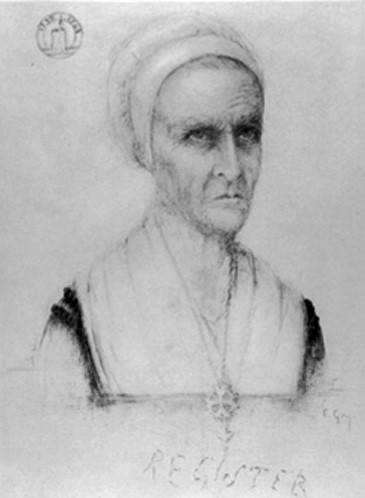
Marie Durand (1711-1776)
 This piece was developed during the second Bartimaeus Institute Online (BIO) Study Cohort 2016-2017. These pieces will eventually be published in a Women’s Breviary collection. For more information regarding the BIO Study Cohort go here.
By Chelsea Page
“Seek the reign of God and God’s justice, and all things will be given to us below.”
“Resister.” Marie Durand carved this word in stone in the wall of the Tower of Constance, the fortress where she was imprisoned in southern France in the 1730s. She had grown up in a Huguenot (French Protestant) household where “Praise” was carved above the fireplace and the plea for divine “Mercy” above the door, through which French soldiers could return at any time. To these words she added the prayer “Resist.” Continue reading “Marie Durand (1711-1776)”
Wild Lectionary: Our Default State is Goodness
 Proper 21(26)
Seventeenth Sunday after Pentecost
Ezekiel 18:1-4, 25-32
Philippians 2:1-13
Matthew 21:23-32
By the Reverend Doctor Victoria Marie
As I reflected on today’s readings the theme that emerged is: our response to God. In the first reading Ezekiel is saying that when we turn away from what is just, we die. When we return to acting with justice, we save our lives. Continue reading “Wild Lectionary: Our Default State is Goodness”
I will
I will take the ring….though I do not know the way.
- The Fellowship of the Ring
Sing about it until it can be realised
 By
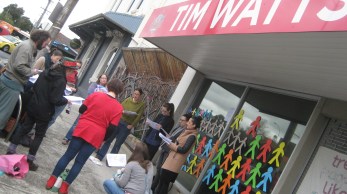
By “Sing about it until it can be realised” said Ched Myers at the Kinsler Institute, a call to write, play and sing the songs of freedom until freedom is won . This is not a new idea, we sing in the tradition of so many justice movements: civil rights, suffragettes, apartheid, slavery… What songs are we singing that are calling us forward and giving us courage along the way – in this place, at this time, in this context? Continue reading “Sing about it until it can be realised”
 Radical Discipleship