
 By Rose Berger
January 10, 2017, Sojourners Chapel
Leviticus 19:15-18; Matthew 5:38-48; 1 Thessalonians 5:12-24
Thank you to Karen and the Chapel Committee for inviting me.
Usually when I preach I like to do a deep dive into scripture that unlocks scripture’s liberating power on us here at Sojourners.
But today we’ll take a different direction. I was asked to speak specifically about the conference I attended in Rome last year on Nonviolence and Just Peace. Continue reading “Sermon: Nonviolence;“Thou shalt not stand idly by the blood of a neighbor” vs “Do not resist the evildoer” and “turn the other cheek””
 Siddhartha listened. He was now listening intently, completely absorbed, quite empty, taking in everything. He felt that he had now completely learned the art of listening. He had often heard all this before, all these numerous voices in the river, but today they sounded different. He could no longer distinguish the different voices- the merry voice from the weeping voice, the childish voice from the manly voice. They all belonged to each other: the lament of those who yearn, the laughter of the wise, the cry of indignation and the groan of the dying. They were all interwoven and interlocked, entwined in a thousand ways. And all the voices, all the goals, all the yearnings, all the sorrows, all the pleasures, all the good and evil, all of them together was the world. All of them together was the stream of events, the music of life. When Siddhartha listened attentively to this river, to this song of a thousand voices; when he did not listen to the sorrow or laughter, when he did bind his soul to any one particular voice and absorb it in his Self, but heard them all, the whole, the unity; then the great song of a thousand voices consisted of one word: Om- perfection.
 By
By 

 Now what is history? It is the centuries of systematic explorations of the riddle of death, with a view to overcoming death. That’s why people discover mathematical infinity and electromagnetic waves, that’s why they write symphonies. Now, you can’t advance in this direction without a certain faith. You can’t make such discoveries without spiritual equipment. And the basic elements of this equipment are in the Gospels. What are they? To begin with, love of one’s neighbor, which is the supreme form of vital energy. Once it fills the heart of man it has to overflow and spend itself. And then the two basic ideals of modern man—without them he is unthinkable—the idea of free personality and the idea of life as sacrifice.

 By
By 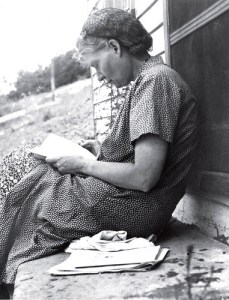 Turn off your radio. Put away your daily paper. Read one review of events a week and spend some time reading good books. They tell too of days of striving and of strife. They are of other centuries and also of our own. They make us realize that all times are perilous, that men live in a dangerous world, in peril constantly of losing or maiming soul and body. We get some sense of perspective reading such books. Renewed courage and faith and even joy to live.
 Radical Discipleship