Mossback

This is an excerpt of an interview Orion Magazine does with Dave Pritchett, the author of Mossback: Ecology, Emancipation, and Foraging for Hope in Painful Places. Here, Pritchett responds to a question about the meaning of his title and his key inspirations to reclaim the word.

Well I love the word. I first heard the term used, I think, in high school when I lived in Arkansas by fishers to describe big old fish or turtles that had algae growing on their backs. In research for the book, I came across the term describing Confederates who evaded the draft by hiding out. The word was really evocative and multilayered, and when I dug further into its use and etymology, I found that it seemed to be a derogatory term sort of like the more modern “redneck,” and there is some suggestion that it came from the Carolina swamps and used in that same disparaging way to describe poor folks who were so slow moving that they had moss growing on their backs. I was really taken when I found a report during the Reconstruction period after the Civil War recounting a gun fight between the Ku Klux Klan and a group called the “Mossy-backs.” So for me, the word conjures a complex meaning with allusions of ecological connection, but also perhaps an unwillingness to fight wealthy people’s wars or to tolerate explicitly white supremacist institutions. That’s the sort of backwardness I can get behind. I found “mossback,” with its multivalent meaning really helpful, since I’ve been looking for metaphors that contribute to the somewhat odd admixture of ecological well being with racial and economic analysis that the word connotes. Of course, I’m doing some fanciful reading, as it’s highly unlikely that the Mossy-backs had a robust racial analysis, or that Confederate deserters were thinking much beyond themselves and their families. But I want to reclaim the word and use it insofar as it moves us toward the kind of environmental and racial solidarity that I believe our times require. 

Read the entire interview here. It’s really really good.

David Pritchett is author of Mossback: Ecology, Emancipation, and Foraging for Hope in Painful Places. He works in emergency medicine, and he holds a diploma in mountain medicine and is certified in track and sign.
Wild Lectionary: And Then the Stones Cried Out

2017-04-29 21.19.52.jpgBy Melanie Delva & Coyote Terry Aleck, re-posted from May 2017

The first three readings for this Sunday are a seemingly bizarre mix of passages dealing with stones.  First, the stoning of Stephen as he testifies to the glory of Christ. Then the Psalmist describing God as his “strong rock, a castle to keep me safe.” Finally Christ as the “living stone,” encouraging followers of Christ to, “like living stones, let [ourselves] be built into a spiritual house.” Stones that cause pain and death; stones that provide safety; stones that support new life. Continue reading “Wild Lectionary: And Then the Stones Cried Out”

Wild Lectionary: No Peace in Heaven, No Peace on Earth

van-gogh-the-starry-night-1889
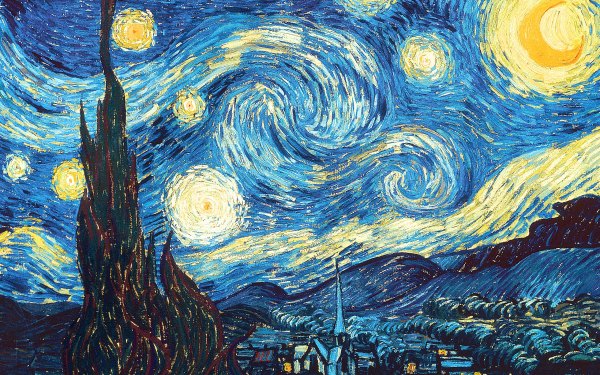
Vincent VanGogh’s Starry Night

By Wes Howard-Brook and Sue Ferguson Johnson, a re-post from April 2019

In the fifteenth year of the reign of Emperor Tiberius, when Pontius Pilate was governor of Judea, and Herod was ruler of Galilee, and his brother Philip ruler of the region of Ituraea and Trachonitis, and Lysanias ruler of Abilene, during the high priesthood of Annas and Caiaphas, the word of God came to John son of Zechariah in the wilderness. (Luke 3.1-2)

Do you think that I have come to bring peace to the earth? No, I tell you, but rather division! (Luke 12.51)

As he was now approaching the path down from the Mount of Olives, the whole multitude of the disciples began to praise God joyfully with a loud voice for all the deeds of power that they had seen, 38 saying,
“Blessed is the king

who comes in the name of the Lord!
Peace in heaven,
and glory in the highest heaven!
(Luke 19.37-38)

In imagining ways to hear Scripture from the lens of “wild lectionary,” we tend to jump to details of life on earth: water, trees, animals, mountains. This focus on earth is challenged by this week’s passage from Luke, as Jesus and his disciples enter Jerusalem for what we’ve come to call “Holy Week.” For Luke tells us that “the whole multitude of disciples” proclaimed as Jesus came down the Mount of Olives, not “peace on earth,” but “peace in heaven.” What can they be thinking? What is the relationship between heaven and earth when it comes to making peace? Continue reading “Wild Lectionary: No Peace in Heaven, No Peace on Earth”

We are Jackson

A message from We the People of Detroit.

The Mississippi Rapid Response Coalition (The Coalition), led by the People’s Advocacy Institute, the Mississippi Poor People’s Campaign, Immigrant Alliance for Justice and Equity, One Voice, MS, Alternate ROOTS, Mississippi Moves, Operation Good, Strong Arms of Mississippi and over thirty partner organizations, are working diligently to meet the clean water needs of the communities directly impacted by the deteriorating infrastructure in Jackson, Mississippi. After more than five decades of neglect by the State, residents in older cities, like Jackson, have been forced to carry the financial burden of fragile infrastructure and have been exposed regularly to the health risks associated with the need for constant repair. In 2021, residents were under a boil water alert for at least 225 days. In 2022, boil water requirements continue to plague an already resource constrained population. These water woes not only impact the quality of life for Jackson’s residents, they also impact Jackson’s economy (schools, businesses, etc.), further strangling an already under-resourced city.

Consider making a donation.

Time

An excerpt from The Overstory by Richard Powers.

“But people have no idea what time is. They think it’s a line, spinning out from three seconds behind them, then vanishing just as fast into the three seconds of fog just ahead. They can’t see that time is one spreading ring wrapped around another, outward and outward until the thinnest skin of Now depends for its being on the enormous mass of everything that has already died.”

A Divine Summons

By Ched Myers, a sermon to St. Michael’s Episcopal Church, Goleta Slough Watershed/Chumash Territory, CA, 5th Sunday in Epiphany, Feb 6, 2022

Luke 5:1-11 powerfully stitches together two gospel traditions: the miraculous catch of fish also found at the end of John (21:1-14), and the call of the fishermen which also occurs at the beginning of Mark (1:16-20). Let’s look at both themes, each so important to the vocation of followers of Christ.

Jesus’ encounter with working fishermen on the shores of Lake Galilee is typically romanticized in our churches: Oh, how quaint, fishermen! But this is a trivialization. No, this scene communicates defiance and delight, resistance and renewal—the same energy that fueled the painting of that new mural of the Goleta Slough here at the church, just completed by our friends Dimitri Kadiev, Rufo Noriega and Joshua Grace (right), which we are celebrating today.

Continue reading “A Divine Summons”

A Secret Oasis for the Birds

By Ériu Erin Moran Martinez (Detroit, MI), re-posted with permission from Facebook

Calling my kin who are in need of a strong dose of wonder, connection, and mystery…

Please come birding in the alleys with me. I walk the alleys in my neighborhood a few times a week, and it is a deeply nourishing experience. Yes, there is unsightly business back there, and vigilance is required. But the birds (and other kin) I encounter there remind me that we are surrounded and supported by our non-human relatives, all the time and everywhere, even here in the heart of the city. Our alleys, in their “weediness”, are a secret oasis for the birds, where they feed on seeds, insects, and rodents. It’s in the alleys where many birds shelter in the overgrown brambles and bushes from harsh weather. It’s there where so many secret away to mate, nest, and raise their young.

Continue reading “A Secret Oasis for the Birds”

A Beekeepers Musings

unnamed2By Marcia Lee

The end of an era is over.  The beehive that started it all did not survive the summer.  This hive barely made it through the winter, revived itself, and then swarmed twice.  This led to two ‘new hives,’ but the bees did not leave a queen for the bees that were left behind.  So many lessons from the bees for these times.  I made so many small and large decisions throughout the time, many of them probably not the best.  But here we are.

Yesterday one of the beehives in our backyard was robbed by other bees, wasps, and insects.  When we went to look today, we found that the hive had been decimated.  There was no more honey in the cells and the bodies of dead bees littered the floor of the hive.  The hive was going to die one way or another, because, without a queen, a hive cannot survive.  The honey went to other bees and wasps and it will help them to survive another winter.  However, if I had pulled the honey, could the bees have died a softer death? Continue reading “A Beekeepers Musings”

Class During COVID: A Modest Proposal

CLASSROOMBy Kim Redigan 

I am a garden-variety high school teacher who has spent the better part of the summer trying to get back on my feet after wading through the weeds of a semester marked by the COVID crisis.

Most teachers would probably agree that stepping over the demarcation line between the classroom and COVID country last March was traumatic for everyone involved. Most of us found a way to do it – and we did it well – but throughout the semester my gut was screaming that this way of doing school was brutal, untenable, unhealthy.

Most teachers work harder than people know. Our classrooms are sacred centers of hospitality. Places of grace and, on most days, gratitude. Continue reading “Class During COVID: A Modest Proposal”