
“The more clearly we can focus our attention on the wonders and realities of the universe, the less taste we shall have for destruction.”
― Rachel Carson
Category: Watershed Discipleship
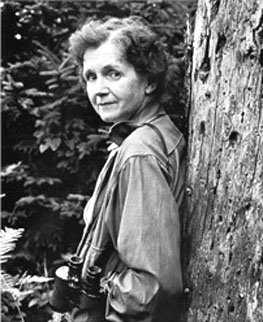
Watershed Discipleship: Covenanted Right Relationship by Todd Wynward
 Todd Wynward writes, farms, teaches and leads wilderness trips in northern NM. He is an animating force behind TiLT, an intentional discipleship co-housing community in the Rio Grande Watershed. His new book, Rewilding the Way, is to be published by Herald Press in 2015.
—————-
There is a covenant that undergirds our lives. Like a watershed, it’s about blessings, it’s about relationships, and it’s about limits. Much of the time, we oh-so-independent, uber-mobile North Americans forget this covenant we have with creation. We who suffer from the disease of affluenza tell ourselves we’ve earned the benefits we receive; we think it our God-given right to acquire whatever we want, whenever we want, from wherever we want, without reflecting on the real cost.
Continue reading “Watershed Discipleship: Covenanted Right Relationship by Todd Wynward”
Jesus On A Vision Quest
 By Ched Myers, First Sunday in Lent (Mark 1:9-15)
Note: This is an ongoing occasional series of Ched’s brief comments on the Markan gospel readings from the Revised Common Lectionary during year B.
———————
In Mark’s account of Jesus’ baptism, the narrative is suddenly invaded by dramatic imagery. Jesus rises from Jordan’s waters to a vision of the “heavens rent asunder” (1:10). This is an allusion to Isaiah 64:1f:
Continue reading “Jesus On A Vision Quest”
The Lessons of Groundhog’s Day
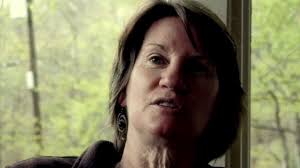 By Joyce Hollyday. First published on her blog http://seekingcommunity.ca in 2012.
Tuning in to life’s rhythms
A Sunday school teacher was asking her young class about Easter. A 5-year-old boy piped up, “That’s when Jesus comes out of his tomb, and if he sees his shadow, we have six more weeks of winter.”
This story may not be funny or make any sense to you, because I don’t know if you have this bizarre holiday in Canada; but yesterday in the U.S. of A., we observed Groundhog’s Day. And by “observed,” I mean we totally ignored it except to ask at the end of the day, “Anybody know what Punxsutawney Phil saw today?”
Continue reading “The Lessons of Groundhog’s Day”
Baptized Into Our Bioregion
 By Ched Myers of Bartimaeus Cooperative Ministries, hosting the Festival of Radical Discipleship in mid-February in Oak View, CA:
Yesterday, the First Sunday after Epiphany, was the Feast of Jesus’ Baptism. In the gospel reading, a particular preposition is used in refrain in Mark 1:9-12. Everyone else is baptized by John in the Jordan, but Jesus is baptized into the river (Gk, eis ton Iordanēn). Then that wild bird descends onto or into Jesus (eis auton). And right after this, Jesus journeys deep into the wilderness (eis tēn ‘eremon), on his “vision quest.”
Continue reading “Baptized Into Our Bioregion”
Ecological Hermeneutics: “The Bible and Climate Change”
 In a very short order we got very, very big. Human beings have always been in Job’s position–small. Our job is to figure out how to get smaller again. And I think it is essentially a theological task.
Bill McKibben
Ched Myers is always up for the challenge of making the Society of Biblical Literature’s annual gathering of “Bible geeks” accountable to the sanctuary, the street and the soil. He’s been chipping away at the ivory tower for decades now. Here are a few highlights from a paper Myers read at the Society of Biblical Literature, a couple of weeks ago, participating on a panel assessing the 20th anniversary of Bill McKibbon’s The Comforting Whirlwind: God, Job and the Scale of Creation (1994):
On McKibben’s Legacy:
Whether or not we are aware of it, every one of us owes you a huge debt of gratitude for a life’s work of truth telling, movement building and relentless advocacy. Like many of us in the room (I hope), I’ve been following and occasionally participating in 350.org since its inception, especially around the Keystone XL work. You and your colleagues have animated a truly grass roots initiative that uniquely translates the complexities of climate catastrophe into mobilizing soundbytes.
——————-
Indeed, to exhume scripture’s radical critique of imperial culture is to endure diffident dismissal by the secular left, shrill hostility from the religious right, and studied ambivalence from the ecclesial center. Yet your work on Job stands in the noble minority tradition of engaged readers of Word and World such as Jacques Ellul, Martin Luther King, Jr., William Stringfellow, Dorothy Soelle, Ernesto Cardenal, Cornell West, and Elizabeth McAlister—none of whom, let it be carefully noted, were or are professional biblical scholars.
From Job to Jesus, homing in on Jesus’ teaching in Luke 12, “that awkward moment in Luke’s gospel where Jesus, in the middle of a strongly worded diatribe about the economic delusions and entitlements of the rich, whirls around and exhorts his disciples to ‘pay attention’ to the birds and wildflowers (Lk 12:24-28)”:
But what if Jesus is simply summarizing the argument from Job’s whirlwind, a teaching meant to be taken with utter seriousness? What if this paean to birds actually demands that we confront the three pathological characteristics of modern capitalist culture—addiction, anxiety and alienation—as life and death issues? It then becomes for us truly a “text of terror”—but also a key to our liberation.
——————–
Jesus is invoking a cosmology shared by indigenous and traditional peoples the world over and throughout history, which was translated into economic lifeways characterized by symbiosis with nature, sustainable and local production and consumption, and cooperative and equitable work patterns…
Prodding McKibben: A Transition from “petitioning around policy issues” to “nurturing place-based politics” (aka, Watershed Discipleship):
I think we will see in the coming years that it is those who are rooted on particular land who will be most able to say no to the carbon juggernaut, and to say yes to more sustainable lifeways. To me, Bill, this suggests that our movement ought to be spending at least as much effort nurturing place-based politics as we do petitioning around policy issues and organizing big marches, as important as the latter are.
The approach of watershed discipleship is, in the tradition of Job’s whirlwind and Jesus’ ode to birds, blessedly geocentric, and firmly straddles the dialectic of healing the earth and delighting in it. It is my strong conviction that it can animate communities of faith to engage in contextual and constructive witness as they awaken to the realities of climate catastrophe—for which awakening we are greatly indebted to Bill McKibben.
Positioning by Rose Berger
 Rose Berger is an award-winning religion journalist, author, public speaker, poet, and Catholic who specializes in writing about spirituality and art, social justice, war and peace.
Positioning
I didn’t count the rings
on the oak we took down
—crane and all—but think
there must have been a hundred
or more. I’d rather,
I’m sure, count the hairs
on your head
or finger the span
of your spine, my hand
on your smooth skin,
until we are old enough
to have limbs
that can no longer bear
the weight of a high wind
or surprise snow. Continue reading “Positioning by Rose Berger”
Christ & Cascadia
 by Matt Cumings & Emily Rice
This is the final post in our Friday Watershed Discipleship series. Matt Cumings (Settler, Scottish) works on Eloheh Farm and attends Wilderness Way Community. He is finishing up an internship with EcoFaith Recovery which intends to explore intersectionality, both barriers and benefits, in social justice and ecological justice movements. Emily Rice (Settler, Ikalahan, Philippines) is an organizer focused on the intersections of racial justice, indigenous solidarity, feminism and faith. She is a co-founder of the activist collective Killjoy Prophets and serves on the board of Evangelicals 4 Justice. Continue reading “Christ & Cascadia”
Thank you by Alice Walker
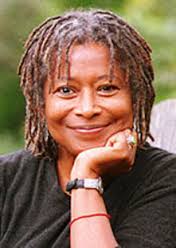
“Thank you again. I love you. I love your trees, your sun, your stars and moon and light. Your darkness. Your plums and watermelons and water meadows. And all your creatures and their fur and eyes and feathers and scales.”
Finding Kinship in the Ventura River Watershed

Sarah Holst (right, with hubby Nathan) just finished a split internship with Bartimaeus Cooperative Ministries and the Abundant Table Farm Project. The newlyweds will be heading to Rochester, NY in January to intern with the Spiritus Christi community. Here, Sarah reflects about her process in creating the Equinox Liturgy for Farm Church in early October.
————————-
A week ago, I was washing the dishes after a shared breakfast at Ched and Elaine’s and rolling around how the Equinox Liturgy I was writing was going to take shape. In the process of this, I was also thinking about the chapter that Nathan and I had just read in Ched’s book Who Will Roll Away the Stone on Reclamation (Chapter 11). This chapter lays out the skin and bones of what has now fleshed out into Watershed Discipleship, and asks the question: How do we come to love our land (through the lenses of Christian theology) in a way that moves us to work for environmental and social justice? Continue reading “Finding Kinship in the Ventura River Watershed”
 Radical Discipleship