Talk by Rose Marie Berger at the International Thomas Merton Society Sixteenth General Meeting at Santa Clara University in California, June 28, 2019
Listen to audio HERE.
Talk by Rose Marie Berger at the International Thomas Merton Society Sixteenth General Meeting at Santa Clara University in California, June 28, 2019
Listen to audio HERE.
By Oz Cole-Arnal, former professor emeritus at Waterloo Lutheran Seminary
*Note: this is the third installment of poems from Professor Cole-Arnal’s recent memoir work. “Come the Dawn” was written in Feb 1981, shortly after almost succumbing to an illicit affair in France during May-June (1980). These words mark his attempt to remember his marital promises and his continual love for wife Marian (“Bunny”). It is also critical to remember that this poetry included a third party: his therapist Andy Coppolino with whom they were wrestling with his nocturnal dreams.
A howl of pain piercing the night,
Wide awake, the only sound a heartbeat,
The discovery of mortality, alone, deeply alone,
Wrapped in darkness and afraid
–Before the dawn. Continue reading “Come the Dawn”
From author and professor Ibram X. Kendi’s recent interview on DemocracyNow (August 13, 2019). Kendi’s new book is called How To Be An Antiracist.
I classify racism and capitalism as these conjoined twins — right? — from the same body but different personalities, different faces. And the reason why I do that is because I’m an historian. And so I track, particularly in my last book — the origins of racism cannot be separated from the origins of capitalism. The origins of capitalism cannot be separated from the origins of racism. The life of racism cannot be separated from the life of capitalism, and vice versa. Continue reading “Conjoined Twins”
From The Poor People’s Campaign: A National Call for Moral Revival (August 8, 2019).
If you really change your ways and your actions and deal with each other justly, if you do not oppress the foreigner, the fatherless or the widow and do not shed innocent blood in this place, and if you do not follow other gods to your own harm, then I will let you live in this place, in the land I gave your ancestors for ever and ever. But look, you are trusting in deceptive words that are worthless.
—Jeremiah 7:5-8
One week ago, we were in El Paso at the invitation of the Border Network for Human Rights to highlight the violence that their community has been suffering. We heard stories of families separated, asylum seekers turned away and refugees detained like prisoners of war. We heard how their community has been militarized and how poor border communities have been especially targeted. We promised that we would do everything in our power to compel the nation to see this violence. Just a few days later, a terrorist opened fire in El Paso. And then another attack occurred in Dayton. Continue reading “A Moral Reckoning”
By Wes Howard-Brook and Sue Ferguson Johnson, on this Sunday’s Gospel text (Luke 12:49-56)
*Note: this piece was originally posted on RadicalDiscipleship.net during the summer of 2016.
Jesus, erstwhile proclaimer of peace and love, hopes for fire and anticipates division within households. Was the Lord having a bad day on the Way to Jerusalem in this Sunday’s Gospel? How can we reconcile his word in this week’s lectionary text (Luke 12.49-56) with what we hear in the rest of Luke’s Gospel? Continue reading “Jesus of Nazareth, Arsonist”
Proper 15(20) C
Jeremiah 23:23-29
Hebrews 11:29-12:2
Luke 12:49-56
By Rev. Dr. Victoria Marie
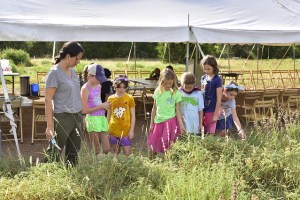
Recently, I had the honour of participating as the resident elder in the Sacred Earth Camp for youth, a project of Salal + Cedar Watershed Discipleship Community. The lectionary readings, in light of the Camp experience, motivated me to revisit and reflect on certain current truths and issues of concern. Continue reading “Wild Lectionary: Prophets False and True”

By Leanne Betasamosake Simpson. This article first appeared in Geez magazine’s winter 2014 issue, Geez 36: The End.
It seems strange to me that ideas of invasion, attack, occupation, and dispossession are recent fodder for television series such as The Walking Dead. This fictional reality is so strikingly close to the colonial legacy I was born into, at least in concept, it is sometimes difficult to see it as entertainment. Continue reading “Indigenous Resistance Lifts the Veil of Colonial Amnesia”
By Kateri Boucher at Day House Catholic Worker August 11, 2019
Luke 12: 32-4
Hebrews 11: 1-2, 8-19
Wisdom 18: 6-9
Some of you may have heard the story about the man who was being chased by a tiger and falls off a cliff. Luckily he catches a branch and is hanging there from it, trying to figure out what to do. In desperation he cries out, “If there’s a God up there, I’ll do anything if you’ll save me!” Suddenly a voice booms down from the heavens, “This is God and I want to save you! All you have to do is let go of the branch!” There’s a long pause as the man thinks that over, then he finally turns back up and says “Is there anyone ELSE up there?”
From spiritual practitioner Bayo Akomolafe (Facebook, August 4, 2019).
The phrase “thoughts and prayers” needs a new cosmology. The one it now operates in presumes ‘God’ is absolutely transcendent, heavenly, irretrievably cast away at an unbridgeable remove from our earthly goings-on. Brought down to our material earth, thoughts and prayers take on a new urgency. Thoughts become public things, the shared fabric through which my life becomes yours and yours mine; prayers become matters of accountability and justice. Thoughts and prayers should be ecological matters that enable us to meet ourselves, to share our tears and ask hard questions about our complicity in the suffering of others. Not Twitter templates that deepen our indifference and bypass our complacency, masking as piety.
From the conclusion of Dr. Maulana Karenga’s recent column in the Los Angeles Sentinel:
As I have noted elsewhere, “a society that cannot concede its problems cannot solve its problems. And a society that cannot solve its problems cannot survive its problems.” Certainly, we cannot deny America, U.S. society, has a series of interrelated self-destroying problems. And these basic problems cannot be summed up as Trump, although he represents them in one of their most raw, racist and unadorned forms. The struggle over what kind of America we will have is still being fought on the ground in every place and instance of oppression. Paul Robeson is right, “The battlefront is everywhere. There is no sheltered rear.” And the task, Fannie Lou Hamer tells us, is to constantly question America, and set aside all illusions of a “perfect union,” of freedom unfought for and of justice not gained and sustained in righteous and relentless struggle.