 By Bill Wylie-Kellermann
June 2, 2019
the day’s measure is more fleshy far,
more soulful even
than circles, however sweet, around our brother sun,
warming the planet this day
toward the end of an aeon. Continue reading “Seventieth with Friends”

By Bill Wylie-Kellermann
June 2, 2019
the day’s measure is more fleshy far,
more soulful even
than circles, however sweet, around our brother sun,
warming the planet this day
toward the end of an aeon. Continue reading “Seventieth with Friends”
 By Kateri Boucher
Quit your prayers
for quick answers,
quick garden growth,
quick long hair,
quick flight across
the country,
quick salvation,
and even quick death. Continue reading “Quit your Prayers”
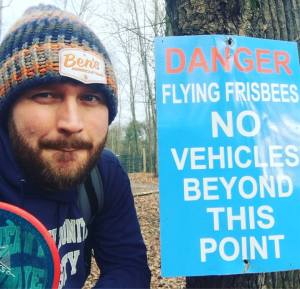 By Ben Wideman, campus minister for the 3rd Way Collective in State College, PA
*This is part of a series of pieces from contributors all over North America each answering the question, “How would you define radical discipleship?” We will be posting responses regularly on Mondays during 2019.
Discipleship is a word that gets tossed around a lot in campus ministry. It is at the core of many different organizations on our campus. We even have a campus ministry that was founded at Penn State and now present on more than a dozen campuses across the country called DiscipleMakers. Most of these organizations see discipleship as a sending call to embody a literal biblical call to make non-believers or non-practicing Christians into disciples of Christ (based on the Matthew 28 passage often referred to as the Great Commission). Continue reading “To Flip the Script of What a Christian Minister Can Be”
 From the front porch of Mother Ruby Sales (May 19, 2019).
Do freedom movements seek to build a new table or do they seek to gain more seats at a broken down one? Do they create new powerful people or do they create new token elites? Do nonviolent movements use the same language to talk about ourselves and lives that we learn from the guardians of power or do we speak in new and multiple tongues that express the largeness of our individual and collective lives?
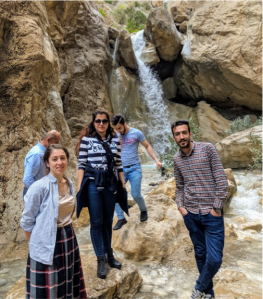
An excerpt from the monthly update of Weldon Nisly, a retired Mennonite pastor and part-time member of the Christian Peacemaker Teams Iraqi Kurdistan (CPT IK) delegation.
A few years ago, after 25 years as a human rights and women’s rights activist, Gulistan Saeed decided to seek change within the political system. Elected as a Member of Parliament of the KRG, she was granted her request to serve on the human rights committee.
Gulistan welcomed the CPT IK team to the KRG Parliament and listened as we shared the Deraluk families’ sorrow and request for assistance. She promised to take their case to her committee and to an independent Kurdish human rights committee to help the families find their missing loved ones. She also expressed eagerness to work with CPT on future human rights cases and encouraged CPT to bring these Deraluk families to Erbil to meet with other Members of Parliament. She recommended that CPT and the families have a press conference to help the people of Iraqi Kurdistan and the world hear the traumatic impact of Turkey’s cross border bombing of civilians. Continue reading “Confronting U.S. Warring Madness”

Easter 7C
Acts 16:16-34
By Laurel Dykstra
In this passage from Acts, a lot is going on.
Paul and a group of Christians are going to an unspecified place of prayer. A slave girl (we don’t know if she is 12 or 20), who makes a lot of money for the men who own her by making predictions, follow them saying ‘These men are slaves of the Most High God, who proclaim to you* a way of salvation.’
Not just once, but for days.
Paul, out of annoyance, commands the spirit that causes her ability to come out. Continue reading “Wild Lectionary: Slave and Prisoner”
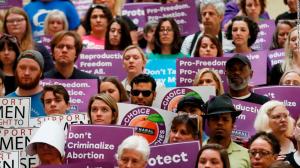 An excerpt from The Atlantic‘s interview with Rev. Jen Kast, a UCC pastor who grew up in hyper-Evangelical Western Michigan.
I began to understand myself as a woman in ministry. I began to see myself as this Christian feminist. I began to own my voice differently, and to question the rules of engagement of Christianity that I was raised with.
I began saying things like, “Why is it that abortion is the only issue that my parents and family really care about?” I have a very good relationship with my family. I’m not trying to paint them in negative light. But why? Why is this the only issue?
Like many Millennials coming out of evangelicalism, I began to care about different justice issues. I began to care about the Earth, and racial justice, and interfaith justice. And one of the topics that arose for me was abortion.
I began questioning: What about bodily autonomy? Isn’t that justice? How would God ever infringe upon that?
And this was a big one for me: Why is it that when it comes to this topic, it’s almost always white, straight, Christian men who are the loudest?
 By Rev. Joanna Lawrence Shenk
*This is part of a series of pieces from contributors all over North America each answering the question, “How would you define radical discipleship?” We will be posting responses regularly on Mondays during 2019.
A version of this article was first preached at First Mennonite Church of San Francisco on March 31, 2019
During Lent this year I experienced a stripping away, a reorientation in a vulnerable and uncomfortable way. I recognized my need for God and guidance by the Spirit anew. It has led to questions such as:
Where is the Spirit at work?
Am I attentive enough to follow the Spirit’s leading?
Am I courageous enough to follow?
Do I actually need God or do I think I’m okay with my analysis and intention to do good in the world?
In this time prayer has become a central practice. Continue reading “Radical Discipleship: An Invitation to be Led by the Spirit in Prayer”
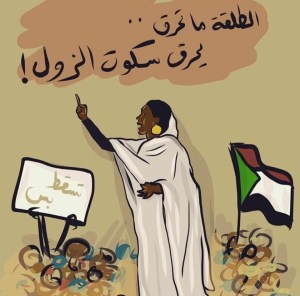
An excerpt from a recent newsletter “Radical Change Must Fall Like a Gentle Mist, Not a Heavy Downpour” at The Tricontinental, an international, movement-driven institution focused on stimulating intellectual debate that serves people’s aspirations.
Change comes at different tempos. Political change – the removal of a government – can be swift. Slower yet is economic change, with systems of production far less easy to pivot than the ejection of a government. Harder to change social systems, institutions such as the family, which have deep roots not only in our consciousness but also in our infrastructure (consider how our housing is built, to facilitate an ideological view of the ‘family’). But the hardest of all to change are the rigidities of culture, the tap roots of norms and customs that go deep into the centre of human experience. Prejudices of all kinds – racism and patriarchy – lie far beneath the surface, requiring what Zhou Enlai called ‘ideological remoulding’ to alter them. ‘It cannot be done with haste’, Zhou Enlai says several times in his speech. Such cultural work takes time. It has to dig gently into the earth to investigate the tap root, digging deeper to understand its power. Radical change has to confront culture’s blockages. Two kinds of work are necessary: cultural work, to stretch the imagination, and political work, to undermine the power of nasty cultural forms.
 Radical Discipleship