Our Most Sacred Relative

Jim BearAn excerpt from Rev. Jim Bear Jacobs’ powerful Thursday morning sermon at the February 2019 Bartimaeus Kinsler Institute on Chumash land (“Oak View, CA”). Listen to all 40 minutes of challenge and inspiration here.

The principle of non-Indigenous environmental justice work could be summarized like this:

The earth is our greatest natural resource and it is incumbent upon us to protect it.

Sounds good, but it is wrong. Because when viewed from an Indigenous perspective, we would state it like this:

The earth is our most sacred relative and it is incumbent upon us to protect her.

The Earth has an identity. The Earth lives. She breathes. She moves. She thunders. She nourishes.

The Traumatic Somatic

MamieTillFrom the conclusion of a sermon that Ched Myers preached at Garret Evangelical Theological Seminary Chapel on April 24, 2019. Access the entire sermon here

Our gospel text—and the excruciating lesson of Emmet Till’s funeral, which launched the most significant social movement in U.S. history—challenge us to embrace the beat up bodies of both marginalized people and degraded places around our earth mother. As we do so, we will be motivated also to embrace the militant evangelistic vocation Jesus leaves his companions at the end of Luke’s Emmaus narrative: to “proclaim repentance and forgiveness of sins in my name to all nations, beginning from Jerusalem” (24:47). It is we who must continue the prophetic struggle to turn history around from its captivity to our terminal addictions and compulsions—that’s the meaning of “repentance.” Resurrection as Insurrection! And as Jesus notes, this good news is not just for individuals, but nations and systems, starting at the centers of power— for Luke, Jerusalem, for us, Washington DC. Continue reading “The Traumatic Somatic”

This Sacred Work

TeresaIn April 2016, Teresa Grady joined the Ancestors after 88 years of resisting and rising above the colonial script. This is an excerpt from the eulogy given by her granddaughter Cait De Mott Grady at the funeral mass at Immaculate Conception Church in Ithaca, New York.
My grandma who found cracks in empire and planted seeds in the rich and fertile soil that’s there. My grandma knew in her gut, in her bones, in her heart, in her spirit, that it is imperative that each of us say something, do something, speak from our specific position within the interlocking systems of oppression — patriarchy, white supremacy, capitalism, racism, militarism, materialism — systems that work to strip us all of our humanity. And that this sacred work starts with relationships.

Teresa Grady: Presente!

The Ghosts America Has Kept At Bay

BayoAnother pressing social media post from Bayo Akomolafe (April 30, 2019).
An older gentleman in Iowa asked me:

As a non-American, what do you think is our greatest problem in America today?

I replied, “I’m not sure about it being the ‘greatest’, but I would say immigration.”

He nodded his head as if in agreement, so I drove the real point home: Continue reading “The Ghosts America Has Kept At Bay”

Wild Lectionary: Trees, a Gift for All or Entitlement for Some?

226AtlanticAveEaster 5C 5th
Revelation 21:1-6
John 13:31-35

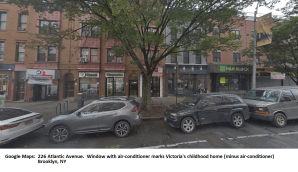
By Rev. Dr. Victoria Marie

And I saw the holy city, the new Jerusalem, coming down out of heaven from God, prepared as a bride adorned for her husband. And I heard a loud voice from the throne saying, “See, the home of God is among mortals.”

I imagine that a new Jerusalem, where God will dwell, will most definitely have tree-lined streets. I also imagine that God’s design for the present Jerusalem—for Earth’s cities in general—is that all should benefit from the Divine gift of trees.

Continue reading “Wild Lectionary: Trees, a Gift for All or Entitlement for Some?”

Eastertide: the Outing of the Church

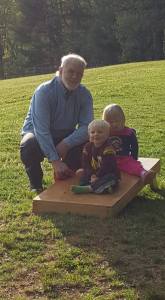
KenBy Ken Sehested (photo right with grandchildren), curator of prayerandpolitiks.org

Some years ago, writing in the days leading up to Easter, I realized important though tragic anniversaries arrived in the days immediately following that Sunday.

“Even before our resurrection flowers have wilted, we will be confronted again with the presence of evil. Since Easter falls early in the calendar this year, in the coming resurrection week we will be forced to remember the enduring power of death. In 1945, Dietrich Bonhoeffer, a German pastor and theologian, was executed by the Nazis two days after Easter Sunday. This next Thursday, April 4, we will remember the 1968 assassination of Dr. Martin Luther King Jr. right here in Memphis.” —continue reading “Open Letter to My Daughter: Easter morning, with the stench of death still in the air

What it is

We have entered Eastertide, the liturgical season beginning with Easter and ending 50 days later on Pentecost (aka Whitsunday). The formulation of this season parallels the period in Judaism between the first day of Pesach (Passover, marking their liberation from Egypt) and the feast of Shavu’ot (Feast of Weeks, both a harvest festival and a commemoration of the giving of Torah at Mount Sinai). Parallel resurrection moments, setting the stage for resulting resurrection movements. Continue reading “Eastertide: the Outing of the Church”

Elders

JeanieBy Jeanie Wylie-Kellermann, an excerpt from her “Editor’s Note” in the May 1999 issue of The Witness magazine, organized around the theme “Aging: Learning to be an Elder.” 
Elders usually must let go of their expectations to be power brokers, but they are also often positioned in a way that allows them greater freedom to act politically. Recently my partner Bill and I were at an Ash Wednesday vigil at the local manufacturer of cruise missile engines. Except for a few college students, we were probably the youngest people there–which isn’t saying much since we are in our 40s. On one level, that gave us an opportunity to beat ourselves up for our demographics–Why is the peace movement so white, so middle class and now so elderly? But in thinking about it, where would we prefer that elders be? What better task, could they adopt than to witness against fire power that can carry nuclear payload, but now is used in first-strike attacks against countries like Iraq or the former Yugoslavia? The conviction of these older ones is a gift to us. (I remember during a civil disobedience campaign against this same manufacturer in the early 1980s hearing a senior citizen say to a young mother who was agonizing about whether to do the action, “You take care of your babies. I’ll do this in your name and, before long, you can do this in the name of another mother.”) Continue reading “Elders”

It Was Out of My Heart That I Spoke

MonicaA few summers ago in Detroit, a circle of high school students from a local church gathered with community organizer Monica Lewis-Patrick, executive director of the grassroots We The People of Detroit. The conversation flowed into what it looks like for faith to infuse political action when the odds are stacked against justice, freedom and equity. This is an excerpt.

All we have to do is start connecting the dots and telling the truth. When I started working in social justice, I was working in education, with children that were mentally impaired and extremely violent. What I found out really quickly was that the people at the table didn’t give a damn about the children. It was about the dollars. Because I cared about the children, I had to educate myself in terms of how I influence the policy—or the people who drive the policies—to help my people get the change they need. To help the children I served. That meant going to meetings where sometimes I would be the only one there speaking on behalf of the population that I thought was most vulnerable and most in need. Was I scared? Yes I was. Did I always get the language right? No I didn’t. Did I always have the data on hand that they had? No I didn’t. But it was out of my heart that I spoke. And then from there what would happen is that somebody would give me a card or somebody would say, “You know, I didn’t know that part” or “Can we talk?” And then I had to dig up from my spiritual history or family history and muster up enough energy to go meet with somebody that has a title—that seems to have power—and say to that person “We don’t like this.”