The Cross: A Call to Gospel Nonviolence

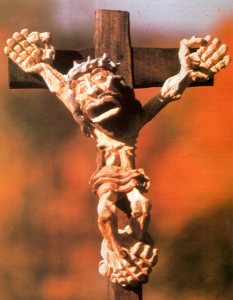
crucifixion_edilberto-meridaEast Coast Friends!! An announcement from The Alternative Seminary in Philly!

THE CROSS OF CHRIST: A JUSTIFICATION FOR REDEMPTIVE VIOLENCE OR A
CALL TO GOSPEL NONVIOLENCE?

The cross can heal and hurt; it can be empowering and liberating but also enslaving and oppressive … I believe that the cross placed alongside the lynching tree can help us to see Jesus in America in a new light, and thereby empower people who claim to follow him to take a stand against white supremacy and every kind of injustice.” ― James H. Cone, The Cross and the Lynching Tree

Continue reading “The Cross: A Call to Gospel Nonviolence”

Where We Put Down Our Roots

By Mark Van SteenwykMVS

*This is the 11th installation of a year-long series of posts from contributors all over North America each answering the question, “How would you define radical discipleship?” We will be posting responses regularly on Mondays during 2019.

What is Radical Discipleship? This used to be a fairly simple question to me. Now? Not so much.

Fifteen years ago, with the confidence of a late 20’s white seminarian, I “planted” a church whose only real mission was to take Jesus seriously. Soon, that new church experiment mutated into a full on intentional community, a sort of hybrid between a catholic worker house and a hippy Mennonite Church. We called ourselves the Mennonite Worker. Continue reading “Where We Put Down Our Roots”

Are You Willing to Follow Dr. King Today?

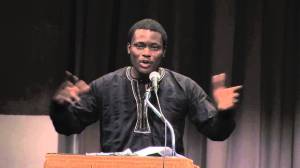
BarberSome highlights from Rev. William Barber’s 50-minute speech delivered on Martin Luther King, Jr. Day in Tennessee.

We do not celebrate martyrs. You join them.

MLK Jr. preached, but we make a dangerous mistake that his words were just soaring oratory. He preached civil disobedience and he preached a movement to challenge the demons of Jim Crow.

Not only in sanctuary…but he preached and acted in the streets of the nation.

If … it doesn’t lead to the liberation of the sick, poor and oppressed — then preaching is just words with no action,

People love dead prophets, but the question is, “Are you willing to follow Dr. King today?”

A Moral Compass That Was Unbreakable

Albert Woodfox, Herman Wallace
Herman Wallace and Albert Woodfox in the early 70’s (PC: In The Land of the Free)

An excerpt from Albert Woodfox’s recent autobiographical article in The Guardian. He was a Black Panther who spent more than 40 years in solitary confinement.

I made my bed every morning. I cleaned the cell. I had my own cleanup rag I used to wipe down the walls. When they passed out a broom and mop I swept and mopped the floor of my cell. I worked out at least an hour every morning in my cell.

By the time I was 40 I saw how I had transformed my cell, which was supposed to be a confined space of destruction and punishment, into something positive. I used that space to educate myself, I used that space to build strong moral character, I used that space to develop principles and a code of conduct, I used that space for everything other than what my captors intended it to be. Continue reading “A Moral Compass That Was Unbreakable”

Living into that Reality with Prayer & Action

Reconciliasian imageA Lenten message from our friends at ReconciliAsian, a peace center in Los Angeles that equips leaders in Korean and Asian American churches and communities to serve in ways that promote unity, justice and peace towards reconciliation.

The forty days of Lent represents the time Jesus spent in the wilderness, enduring the temptation of Satan and preparing to begin his ministry. Lent is a time of repentance, fasting and preparation for the coming of Easter. Continue reading “Living into that Reality with Prayer & Action”

Wild Lectionary: Roots and Stories

7491435002_e9fed382f8_o
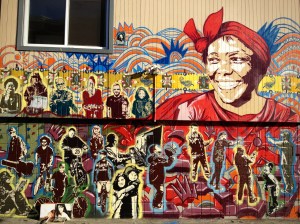
Wangari Maathai mural in the Lower Haight. Photo by Phil Dokas.

Lent 1

Deuteronomy 26:1-11
Psalm 91:1-2, 9-16
Romans 10:8b-13
Luke 4:1-13

By Rev. Dr. Victoria Marie

As I reflected on today’s readings, the theme they seemed to weave together is to begin Lent by reviewing our stories. With the First Reading, in which the writers of Deuteronomy are giving the reader a sort of Last Will and Testament of Moses, God’s people are reminded of their history and God’s presence in it. They are told to recount that history in ritual and celebration. We are also being reminded to reflect on our personal intergenerational stories. Who were our ancestors? How was God with them as they journeyed? How do their stories impact your story? How has God’s presence in all of our stories led us to where we are today: physically, socially, emotionally and spiritually? The First Reading reminds us to ponder these questions as we reflect on our stories. Continue reading “Wild Lectionary: Roots and Stories”

Third Helpings

talitha3By Talitha Fraser

We live in times where the focus is on those things that divide rather than connect us but as Chappo (Peter Chapman) says “You should share communion together, it has a unique power to unite beyond words.

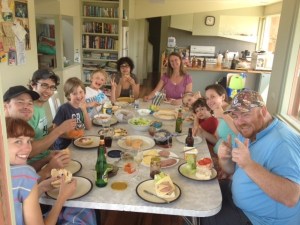
Sometimes community is a few households sharing life together. This brownie recipe feels symbolic of that as the plate I regularly bring to share at special occasions – birthdays, Christmas, dedications… When I was interning with Bartimaeus Cooperative Ministries (BCM) in 2012, my community back in Melbourne sent me their smiling, summer faces into my crisply cold California day so that I might feel ‘at the table’.  I made brownies for the Institute that year and we started up an Institute cookbook and I like to think they’re still being made.  Taking our recipes with us means we can feel at home wherever we are and share that hospitality with others. Rather than one community here and another there… there’s just one big community. Please join us. Make brownies. Continue reading “Third Helpings”

Out of the Depths I Call

By Nancy Bowker

Kathy Eliot and I were fellow contemplatives at St. Luke’s Cathedral for 20 years. We got together a few months before her death. We agreed I would sing for her while she was alive, rather than waiting for her funeral.

In the dimming light of this vastly silent sacred space she leafed through sheaves of 50 year old hand written Psalms. She was a woman of humble, quiet and private faithfulness.

But one can sense the empowering Spirit behind every word. She would then hand the beloved penciled psalm to me. I sang the whole song in one take, but later edited an interspersed call and response.

This track was later played at her funeral, and given to her friends.

A Wild, Ragged Figure

Ric HudgensBy Ric Hudgens

*This is the tenth installation of a year-long series of posts from contributors all over North America each answering the question, “How would you define radical discipleship?” We will be posting responses regularly on Mondays during 2019.

What is radical discipleship?

I’m in bed recovering from a stroke. I have dramatic weakness on the right side of my body. I can only walk with assistance. I talk slowly and softly. It is difficult for me to write. I am poor in physical strength, but rich in friends and strong in faith. Maybe I’ll be back to normal some day; or maybe it’s time for me to find a new normal. Continue reading “A Wild, Ragged Figure”

This is Why I Speak of “Postactivism”

BayoFrom Bayo Akomolafe, originally posted to social media on February 26, 2019:

A sticky myth of modern activism is that we are human observers looking out upon a world of troubling events from a distance that allows us to think up solutions to, or ask poignant questions about, those critical occurrences. Our popular equations of social change seemingly take for granted the constancy of human subjectivity and agency. We are pillars in the sandy storm: the world outside our skins may roar and thrash and turn, but we are the calm interruptions in the wind – and it is our impenetrable inner world and free-willed consciousness that will bring order to the chaos around us – if only we get our act together. What we do not see, however, is how fluid, incoherent and unstable we really are. For instance, with the problem of environmental degradation, we do not usually notice how we are co-produced in the leaching of dangerous toxins from aquatic bodies in plastic oceans, how these secretions not only penetrate our own bodies but modify them, and how these modifications imply that we are not pure referees of the situation. We are “in deep”, and we must account for the fact that how we even see the problem is part of the problem. Continue reading “This is Why I Speak of “Postactivism””