In Ever-More Predatory and Beguiling Forms

BWKFrom Bill Wylie-Kellermann’s recent release Principalities in Particular: A Practical Theology of the Powers That Be (Oct 2017):

In the struggle for racial justice the recognition of “institutional racism,” that insidious structural element far beyond personal prejudice, was a huge step toward seeing racism as a principality. Ironically, however, the liberal preoccupation with its institutional character would prove progressively blind to its overpowering spiritual dimension. The African American freedom struggle, founded under SCLC’s early banner, “To Heal the Soul of the Nation,” tended to become more and more a civil rights movement with a largely legislative agenda. In the several decades since Stringfellow’s address, the legal apparatus of our American apartheid has been all but dismantled. End of racism, right? No. We ignore its spiritual reality at the peril of our national soul. And there is no force in our history that has proven more relentless or devastatingly resilient than white racism. It is empirically a demon which again and again rises up transmogrified in ever-more predatory and beguiling forms, truly tempting our despair. The frustration we suffer is not unlike that of the disciples who were gently upbraided by Jesus, “This kind can only be cast out by prayer and fasting.”
Continue reading “In Ever-More Predatory and Beguiling Forms”

A Symbol of a Nation

The End of the Myth_JKT.inddFrom Greg Grandin, professor at New York University and author of The End of the Myth: From the Frontier to the Border Wall in the Mind of America (2019):

The wall might or might not be built. But even if it remains only in its phantasmagorical, budgetary stage, a perpetual negotiating chip between Congress and the White House, the promise of a two-thousand-mile-long, thirty-foot-high ribbon of concrete and steel running along the United States’ southern border serves its purpose. It’s America’s new myth, a monument to the final closing of frontier. It’s a symbol of a nation that used to believe that it had escaped history, or at least strode atop history, but now finds itself trapped by history, and of a people who used to think they were captains of the future, but now are prisoners of the past.

We’re Not in that World Yet

StevensonIn a New York Times Magazine interview, Bryan Stevenson was asked, “What would the Rev. Dr. Martin Luther King, Jr. think of America if he were alive today?” This was his answer.

When he found out that one in three black male babies born in this country is expected to go to jail and prison, when he saw the level of poverty, when he heard some of the rhetoric that we frequently hear, I think he would be heartbroken. But I also think he would be excited that if he called a meeting, thousands would come. And that’s what has to happen, even without Dr. King — that we have to be willing to make that commitment so that we can create a world where if Dr. King emerged, he would be so proud to say his dream has finally been realized. We’re not in that world yet.

Bryan Stevenson is the author of Just Mercy: A Story of Justice and Redemption (2014) and the co-founder of the National Memorial for Peace and Justice (informally known as the National Lynching Memorial).

Wild Lectionary: The Boy with Epilepsy- Listening Again

img_5191_med_hr-2
Wing and a Prayer, 2014, mixed media, L.J. Throstle

Lent 2C
Luke 9:28-43

By Lucy Price

Matthew, Mark and Luke all contain seizures and demons in the same sentence and some even translate the word to epilepsy. Lunatic and moonstruck are closer to the original translation, but in any case growing up in the church as a person living with epilepsy, hearing the story of the boy brought to Jesus for healing left me with a knot in my stomach and a lump in my throat. Continue reading “Wild Lectionary: The Boy with Epilepsy- Listening Again”

What I’ll Tell You- To My Daughter (in the far future)

4253502775_f38a01d235_z
Photo by David Merz

By Sarah Brooks

This year they told us “12 good years”.
Will I bring you into this world with that written out before me?
Dwelling on that is new- I don’t have the answer yet.
Part of me mourns the time when the only thing between us were the years I needed,
And the other copes by listing out your name.

So, for now I’ll say,
if this world does end up powering you into existence, Continue reading “What I’ll Tell You- To My Daughter (in the far future)”

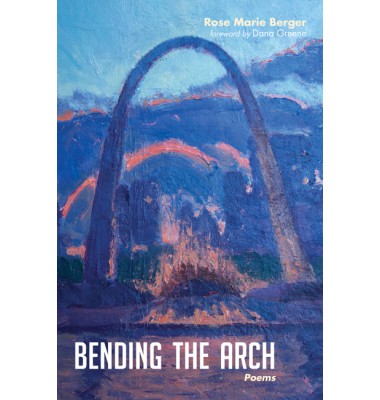
Bending the Arch: An Interview with Rose M Berger

roseOnce a young woman asked Rose Berger, out of the blue, to baptize her. I watched as right then and there, Rose summoned sacramental power and beauty pouring water and speaking holy poetry. So, when Rose publishes a book of poetry, I pay attention and call upon all of you to heed her cry.          -Lydia Wylie-Kellermann

Bending the Arch, By Rose Marie Berger

RD: It is a heavily annotated poem, can you talk about the relationship between the poetry and the history and information in the back?

RMB: It’s a good question. I just finished reading Micheal O’Siadhail’s The Five Quintets, a 350-page poem examining the Modern era with no endnotes or explanations. It’s a stunning, ground-breaking work. But it requires a lot of work by the reader. Bending the Arch requires a lot from the reader also, but I wanted to lower the bar a little. Make it a little easier and more accessible. There are themes in Bending the Arch that I want readers to explore more on their own. My hope is that the endnotes will encourage readers to dig into the suppressed historical narratives in their own families and regions. Continue reading “Bending the Arch: An Interview with Rose M Berger”

The Cross: A Call to Gospel Nonviolence

crucifixion_edilberto-meridaEast Coast Friends!! An announcement from The Alternative Seminary in Philly!

THE CROSS OF CHRIST: A JUSTIFICATION FOR REDEMPTIVE VIOLENCE OR A
CALL TO GOSPEL NONVIOLENCE?

The cross can heal and hurt; it can be empowering and liberating but also enslaving and oppressive … I believe that the cross placed alongside the lynching tree can help us to see Jesus in America in a new light, and thereby empower people who claim to follow him to take a stand against white supremacy and every kind of injustice.” ― James H. Cone, The Cross and the Lynching Tree

Continue reading “The Cross: A Call to Gospel Nonviolence”

Where We Put Down Our Roots

By Mark Van SteenwykMVS

*This is the 11th installation of a year-long series of posts from contributors all over North America each answering the question, “How would you define radical discipleship?” We will be posting responses regularly on Mondays during 2019.

What is Radical Discipleship? This used to be a fairly simple question to me. Now? Not so much.

Fifteen years ago, with the confidence of a late 20’s white seminarian, I “planted” a church whose only real mission was to take Jesus seriously. Soon, that new church experiment mutated into a full on intentional community, a sort of hybrid between a catholic worker house and a hippy Mennonite Church. We called ourselves the Mennonite Worker. Continue reading “Where We Put Down Our Roots”

Are You Willing to Follow Dr. King Today?

BarberSome highlights from Rev. William Barber’s 50-minute speech delivered on Martin Luther King, Jr. Day in Tennessee.

We do not celebrate martyrs. You join them.

MLK Jr. preached, but we make a dangerous mistake that his words were just soaring oratory. He preached civil disobedience and he preached a movement to challenge the demons of Jim Crow.

Not only in sanctuary…but he preached and acted in the streets of the nation.

If … it doesn’t lead to the liberation of the sick, poor and oppressed — then preaching is just words with no action,

People love dead prophets, but the question is, “Are you willing to follow Dr. King today?”

A Moral Compass That Was Unbreakable

Albert Woodfox, Herman Wallace
Herman Wallace and Albert Woodfox in the early 70’s (PC: In The Land of the Free)

An excerpt from Albert Woodfox’s recent autobiographical article in The Guardian. He was a Black Panther who spent more than 40 years in solitary confinement.

I made my bed every morning. I cleaned the cell. I had my own cleanup rag I used to wipe down the walls. When they passed out a broom and mop I swept and mopped the floor of my cell. I worked out at least an hour every morning in my cell.

By the time I was 40 I saw how I had transformed my cell, which was supposed to be a confined space of destruction and punishment, into something positive. I used that space to educate myself, I used that space to build strong moral character, I used that space to develop principles and a code of conduct, I used that space for everything other than what my captors intended it to be. Continue reading “A Moral Compass That Was Unbreakable”