From Dr. Ezzideen Shehab (above), re-posted from social media on April 25, 2025. Support the publication of his first book here. Support his medical clinic in Northern Gaza here.
This morning, the heralds of decay, UNRWA and the World Food Programme, proclaimed what was already written in the bones of the living: the flour is gone, the food is spent, and the age of starvation has officially begun.
No more bread for the condemned.
No more hollow ceremonies of distribution.
Now, the mask has been torn away: the people are sentenced to death by hunger, and the world has chosen not to hear the verdict.
Behold! There is no economy, no labor, no dignity of exchange. The body, stripped of its last illusions, becomes an animal clawing at the dust. The soul, once capable of hope, sinks into a silent, grey despair.
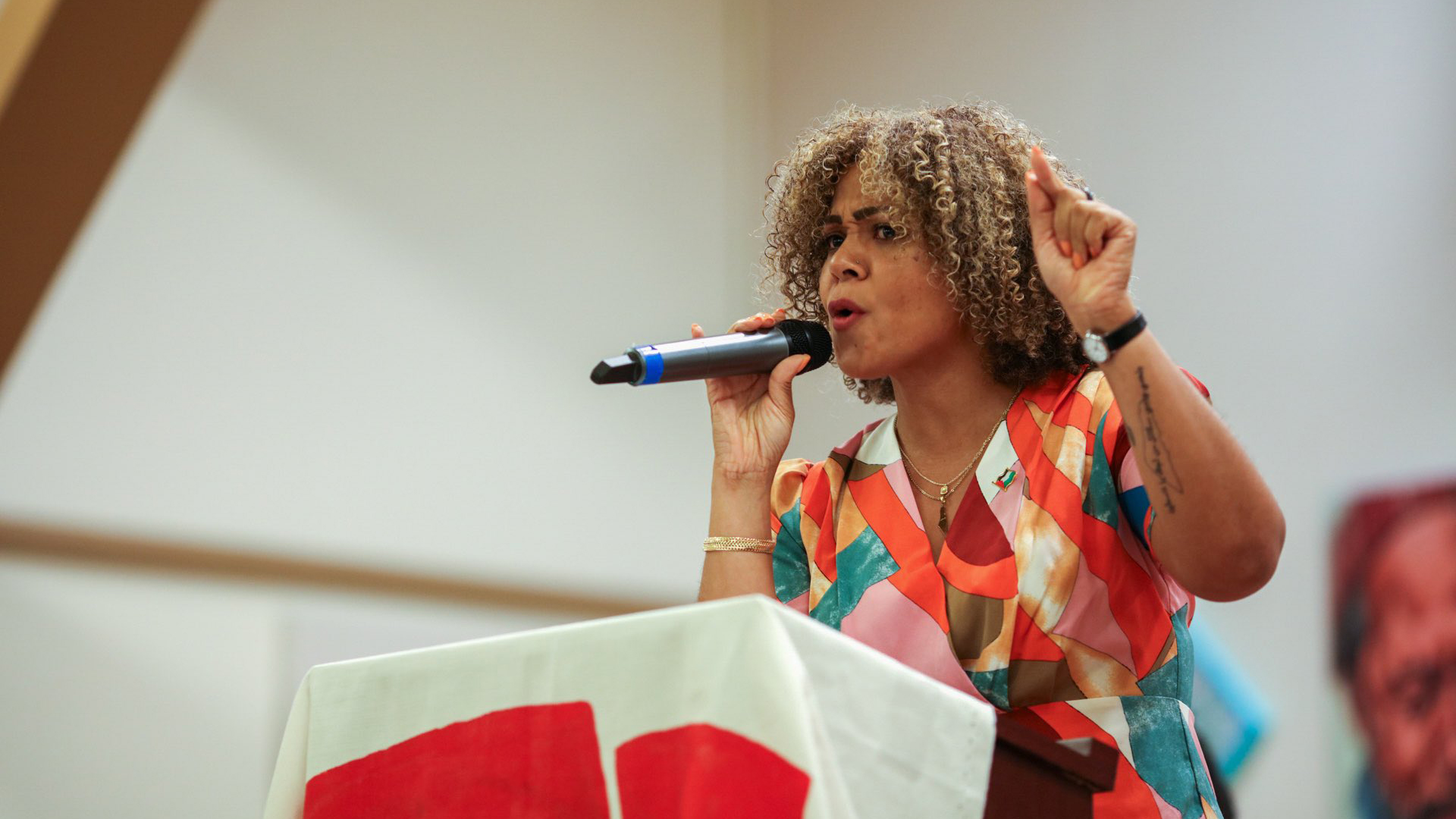
From organizer and theologian Claudia de la Cruz, re-posted from X (04.21.2025).
In November 2016, I participated in the 3rd Gathering of Social Movements in Rome. A process initiated by the @MST_Oficial
Pope Francis shared a powerful message that day which was anti capitalist and centered humanity and the planet as sacred. His message was one in defense of people’s dignity and the right to housing, land and work. He also shared a very humble request – “if you pray, pray for me. If you don’t, send me good vibes!” I couldn’t help but do both, after all, he was speaking these words from The Vatican- a place of power and contradictions.
As it is with many, his life wasn’t a straight line, but it was filled with moments of great courage and love for the people. He stood against blockades, sanctions, capitalism, militarism and genocide. He spoke up for Cuba, Palestine and all who’ve suffered as a result of oppressive and exploitative systems. His faith and convictions moved him in the direction of the people- as it should be.
Words from his speech to the movements who were present in Rome in 2016.
“Who is really in charge, then? Money. How does it govern? With the whip of fear, of inequality, and of economic, social, cultural, and military violence—a violence that breeds more and more violence in a downward spiral that seems never-ending. So much pain, so much fear!
As I’ve said before, there is a foundational terrorism that arises from the global control of money over the earth and threatens all of humanity. Terrorism truly begins when “you have cast aside the wonder of creation—man and woman—and replaced it with money.” That system is terrorist.
This warped system may offer certain cosmetic implants that are not true development: economic growth, technological advances, greater “efficiency” in producing things that are bought, used, and thrown away—dragging us all into a frenzied cycle of waste…
But this world does not allow for the full development of the human being —development that cannot be reduced to consumption, that is not limited to the well-being of a few, but that includes all peoples and individuals in the fullness of their dignity, allowing them to share as brothers and sisters in the wonder of Creation. That is the kind of development we need: human, integral, respectful of Creation, of this common home.”
From Olly Costello, re-posted from social media (04.22.2025).Mohsen Mahdawi’s pre-trial hearing is this morning.
Friends, I know there is so much grief. So many people needing our attention and support. I am amplifying Mohsen’s story because he is a dear friend of some dear people in my life.
Mohsen is another Palestinian Columbia student, fighting for human rights who has been abducted by ICE. He has not been charged with any crime and the DoJ has not given a reason for his detention. His pretrial hearing is TOMORROW morning.
There are a few asks from his community for support that you can find on slide 3. If you can’t spare financial support, consider writing him a letter. Contact your congressional leaders and demand they take action on behalf of Mohsen and all our community members facing persecution for their status and advocacy. Please share his story and watch this incredible interview he did with CBS the day before his abduction.
I hope you will join me and so many others continuing to fight against the violence of detention, incarceration, state violence and growing fascism here and around the world.
An excerpt from Cornel West’s Democracy Matters (2004).
The ultimate Christian paradox of God crucified in history under the Roman empire is that the love and justice that appear so weak may be strong, that seem so foolish may be wise, and that strike imperial elites as easily disposable may be inescapably indispensable.
The real scandal of the gospel is this: humanity’s salvation is revealed in the cross of the condemned criminal Jesus, and humanity’s salvation is available only through our solidarity with the crucified people in our midst. Faith that emerged out of the scandal of the cross is not a faith of intellectuals or elites of any sort. This is the faith of abused and scandalized people—the losers and the down and out. It was this faith that gave blacks the strength and courage to hope, “to keep on keeping on,” struggling against the odds with what Paul Tillich called “the courage to be.”
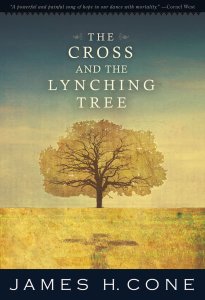
The cross and the lynching tree interpret each other. Both were public spectacles, shameful events, instruments of punishment reserved for the most despised people in society. Any genuine theology and any genuine preaching of the Christian gospel must be measured against the test of the scandal of the cross and the lynching tree.
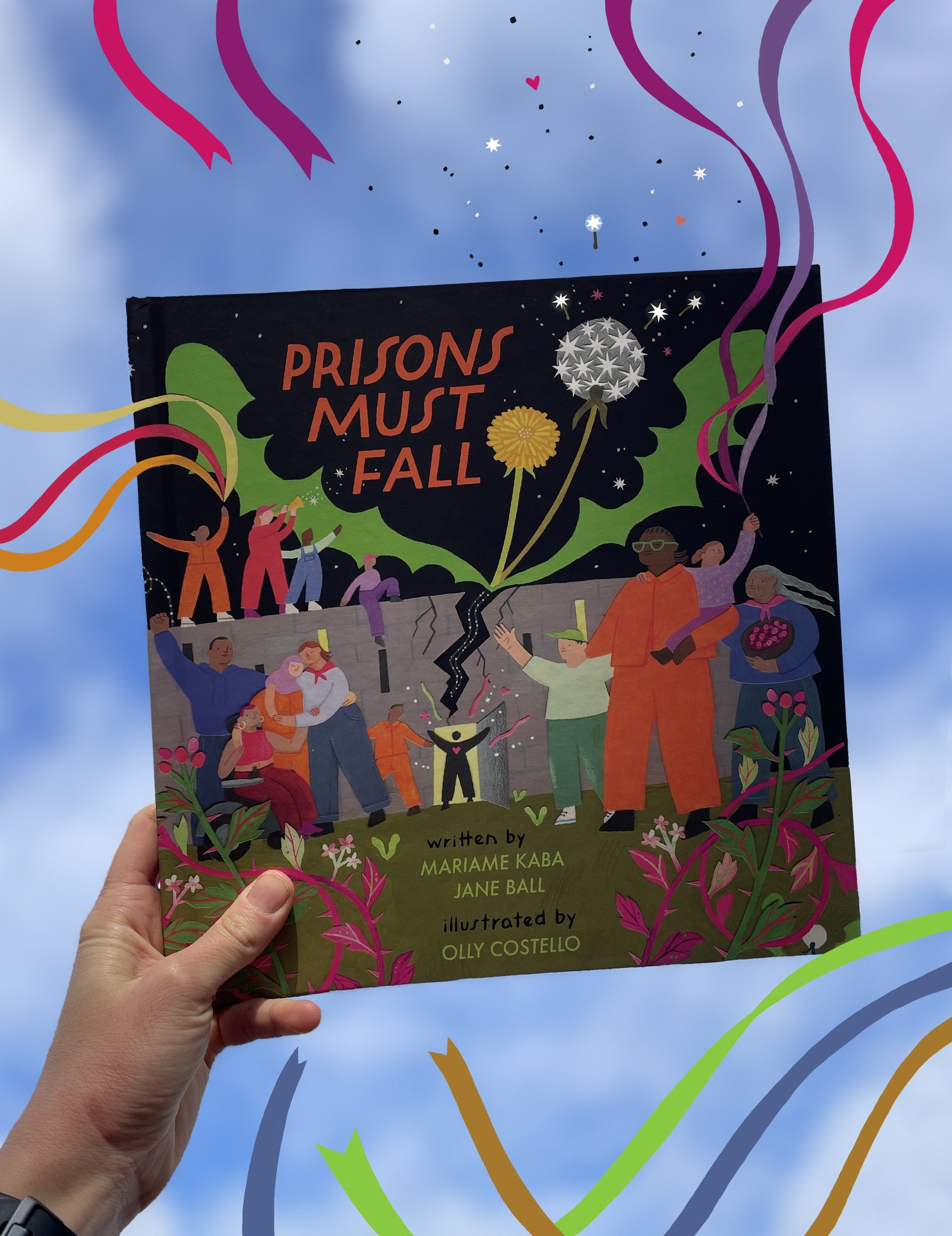
An Update from Critical Resistance, an organization committed to challenging the belief that caging and controlling people makes us safe.
For the month of April, we honor two dates that speak to the resilience of life under violent systems of control: Palestinian Prisoners Day on April 17, and Earth Day on April 22. Though they may seem unrelated, both are powerful reminders that the fight against cops and cages is a fight for the right to live—a struggle for collective survival and liberation.
This week, Palestinian Prisoners Day uplifts the courage and resistance of Palestinians caged and tortured in apartheid-Israeli prisons as part of a settler colonial regime that uses imprisonment as a key tool of control. Next week, Earth Day calls us to confront the global systems that exploit land and people.
From the 9,600 Palestinians currently incarcerated by apartheid-Israel, including over 3,300 prisoners in administrative detention without charge or trial, to the escalated crackdowns on student activism for Palestine and collaborating with attacks on immigrant communities in the US as seen by the Trump administration and ICE’s targeting of Mahmoud Khalil, we uplift the brave resolve of imprisoned Palestinians who continue to organize hunger strikes, create underground political education spaces, and remain part of the larger struggle for land, dignity, and freedom in the face of brutal repression in historic Palestine and across the diaspora.
Last week, the U of Minnesota deleted this American Indian Studies’ statement on Palestine, which was posted in December 2023.
We the undersigned faculty and staff in American Indian and Indigenous studies at the University of Minnesota-Twin Cities (UMN) understand our accountability to the peoples, lands, waters, and skies of Dakota Oyate. We are employed by a land grab university built from stolen Dakota, Anishinaabeg, and Ho-Chunk wealth, land, and blood. Invaded and then claimed by Euro-American settlers, “Minnesota” has, for more than one hundred years, maligned and demonized Dakota patriots who resisted genocide. Their descendants continue to be denied return or land back. Streets and university halls proudly bear the names of the architects of genocide while Dakota calls for justice are ignored, silenced, or shuffled into empty gestures of reconciliation, land acknowledgement, and diversity, equity and inclusion.
It is from this place and position of advancing justice for the crimes of genocide in “Minnesota” that we proclaim unequivocal solidarity with the Palestinian people who presently suffer and resist genocide halfway across the world.
No nation-state should exist through the genocide of another people, particularly when that existence also involves, as it does in Palestine, a longer and ongoing history of colonial and military occupation and apartheid of the other’s homelands and peoples.
Recently, some of us have helped the Palestinian community at UMN publicly say the names of Palestinian relatives and friends killed in this obscene and criminal campaign. For this act, we have also been criticized for being anti-Semitic and for “supporting Hamas.” But we will continue to say their names like those of so many other victims of hate and war fueled by imperial and colonial violence. We say their names to witness and resist genocide and injustice everywhere.
Of the more than nineteen thousand Palestinians killed, almost 70% are women and children, the direct result of the state of Israel’s indiscriminate revenge for the deaths of more than a thousand foreign nationals, Israeli soldiers, and Israeli civilians and the capture of more than 200 Israeli soldiers and civilians after Palestinian fighters and civilians broke through the Gaza border on October 7, 2023.
In no way is the “conflict” an equal one: we see in the staggering incongruity of the tally–and in the rubble in Palestine–the grotesquely disproportionate demands of, on the one hand, Palestinian national defense and right of return, and, on the other, the Israeli state’s genocidal expression of its right to exist.
Also unequal, unjust and obscene is how the Israeli state acts with such remarkable impunity, a pass made possible by the monstrosities of financial, military, technical and cultural imperialism of the United States and the Western world powers.
Like other universities in nation-states whose existence is procured through the genocide and removal of Indigenous peoples, UMN risks functioning as a proxy for mounting state repression of resistance and justice. Like the recent measure by the U.S. Congress to criminalize outspoken Palestinian students, political figures, and allied organizations, University leaders across the country have also capitulated to external lobbying and financial pressure to crack down on freedom of speech and critical expression by outspoken faculty, staff and students. Such campaigns of repression on campuses silence critical perspectives that undergird vital principles of academic freedom, governance, and excellence. These campaigns of repression, too, are complicit with genocide and injustice. They, too, should be loudly condemned and resisted. We applaud, therefore, those few University Presidents and University leaders who have courageously spoken up in this milieu to affirm the rights of faculty and students to speak out and to condemn retaliatory action against them.
We will not be silent. We will not be silenced. We will resist. We welcome you to join us.
Our statement, by we who constitute a large majority of the members of the Department of American Indian Studies at the University of Minnesota – Twin Cities, does not reflect the views of the College of Liberal Arts nor should be taken as the official view of the University of Minnesota.
signed (alphabetical order):
Prof. Christine DeLisle Nicholas DeShaw Prof. Vicente M. Diaz Prof. Nick Estes Prof. Jessica Garcia Fritz Prof. Kat Hayes Prof. Brendan Kishketon Nora Livesay C̣aƞtemaza Neil McKay Prof. Meixi Prof. Jean O’Brien Prof. Gabriela Spears-Rico Prof. Melanie K. Yazzie
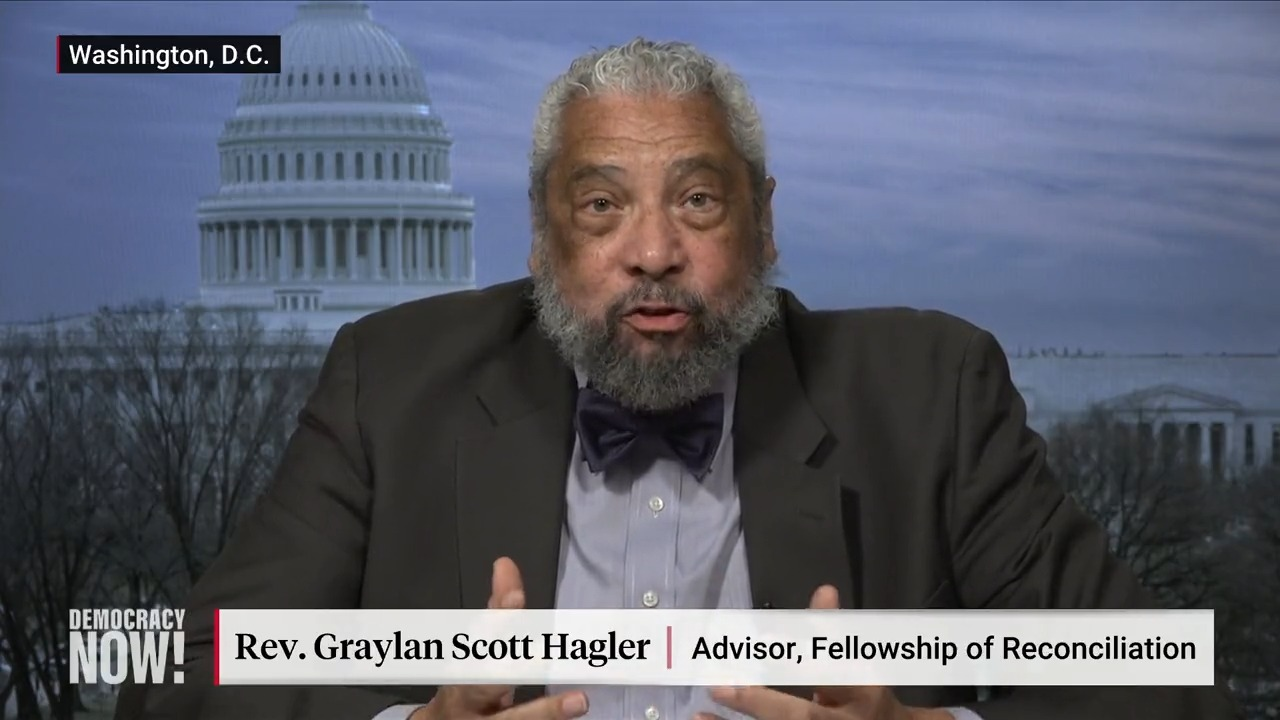
By Rev. Graylan Scott Hagler, Senior Advisor, The Fellowship of Reconciliation USA, Director & Chief Visionary, Faith Strategies LLC, Pastor Emeritus, Plymouth Congregational United Church of Christ
April 1, 2025
The presidential announcements and outrage come at us so viciously fast that it is difficult to keep up with the latest assault on governance, our intellect, decency, or humanity. Much of the perceived chaos is planned and judiciously meted out to keep our heads spinning leaving little time or energy to respond to anything before something new intrudes the space. Their goal is to produce as much confusion and chaos as possible so the public will struggle to keep up and lose the ability to pay close and constant attention to the important things of democratic and constitutional order. Our national setting has become a mixture of reality TV with the sensationalism of that genre, where mean-spirited sound bites emanate from those in power who smirkingly stare into the cameras knowingly creating the next news cycle. There is a racist, hate-filled, untruthful, and vindictive blanket covering this government and suffocating the country under its weight. We have never seen anything like this before.
In the coming months, we’re engaging in a series of critical conversations about Christian supremacy and how it affects the struggle for Palestinian liberation.
Our first conversation in this series will take place Thursday, April 10, at 8:00pm ET / 5:00pm PT. We’ll be joined by Ben Lorber, author of “Safety Through Solidarity: A Radical Guide to Fighting Antisemitism”, Shoshana Brown from the Diaspora Alliance, and Rev. Anne Dunlap from @liberatinglineagescollective for a discussion about Christian supremacy, antisemitism, Project Esther, and more.




 On Good Friday, we get back to the basics: an excerpt from James Cone’s

 Radical Discipleship