Resurrecting Ancient Wisdom & Worldview

1491By Randy Woodley, re-posted with permission from the Ethnic Space and Faith blog

There are stark differences between the worldviews of Indigenous peoples and those whose worldviews developed with the influence of Western Europe. The “age of discovery” brought the Europeans to our Indigenous shores. Many of those theologians and discoverers attributed their discoveries to God and then immediately acted in the most ungodly manner. I am willing to concede that the Creator had a hand in the meeting of the two worlds but I think it has been largely misinterpreted by the Western nations and Western religious bodies. These so called “discoveries” created not only wealth by extraction in previously co-sustained Indigenous lands, labor and resources, but they also created perverted national myths and twisted theological accounts of conquest. These myths have continued to be told time and time again, and with each generation they are reified, built upon and codified into our society’s collective mythologies and memories. Continue reading “Resurrecting Ancient Wisdom & Worldview”

Entertainment for Angels

GuatemalaBy Tommy Airey

Detroit, Michigan

“…because You have hidden these things from the wise and learned, and revealed them to little children.”—Matthew 11:25b

“This pedagogy makes oppression and its causes objects of reflection by the oppressed, and from that reflection will come their necessary engagement in the struggle for their liberation.”–Paolo Freire, The Pedagogy of the Oppressed (1972)

Many episodes from the biblical script star the widow, the orphan and the immigrant as a sacred Trinity of sorts. The God known as Steadfast Love consistently compels those who bear the Name to never shame nor blame these three. In fact, in these three, Steadfast Love covenants Herself to Justice, promising to be a swift witness against anyone who oppresses or swears falsely against them.  If one’s theology still makes room for hell, this litmus test ought to be included. Continue reading “Entertainment for Angels”

Wild Lectionary: Planted and Watered

IMG_4260.JPG
Author with Forest School Students

Easter 7(B)
Psalm 1

By Laurel Dykstra

Happy are those who do not follow the advice of the wicked, or take the path that sinners tread, or sit in the seat of scoffers; but their delight is in the law of the LORD, and on his law they meditate day and night. They are like trees planted by streams of water, which yield their fruit in its season, and their leaves do not wither. In all that they do, they prosper.

The image of large well-watered trees growing larger is used in scripture as a symbol of human prosperity, abundance, and flourishing for individuals (Psalm 92:12-13) and nations (Ezekiel 31). Often the type of tree is unnamed but a significant number are cedars. In an arid landscape shade as a luxury, an association amplified by the biblical equation of cedar wood with wealth. Continue reading “Wild Lectionary: Planted and Watered”

Rock! Paper! Scissors!

lc7apk0_2_orig.pngWe are excited to share that Jesus Radicals has started a new online journal- Rock! Paper! Scissors! Tools for anarchists + Christian thought and action. The first issue is out edited by Joanna Shenk on The Movement Makes us Human.

In a time when the inhumanity of heteronormative, white supremacist, capitalist, patriarchy are publicly normalized by the powerful, Jesus Radicals shares stories of resistance, love, and transformation. The Movement Makes Us Human, the title of a newly released book on the life and thought of social movement veteran Dr. Vincent Harding authored by co-organizer Joanna Shenk, is also the theme of the first issue of the Jesus Radicals online journal.

Check out the Journal here!

God in a Grape; Spirit in a Sheep

JPerk, Ilustration
Icon of the Unburnt Bush 

By Jim Perkinson, a homily on John 15:1-8 and Acts 8:26-40 preached last Sunday to the beloved community at St. Peter’s Episcopal Church in Detroit

I begin by thanking four primary ancestors: my own Celtic, Nordic, Saxon, Frankish kin deep in the past before my people became sick with white supremacy; the African Eve of all of our origins whose black folk offspring of Detroit engaged survival efforts and justice demands and creation-in-spite-of that are nothing short of prophetic and wondrous; the Algonquian and Haudenosaunee communities of the Strait who lived by profound dignity and wisdom on the land and waters; and all the non-human denizens of this place themselves, whose continuous gift makes possible the breathing and loving and struggle of all of us sitting here. For all of them: gratitude. And indebtedness to live, worthy. Continue reading “God in a Grape; Spirit in a Sheep”

It is a Word I Use Daily

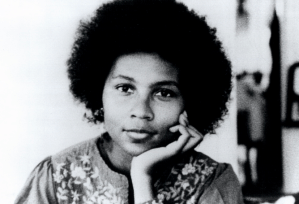
bellFrom the opening paragraphs of bell hooks’ Understanding Patriarchy:

Patriarchy is the single most life-threatening social disease assaulting the male body and spirit in our nation. Yet most men do not use the word “patriarchy” in everyday life. Most men never think about patriarchy—what it means, how it is created and sustained. Many men in our nation would not be able to spell the word or pronounce it correctly. The word “patriarchy” just is not a part of their normal everyday thought or speech. Men who have heard and know the word usually associate it with women’s liberation, with feminism, and therefore dismiss it as irrelevant to their own experiences. I have been standing at podiums talking about patriarchy for more than thirty years. It is a word I use daily, and men who hear me use it often ask me what I mean by it. Continue reading “It is a Word I Use Daily”

James Cone: The Scalpel & The Compress

James ConeThe reflections on Dr. James Cone’s life and teaching keep on pouring in from his former students.  This one is from Ken Sehested the curator of Prayer & Politiks.

I was traveling when the news of Dr. James Cone’s death was reported on Saturday. The first thought that came to mind was what seems to be a providential concurrence: His passing came two days after the opening of the National Peace and Justice Memorial, solemnizing the lynching in the US of some 4,400 black people, in 800 counties, between 1877 and 1950. Cone’s last book, The Cross and the Lynching Tree, was recipient of this year’s Grawemeyer Award in Religion. Continue reading “James Cone: The Scalpel & The Compress”