
By Sarah Holst
when I see you saying
that women marching
is embarrassing
all I want is for you to
listen
to the indigenous
communities crying out
for their missing and
murdered women Continue reading “when I see you saying”

By Sarah Holst
when I see you saying
that women marching
is embarrassing
all I want is for you to
listen
to the indigenous
communities crying out
for their missing and
murdered women Continue reading “when I see you saying”
 By Jim Perkinson, a sermon on Jonah 3:1-5, 10 and Mk 1:14-20, January 21, 2018, St. Peter’s Episcopal Church (Detroit, MI)
I am not a fish person—which is why I volunteered to preach this Sunday, where the lessons focus on fish, in the stories of Jonah and the whale and of the disciples on the Sea of Galilee called to become “fishers of humans.” To “catch” the significance of the latter, we need to reel in the former carefully. Though not included in the lectionary, the heart of the Jonah story turns on the following verse:
And the Lord appointed a great fish to swallow Jonah; and Jonah was in the belly of the fish three days and three nights (Jon 1:17).
The text is clear. Jonah was saved by a fish. But we need to go slow, since we often read it the other way around—that Jonah was saved from a fish. So in the interests of getting us hooked on the story-line, I want to string out three pieces of bait. Continue reading “The Sunday Long Read: Dove Songs and Fish Offerings”
 From Gloria Anzaldua in “How To Tame A Wild Tongue:”
So, if you want to really hurt me, talk badly about my language. Ethnic identity is twin skin to linguistic identity – I am my language. Until I can take pride in my language, I cannot take pride in myself. Until I can accept as legitimate Chicano Texas Spanish, Tex-Mex, and all the other languages I speak, I cannot accept the legitimacy of myself. Until I am free to write bilingually and to switch codes without having always to translate, while I still have to speak English or Spanish when I would rather speak spanglish, and as long as I have to accommodate the English speakers rather than having them accommodate me, my tongue will be illegitimate.
I will no longer be made to feel ashamed of existing. I will have my voice: Indian, Spanish, white. I will have my serpent’s tongue — my woman’s voice, my sexual voice, my poet’s voice. I will overcome the tradition of silence.
 By Howard Thurman
I share with you the agony of your grief,
The anguish of your heart finds echo in my own.
I know I cannot enter all you feel
Nor bear with you the burden of your pain;
I can but offer what my love does give:
The strength of caring,
The warmth of one who seeks to understand
The silent storm-swept barrenness of so great a loss.
This I do in quiet ways,
That on your lonely path
You may not walk alone.
 Epiphany 4B
1 Corinthians 8:4-6, 8
As to the eating of food offered to idols, we know that “no idol in the world really exists,” and that “there is no God but one.” Indeed, even though there may be so-called gods in heaven or on earth–as in fact there are many gods and many lords– yet for us there is one God, the Father, from whom are all things and for whom we exist, and one Lord, Jesus Christ, through whom are all things and through whom we exist.
“Food will not bring us close to God.” We are no worse off if we do not eat, and no better off if we do.
By David Pritchett
Fireflies and Feathers: Two Kinds of Farming
The summer of 2012 was hot in the Midwest. By the fourth week of temperatures over 90 degrees, and over two months without rain, the grass was brown and our crops in Northeastern Indiana were not faring any better. Continue reading “Wild Lectionary: What We Do with Our Bodies”
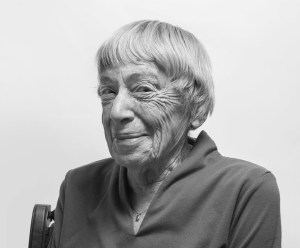 The prophetic and passionate Ursula Le Guin (October 21, 1929 to January 23, 2018), excerpted from her 2014 speech at The National Book Awards:
Hard times are coming, when we’ll be wanting the voices of writers who can see alternatives to how we live now, can see through our fear-stricken society and its obsessive technologies to other ways of being, and even imagine real grounds for hope. We’ll need writers who can remember freedom – poets, visionaries – realists of a larger reality.
Right now, we need writers who know the difference between production of a market commodity and the practice of an art. Developing written material to suit sales strategies in order to maximise corporate profit and advertising revenue is not the same thing as responsible book publishing or authorship. Continue reading “Ursula: ¡Presente!”
 By Frida Berrigan, Re-posted from TomDispatch.com and MotherJones.com.
As a mother and an activist, here’s what I’ve concluded as 2018 begins: It’s getting harder and harder to think about the future—at least in that soaring Whitney Houston fashion. You know the song: “I believe the children are our future, teach them well and let them lead the way…” These days, doesn’t it sound quaint and of another age? Continue reading “How Do I Reassure My Children About the Future When the Future Is Terrifying? An activist’s lament.”
 By Nancy Hastings Sehested
Co-Pastor, Circle of Mercy Congregation
Holy Light,
We stand somewhere in the shadows, in-between the battlefield of our struggles and the sanctuary of our souls.
Shed a little light on our way. Keep your lighted sanctuary within us portable, able to see clearly, to walk courageously, to withstand the forces that corrupt the truth of our belonging to your one world-wide family. Continue reading “Prayer: Holy Light”
 From spiritual master Eckhart Tolle in his classic The Power of Now (1999):
If you are pulled into unconscious identification with the emotion through lack of presence, which is normal, the emotion temporarily becomes “you”…You will not be free of that pain until you cease to derive your sense of self from identification with the mind, which is to say from ego. The mind is then toppled from its place of power and Being reveals itself as your true nature.
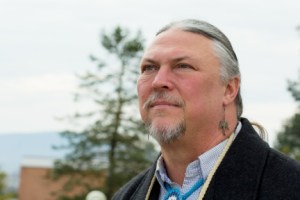 From Randy Woodley in Shalom and the Community of Creation: An Indigenous Vision (2012):
Humans have moved recently from tertiary consumers to becoming primary consumers. Such change is beyond the earth’s natural cycles and recharge rates, creating imbalance and disharmony on the whole planet. In order to restore balance, the earth is being forced to “consume” the primary consumer, moving her temporarily to confront humanity with the only defense she has, namely, natural disasters. In a very real sense, the top of the food chain is now the earth herself.

