
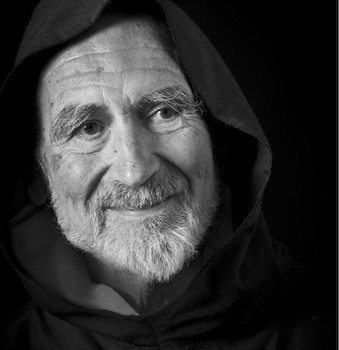
 From Benedictine monk David Steindl-Rast in an Onbeing interview with Krista Tippett (January 2016):
I remember, the grace that Buddhists pray before a meal starts with the words, “Innumerable beings brought us this food. We should know how it comes to us.” And when you put that into practice and look at what’s there at your table, on your plate, there is no end to connectedness. In the end, for instance, most people don’t think of it, but in the end, we always eat earth. We eat earth. Not in an abstract way, in a very concrete way. This humus is what we eat, or crystals when we eat salt, it’s pretty obvious that comes out of the earth. That’s earth, directly.
When we eat vegetables, well, the vegetables were nourished by all the nutrients in the earth, and then now we eat them, or the fruits of these plants. If you eat meat or fish, then they were nourished by vegetables, and they were nourished by the earth. Always comes back to earth. But that is only one aspect. Most of it was grown, so people had to work on sowing it, and harvesting it, packaging it, transporting it. There you have already a couple of thousand people whom you will never see, never know by name, never meet, and yet without them, there wouldn’t be anything on your plate. There’s this wonderful cartoon where the family sits at Thanksgiving around the table and says, “Thank you, Jesus.” And then in a cloud comes a farm worker, whose name happens to be Jesus, like the Mexican farm workers.
 By
 By Jyarland Daniels, CEO and Founder of
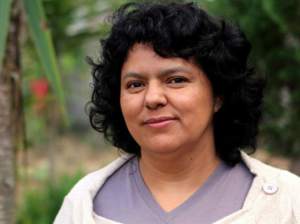 From Berta Zúñiga Cáceres, the daughter of Honduran community organizer Berta Caceres who, in Spring 2016, was murdered by the national and local Honduran government and a multinational dam company, with at least the tacit support of the US. This is from a
 By Mary Oliver
 By

 By Tommy Airey
 By Rose Marie Berger (23 September 2017)
 From author and legal analyst Paul Butler in a

