From Cole Arthur Riley at Black Liturgies (who else?).


From Cole Arthur Riley at Black Liturgies (who else?).
Here’s some more Octavia Butler to meditate on. This one comes to us from author Monica Byrne, who wrote that every time she criticizes the Democratic Party, and someone asks “So what’s the answer?”, she posts this.

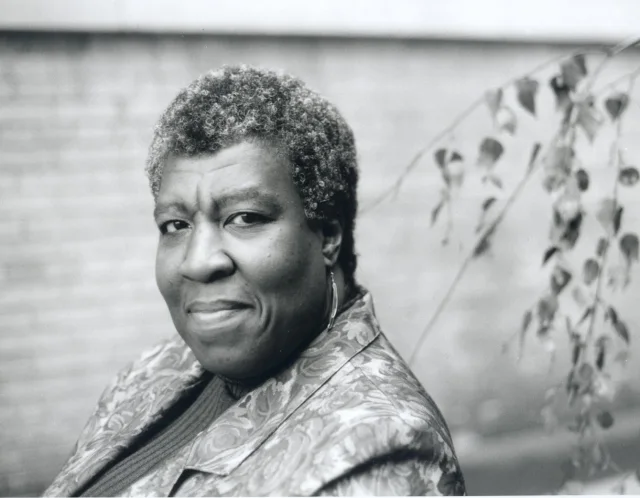
By Maria Popova, re-posted from themarginalian.com
In 1845, as the forgotten visionary Margaret Fuller was laying the foundation of modern feminism, advocating for black voting rights, and insisting that “while any one is base, none can be entirely free and noble,” she contemplated what makes a great leader and called for “no thin Idealist, no coarse Realist,” for a person “of universal sympathies, but self-possessed,” one for whom “this world is no mere spectacle or fleeting shadow, but a great, solemn game, to be played with good heed, for its stakes are of eternal value.”
But how does a nation, a society, a world concerned with more than the shadowy spectacles of the present identify and elect such leaders to shape the long future?
A century and a half after Fuller, Octavia Butler (June 22, 1947–February 24, 2006) — another rare visionary — offered a glimmer of guidance in her sibylline two-part series set in the 2020s: Parable of the Sower (public library) and Parable of the Talents (public library) — a set of cautionary allegories, cautionary and future-protective in their keen prescription for course-correctives, about the struggle of a twenty-first-century society, Earthseed, to survive the ecological collapse, political corruption, corporate greed, and socioeconomic inequality it has inherited from the previous generations and their heedless choices.
Like Ursula K. Le Guin, Butler straddled the timeless and the prophetic, saturating her fiction with astute philosophical and psychological insight into human nature and the superorganism of society. Also like Le Guin, Butler soared into poetry to frame and punctuate her prose. Each chapter begins with an original verse abstracting its thematic direction. She opens the eleventh chapter of the second Earthseed book with this verse:
Choose your leaders with wisdom and forethought.
To be led by a coward is to be controlled by all that the coward fears.
To be led by a fool is to be led by the opportunists who control the fool.
To be led by a thief is to offer up your most precious treasures to be stolen.
To be led by a liar is to ask to be told lies.
To be led by a tyrant is to sell yourself and those you love into slavery.
And yet our discernment in choosing wisely, Butler intimates in a chilling short verse from the first book, can so often be muddled by our panic, by our paralyzing fright and pugilist flight:
Drowning people
Sometimes die
Fighting their rescuers.To read the rest, click here.

By Tommy Airey, re-posted from his weekly Substack newsletter
In the months after police murdered George Floyd in Minneapolis, I joined counter-protesters at the “White Lives Matter” rally in front of the pier in Huntington Beach, a former sundown town in Southern California. One of the white men who mattered was toting a two-story pole with three flags: the stars-and-stripes, the 18th century “Don’t Tread on Me” rattlesnake and a “Trump 2020: No More Bullshit” banner. He wore a shirt that said, “I stand for the flag and kneel for the cross.”
As I digested his message, I scrolled through all the memory verses stored away in the recesses of my post-evangelical mind. The only passage in the bible that even remotely resembles kneeling for the cross is in the second chapter of Philippians.
The verse from Paul’s letter to a little house church in the Roman colony says that in the name of Jesus, every knee shall bow and every tongue shall confess that Jesus is lord. Context matters. The passage subverts the patriotic supremacy of its day. Back then, every knee bowed to Caesar and every tongue confessed that Caesar was lord.
The first Christians pledged allegiance to Something Else.
Continue reading “A Scalawag”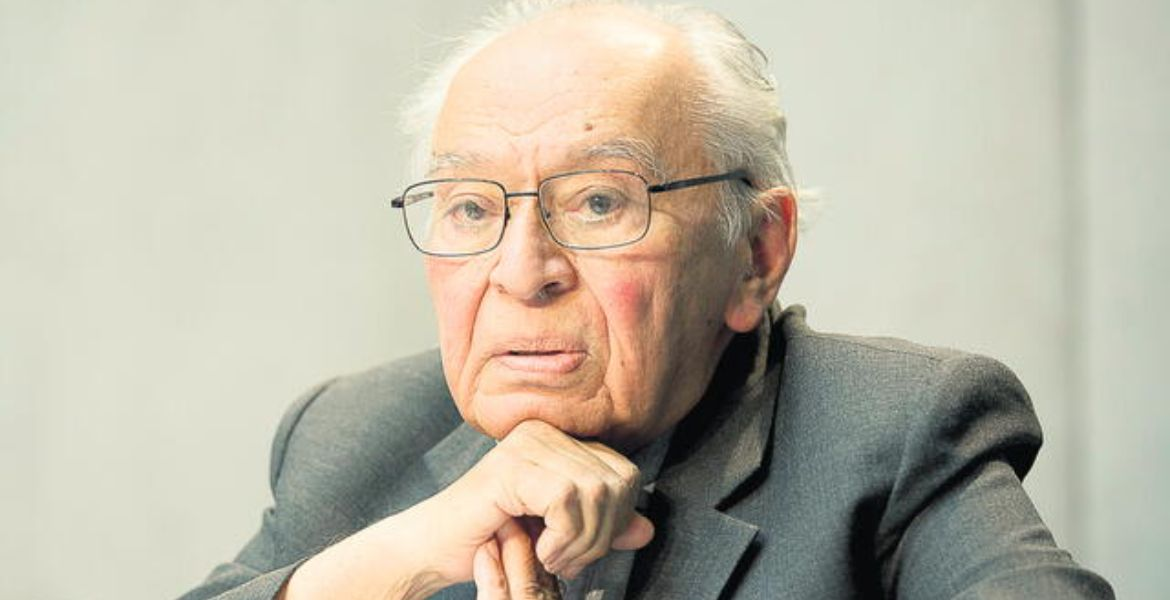
Gustavo Gutierrez (June 8, 1928 – October 22, 2024).
But the poor person does not exist as an inescapable fact of destiny. His or her existence is not politically neutral, and it is not ethically innocent. The poor are a by-product of the system in which we live and for which we are responsible. They are marginalized by our social and cultural world. They are the oppressed, exploited proletariat, robbed of the fruit of their labor and despoiled of their humanity. Hence the poverty of the poor is not a call to generous relief action, but a demand that we go and build a different social order.

By Jim Perkinson, a ten-year retrospective on Radical Discipleship
What has significantly changed – in the world and in yourself? What/Who has inspired you or brought you hope? What are the forms of supremacy that you’ve struggled to break rank with?
So, yes, ten years from Obama through Trump to Biden and now looking the rump of the nation straight in the eye! But it ain’t about the leadership as much as the dealership. The global grip of corporate armature and billionaire priority and militant supremacy grows apace. The Elon Musk flush of political theater with digital warp and AI belches of algorithmic inanity seems virtually (!) unstoppable in the short term. In service overwhelmingly—though not exclusively—of white delusion and confusion that pallor is somehow valor and value, rather than weaponized trauma coming out of the European Middle Ages outfitted with a new weapons technology and an old lie!
What has changed in the world is perhaps Time itself—or at least our relationship to it. The onslaught of a pillaging of the more-than-human world into a technological commodification hell bent on re-engineering seemingly everything grabbable on the planetary surface into a human prosthesis, global in extent, accelerating in pace, arguably exercised by a hyperventilating “more” and “faster” that has no imaginable containment other than a resounding “Halt” trumpeted by a no-longer-patient biosphere speaking in the key of climate extremity.
What has changed in me is a night-sky shift towards the oscillating, incubating, jousting-and-composting Mystery of deep dark running from the planetary core to the astral holes centering galaxies and the song that reverberates between. In grief, I lament the loss of half of human life to the dragon’s tail (Rev 12:1) of light-pollution sweeping almost all the stars from urban vision looking for ancestral constellation and consolation above the flickering glow of now. But then NASA has recently hipped us to a new recognition that Black Holes actually “sing,” echoing a B-flat vibe 57 octaves below middle C in a frequency wave 10 million years long, holding on tune for 2 billion years across that orange hazed horizon. So, thus: the Beauty that is—whether I can see it or not! Irreducibly in motion in complexities of gift-economy reciprocation so far beyond our ken that we fill entire blackboards with equations that “explain” something less than 4 % of all that is (chalking the rest up to “Dark Energy” and “Dark Matter”)!
And no surprise then that I still mark my deepest education as an on-going, 40-year baptism in another kind of “Beautiful Blackness” on Detroit’s east side streets, now being rhizomically linked with Native savvy and syncopation here in Anishinaabe smarts about Great Lakes water-wisdom. That combination is complemented by continuous learning (from my wife) of indigenous Ayta resilience on the sides of Pinatubo’s eruptive divinity. And schooled by such, I am propelled back along my own ancestral root, to Celt and Nordic colloquies with Indo-European-profundities dating to pre-Roman humility still rooted in being taught-by our more-than-human kin before such was warped and decimated by imperial domination and rapacity.
So, the supremacy at issue? A three-fold iteration across 5,000 years of elaboration, beginning in Mesopotamian re-organization of smaller-scale lifeways (hunting-and-gathering, subsistence cultivation, village-based pastoralism) into city-state coercion of labor, surplus extraction, imposed taxation, debt, drudgery, and disease evisceration. Gradually elites began to assemble armatures of trade, technology, and architecture that effectively removed and buffered them from hands-on exchange with plants and animals in elevating themselves figuratively and literally out of reciprocal relations with such, to a controlling, plundering, and decimating accumulation of goods and status whose brutality was destined to be promoted and gaslighted ever after as “civilization” (built on the Latin word “civis” for male-propertied “citizen” players in in the on-going pillage).
Some 3,000 years down the road, that elite-anchored “species supremacy” insisting humans alone had status and worth, gave rise to its most potent religious offspring in the form of Christian supremacy, warping and re-configuring a Galilean back-to-the-land movement seeking to enflesh ancient Sabbath and Jubilee traditions of eco-reciprocity and co-communion into a monopolistic privatization of “truth” and of Earth itself. This led after more than a millennium to Doctrine of Christian Discovery genocide (95% on average) of Native Turtle islanders and enslavement of African peoples as tools of produce and wealth assemblage on the stolen land. Yes, in USA self-conceit—going underground and toxic as the spiritual underpinning of a newly-articulated visual regime of white-skin power and predation. This still regnant supremacy continues to vaunt Euro-heritage and visage over all else, even as it remains ideologically and artifactually entwined with the civilizational and religious supremacies it (supposedly) superseded.
And thus we face today, a biospheric blowback ripping the facade off the entire enterprise that will not much longer tolerate the evident fatuity and stupidity. Inspiration towards life and “ways of being” otherwise—in the face of such—for me is a question of track record. Who has the proven experience of living in place over generations without destroying either themselves or everyone and everything else in that place and without having to reach beyond that particular bioregional bounty to plunder an “elsewhere”? The simple answer to such is “indigeneity” and ancestry. How re-learn what they knew and know? And once again, become worthy recipients of—because co-participants with—such amazing Beauty and Magnificence as Life on this planet yet represents and obviously is.

An excerpt from Arundhati Roy’s 2024 PEN Pinter prize acceptance speech. Read the whole thing. It’s definitely worth five minutes of your time today.
What can possibly justify what Israel is doing?
The answer, according to Israel and its allies, as well as the Western media, is the Hamas attack on Israel on October 7th last year. The killing of Israeli civilians and the taking of Israeli hostages. According to them, history only began a year ago.
So, this is the part in my speech where I am expected to equivocate to protect myself, my ‘neutrality’, my intellectual standing. This is the part where I am meant to lapse into moral equivalence and condemn Hamas, the other militant groups in Gaza and their ally Hezbollah, in Lebanon, for killing civilians and taking people hostage. And to condemn the people of Gaza who celebrated the Hamas attack. Once that’s done it all becomes easy, doesn’t it? Ah well. Everybody is terrible, what can one do? Let’s go shopping instead…
I refuse to play the condemnation game. Let me make myself clear. I do not tell oppressed people how to resist their oppression or who their allies should be.
Continue reading “The Wound that is Palestine”
This is an excerpt from Sherene Seikaly’s Nakba in the Age of Catastrophe, which definitely deserves to be read in its fullness. The wild thing is that this piece was written five months before October 7, 2023.
In the age of catastrophe, Palestine is a paradigm. It can teach us about our present condition of the permanent temporary: we are all unclear about what the future holds. We are all suspended in time with no end in sight. We are all uncertain if there is any “normal” to which we can return. For some, this realization is a rupture. For most, violence and dispossession are not interruptions. They are markers of the temporal and spatial suspension that make up the everyday.
Palestine is not a laboratory. It is not a site of sympathy. It cannot be reduced to a sterile problem. Palestine is a place of abundance, an abundance of lessons about persisting in the looped and looping time of the present. Like many other struggles, Palestine reminds us, in the words of Jodi Byrd that the “post has not yet arrived.” There is no postcolonial, postracial, postZionist. We cannot await a secular salvation or a messianic apocalypse. We are in the apocalypse.
Continue reading “Palestine is a Paradigm”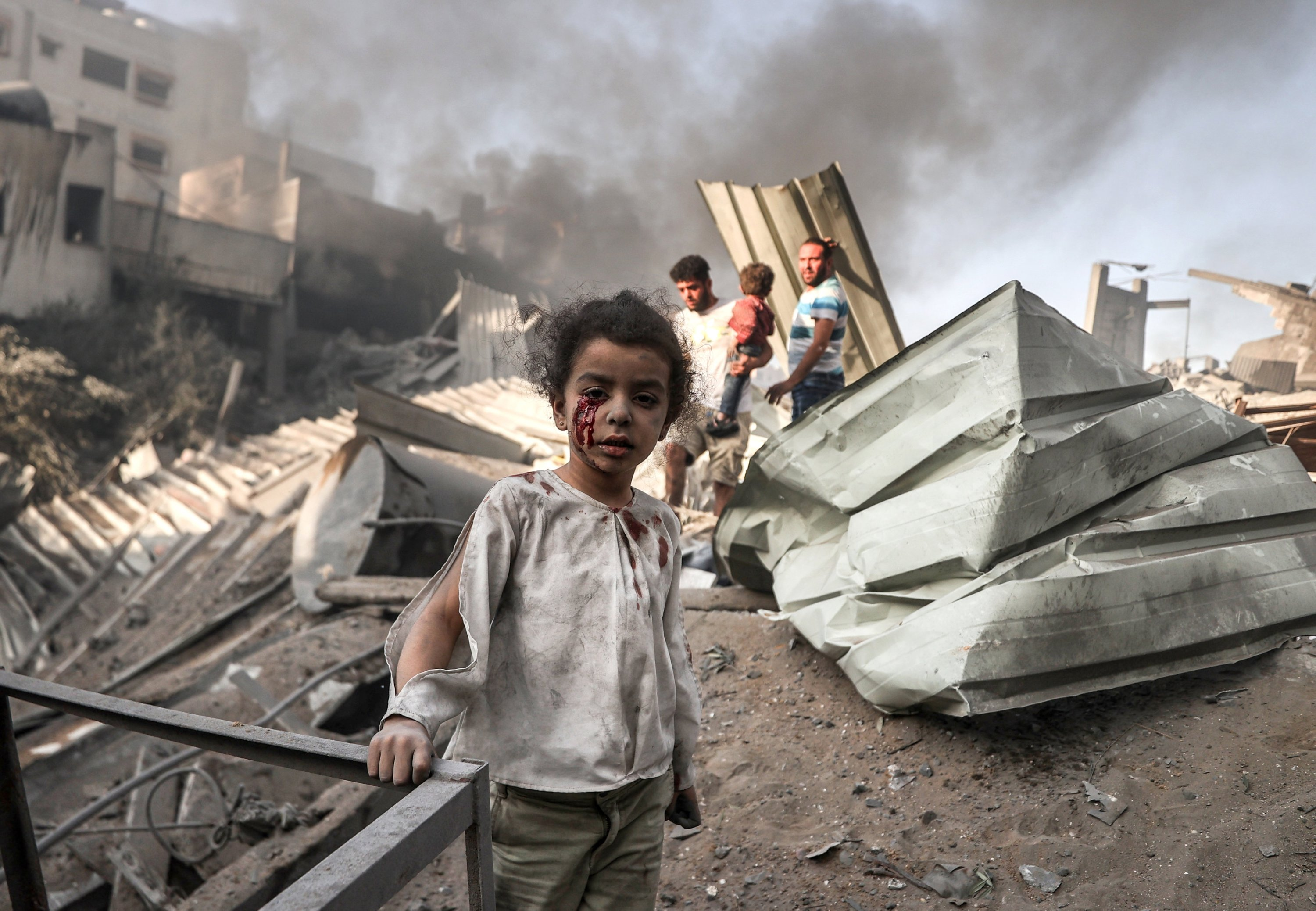
99 US doctors and nurses who have served in Gaza this year just sent this open letter to Joe Biden and Kamala Harris.
OPEN LETTER FROM AMERICAN MEDICAL PROFESSIONALS WHO SERVED IN GAZA
October 2, 2024
Dear President Biden and Vice President Harris,
We are 99 American physicians, surgeons, nurse practitioners, nurses, and midwives who have volunteered in the Gaza Strip since October 7, 2023. Combined, we spent 254 weeks volunteering in Gaza’s hospitals and clinics. We worked with various nongovernmental organizations and the World Health Organization in hospitals and clinics throughout the Strip. In addition to our medical and surgical expertise, many of us have a public health background, as well as experience working in humanitarian and conflict zones, including Ukraine during the brutal Russian invasion. Some of us are veterans and reservists. We are a multifaith and multiethnic group. None of us support the horrors committed on October 7 by Palestinian armed groups and individuals in Israel.
The Constitution of the World Health Organization states: “The health of all peoples is fundamental to the attainment of peace and security and is dependent on the fullest cooperation of individuals and States.” It is in this spirit that we write to you in this open letter.
We are among the only neutral observers who have been permitted to enter the Gaza Strip since October 7. Given our broad expertise and direct experience of working throughout Gaza we are uniquely positioned to comment on several matters of importance to our government as it decides whether to continue supporting Israel’s attack on, and siege of, the Gaza Strip. Specifically, we believe we are well positioned to comment on the massive human toll from Israel’s attack on Gaza, especially the toll it has taken on women and children.
Continue reading “Well Positioned to Comment”
From Palestinian-American poet Hala Alyan. It is called “Naturalized.”
Can I pull the land from me like a cork?
I leak all over brunch. My father never learned to swim.
I’ve already said too much.
Look, the marigolds are coming in. Look, the cuties
are watching Vice again. Gloss and soundbites.
They like to understand. They like to play devil’s advocate.
My father plays soccer. It’s so hot in Gaza.
No place for a child’s braid. Under
that hospital elevator. When this is over.
When this is over there is no over but quiet.
Coworkers will congratulate me on the ceasefire
and I will stretch my teeth into a country.
As though I don’t take Al Jazeera to the bath.
As though I don’t pray in broken Arabic.
It’s okay. They like me. They like me in a museum.
They like me when I spit my father from my mouth.
There’s a whistle. There’s a missile fist-bumping the earth.
I draw a Pantene map on the shower curtain.
I break a Klonopin with my teeth and swim.
The newspaper says truce and C-Mart
is selling pomegranate seeds again. Dumb metaphor.
I’ve ruined the dinner party. I was given a life. Is it frivolous?
Sundays are tarot days. Tuesdays are for tacos.
There’s a leak in the bathroom and I get it fixed
in thirty minutes flat. All that spare water.
All those numbers on the side of the screen.
Here’s your math. Here’s your hot take.
That number isn’t a number.
That number is a first word, a nickname, a birthday song in June.
I shouldn’t have to tell you that. Here’s your testimony,
here’s your beach vacation. Imagine:
I stop running when I’m tired. Imagine:
There’s still the month of June. Tell me,
what op-ed will grant the dead their dying?
What editor? What red-line? What pocket?
What earth. What shake. What silence.
 Radical Discipleship