This Sunday, radical disciples are organizing vigils all over the world to stand in solidarity with Palestinians who are resisting illegal settlements in the West Bank. Check out the Al-Makhrour IG page for locations, or to lead up a vigil in your watershed. Cole Arthur Riley wrote this prayer for the occasion.
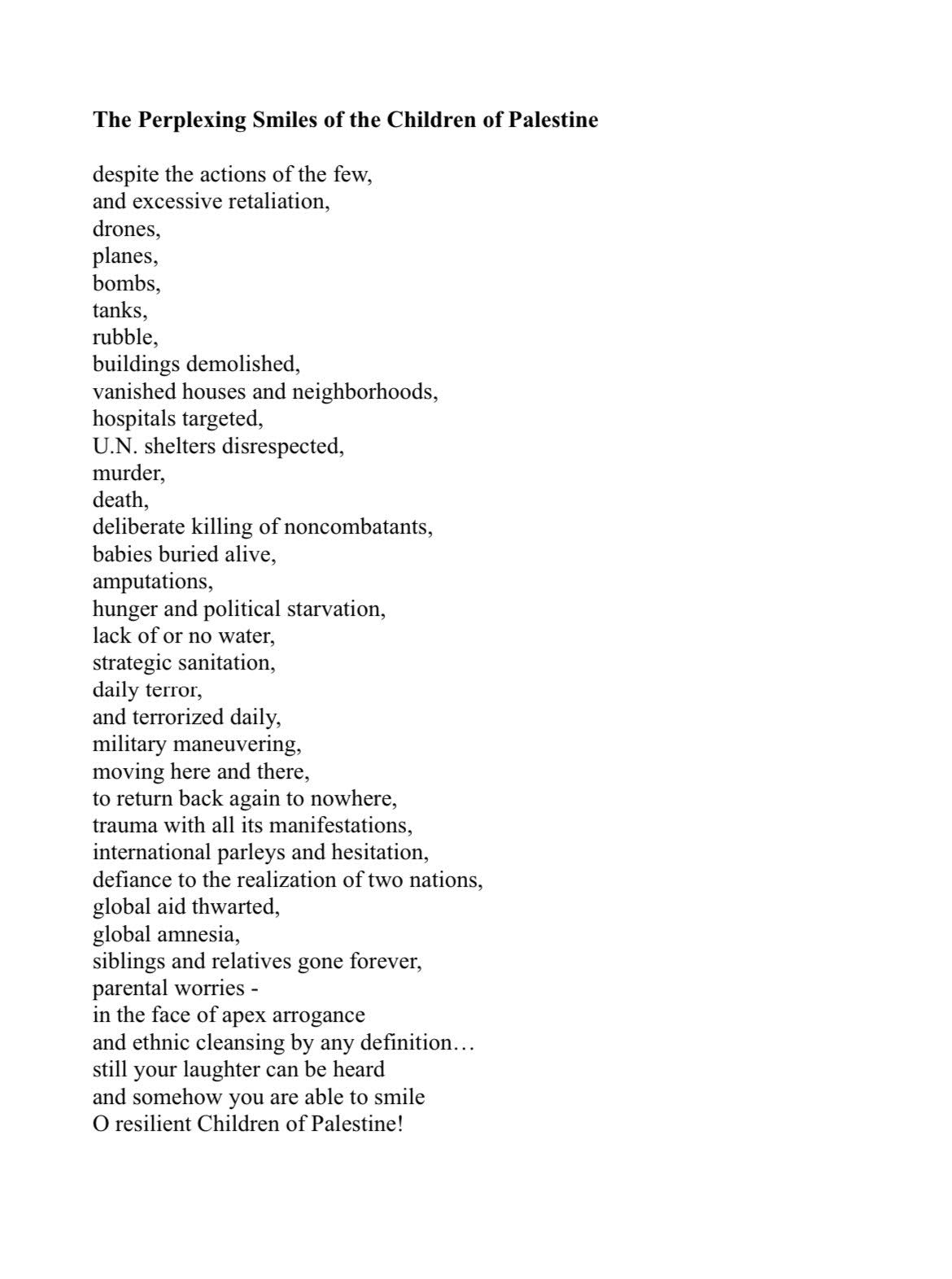
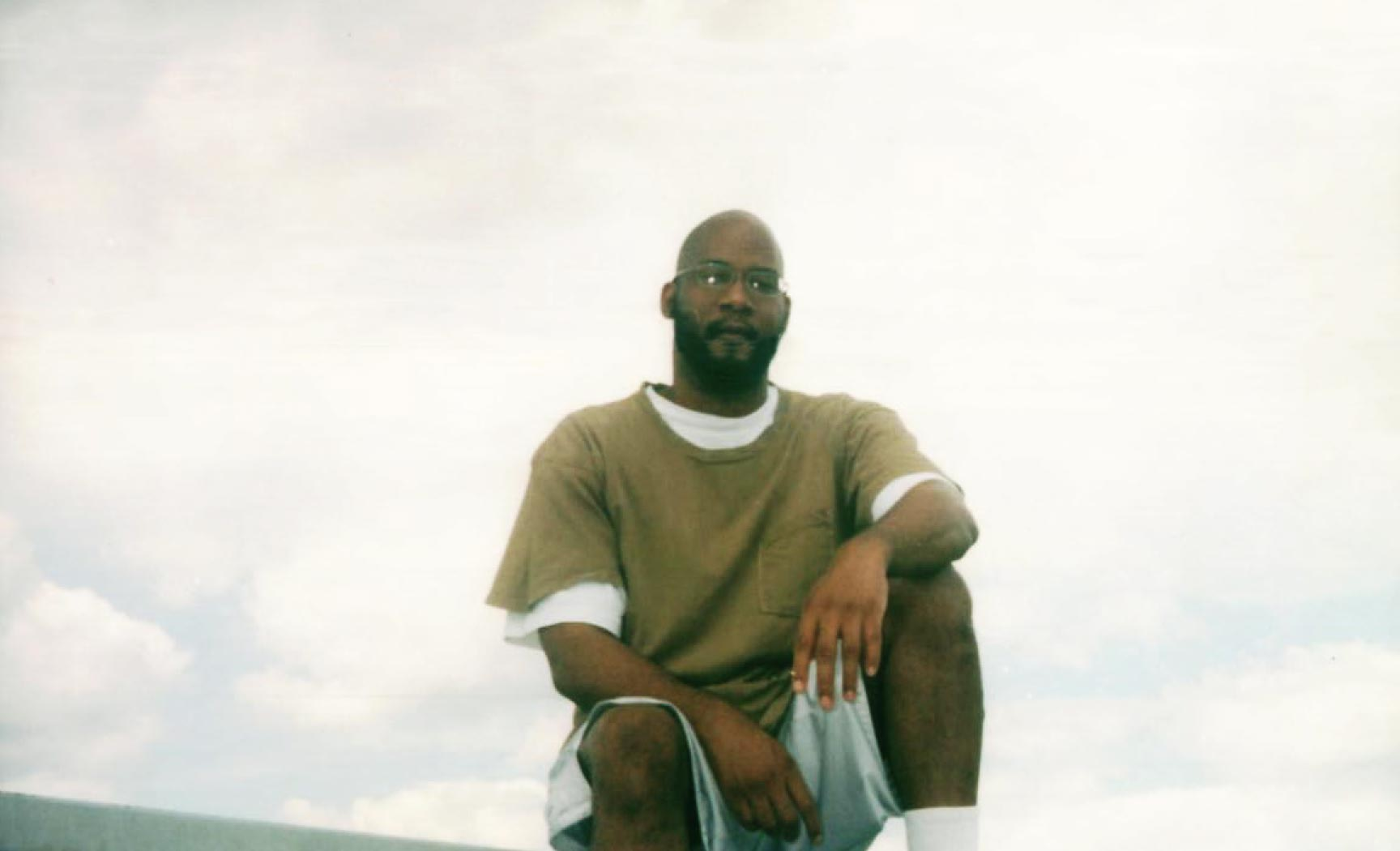
Earlier this week, the state of Missouri executed Marcellus Williams, even though new evidence exposed his innocence. Earlier this year, Williams penned this poem for the people of Palestine. In this movement for life, love and liberation, everything is connected.
The Innocence Project put out this call yesterday to save the life of Marcellus Williams, who prosecutors now say was wrongly convicted. More details here.
With so little time until #MarcellusWilliams is set to be executed tomorrow, Sept. 24th at 6 p.m., our best tool is our voice. We must make as much noise as possible in these final hours, as public pressure can make all the difference in the moments leading up to an execution. Please, email, tweet or call Gov. Parson (@GovParsonMO) RIGHT NOW at 417-373-3400 and URGE him to step in and prevent Marcellus’ execution.
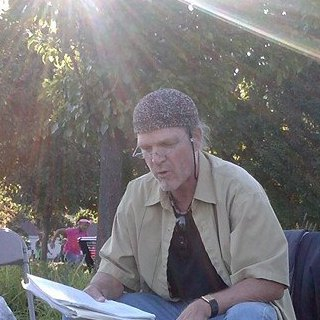
By Jim Perkinson (above), a sermon for St. Peter’s Episcopal Church (Detroit, MI)
And he said to her, “Let the children first be fed, for it is not right to take the children’s bread and throw it to the dogs.” (Mk 7:27)
Note, right up front, how rapidly the subject shifts topic in this Marcan vignette. It goes from unclean spirit to bread to puppies and argues about priorities. Pretty easy for somebody eclectic like me to open up, in response, a fire hydrant of ideas without any hoses attached. So, my title is an attempt to organize the flow a bit. We begin (ha!) with the word “first.”
The sacred Jewish writing known as the Talmud (Brachot 40a) asserts: “It is forbidden for people to eat before they give food to their animals as it says (Dvarim 11:15), ‘I will provide grass in your field for your cattle’ and only then does the verse state ‘and you will eat and be satisfied’” (Rav Yehuda, teaching in the name of Rav, quoted by Halickman)[1]
But, but then in the Gospel of Mark today (as we read), Rabbi Jesus says: “Let the children first be fed; it is not right to take the children’s bread and throw it to the dogs” (Mk 7: 27).
And those “buts” (plus a bunch more) will be central in the riff to follow here—one thing going one way, and then suddenly the same thing going another way, or even a line of anatomy curving around against itself and in “cheeky” fashion, doing so twice. There are buts and then there are “butts.” As we shall note.
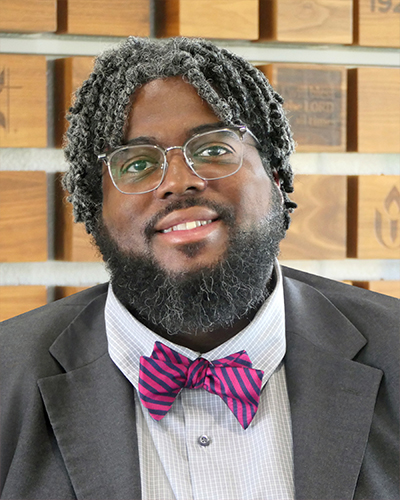
By Rev. Dr. Nick Peterson, Professor of Homiletics and Worship at Christian Theological Seminary in Indianapolis. In his work, Nick explores how black faith engenders intramural care practices, which he calls “black-on-black care” – a transformative care that contends with and sometimes exceeds the constraints of antiblackness. Rev. Dr. Peterson offered this up to celebrate the 10-year anniversary of RadicalDiscipleship.net.
I traffic in primarily liberal Protestant circles where discipleship often gets a bad rap, largely due to its association with evangelical circles whose theologies frequently oppose liberation and inclusion. Still, I think it’s important not to abandon the idea or concept to its popular usage, but rather to recognize its potential to sow the seeds of God’s will on earth as it is in heaven.
We all know that Jesus called and chose his disciples—like any good rabbi, he wanted to select people who could carry forward his teachings and his orientation toward life and God’s purpose in the world. The thing is, Jesus didn’t seem particularly selective about whom he chose, or at least that’s how the gospels tell it. He was simply walking along and called men as he encountered them, and, across the board, they stopped what they were doing to follow him. These were not generally men trained in the specifics of Jewish law or religious practice. They were not of noble birth or high standing, with few exceptions. Still, Jesus chose to give the best of himself to a group of ordinary, everyday people.
Jesus calls disciples who will follow. And that’s the challenge, because following Jesus doesn’t necessarily make the path any clearer. The road of discipleship does not lead to easy living; in fact, it leads to a radical disposition. This disposition confronts suffering, pain, neglect, and oppression with truth, words of hope, and life itself. The discipline of discipleship is less about having the right answers or being a superb apologist, and more about being willing to witness pain that we’d rather not see—and remaining bold enough to believe and wait for God to show up in it.
The radical call of discipleship remains a daunting proposition because Jesus ultimately chose to show his greatest power by entering into death and waiting with it until even death surrendered to God’s purposes. The world we inhabit is death-dealing as well, because of the evil born of human hands. From our children killing each other at school and at play, to our dollars funding the bombing of children thousands of miles away—death has become a universal currency. And in the face of this, God calls a remnant, raises a witness in the world, to remind us that this is not how we are meant to live.
The ubiquity of violence and death can be so overwhelming that it may feel like our labor and waiting are meaningless. This feeling is amplified by the pressure to make a large impact, to equate witness with notoriety or platform. But God’s call has never been about winning on the world’s terms or even on our own terms. God does not call disciples to play and win the game of domination. God calls disciples to lavish love on the world until Love wins. God calls disciples to pour out mercy and grace on the neglected and the maligned, like water on thirsty ground. God calls disciples to a steadfastness that does not confuse urgency with anxiety or inclusion with passivity. The radical call of God is like the wind of the Spirit, moving where it will, connecting inspired breaths across time and space.
For the gift of the invitation to follow, we give thanks. For those whose footprints reveal new paths in this journey, we give thanks. Thank you, radical disciples, for nurturing this oasis in a dry land.
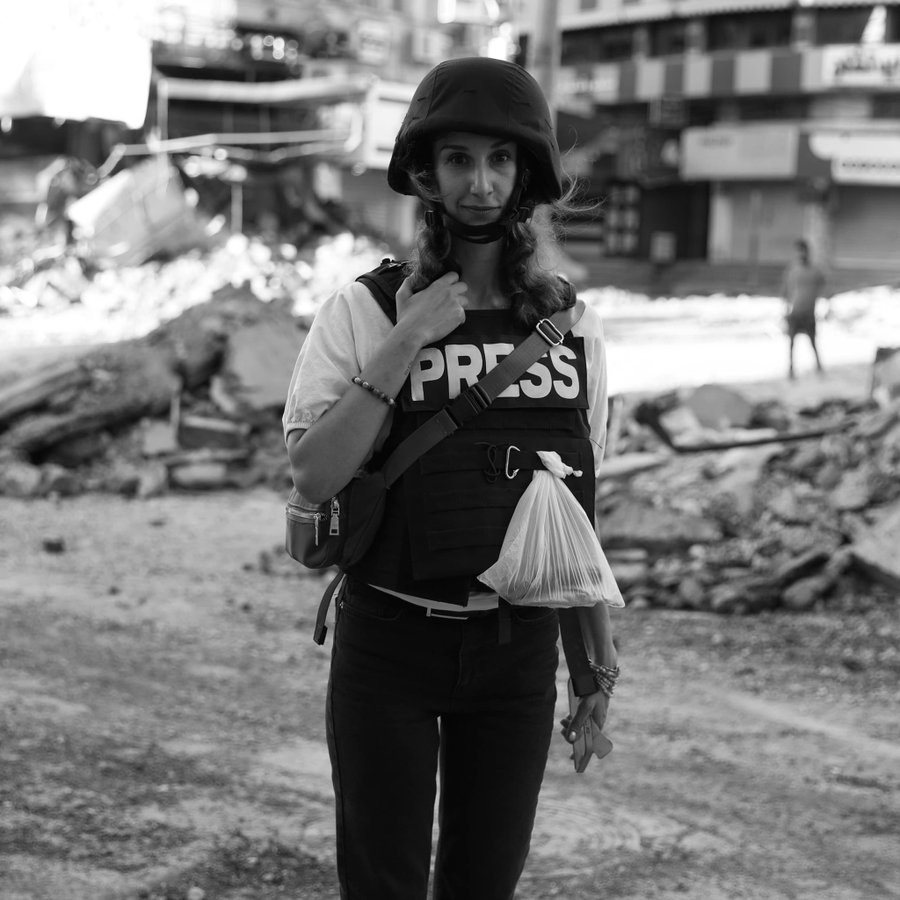
By Miriam Barghouti, a journalist and policy analyst in Palestine
I keep forgetting to wear my helmet in the field. If I’m honest it’s because I hate it, it’s so heavy & when my peers remind me to wear it I snap back, “what? You think it’ll protect us? Didn’t Shireen (Abu Aqleh) get shot in the neck?”
In our profession as war journalists we are required to wear bullet-proof vests with the PRESS insignia on them, and our cars are all also marked with “PRESS/TV.”
It’s to be visible to armed groups, whether it’s the Israeli military or Palestinian resistance groups, that we are PRESS. With that, they’re all supposed to ensure our safety & not target us.
But in Palestine, being press means being a target. The gear which is meant to protect us has become a marker to attack us.
When the Israeli army is not around -even if I’m around Palestinian fighters- I actually don’t need my gear at all.
In fact, fighters are eager to speak with us- often commending our “bravery” to dare go by them because the Israeli military does not want their stories out.
It is only when Israeli army jets, drones, & soldiers are in the skies/ground do I find us- local and internationals- wearing our gear.
The flack jacket can’t protect me from a drone strike, a bullet to the neck, to the thigh, to the shoulder.
All of this is to explain to you- the ones we serve,- why we continue to wear our gear even though their weight causes problems for the spine and body, all while having with no real capacity to protect us (consider the journalists in GZ who have worn their gear for nearly a year, developing all sorts of health issues & still being executed- despite this they remain committed to their profession).
We keep wearing this gear as an act of defiance to maintain right for press, & flow of information.
When the only official body tasked with relaying information in real-time is targeted, documentation is blurred and the narrative becomes a debate of we said, they said.
Censorship is not just the removal of posts from social media platforms. It is a violent, bloody, and strategic act that’s less about the messengers & more about the message relayed.
Here, is where our slaughter is the engineering of your ignorance.
A decade ago, I was teaching Bible and theology full-time at our local Jesuit school, Seattle University. Now I am retired.
A decade ago, my wife and ministry partner, Sue, were part of our local Mennonite congregation. Now, we do not attend church.
A decade ago, I identified as a Christian. Now, I have reclaimed my birth identity as a Jew who loves the Jewish Jesus.
A decade ago, Sue and I were in the midst of an eighteen year stretch of hosting and leading a Scripture group that met every Thursday for two hours in our living room. Now, it is hosted elsewhere.
There are many reasons for these changes, some which we all share—the pandemic, for instance—and others that are personal to my own journey. But as a result of these choices, I now am experiencing life much differently than I was a decade ago.
If a tree falls in the forest and nobody hears it, does it make a sound? This is an old philosophical question that most of us have heard in one form or another. For many the question seems to be a preposterous one for the immediate response is ‘certainly, because the tree will crash in a cacophony of sounds whether anyone is around or not.’ But this is not what the question asks. The question is raising the issue of perception. Sounds are a matter of perceiving and receiving vibrations and disturbances in the atmosphere. We receive and interpret the disturbance paying attention to the movement and commotion and assigning to the sounds definition and meaning. As sounds and disturbances are perceived and received it is then inputted into the brain so that the brain can make association and assignment. This in general is how we hear. This is how we perceive occurrences in our environment. So, if there are no ears to interpret the vibrations and transmit them to the brain for interpretation and assignment, and therefore no perception, does sound actually occur? The question is raising the issue that sound is a matter of perception, reception, and the ability to interpret disturbances that occur around us. The underlying question is whether sound requires a witness. If there are no witnesses to the tree falling and sending vibrations throughout the atmosphere, does it really make a sound, or is sound only a matter of perception, reception, and interpretation.
Today is the ten-year anniversary of our first post on Radical Discipleship. It’s been a whole decade of platforming expressions of Christian faith committed to breaking rank with supremacy of every form.
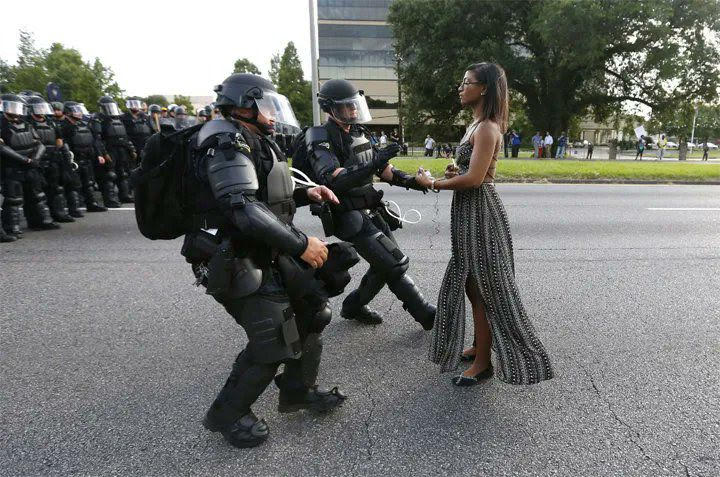
When we started, folks were still marching in Ferguson, in the aftermath of the murder of Michael Brown.
Since then, we’ve become unstitched. Which is another way to say we are getting free.





 Radical Discipleship