Love Reckons

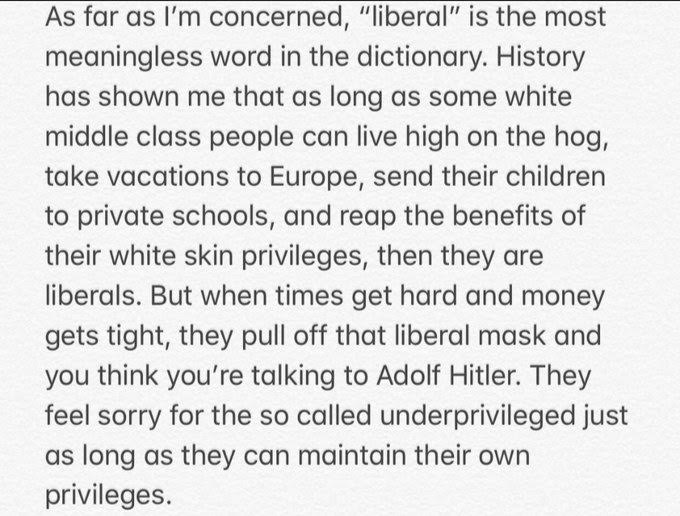
An excerpt from an article Kiese Laymon wrote in 2015, reflecting on a conversation he had with his grandma “12 hours after Susie Jackson, Ethel Lance, Clementa Pinckney, Tywanza Sanders, Cynthia Hurd, Sharonda Coleman-Singleton, Depyane Middleton Doctor, Daniel Simmons and Myra Thompson were murdered in a black Charleston church by a cowardly white American thug.”

What I do know is that love reckons with the past and evil reminds us to look to the future. Evil loves tomorrow because peddling in possibility is what abusers do. At my worst, I know that I’ve wanted the people that I’ve hurt to look forward, imagining all that I can be and forgetting the contours of who I have been to them.

Like good Americans, I told Grandma, we will remember to drink ourselves drunk on the antiquated poison of progress. We will long for “shall’s” and “will be’s” and “hopes” for tomorrow. We will heavy-handedly help in our own deception and moral obliteration. We will forget how much easier it is to talk about gun control, mental illness and riots than it is to talk about the moral and material consequences of manufactured white American innocence.

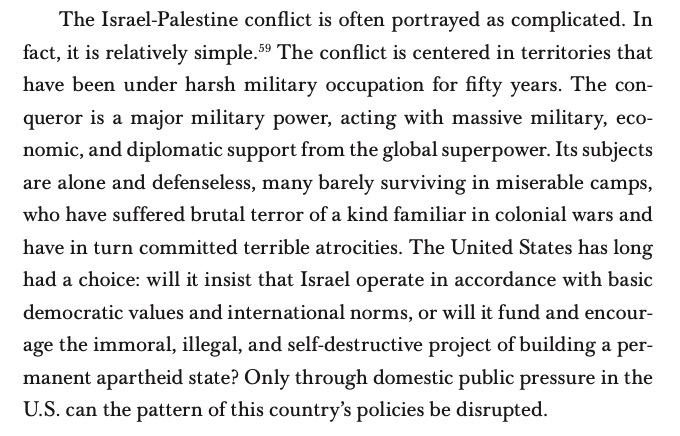
The Origins of Modern Zionism

This is Zachary Foster’s response to a tweet from Emily Schrader that said, “I’m not sure why this needs to be said, but we don’t need non-Jews to be lecturing Jews about what Zionism is or isn’t.” Foster is a Jewish-American historian of Palestine who received his PhD in Near Eastern Studies from Princeton in 2017.

Of course, Christians don’t need to be lecturing Jews about anything. We have our own intramural issues – and Christian Zionism is a big one that heavily influences conservative and liberal followers of Jesus.

Zionism was initially a Christian phenomenon before it was a Jewish phenomenon.

→ Anthony Cooper (Lord Shaftesbury) (1801-1885) published a tract in 1838 claiming that Jewish “restoration” in Palestine would benefit Great Britain’s geopolitical position and would hasten the second coming of Jesus.

→ Charles Henry Churchill (1807-1867) proposed a plan for establishing a Jewish state in Palestine in the 1840s as British Consul in Damascus.

→ James Finn (1806-1872), British Consul in Jerusalem, member of the London Society for Promoting Christianity Amongst the Jews, bought land in the 1850s in the Palestinian village of Artas for the purpose of employing destitute Jews there.

→ James Bicheno’s (1880) “The restoration of the Jews, the crisis of all nations”: purpose to “stir up public attention to the prophecies which relate to the restoration of this singular people in the latter days.”

→ William Hechler an Anglican clergyman in 1884 wrote “The Restoration of the Jews to Palestine” in which he argued that Jewish settlement in Palestine was a precondition for the return of Jesus.

Maybe the more sensible question is, why did Jews hijack the idea of Zionism from non-Jews?

Sources: Ilan Pappe, Lobbying for Zionism; Masalha, The Zionist Bible

Anti-Semitism and Hypocrisy at the Top: a Jewish response

Re-posting this piece by Wes Howard-Brook from February 2019 because it is more relevant than ever. Gotta say that after five-and-a-half years, it has aged quite well.

Three, young, powerful, brash women of color have come down upon the Capitol and left the old while folks there sputtering in their wake. The most well-known—so much so that she already can be recognized by her initials, AOC—Rep. Alexandria Ocasio-Cortez (NY)—has blown the doors off Congress by daring to offer her “Green New Deal” vision. The other two are both Muslim women, Michigan Rep. Rashida Tlaib and Minnesota Rep. Ilhan Omar. Tlaib and Omar have strongly promoted the international “Boycott, Divestment, and Sanction” campaign to pressure the Israeli government to withdraw from West Bank settlements.

AOC has been allowed to thrive as a social media star, despite being treated with despicable condescension by the “senior” congresspeople and their supporters. After all, even the Democratic Party knows that climate change is real and needs immediate action.

But when it comes to criticizing Israel, Dems collectively freak out in an orgy of blatant hypocrisy that might, but probably wouldn’t, make Trump blush. Most immediate, Rep. Omar was quoted in a tweet stating that “Jewish money,” more specifically, the American Israel Public Affairs Committee, influences US policy on Israel. This claim led to instant and widespread condemnation from all sides, for promoting “anti-Jewish tropes.” Rep. Omar was forced to apologize publically.

Continue reading “Anti-Semitism and Hypocrisy at the Top: a Jewish response”

where the land is not bullied

A poem called “Moving towards Home” by June Jordan.

“Where is Abu Fadi,” she wailed.
“Who will bring me my loved one?”
The New York Times, 9/20/82

I do not wish to speak about the bulldozer and the
red dirt
not quite covering all of the arms and legs
Nor do I wish to speak about the nightlong screams
that reached
the observation posts where soldiers lounged about
Nor do I wish to speak about the woman who shoved her baby
into the stranger’s hands before she was led away
Nor do I wish to speak about the father whose sons
were shot
through the head while they slit his own throat before
the eyes
of his wife
Nor do I wish to speak about the army that lit continuous
flares into the darkness so that others could see
the backs of their victims lined against the wall
Nor do I wish to speak about the piled up bodies and
the stench
that will not float
Nor do I wish to speak about the nurse again and
again raped
before they murdered her on the hospital floor
Nor do I wish to speak about the rattling bullets that
did not
halt on that keening trajectory
Nor do I wish to speak about the pounding on the
doors and
the breaking of windows and the hauling of families into
the world of the dead
I do not wish to speak about the bulldozer and the
red dirt
not quite covering all of the arms and legs
because I do not wish to speak about unspeakable events
that must follow from those who dare
“to purify” a people
those who dare
“to exterminate” a people

those who dare
to describe human beings as “beasts with two legs”
those who dare
“to mop up”
“to tighten the noose”
“to step up the military pressure”
“to ring around” civilian streets with tanks
those who dare
to close the universities
to abolish the press
to kill the elected representatives
of the people who refuse to be purified
those are the ones from whom we must redeem
the words of our beginning

because I need to speak about home
I need to speak about living room
where the land is not bullied and beaten into
a tombstone
I need to speak about living room
where the talk will take place in my language
I need to speak about living room
where my children will grow without horror
I need to speak about living room where the men
of my family between the ages of six and sixty-five
are not
marched into a roundup that leads to the grave
I need to talk about living room
where I can sit without grief without wailing aloud
for my loved ones
where I must not ask where is Abu Fadi
because he will be there beside me
I need to talk about living room
because I need to talk about home

I was born a Black woman
and now
I am become a Palestinian
against the relentless laughter of evil
there is less and less living room
and where are my loved ones?

It is time to make our way home.

June Jordan, “Moving Toward Home,” in Living Room: New Poems by June Jordan (New York: Thunder’s Mouth Press, 1993) and reprinted in Directed by Desire: The Collected Poems of June Jordan (Port Townsend, WA: Copper Canyon Press, 2007)

Responsibility

If you have not read Marina Magloire’s most recent article in The LA Review of Books, you really must. She explores correspondence between June Jordan and Audre Lorde over their disagreements on Israel/Palestine. It is absolute fire. Here’s an excerpt.

Driven by her grief and outrage at the massacres at Sabra and Shatila in September 1982, in which thousands of Palestinians were murdered by militia groups over the course of two days, Jordan wrote an open letter called “On Israel and Lebanon: A Response to Adrienne Rich from One Black Woman,” dated October 10, 1982. Her address to Rich was both personal (she names Rich alone among the signatories of the two letters) but also pedagogical (it is an open letter to be published in WomanNews and thus intended for public consumption). Using the words “genocide” and “holocaust,” Jordan lays out the shocking array of war crimes committed by Israel over five months—phosphorous bombs, the destruction of civilian infrastructure, the massacre at Sabra and Shatila—and criticizes Rich’s failure to take responsibility for these things as the tangible outcomes of the Zionism she claims to espouse. This idea of responsibility runs through Jordan’s response like a live wire, culminating in this astonishing statement:

I claim responsibility for the Israeli crimes against humanity because I am an American and American monies made these atrocities possible. I claim responsibility for Sabra and Shatilah [sic] because, clearly, I have not done enough to halt heinous episodes of holocaust and genocide around the globe. I accept this responsibility and I work for the day when I may help to save any one other life, in fact.

Because Rich does not take responsibility, Jordan models it for her. This is perhaps the most important rhetorical turn in Jordan’s letter, though it goes unacknowledged in subsequent responses from other readers. Jordan recognizes that being part of an ethnonationalist state, whether born or chosen, carries the obligation to critique its violence. The fact that a Black woman born in this nation can make this statement, with far more humility than Rich’s selective, cherry-picked identification with Israeli statehood, is a testament to the transformative possibilities of Jordan’s identity politics.

The Moment Died

This poem is called “Just Another Death of a Palestinian Baby” by The Reverend Debra Susannah Mary Rhodes, CMMR, written soon after the genocide began

“My baby is dead,” she wailed!
Another Palestinian mother standing helplessly
as her baby was ripped from her arms,
his body strewed about like the sand in the desert
beyond the border.
Sifting through rubble on her bloody knees
she searched furiously, searched for a part…
any part… of her beloved son.
Three days earlier her daughter had been shot
as their house was destroyed by artillery shells.
The noise still reverberated inside her,
causing her bones to clatter like a toy skeleton
and her ears to shut down in shock.
Finally finding a tiny little finger, she grabbed it
and held it close to her heart.
Was it his?
Does it matter?
It was someone’s baby, and she was a mother.
Running to the only church left standing,
she brought his finger up to the altar,
placed it before the tabernacle,
knelt…
and screamed.
Screamed until her throat was raw while Jesus watched
from his cross, weeping.
With nothing left inside, she laid down prostrate,
barely breathing,
and then looked up just as a tear fell on her cheek
from high above her.
For the first moment in 90 days she felt
clean… loved…. held…
Just then another woman came stumbling in,
sobbing,
clutching a piece of fabric to her heart.
And the moment died, just like everything else.

Mother Debbi is a writer and a priest in the Episcopal Church, and she and her husband, also a priest, co-founded The Community of Mary, Mother of the Redeemer in 2018, open to all baptized Christians, that receives God’s grace from The Daily Office, Daily Mass, and personal prayer, and then works to exorcise the injustice, oppression, and violence of Empire from our lives and live into the Kingdom of God the way the early Christians did. Mother Debbi loves all aspects of “Spiritual Motherhood,” and has spent much of her adult life volunteering in jails and maximum-security prisons, bringing Christ’s love to the “least of the least of these.”